What Is a 12V Deep Cycle Battery and Why It Matters

Blog

What Is a 12V Deep Cycle Battery and Why It Matters

by Emma on Aug 21 2025
A 12V deep-cycle battery provides long-lasting, reliable power for your adventures. Designed to withstand deep discharges and repeated recharges, these batteries are the backbone of applications like RVs, boats, off-grid solar systems, and camping equipment. Understanding 12V deep-cycle batteries can help you choose the right one for your needs, whether it's a 12V deep-cycle marine battery for a trolling motor or a 12V deep-cycle RV battery for off-grid camping. What Is a 12V Deep Cycle Battery A 12V deep cycle battery is like a reliable water tank, slowly releasing energy to keep devices running smoothly for hours. Unlike starting batteries with thin plates for instant power, deep cycle batteries use thicker lead plates (in lead-acid models) or advanced lithium chemistry to withstand deep discharges, often up to 50-80% for lead-acid and 80-100% for Lithium Iron Phosphate (LiFePO4), known as Depth of Discharge (DoD). For example, a 12V 100Ah deep cycle battery can deliver 10 amps for 10 hours before needing a recharge. Lithium's flat discharge curve ensures steady voltage, ideal for sensitive devices like trolling motors, while lead-acid batteries gradually lose voltage. Limiting DoD to 50% for flooded lead-acid or 70-80% for AGM extends lifespan, whereas LiFePO4 thrives at near-full discharge. This ability to handle deep discharges makes 12V deep cycle lithium batteries perfect for power systems requiring sustained energy, such as off-grid solar or marine applications. For more comprehensive information about deep cycle batteries, please continue reading: What is a deep cycle battery? Exploring Types of 12V Deep Cycle Batteries: From Lead-Acid to Lithium 12V deep cycle batteries come in several types, each with unique strengths. Here's a detailed look at the main options: Flooded Lead-Acid Batteries: These traditional lead-acid batteries are affordable (~$100) but require regular maintenance, like checking electrolyte levels in a ventilated area. Their lifespan is 1-3 years under heavy use, extending to 5 with care, but deep discharges beyond 50% cause sulfur buildup on lead plates, reducing capacity. And they're heavy (40-50 lbs) and best for budget-conscious users.   Absorbed Glass Mat (AGM) Batteries: Sealed lead acid batteries, like 12V AGM deep cycle batteries, use fiberglass mats to hold electrolyte, making them maintenance-free and spill-proof. They support 70-80% DoD, charge up to 5x faster than flooded batteries, and resist vibration, ideal for RVs and marine use. Costing $200-$300, they last 3-6 years but are sensitive to overcharging.   Gel Batteries: Similar to AGM, 12V gel battery deep cycle use a gelled electrolyte, offering maintenance-free operation and 3-6 years lifespan. Costing $250-$400, they're less common due to sensitivity to overcharging but suit specific applications like solar storage.   LiFePO4 Batteries: A 12V lithium deep cycle battery is the best choice, with a service life of 5-10 years and 3,000-5,000 cycles. They support 98-100% DoD, are lightweight (20-30 lbs for a 12V 100Ah deep cycle battery), and include a Battery Management System (BMS) for safety. The BMS manages cell balancing, prevents over-discharge, and often includes Bluetooth for real-time monitoring of voltage and temperature.   The table below compares these types: Battery Type Cost Lifespan DoD Maintenance Weight (100Ah) Flooded Lead-Acid ~$100 1-3 years (up to 5) 50% High (electrolyte checks) 40-50 lbs AGM $200-$300 3-6 years 70-80% None 40-50 lbs Gel $250-$400 3-6 years 70-80% None 40-50 lbs LiFePO4 $200-$1200 5-10 years 80-100% None (BMS-managed) 20-30 lbs Applications of 12V Deep Cycle Batteries in RVs, Marine and Beyond 12V deep cycle batteries power a variety of applications requiring consistent energy over extended periods. Key uses include: RVs and Camping: A 12V RV battery deep cycles runs lights, fans, and appliances for off-grid adventures. Small 12V deep cycle battery options (20-50Ah) suit compact camping gear like portable fridges. Thinking about upgrading or replacing your RV battery? Also read: What type of deep cycle battery is best for off-grid RV living? Marine Applications: 12V deep cycle marine batteries, such as 12V deep cycle trolling motor batteries, provide steady low-current power for fishing or boating, with lithium's lightweight design easing installation. Off-Grid Solar Systems: High-capacity batteries like 12V 200Ah, 12V 300Ah, or 12V 460Ah deep cycle batteries store solar energy for homes or cabins, with lithium excelling due to its high cycle life. Industrial Uses: Large batteries (4D, 8D) support forklifts, golf carts, and floor sweepers, often using lead-antimony plates for durability. Portable Power Stations: Lithium-based 12V lithium deep cycle batteries are popular in compact power systems for camping or emergency backup, offering portability and efficiency. 12V Deep Cycle vs. Starting Batteries: Key Differences Think of a 12V deep cycle battery as a marathon runner, pacing itself to deliver steady energy over extended periods, while a starting battery is a sprinter, built for quick, powerful bursts to crank engines. These fundamental differences make these type suited to specific roles, and choosing the wrong one can lead to poor performance or early failure. Below are the key distinctions: Purpose and Performance: 12V deep-cycle batteries are designed for deep discharge, providing stable, low-current power for long periods of time and can withstand repeated 80%-100% discharge cycles without serious damage. Starting batteries, primarily designed for automotive or marine use, deliver hundreds of amperes for seconds but are not suitable for continuous power supply because deep discharge causes their battery performance to degrade rapidly.   Plate Design: Deep-cycle batteries, such as lead-acid batteries, use thicker lead plates or lithium-iron phosphate chemistry like lithium-ion batteries. Starting batteries use multiple layers of thin lead plates to increase surface area for high current output. These plates can warp or become pitted under repeated deep discharges, reducing capacity and lifespan.   Grid Composition: Deep-cycle 12V batteries use a specialized grid design, and the high-density lead paste in the plates further improves durability during deep discharge. Starting batteries typically use lead-calcium grids optimized for rapid energy release, but these batteries have poor cycling tolerance and may cause battery failure if used in deep-cycle applications.   Application Suitability: Deep-cycle batteries excel in applications where long-duration power is required, such as powering a 12V deep-cycle marine battery for a trolling motor or a 12V deep-cycle RV battery for off-grid camping. Their design ensures stable voltage for sensitive electronics. In contrast, starting batteries are better suited for starting the engine and stabilizing accessory voltage when the engine is off. Using a starting battery for deep-cycle applications like running a trolling motor can lead to overheating and plate damage, resulting in battery failure. Understanding these differences ensures you choose the right battery type to avoid costly replacements and optimize performance. Sizing Your 12V Deep Cycle Battery: Capacity and Group Sizes Choosing the right 12V deep cycle battery involves matching size and capacity to your needs. Group sizes define physical dimensions and terminal placement for equipment compatibility. Amp hours (Ah) measure capacity, how much energy the battery stores. A 12V 200Ah deep cycle battery, for instance, delivers 20 amps for 10 hours. For lead-acid batteries, estimate Ah by dividing Cold Cranking Amps (CCA) by 7.25: 725 CCA ≈ 100 Ah, lithium batteries list Ah directly. Here's a look at common group sizes: Group Size Dimensions (L × W × H) Typical Capacity (Ah) Group 24 10.25" × 6.81" × 8.88" 70-85 Ah Group 27 12.06" × 6.81" × 8.88" 85-110 Ah Group 31 13" × 6.81" × 9.44" 95-125 Ah For high-demand systems like solar, a 12V 300Ah or 12V 460Ah deep cycle battery provides ample storage, while a Group 24 deep cycle battery suits smaller RVs or trolling motors. How to Charge a 12V Deep Cycle Battery for Optimal Performance Charging a 12V deep cycle battery is like refilling a water tank, you need the right tools to avoid damage. Use a 12V deep cycle battery charger compatible with your battery type. Smart chargers with multi-stage charging (bulk, absorption, float) for lead-acid or constant current/voltage for lithium are ideal. Flooded Batteries: Require ventilated areas and electrolyte checks, use multi-stage charging to prevent sulfation. AGM/Gel Batteries: Need precise voltage (14.4-14.8V) to avoid overcharging, which shortens lifespan. LiFePO4 Batteries: Use dedicated chargers, severe over-discharge may trip the BMS, requiring a low-voltage recovery charger. Choosing the Best 12V Deep Cycle Battery for RV, Marine, or Solar Selecting the best 12V deep cycle battery depends on your application, budget, and environment. For budget users, a 12V lead acid deep cycle battery or 12V gel battery deep cycle offers affordability but requires maintenance. A 12V AGM deep cycle battery balances cost and convenience, ideal for vibration-heavy settings like RVs or boats. For top performance, a 12V lithium deep cycle battery provides lightweight design and longevity for solar or camping. Key considerations: Application: A Group 24 deep cycle battery (70-85Ah) suits smaller RVs or trolling motors, while 12V 300Ah or 12V 460Ah batteries serve high-demand solar systems. Environment: LiFePO4 handles extreme temperatures with self-heating options, AGM resists vibration. Sustainability: Lithium's recyclability and UL certifications ensure safety and lower environmental impact, though lead-acid recycling programs are widely available. Maximizing the Lifespan of Your 12V Deep Cycle Battery The lifespan of different 12V deep-cycle batteries varies, and factors such as ambient temperature, depth of discharge, and maintenance also affect battery life. For example, limiting the depth of discharge of a 12V lead-acid deep-cycle battery to 50% can double its cycle life compared to a battery discharged to 90%. Maintenance tips: Flooded Batteries: Check electrolyte monthly, store in cool, ventilated areas to prevent gas buildup. AGM/Gel Batteries: Monitor for overcharging, store fully charged to avoid sulfation, where lead sulfate crystals harden on plates, reducing capacity. LiFePO4 Batteries: Rely on the BMS for protection, with features like Vatrer’s self-heating for cold climates. Charge within 32°F-131°F /0°C-49°C (some models, like Vatrer’s heated batteries, extend this range). Use Bluetooth apps for regular voltage and temperature checks. Regular state-of-charge monitoring prevents sulfation in lead-acid and ensures lithium BMS functionality, promoting a longer lifespan. Troubleshooting Your 12V Deep Cycle Battery Issues If your 12V deep cycle battery falters, a quick check can pinpoint issues. Inspect for dirt, loose terminals, or cracks. Test voltage with a digital multimeter after a 1-hour rest to avoid “false voltage,” where defective lead-acid cells conduct at rest but fail under load due to heat breaking internal connections. A fully charged battery reads 12.8-13V, below 10V after charging indicates a dead battery. Common issues include: Slow/Fast Charging: Signals a faulty charger or cell damage. Failure Under Load: Suggests defective cells in lead-acid batteries. BMS Faults (LiFePO4): A tripped BMS (from low voltage) may require a specific charger or manual reset, check manufacturer guidelines. For LiFePO4, use apps like Vatrer's Bluetooth app to monitor voltage, temperature, and cycles, catching issues early. Why Choose Vatrer Power for Your 12V Deep Cycle Battery? Vatrer offers deep-cycle lithium batteries with over 4,000 cycles, low-temperature protection, and an IP65 rating, suitable for harsh environments like coastal marine applications. The product line includes 12V 100Ah, 12V 200Ah, and 12V 300Ah deep-cycle batteries, equipped with Bluetooth monitoring for real-time voltage and temperature monitoring via a mobile app. Features like self-heating ensure optimal performance even in cold climates. While lithium batteries have a higher initial cost, their long lifespan and low maintenance can provide long-term savings. Explore the 12V lithium battery that's right for your RV, marine, or solar needs today!
What Is The Best Deep Cycle Battery For a RV

Blog

What Is The Best Deep Cycle Battery For a RV

by Emma on Aug 20 2025
Imagine a remote wilderness camping trip where you can leave your RV's air conditioner on all night or keep your refrigerator working all the time without having to worry about the power supply at all. That's exactly what you need to have a proper deep cycle RV battery to make this freedom possible, providing reliable power for lights, appliances, and electronics even without the grid. Deep cycle batteries are built to supply steady power over extended periods, making them essential for dry camping. With lithium deep cycle RV batteries gaining popularity for their efficiency and longevity, this comprehensive guide helps you choose the best RV deep cycle battery for your camping style, ensuring comfort and reliability on every adventure. What Are Deep Cycle Batteries for RV Camping? Think of a deep cycle RV battery as a marathon runner, steadily powering your RV's systems over hours, unlike a sprinter-like starting battery that delivers a short jolt. These batteries are capable of withstanding 80%-100% deep discharge without damage. This makes them ideal for running high-demand appliances like microwaves, CPAP machines, or air conditioners during extended camping. Knowing the differences between battery types, like LiFePO4, AGM, gel, flooded lead-acid, and hybrid deep cycle marine and RV batteries, helps you pick one that matches your RV lifestyle and provides reliable power for your weekend getaway or long-term camping life.   For more on deep cycle batteries, you can read on: What is a deep cycle battery? What is a group 24 deep cycle battery? Exploring Types of Deep Cycle RV Batteries To find the best RV deep cycle battery, you need to understand the strengths and limitations of each type. Below, we compare the main options, tailored to RV camping needs. Lithium Iron Phosphate (LiFePO4) LiFePO4 deep cycle batteries are a top choice for RVers, like a reliable partner powering everything from CPAP machines to induction cooktops during off-grid trips. They offer fast charging (up to five times faster than AGM), a lightweight design (30-50% lighter than lead-acid), and can be fully discharged without harm. With a lifespan of 2,000-5,000 cycles, these perform significantly better than other RV battery types. Their stable chemistry ensures safety in tight RV spaces, and they're eco-friendly, free of toxic heavy metals, and aligned with RoHS standards. Absorbed Glass Mat (AGM) AGM deep-cycle RV batteries are like rugged off-road vehicles, built to withstand vibrations and extreme weather, including freezing temperatures. They're maintenance-free, spill-proof, and can discharge up to 80%, making them suitable for shorter off-grid trips. However, their lifespan (500-1,000 cycles) is shorter than LiFePO4, and they require careful charging to avoid damage from overcharging. If you are interested in AGM, you can also learn more: what is an AGM battery? Gel Battery Gel batteries use a gelled electrolyte, like a sealed container that minimizes spills and gas emissions compared to traditional lead-acid options. They're maintenance-free and offer decent charge efficiency but require a specific low-and-slow charging profile to prevent damage. Their specialized charging needs and limited availability make them less practical for most RV applications compared to AGM or LiFePO4. Flooded Lead-Acid Flooded lead-acid batteries are the budget-friendly workhorse, but they're heavy and high-maintenance. Prone to overheating, they require monthly electrolyte top-offs and release hazardous hydrogen gas during charging. They must be stored fully charged to avoid freezing, with a recommended 50% discharge limit and a lifespan of 300-500 cycles, making them less ideal for frequent deep cycling in RVs. Marine and RV Batteries Deep cycle marine and RV batteries, often available in group 24 deep cycle RV battery or group 27 sizes, are hybrids blending starting and deep cycle capabilities. They're cost-effective but less robust than dedicated deep cycle options. Suitable for RVs with campground hookups, they need sufficient reserve capacity and slow discharge rates to power appliances effectively.   The table below summarizes the key differences between the different RV battery types and can help you make a choice based on your RV's electrical needs and camping style. Battery Type Lifespan (Cycles) Maintenance Discharge Depth Weight Best For LiFePO4 2,000-5,000 None 100% Light Boondocking, long-term use AGM 500-1,000 None 80% Moderate Short trips, vibration-heavy routes Gel 500-800 None 50-80% Moderate Stable environments, careful charging Flooded Lead-Acid 300-500 High 50% Heavy Budget-conscious, campground use Why LiFePO4 Deep Cycle Batteries Best for RV Camping Lithium battery lightweight design improves RV fuel efficiency and simplifies installation. Built-in Battery Management Systems (BMS) protect against overcharging, overheating, and short circuits, ensuring safety in confined RV spaces. LiFePO4 batteries are also eco-friendly, eliminating toxic waste and supporting sustainable camping, an appealing feature for environmentally conscious RVers. Despite the high initial investment, they save money in the long run, and their support of a 5-10 year lifespan greatly reduces replacement costs. Therefore, lithium deep cycle RV batteries are the best choice for RVers who desire reliable power during dry camping trips. How to Choose the Best Deep Cycle Battery for Your RV Selecting the best RV deep cycle battery requires balancing your power needs with practical factors. Here's what to consider: Capacity (Amp-Hours, Ah): Measured in amp hours (Ah), capacity determines runtime. A 12 volt deep cycle RV battery with 100-200 Ah suits boondocking, while a group 24 deep cycle RV battery (70-85 Ah) works for lighter use. Depth of Discharge (DoD): LiFePO4 allows 100% discharge, while lead-acid types like AGM deep cycle RV batteries prefer 50% to maximize lifespan. Voltage: Most RVs use 12V RV battery deep cycle systems, but some pair 6 volt deep cycle RV batteries in series for high-power 12V setups. Charging Compatibility: Ensure compatibility with solar panels, inverters, generators, or shore power. LiFePO4 excels with fast charging from solar or alternators. Temperature Tolerance: Batteries must handle temperature swings and humidity. LiFePO4 and AGM batteries excel in this regard, and some of the LiFePO4 models are also equipped with low-temperature shutdown protection. Batteries such as the Vatrer RV battery, with its low temperature protection, Bluetooth connectivity and self-heating, ensure that it is suitable for your camping life in all climates. Vibration Resistance: RV travel demands durability. AGM and LiFePO4 with stand shocks and bumps effectively. Vatrer batteries all comply with IP65 standards. Size and Weight: Compact, lightweight options like LiFePO4 save space and reduce RV load. Warranty and Support: LiFePO4 batteries often offer 5–10-year warranties, compared to 1-3 years for AGM or lead-acid, reflecting their durability. Choose brands with reliable support, such as Vatrer battery. Cost-Benefit Analysis: LiFePO4 vs. Other RV Deep Cycle Batteries A 100Ah lithium deep cycle RV battery typically costs $600-$1,200, compared to $25-$450 for a comparable AGM deep cycle RV battery or $100-$300 for flooded lead-acid. While LiFePO4 has a higher upfront cost, its 5,000+ cycles translate to roughly $0.20 per cycle, versus $0.38 for AGM (800 cycles) or $0.60 for lead-acid (500 cycles). Lead-acid batteries may also require a ventilation system to be safely installed in an RV, which can add additional costs. For frequent RVers, LiFePO4's maintenance-free nature and longevity offer significant long-term savings. Top Best Deep Cycle Battery Recommendations for RVs Choosing the right deep cycle RV battery ensures your appliances, from lights to air conditioners, run smoothly during your adventures. Vatrer lithium deep cycle RV batteries offer reliable, long-lasting power with advanced features like Bluetooth monitoring and self-heating for diverse RV camping needs. Below are five top Vatrer models tailored for RVs, ensuring compatibility with various setups and camping styles. Before purchasing, check your RV's battery compartment size and wiring to ensure a proper fit, especially for group 24 deep cycle RV batteries. Vatrer 12V 100Ah Group 24 Battery: Perfect for compact RV setups or weekend campers, this 12V RV battery deep cycle delivers 1,280Wh of energy with a lightweight 23.14 lbs design. Its 100A BMS ensures safe operation for smaller loads like LED lights, fans, or a 12V fridge. Ideal for Class B RVs or van conversions where space is tight.   Vatrer 12V 100Ah LiFePO4 Heated Battery: Designed for cold-weather boondocking, this LiFePO4 deep cycle battery features low-temperature cutoff protection, stopping charging below 32°F (0°C) to prevent damage. With 1,280Wh and a 100A BMS, it powers essentials like CPAP machines or small heaters, while Bluetooth monitoring lets you track performance via the Vatrer app. At 24.20 lbs, it's a great fit for RVers camping in chilly climates.   Vatrer 12V 200Ah Plus Lithium Battery: A versatile choice for mid-sized RVs, this deep cycle RV battery provides 2,560Wh and a 200A BMS, supporting high-demand appliances like microwaves or air conditioners. Its low-temperature cutoff and 48.5 lbs weight make it ideal for Class C RVs or frequent boondockers seeking reliable power over extended periods.   Vatrer 12V 460Ah Deep Cycle Lithium RV Battery: Built for heavy-duty power needs, this lithium deep cycle RV battery offers 5,888Wh and a 250A BMS, powering large Class A RVs or fifth wheels with multiple appliances. Its Bluetooth functionality allows real-time monitoring, and the 3,200W output handles high loads like induction cooktops. At 104.7 lbs, it's a space-efficient upgrade, replacing multiple lead-acid batteries with one unit.   Vatrer 12V 560Ah Self-Heating Lithium RV Battery: The ultimate choice for luxury RV camping, this deep cycle RV battery delivers 7,168Wh and a 300A BMS, supporting extensive off-grid setups with air conditioners, refrigerators, and more. Self-heating and Bluetooth features ensure performance in harsh conditions, while its 5,000+ cycle life suits full-time RVers. At 136.58 lbs, it's designed for large compartments in high-end RVs.   These Vatrer LiFePO4 deep cycle batteries cater to various RV camping styles, from weekend trips to full-time boondocking. Their lightweight design, fast charging, and IP65-rated durability make them ideal for dry camping, ensuring reliable power wherever your journey takes you. How BMS Enhances LiFePO4 Deep Cycle Batteries for RVs A Battery Management System (BMS) acts like a vigilant guardian for LiFePO4 deep cycle batteries, monitoring voltage, current, and temperature to prevent overcharging, overheating, or short circuits. This ensures safe, reliable operation in RV environments, preventing sudden power loss that could disrupt appliances during remote camping. Many LiFePO4 batteries, including those from top Vatrer brands, feature Bluetooth-enabled BMS, allowing real-time monitoring via smartphone apps. This feature lets RVers track battery health on the go, enhancing convenience and performance during long trips. Solar and Inverter Compatibility for RV Deep Cycle Batteries Many RVers rely on solar panels for off-grid charging, and LiFePO4 deep cycle batteries pair seamlessly with solar setups due to their fast charging. A 200-400W solar array can charge a 100Ah LiFePO4 battery in 4-8 hours under full sunlight. Use an MPPT (Maximum Power Point Tracking) solar charge controller for maximum efficiency, as PWM controllers may underperform with LiFePO4. These batteries also support high discharge rates for inverters, powering AC appliances like air conditioners efficiently. Ensure your inverter and charge controller are LiFePO4-compatible to optimize performance. Maintenance Tips for Your Deep Cycle RV Battery's Longevity Proper care extends your deep cycle RV battery's life: LiFePO4: Maintenance-free, store fully charged in moderate temperatures. Use a BMS app for real-time monitoring. AGM/Gel: Maintenance-free, avoid overcharging and store in cool, dry conditions. Flooded Lead-Acid: Check water levels monthly, top off with distilled water, and clean corrosion with a baking soda solution. Disconnect the negative terminal first for safety. Sulfation, caused by undercharging, forms sulfate crystals that reduce capacity and lifespan. Tips: Lead-acid batteries need to be recharged to 100% after a 50% discharge to prevent sulfation. For deep-cycle lithium battery systems, use a digital voltmeter or battery monitor to track charge levels in real time. Conclusion For most RVers, a LiFePO4 deep cycle battery is the top choice due to its longevity, safety, and lightweight design, making it ideal for dry camping and off-grid adventures. AGM deep cycle RV batteries suit budget-conscious users or those with campground hookups, while flooded lead-acid batteries are less practical due to maintenance demands. Evaluate your camping frequency and power needs, and choose a battery that will enhance your RV experience. Not sure how to calculate? Vatrer's online calculator can help you find a customized solution!
5.16 12V Battery Showdown

Blog

12V Battery Showdown: Technical Comparison of FLA vs. AGM vs. Lithium (LiFePO4) for RV, Marine & Off-Grid Use

by XX on May 16 2025
Don't get stranded! Our field-tested guide reveals which battery lasts longest in Arizona heat, handles Minnesota winters, and powers your adventures worry-free. Includes 2025 buyer's checklist!
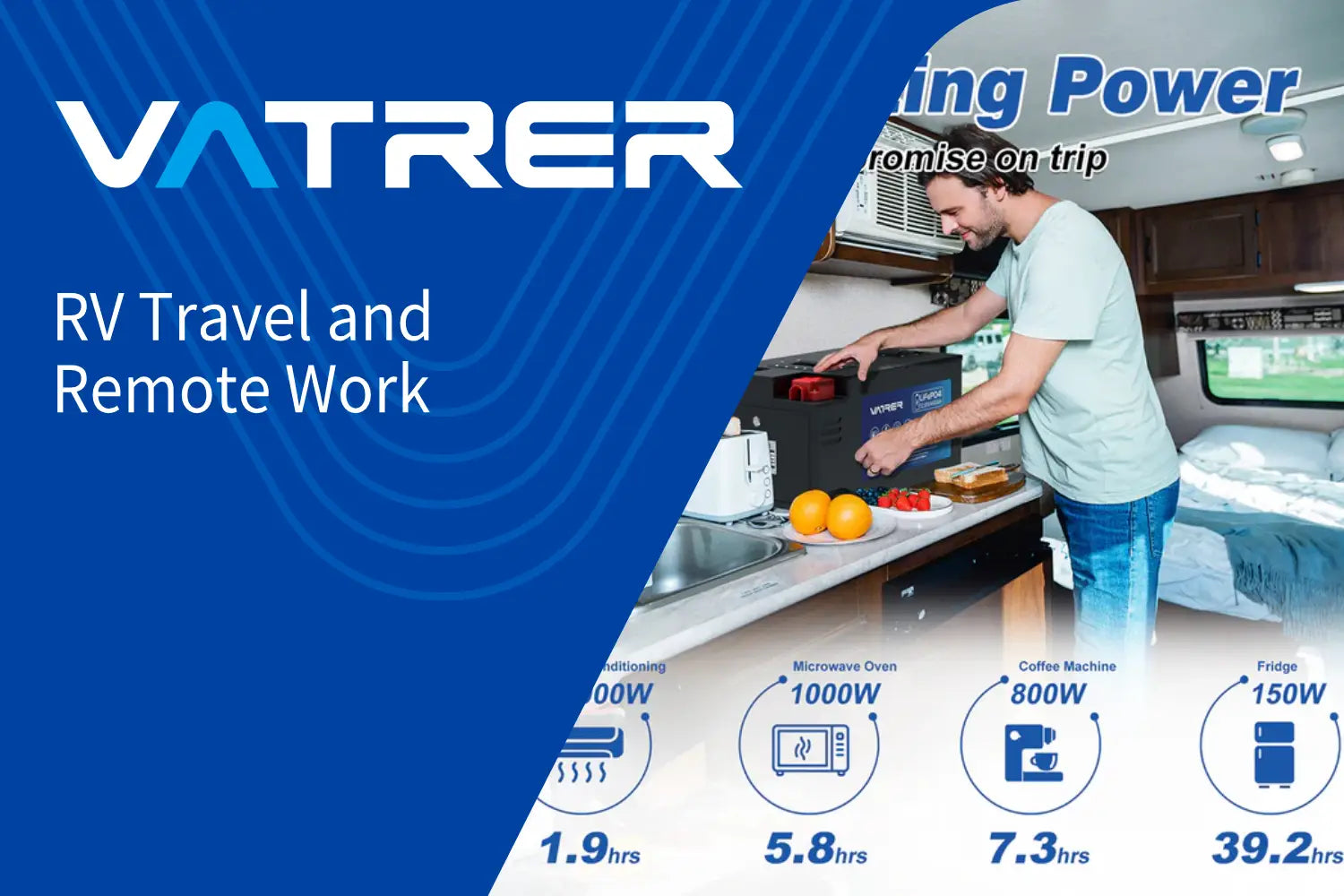
RV Travel and Remote Work

Blog

RV Travel and Remote Work: Establishing Your Digital Nomad Mobile Office

by XX on Apr 10 2025
Discover how to transform your RV into a functional digital nomad hub. Learn workspace design hacks, power management strategies, and productivity tips to balance work and wanderlust seamlessly.
How Long Will a 100Ah Lithium Battery Run a 12V Fridge

Blog

How Long Will a 100Ah Lithium Battery Run a 12V Fridge?

by Emma on Dec 30 2024
There's a quiet kind of comfort that comes from knowing your power setup just works. You're parked for the night, maybe deep in a campground or pulled off a quiet desert road. The sun's long gone, the air has cooled, and your 12V fridge is still humming away in the background, keeping food cold, drinks chilled, and tomorrow's plans intact. When you rely on a 100Ah lithium battery to power a 12V fridge, you're not just thinking about numbers on a spec sheet. You're thinking about peace of mind. You want to know that the fridge won't quit halfway through the night, that you won't wake up to spoiled food, and that your setup can handle real life, not just ideal conditions. How Long Will a 100Ah Lithium Battery Run a 12V Fridge? In most real situations, a 100Ah lithium battery can run a 12V fridge anywhere from about 1.5 to 3 days on a single charge. This range reflects the actual power consumption of these refrigerators during daily use. A 12V fridge doesn't pull power nonstop. Its compressor cycles on and off throughout the day, which means average energy consumption is far lower than the peak wattage printed in the manual. Lithium batteries also help here, because most of their rated capacity is actually usable without damaging the battery. Still, runtime changes noticeably depending on how the fridge is set up and used. Temperature settings, ambient heat, and how often the lid is opened all influence the final result. Estimated Runtime Under Different Conditions Usage Scenario Avg. Daily Fridge Consumption Estimated Runtime (100Ah Lithium) Mild climate, efficient use ~350 Wh/day ~3 days Moderate climate, normal use ~450 Wh/day ~2 – 2.5 days Hot climate, frequent opening ~600 Wh/day ~1.5 – 2 days Large fridge, heavy use ~700 Wh/day ~1 – 1.7 days A 100Ah lithium battery comfortably supports overnight and multi-day fridge use in most scenarios. As conditions become more demanding, higher heat, larger fridges, heavier use, runtime shortens, but it remains predictable and manageable with proper planning. Understanding a 100Ah Lithium Battery Capacity for a 12V Fridge Seeing “100Ah” on a battery label can feel abstract, so it helps to translate it into usable energy. At 12 volts, a 100Ah lithium battery stores roughly 1,280 watt-hours (Wh) of energy. What makes lithium especially suitable for running a 12V fridge is how much of that energy you can actually use. Unlike lead-acid batteries, which typically limit usable capacity to around 50%, lithium batteries safely deliver 80-100% of their rated capacity without shortening lifespan. That usable energy directly translates into longer, more stable fridge operation. Voltage stays consistent throughout the discharge cycle, so the fridge doesn't struggle or shut down early as the battery level drops. How Much Power Does a 12V Fridge Use Per Day? Most modern 12V fridges are designed for efficiency. While the compressor may draw 40-60 watts when running, it only runs part of the time. Over a full day, total energy use usually falls between 300 and 600Wh, depending on size and conditions. Smaller fridges designed for solo travelers or weekend trips tend to stay on the lower end. Larger fridges or units working in hot environments draw more energy because the compressor cycles more often to maintain temperature. Understanding daily energy use, not momentary power draw is key to estimating how long a battery will last. Typical 12V Fridge Power Consumption Fridge Size Average Daily Energy Use Typical Use Case 30 – 40L 300 – 400 Wh/day Solo travel, weekend trips 45 – 60L 400 – 500 Wh/day Van life, small families 70 – 80L 500 – 600 Wh/day Long trips, high food volume Most portable 12V fridges fall well within the energy budget of a 100Ah lithium battery for at least a full day, and often longer. The real difference comes from how hard the fridge has to work, not just its size. How to Calculate How Long a 100Ah Lithium Battery Will Run a 12V Fridge If you've never done battery calculations before, don't worry, just follow the method below step by step, and you'll be able to get results that are relevant to your own use. Step 1: Define the Battery You're Using For this example, let's assume you're using a 12V 100Ah lithium battery, which is the most common setup for RVs, vans, and portable power systems. Typical specs look like this: Battery type: Lithium (LiFePO4) Rated capacity: 100Ah Nominal voltage: 12.8V Usable capacity: 90-100% (common for lithium) To calculate usable energy, we convert amp-hours (Ah) into watt-hours (Wh): 100Ah × 12.8V = 1,280Wh This number represents the total energy budget your fridge can draw from. Step 2: Estimate How Much Energy Your 12V Fridge Uses Per Day Next, we need to understand the fridge, not its peak wattage, but how much energy it actually consumes over time. Most 12V compressor fridges: Draw 40-60W when the compressor is running Run only part of the time (they cycle on and off) In normal conditions, daily energy use typically falls into this range: Efficient use / mild weather: 350-400Wh per day Average use / mixed conditions: 450-500Wh per day Hot weather / frequent opening: 550-600Wh per day Let's assume your fridge uses 450Wh per day (mid-size 12V fridge). Step 3: Divide Battery Energy by Daily Fridge Consumption We take the usable battery energy and divide it by the fridge's daily energy use: 1,280Wh ÷ 450Wh/day ≈ 2.8 days That means, under these assumptions, a 100Ah lithium battery can run your 12V fridge for about 2 to 3 days on a single charge. If your fridge uses more energy, say 600Wh per day, the calculation looks like this: 1,280Wh ÷ 450Wh/day ≈ 2.8 days Same battery, different usage pattern, slightly shorter runtime. Step 4: Adjust for Real Conditions The calculation above gives you a solid baseline, but real life always adds a few variables. You may want to adjust your expectations if: The weather is consistently hot The fridge is opened often Other devices share the same battery The battery is not fully charged at the start As a rule of thumb: Plan for 10-20% less runtime than the math suggests if conditions are demanding Use the full calculated value only in mild, efficient setups This small buffer helps avoid surprises and makes your power planning much more reliable. Factors That Affect How Long a 100Ah Lithium Battery Runs a 12V Fridge Several real factors explain why two people with similar setups may see different results. Fridge Power Consumption: Larger fridges and lower temperature settings increase compressor runtime, which raises daily energy use. Battery Efficiency and Quality: High-quality lithium batteries deliver stable voltage and high usable capacity, ensuring more of the stored energy actually reaches the fridge. Ambient Temperature: Hot environments force the fridge to work harder, increasing energy draw. Cooler surroundings naturally extend runtime. Usage Habits: Frequent door openings, adding warm food, or poor ventilation all shorten runtime, even with the same battery. Understanding these factors helps you predict runtime more accurately and avoid surprises. So, Is a 100Ah Lithium Battery Enough to Run a 12V Fridge? For many setups, yes. A 100Ah lithium battery easily handles overnight use and often supports two or more days of fridge operation when conditions are reasonable. However, if you travel in consistently hot climates, run a large fridge, or power multiple devices from the same battery, upgrading to 200Ah or adding solar charging can provide extra breathing room. It's less about necessity and more about comfort and flexibility. Tips to Make a 100Ah Lithium Battery Run a 12V Fridge Longer Small adjustments can noticeably improve runtime. Keeping the fridge shaded and well-ventilated reduces compressor workload. Setting practical temperature targets instead of extreme cold also saves energy. Managing the rest of your electrical system matters too. Turning off unused devices, charging electronics during daylight hours, and pairing your battery with solar input can significantly extend usable time, especially with lithium batteries that accept partial recharging efficiently. Practical Ways to Extend Fridge Runtime Tip Why It Helps Real Impact Pre-chill food Less compressor runtime Noticeable energy savings Limit door openings Maintains internal temperature Longer daily runtime Add solar charging Replaces daily energy use Potentially unlimited runtime Use lithium batteries Higher usable capacity More predictable performance Runtime isn't fixed. Thoughtful use and small system improvements can stretch a 100Ah lithium battery much further than expected. Conclusion A 100Ah lithium battery is a dependable power source for running a 12V fridge, typically providing 1.5 to 3 days of real-world runtime depending on conditions and usage. The most reliable approach isn't memorizing a single number, but understanding how battery capacity, fridge efficiency, and daily habits work together. Once you understand that relationship, power planning becomes far less stressful. You know what to expect, how to adjust, and when it makes sense to expand your system for extra comfort. Vatrer high-quality lithium batteries support 100% capacity utilization and feature a powerful built-in BMS and low-temperature protection. Whether you're powering your refrigerator on the road, at a campsite, or in an off-grid environment, choosing Vatrer lithium batteries ensures stable performance and longer runtime, allowing you to use your power system with peace of mind wherever you are.
Battery Disconnect Switch on a Camper: An Informative Guide

Blog

Battery Disconnect Switch on a Camper: An Informative Guide

by VatrerZachary on Dec 13 2024
A battery disconnect switch is an essential component of an RV's electrical system, offering numerous benefits such as preventing battery drain, enhancing safety, and facilitating maintenance. 
Charging Methods for RV House Batteries

Blog

Charging Methods for RV House Batteries

by VatrerZachary on Dec 13 2024
This paper explores five different methods to charge your RV house battery, providing a comprehensive guide to help you choose the best option for your needs.
Does Camper Battery Charge When I Am Plugged In 30amp?

Blog

Does Camper Battery Charge When I Am Plugged In 30amp?

by VatrerZachary on Nov 20 2024
1
This paper aims to provide a comprehensive guide on charging camper batteries using 30 amp power, exploring the mechanisms involved, factors affecting efficiency, and potential troubleshooting methods.
How to Charge a Camper Battery While Driving?

Blog

How to Charge a Camper Battery While Driving?

by VatrerZachary on Nov 20 2024
Charging a camper battery while driving is a practical solution for maintaining power on the go. By understanding the different methods available—such as using the vehicle's alternator, DC to DC chargers, and 7-pin trailer connections—you can choose the best option for your needs. 
[Buying Guide] Should I Buy Lithium Batteries on Black Friday?

Blog

[Buying Guide] Should I Buy Lithium Batteries on Black Friday?

by VatrerZachary on Nov 13 2024
Black Friday presents an excellent opportunity to purchase lithium batteries at discounted prices. Understanding the different types of lithium batteries and their advantages over traditional options is crucial in making an informed decision. Evaluating your personal or business needs, considering long-term cost-effectiveness, and factoring in environmental considerations are essential steps in the buying process.
Wire Gauge Selection for Parallel Battery Connections

Blog

Wire Gauge Selection for Parallel Battery Connections

by VatrerZachary on Nov 11 2024
For most applications involving 12 100Ah batteries in parallel, a 2 AWG wire is recommended to ensure safe and efficient operation. However, specific requirements may necessitate adjustments, so always consult wire gauge charts and consider the unique aspects of your system.
Camper Battery Charging on 30 Amp Power

Blog

Camper Battery Charging on 30 Amp Power

by VatrerZachary on Nov 06 2024
Camper battery charging is a critical aspect of maintaining the functionality and reliability of recreational vehicles (RVs). Understanding how your camper battery charges, especially when connected to a 30 amp power source, is essential for ensuring that your vehicle's electrical systems operate smoothly.