Golf Cart Battery Prices Explained: Lead-Acid vs Lithium Battery Costs

Blog

Golf Cart Battery Prices Explained: Lead-Acid vs Lithium Battery Costs

by XX on Apr 20 2025
How much do golf cart batteries cost? The honest answer is: it depends on what kind of battery you buy, how many your cart needs, and whether you are replacing a basic lead-acid pack or upgrading to lithium. For most golf cart owners in the U.S., a full battery replacement can run anywhere from $800 to $1,500 for flooded lead-acid, around $1,200 to $2,000 for AGM, and roughly $1,500 to $5,000+ for lithium. That is a big range, but once you look at lifespan, maintenance, charging speed, weight, and replacement cycles, the cheapest battery at checkout is not always the cheapest battery to own. This guide breaks down real golf cart battery costs in plain English, so you can decide whether lead-acid still makes sense or if lithium is the better long-term move. Quick Price Snapshot: What Golf Cart Batteries Cost Battery Type Typical Full Pack Cost Typical Lifespan Best For Flooded Lead-Acid $800–$1,500 3–5 years with good care Lowest upfront cost AGM Lead-Acid $1,200–$2,000 4–6 years Maintenance-free lead-acid option Gel Battery $1,200–$2,500 4–7 years Specific low-maintenance applications LiFePO4 Lithium $1,500–$5,000+ 8–10+ years Long-term value, range, performance Prices vary by voltage, amp-hour capacity, brand, cart model, charger requirements, and installation. A 36V cart usually costs less to convert than a 48V or 72V cart, and a high-capacity lithium pack costs more than a basic short-range pack. Flooded Lead-Acid Batteries: Cheapest Up Front Flooded lead-acid batteries are the old-school golf cart battery. They are common, easy to find, and usually the cheapest option when you just want to get your cart running again. A typical flooded lead-acid battery may cost around $100 to $250 each, depending on brand, voltage, and capacity. Since most golf carts need a set of multiple batteries, the full replacement cost is usually around $800 to $1,500. The catch is maintenance. Flooded batteries need water checks, clean terminals, proper charging, and regular care. If you ignore them, they can lose capacity quickly. They are also heavy, and performance drops as the pack discharges. AGM Batteries: Less Maintenance, Higher Price AGM batteries are still lead-acid batteries, but they are sealed and do not need watering. That makes them easier to live with than flooded batteries. For a full golf cart pack, AGM batteries usually cost around $1,200 to $2,000. They are cleaner and more convenient than flooded lead-acid, but they are still heavy and do not offer the same long cycle life or usable capacity as lithium. AGM can make sense if you want to avoid watering but are not ready to pay for lithium. Just do not expect lithium-level range, weight savings, or cycle life. Gel Batteries: Good in Some Cases, But Picky Gel batteries are another sealed lead-acid option. They are low maintenance and can perform well when charged correctly. However, they are sensitive to charging settings, so using the wrong charger can shorten their life. A full gel setup may cost around $1,200 to $2,500. For most golf cart owners, AGM or lithium is usually the more common choice, but gel batteries may still work in certain setups where spill resistance and low maintenance matter. Lithium Golf Cart Batteries: Higher Price, Better Long-Term Value Lithium batteries cost more at the start, but they are the main upgrade for owners who want better performance and fewer battery headaches. A full LiFePO4 golf cart battery setup usually costs around $1,500 to $5,000+, depending on voltage, amp-hour rating, kit design, charger, display, Bluetooth or app monitoring, and brand. Vatrer Power offers lithium golf cart battery options in 36V, 48V, and 72V, with LiFePO4 designs built for long cycle life, strong discharge output, and low maintenance. The biggest lithium benefits are simple: less weight, faster charging, no watering, steadier power, longer range, and far more cycles than lead-acid. Lithium vs Lead-Acid: Which Costs Less Over Time? If you only compare the receipt on day one, lead-acid usually wins. If you compare the cost over 8 to 10 years, lithium often looks much better. Battery Type Estimated First Cost Possible Replacements Over 10 Years Maintenance Cost Estimated 10-Year Cost Flooded Lead-Acid $1,200 $1,200–$2,400 $200–$600 $2,600–$4,200 AGM Lead-Acid $1,600 $1,600–$3,200 $0–$200 $3,200–$5,000 LiFePO4 Lithium $2,000–$4,000 Often $0 Usually $0 $2,000–$4,000 These are estimates, not guaranteed numbers. But the point is clear: lithium costs more upfront, while lead-acid can cost more through replacement, maintenance, and lost performance. Why Lithium Often Feels Cheaper After You Own It Lithium batteries do not just last longer. They also give you more usable power. Lead-acid batteries should not be deeply discharged too often if you want them to last. Lithium batteries can typically use more of their rated capacity without the same level of wear. That means a lithium pack with the same rated capacity may deliver more real-world driving range. It also holds voltage better, so your cart does not feel as sluggish when the battery gets lower. What Makes One Golf Cart Battery More Expensive Than Another? Voltage: A 72V setup usually costs more than a 36V setup. Capacity: More amp-hours usually means more range and a higher price. Battery chemistry: Lithium costs more upfront than lead-acid. Brand quality: Better cells, stronger BMS protection, and warranty support usually cost more. Kit features: Chargers, LCD screens, Bluetooth, mobile app monitoring, and cables can affect price. Cart condition: Old cables, worn connectors, or charger upgrades can add cost. Hidden Costs to Watch For The battery price is not always the final price. Before buying, think about these extra costs: Installation: A shop may charge around $150 to $600 or more depending on the cart and conversion work. Charger: Lithium batteries need a lithium-compatible charger. Cables and connectors: Old lead-acid cables may need replacing. Battery meter: Lithium may require a different state-of-charge meter. Recycling or core fees: Lead-acid batteries may include deposits, recycling fees, or disposal costs. Voltage reducer: Accessories like lights, radios, or USB ports may need proper 12V power management. Battery Costs by Golf Cart Voltage Cart Voltage Lead-Acid Cost Range Lithium Cost Range Notes 36V $600–$1,200 $1,200–$2,500+ Common on older carts 48V $800–$1,500 $1,500–$4,000+ Most common modern upgrade range 72V $1,500–$2,500+ $2,500–$5,000+ Higher performance carts and heavier use Not Just Golf Carts: RVs, Solar, and Boats Face the Same Choice The lead-acid vs lithium decision is not only for golf carts. The same question shows up in RVs, trolling motor boats, off-grid solar systems, and backup power setups. Lead-acid is attractive when the budget is tight. Lithium is usually better when you care about long-term use, lower weight, faster charging, and less maintenance. That is why many RV owners, solar users, and boaters are making the same switch golf cart owners are making. Which Golf Cart Battery Should You Buy? If you only need the lowest upfront cost, flooded lead-acid is still the cheapest way to get moving. Just be ready for maintenance, weight, and future replacement. If you want less maintenance but still want a familiar battery type, AGM can work. It costs more than flooded lead-acid but removes the watering routine. If you want the best long-term value, better range, lighter weight, and stronger performance, LiFePO4 lithium is usually the smarter buy. Feature LiFePO4 Lithium Lead-Acid Upfront price Higher Lower Weight Much lighter Heavy Charging speed Faster Slower Maintenance Very low Regular care needed Cycle life Much longer Shorter Driving performance More consistent Fades as voltage drops How to Get the Best Deal Buy a complete kit: A battery kit with charger, cables, display, or app support can save hassle. Match the battery to your cart: Do not overpay for more voltage or capacity than you need. Check warranty and support: A cheap battery with no support can become expensive fast. Shop seasonal sales: Spring, summer, holiday, and year-end deals can reduce the cost. Measure before buying: Make sure the battery fits your tray before placing the order. FAQ How much does it cost to replace golf cart batteries? Most full replacements cost around $800 to $1,500 for flooded lead-acid, $1,200 to $2,000 for AGM, and $1,500 to $5,000+ for lithium, depending on voltage, capacity, brand, and installation. Are lithium golf cart batteries worth the extra money? For frequent use, usually yes. Lithium batteries cost more upfront, but they last longer, charge faster, weigh less, and need far less maintenance. Can I buy cheap golf cart batteries online? You can, but be careful. Very cheap lithium batteries may have weak BMS protection, poor cells, no real warranty, or limited support. For golf carts, battery safety and current output matter. Do I need a new charger when switching to lithium? Usually yes. Lithium batteries need a lithium-compatible charging profile. Some kits include the correct charger, which makes the upgrade easier. What if I live in a cold state like Michigan or Minnesota? Cold weather can affect battery performance and charging. If your cart is used or stored in cold conditions, consider lithium batteries with low-temperature protection or self-heating features. Final Thoughts Golf cart battery prices can feel confusing because the cheapest option upfront is not always the cheapest option over time. Lead-acid batteries are affordable and familiar, but they are heavy, require maintenance, and need replacing sooner. Lithium batteries cost more at checkout, but they offer longer life, lighter weight, faster charging, better range, and lower maintenance. If your golf cart is used often, lithium is usually the better long-term investment. If your cart is used lightly and budget matters most, lead-acid can still get the job done. The best choice depends on how you drive, how long you plan to keep the cart, and whether you want to save money today or reduce costs over the next several years.
Complete Explanation of Parameter Names for Energy Storage Batteries

Blog

Complete Explanation of Parameter Names for Energy Storage Batteries

by VatrerZachary on Jan 16 2025
This article provides a comprehensive guide to understanding energy storage batteries and their parameters, offering valuable insights for both consumers and industry professionals.
What Should My Golf Cart Charger Read When Fully Charged

Blog

What Should My Golf Cart Charger Read When Fully Charged

by VatrerZachary on Jan 15 2025
When a golf cart is fully charged, the charger should normally stop delivering high current, switch to a green or “complete” indicator, and either shut off or enter a low-current maintenance mode. The exact voltage you see depends on whether the cart uses lead-acid or lithium batteries and whether you are measuring the charger while it is operating or the battery pack after it has rested. For a fully charged lead-acid pack that has rested after charging, a 36V golf cart commonly reads around 38.2V, while a 48V pack commonly reads around 50.9V. During active charging, however, the charger voltage will be considerably higher. A lithium system uses different values again, so the battery label and charger specifications should always take priority over a generic voltage chart. Golf cart batteries also need to be checked under the right conditions. A reading taken immediately after unplugging the charger may be temporarily elevated by surface charge and may not represent the battery’s true resting voltage. What Should a Golf Cart Charger Show When Charging Is Complete? Most chargers indicate a completed charge in one or more of the following ways: The charging light changes from red or orange to green. The display shows “Full,” “Complete,” or 100%. Charging current drops close to zero. The charger fan slows down or stops. The charger relay clicks and the unit shuts off. A lead-acid charger enters a low-current float or maintenance stage. Do not judge the state of charge from voltage alone while the charger is still connected. The charger intentionally raises battery voltage above the pack’s normal resting voltage to push energy into the cells. A better check is to confirm that the charger completed its cycle, disconnect it, allow the batteries to rest, and then measure pack voltage with a multimeter. Charger Voltage vs. Resting Battery Voltage These two readings answer different questions: Charger output voltage shows the voltage being applied while the battery is charging. Resting pack voltage shows the battery’s approximate state of charge after the charger has been disconnected and the battery has rested. During the final charging stage, a lead-acid charger may be several volts above the pack’s nominal rating. That does not automatically mean the charger is overcharging the batteries. For the most meaningful resting reading, wait at least several hours after charging. An overnight rest gives an even clearer result. Avoid driving the cart or switching on accessories during this period. Typical Full-Charge Readings by Battery Type The following figures are general reference points. Charger programming, battery manufacturer, temperature, battery age, and BMS settings can all affect the actual readings. Battery system Typical voltage near the end of charging Typical full resting voltage 36V flooded or AGM lead-acid Approximately 42V to 45V Approximately 38.2V to 38.4V 48V flooded or AGM lead-acid Approximately 56V to 60V Approximately 50.9V to 51.5V 36V-class LiFePO4, commonly 38.4V nominal Up to approximately 43.8V Often slightly below 43.8V after resting 48V-class LiFePO4, commonly 51.2V nominal Up to approximately 58.4V Often approximately 56V to 58V after resting Some lithium batteries are intentionally charged below the theoretical maximum cell voltage to improve service life. For that reason, a 51.2V LiFePO4 battery does not always need to reach exactly 58.4V before the charger reports a completed cycle. What Should a Fully Charged 36V Golf Cart Read? 36V Lead-Acid Battery Pack A traditional 36V golf cart usually uses six 6V lead-acid batteries connected in series. After a complete charge and an adequate resting period, the total pack will commonly read: Approximately 38.2V to 38.4V Each 6V battery should generally measure around 6.3V to 6.4V when fully charged and rested. While the charger is actively completing its cycle, the pack voltage may rise into the low-to-mid 40V range. The exact value depends on the charger’s absorption profile, temperature compensation, and battery design. 36V-Class Lithium Battery Pack Many lithium batteries sold for 36V golf carts are actually 38.4V nominal LiFePO4 systems made from 12 cells in series. The theoretical full-charge voltage is: 12 cells × 3.65V = 43.8V The charger may finish slightly below this value, depending on its programmed charging profile and the battery management system. What Should a Fully Charged 48V Golf Cart Read? 48V Lead-Acid Battery Pack A 48V lead-acid golf cart may use eight 6V batteries, six 8V batteries, or four 12V batteries. Regardless of the arrangement, a healthy fully charged pack will commonly rest at: Approximately 50.9V to 51.5V During active charging, pack voltage may temporarily reach the upper 50V range. Some charger profiles may approach 60V during equalization or the final charging stage. Do not assume that a resting reading of 58V or 59V is normal for a lead-acid pack. That type of voltage is normally associated with active charging, not a battery that has been disconnected and allowed to rest. 48V-Class Lithium Battery Pack Most modern lithium conversions use a 51.2V nominal LiFePO4 battery made from 16 cells in series. The maximum full-charge voltage is commonly: 16 cells × 3.65V = 58.4V After charging stops, the pack may settle below 58.4V. A resting reading in the upper 50V range can still indicate a full or nearly full battery. Because LiFePO4 voltage remains fairly flat through much of the discharge cycle, voltage alone is not the best way to estimate remaining range. A BMS-connected display, shunt monitor, or Bluetooth app can provide a more useful state-of-charge estimate. What Should the Charger Amperage Read at Full Charge? Charging current is usually high during the early part of the cycle and gradually decreases as the battery approaches full charge. At the end of charging: A lithium charger will often reduce current to a very low level and then shut off. A modern automatic lead-acid charger may stop completely or enter a low-current float stage. An older lead-acid charger may continue supplying a small finishing current for a limited period. A digital charger may show 0A, less than 1A, or a small maintenance current when charging is complete. The exact value depends on the charger design. If the charger continues delivering close to its maximum current for many hours without completing the cycle, the batteries may be deeply discharged, unbalanced, damaged, or connected to an incompatible charger. How to Read Golf Cart Charger Lights Indicator colours are not standardized across every charger. Always check the label or owner’s manual for the specific model. Common indicator Typical meaning Solid red or orange Charging is in progress Flashing red Possible connection, temperature, voltage, or battery fault Yellow Battery is partly charged or charger is in an intermediate stage Solid green Charge is complete or charger is in maintenance mode Flashing green Near full, balancing, or maintenance mode on some chargers No light No AC power, no battery connection, blown fuse, charger asleep, or failed charger Never assume that green automatically proves the batteries are healthy. A charger may stop because it detected voltage quickly, even when an aged battery has very little usable capacity left. How to Check the Battery Pack With a Multimeter Use a properly rated digital multimeter and follow basic electrical safety procedures. Park the cart, switch it off, and set the direction selector to neutral. Allow the charger to complete its cycle. Disconnect the charger from AC power and the cart. Let the battery pack rest for several hours. Set the meter to DC voltage above the expected pack voltage. Place the red probe on the pack’s main positive terminal. Place the black probe on the pack’s main negative terminal. Record the total voltage. For lead-acid banks, measure each battery separately and compare the readings. Use insulated tools and avoid allowing a metal object to bridge battery terminals. Golf cart battery banks can deliver extremely high short-circuit current. Why a Charger May Show Full but the Cart Still Has Poor Range A completed charger cycle does not guarantee that the battery has full usable capacity. Possible causes include: One weak battery in a series-connected lead-acid bank Sulfated lead-acid plates Low electrolyte level A lithium battery with an inaccurate SOC estimate Cell imbalance Loose or corroded cables A high-resistance connection Battery capacity loss caused by age Low tire pressure or dragging brakes Cold weather reducing usable capacity A weak battery may reach charging voltage quickly because it has lost capacity. The charger then sees the expected voltage and ends the cycle, but the cart runs out of energy much sooner than normal. Why the Charger Never Turns Green If charging continues for an unusually long time, check the following: Confirm that the charger matches the pack voltage and chemistry. Inspect the charging receptacle and plug. Check battery cable connections. Look for corrosion or heat-damaged terminals. Verify electrolyte levels in flooded lead-acid batteries. Measure each battery for a weak unit. Check whether the charger fan and relay operate normally. Confirm that the lithium BMS has not disabled charging. Check battery temperature. A lithium battery may block charging when it is too cold, too hot, deeply discharged, or experiencing a cell-level fault. The charger may appear defective even though the BMS is intentionally preventing current flow. Charging Habits That Help Batteries Last Longer For Lead-Acid Batteries Recharge after normal use instead of leaving the pack partly discharged. Check flooded-battery water levels regularly. Add distilled water only. Do not overfill the cells before charging. Clean and tighten cable connections. Use the charger profile specified for the battery type. Avoid repeatedly interrupting the charge cycle. For Lithium Batteries Use a charger approved for the battery voltage and chemistry. Do not charge below the battery’s low-temperature limit. Follow the manufacturer’s storage-state recommendation. Do not assume an old lead-acid charger is lithium compatible. Check BMS warnings when charging unexpectedly stops. Allow occasional full charging when required for SOC calibration or balancing. Frequently Asked Questions Should a 48V charger show exactly 48V when the battery is full? No. A 48V lead-acid charger normally applies considerably more than 48V while charging. A 48V-class LiFePO4 charger may reach approximately 58.4V. The correct value depends on battery chemistry. Is 51V fully charged for a 48V golf cart? For a rested 48V lead-acid pack, approximately 50.9V to 51.5V commonly indicates a full charge. For a 51.2V lithium battery, 51V would not normally represent a full charge. Is 38V fully charged for a 36V golf cart? A rested 36V lead-acid battery pack commonly reads around 38.2V when fully charged. A 36V-class lithium pack uses a different voltage range. Should the charger read zero amps when finished? Many automatic chargers drop to zero or nearly zero current when charging is complete. Some lead-acid chargers maintain a small float current. How long should I wait before checking battery voltage? Wait at least several hours after disconnecting the charger. An overnight rest provides a more stable reading. Why does battery voltage drop immediately after unplugging the charger? This is usually the normal disappearance of surface charge. The pack voltage settles toward its true resting level after charging stops. Conclusion A fully charged golf cart charger should normally show a completed status, reduced charging current, and a voltage appropriate for the battery chemistry. A rested 36V lead-acid pack commonly measures around 38.2V, while a rested 48V lead-acid pack commonly measures around 50.9V to 51.5V. Lithium batteries use higher full-charge voltages. A 38.4V nominal LiFePO4 battery may charge to approximately 43.8V, while a 51.2V battery may charge to approximately 58.4V. The most reliable diagnosis combines charger status, charging current, resting pack voltage, individual battery readings, and real-world runtime. When those results do not agree, investigate the charger, connections, BMS, and battery condition rather than relying on a single number.
How Often Should You Charge 48 Volt Golf Cart Batteries?

Blog

How Often Should You Charge 48 Volt Golf Cart Batteries?

by VatrerZachary on Jan 14 2025
Introduction A 48-volt golf cart battery system is one of the most common power setups for modern electric golf carts in the United States. It offers a practical balance of hill-climbing ability, driving range, and efficiency, which is why it is widely used on golf courses, gated communities, RV resorts, college campuses, farms, and private properties. How often should you charge 48 volt golf cart batteries? For most owners, the best rule is to charge after each use, especially if the cart uses lead-acid batteries. Lithium batteries are more flexible, but they still perform best when they are kept within a healthy state of charge and not repeatedly drained too low. The right charging schedule depends on battery chemistry, how often the cart is driven, driving distance, terrain, weather, charger type, and battery age. Understanding these factors helps prevent poor range, weak acceleration, sulfation, premature battery failure, and unnecessary replacement costs. Types of 48V Golf Cart Batteries Lead-Acid Batteries Lead-acid batteries are the traditional option for 48V golf carts. Many U.S. golf carts still use flooded lead-acid battery packs because they are affordable, widely available, and familiar to service shops. However, they require regular maintenance, including proper charging, water level checks, terminal cleaning, and ventilation during charging. Lead-acid batteries do not like being left partially discharged. If they sit too long without a full recharge, sulfation can form on the battery plates and reduce capacity. For this reason, lead-acid 48V golf cart batteries should usually be charged after every use, even if the cart was only driven for a short trip around the neighborhood or course. Lithium Batteries Lithium golf cart batteries, especially LiFePO4 batteries, are becoming increasingly popular because they are lighter, charge faster, deliver steady voltage, and require much less maintenance. They are also more tolerant of partial charging than lead-acid batteries. That does not mean lithium batteries should be ignored. A 48V lithium golf cart battery should still be charged before it gets too low, and it should be paired with a charger designed for lithium chemistry. Most lithium battery packs include a battery management system, or BMS, that helps protect against overcharge, over-discharge, and temperature-related issues. How Often Should You Charge 48 Volt Golf Cart Batteries? General Charging Rule For most 48V golf carts, charge the batteries after each use. This is especially important for lead-acid battery packs because they last longer when kept fully charged and protected from deep discharge. For lithium batteries, charging after every light use is not always necessary, but it is still smart to recharge before the battery drops too low. Many lithium owners plug in when the battery reaches around 20% to 40% remaining, or after a full day of use. Usage Level Lead-Acid 48V Batteries Lithium 48V Batteries Light use Charge after use or at least every 1-2 weeks. Charge every 2-4 weeks or before charge gets low. Weekly golf or neighborhood use Charge after each outing. Charge after heavier use or when capacity drops near 20%-40%. Daily use Charge every day after use. Charge every 1-3 days depending on distance and load. Fleet or course use Charge after every shift or at the end of each day. Charge as needed, usually daily during heavy operation. Storage Fully charge before storage and recharge every 30-60 days. Store at the recommended state of charge and check every 2-3 months. Factors That Change Charging Frequency Driving distance: Longer rides require more frequent charging. Terrain: Hills, rough ground, and soft turf increase energy demand. Passenger and cargo weight: Heavier loads drain batteries faster. Battery age: Older batteries lose capacity and may need charging more often. Weather: Hot summers and cold winters can affect charging efficiency and usable capacity. Accessories: Lights, sound systems, fans, GPS units, and USB chargers add extra battery draw. Best Practices for Charging 48V Golf Cart Batteries Charge After Each Use If your cart uses lead-acid batteries, charging after every use is one of the best habits you can develop. Even short drives remove energy from the battery pack, and allowing the pack to sit partially discharged can shorten its lifespan. For lithium batteries, you have more flexibility, but regular charging still helps keep the cart ready. If the cart is used for daily errands, golf rounds, campground driving, or property maintenance, plug it in before the battery gets too low. Avoid Deep Discharge Deep discharge is one of the fastest ways to reduce battery life. Lead-acid batteries are especially vulnerable when they are repeatedly drained too far. Lithium batteries handle deeper discharge better, but regularly running them to zero is still not recommended. A good practical rule is to avoid running a lead-acid pack below about 50% state of charge whenever possible. For lithium batteries, avoid waiting until the battery shuts down before recharging. Use the Correct 48V Charger Always use a charger that matches your golf cart battery voltage and battery chemistry. A charger designed for lead-acid batteries may not be suitable for lithium batteries unless the manufacturer specifically approves it. Smart chargers are useful because they can stop or reduce charging when the battery is full. This helps reduce overcharging risk, heat buildup, and unnecessary battery stress. Maintenance Tips for Longer Battery Life Inspect and Clean Battery Connections Loose or corroded battery terminals can cause poor charging, reduced power, and heat buildup. Check cables and terminals regularly, especially if the cart is used in humid, coastal, dusty, or high-vibration environments. Water Flooded Lead-Acid Batteries Correctly If your 48V cart uses flooded lead-acid batteries, check electrolyte levels regularly. Use only distilled water, and add water after charging unless the plates are exposed. Do not overfill, because electrolyte can expand during charging. Store Batteries Properly For seasonal storage, fully charge lead-acid batteries before parking the cart and check the charge periodically. Lithium batteries should be stored according to the manufacturer’s recommended state of charge, often not completely full and not empty. How Charging Habits Affect Battery Life Overcharging and Undercharging Overcharging lead-acid batteries can cause excessive gassing, heat, water loss, and plate damage. Undercharging can cause sulfation and capacity loss. Both problems reduce performance and shorten battery life. Lithium batteries are less maintenance-heavy, but they still need the correct charger. A compatible lithium charger helps protect the battery pack and allows the BMS to manage charging safely. Expected Battery Lifespan With proper care, lead-acid golf cart batteries often last several years, while quality lithium batteries can last much longer. Real-world lifespan depends on use, charging habits, storage, temperature, charger quality, and how deeply the batteries are discharged. Conclusion Most 48V golf cart batteries should be charged after each use, especially if they are lead-acid. Lithium batteries offer more charging flexibility, but they should still be charged before they get too low and always with a compatible charger. For U.S. golf cart owners, the best approach is simple: charge regularly, avoid deep discharge, use the right charger, inspect the battery pack, and follow the manufacturer’s recommendations. Good charging habits keep your 48V cart ready for the course, the neighborhood, the campground, or daily property use.
How Good is Your LiFePO4 Battery

Blog

How Good is Your LiFePO4 Battery

by VatrerZachary on Jan 09 2025
Introduction LiFePO4 batteries have become one of the most trusted power choices for RVs, golf carts, boats, solar storage, off-grid cabins, and home backup systems across the U.S. They are known for long cycle life, stable chemistry, high usable capacity, and lower maintenance compared with lead-acid batteries. But not every lithium battery is built the same. So the real question is: how good is your LiFePO4 battery? To answer that, you need to look beyond the label. A quality Lithium Iron Phosphate (LiFePO4) battery should deliver safe performance, reliable output, strong cycle life, a well-designed BMS, and stable operation under real-world use. Whether you are powering an RV inverter, upgrading a golf cart, or storing solar energy, these details matter. What Makes LiFePO4 Batteries Different? LiFePO4 stands for lithium iron phosphate. This battery chemistry uses lithium iron phosphate as the cathode material and typically graphite as the anode. Compared with many other lithium-ion chemistries, LiFePO4 is valued for its thermal stability, safety, long lifespan, and dependable discharge performance. In practical terms, that means a LiFePO4 battery is less likely to overheat, more tolerant of regular cycling, and better suited for deep cycle energy storage. This is why LiFePO4 has become popular in RV house batteries, golf cart battery packs, marine systems, solar banks, portable power setups, and backup power systems. Key Signs of a Good LiFePO4 Battery A strong LiFePO4 battery is not judged by voltage alone. You should evaluate the battery by capacity, discharge rating, cycle life, safety protection, efficiency, temperature performance, and how well it matches your application. Performance Factor What to Look For Why It Matters Battery chemistry True LiFePO4 cells Improves safety and cycle life Cycle life Thousands of cycles under proper use Reduces long-term replacement cost BMS protection Overcharge, over-discharge, short-circuit, temperature protection Helps prevent damage and unsafe operation Usable capacity High depth of discharge capability Provides more real energy than lead-acid Discharge rating Matches motor, inverter, or appliance demand Prevents shutdowns under load Temperature range Suitable for your climate and installation location Supports reliable year-round performance Safety: One of LiFePO4’s Biggest Strengths Safety is one of the main reasons U.S. buyers choose LiFePO4 batteries for mobile and home energy systems. The phosphate-based chemistry is more stable than many other lithium chemistries, which helps reduce the risk of overheating and thermal runaway. However, chemistry is only part of the story. A good LiFePO4 battery also needs a reliable Battery Management System. The BMS monitors battery voltage, current, temperature, and cell balance. It can shut down charging or discharging if the battery moves outside safe operating limits. Cycle Life and Long-Term Value One of the easiest ways to judge a LiFePO4 battery is by its cycle life. A cycle is one discharge and recharge. High-quality LiFePO4 batteries can often handle thousands of cycles when used within recommended limits. This is a major advantage over lead-acid batteries. A lead-acid battery may cost less upfront, but it usually offers fewer usable cycles and less usable capacity. A LiFePO4 battery can provide better long-term value because it lasts longer, charges more efficiently, and requires much less maintenance. Efficiency and Usable Capacity LiFePO4 batteries are efficient during both charging and discharging. That means more of the energy you put into the battery is available for actual use. This is especially useful in solar systems, RV setups, and golf carts where every amp-hour matters. Lead-acid batteries often should not be deeply discharged if you want decent lifespan. LiFePO4 batteries can usually provide a much higher usable percentage of their rated capacity. For example, a 100Ah LiFePO4 battery may deliver far more practical usable energy than a 100Ah lead-acid battery in everyday deep cycle use. Charge and Discharge Performance A good LiFePO4 battery should support the current your equipment demands. This is especially important for golf carts, trolling motors, RV inverters, and home backup systems. Capacity tells you how much energy the battery stores, but discharge rating tells you how much power it can deliver at one time. For example, a battery used with a large RV inverter must be able to handle high current without voltage sag or BMS shutdown. A golf cart battery must support acceleration, hills, and heavy loads. A solar storage battery must charge and discharge smoothly every day. Temperature Performance Temperature affects all batteries. LiFePO4 batteries perform well in many conditions, but they still have limits. Heat can speed up aging, while freezing temperatures can restrict charging. Some LiFePO4 batteries include low-temperature charging protection or internal heating for cold-weather use. If your battery will be used in an RV, garage, boat, shed, or outdoor battery box, check the operating and charging temperature specifications. A battery that works well in California may need additional low-temperature protection in Colorado, Michigan, or upstate New York. Common Applications for LiFePO4 Batteries RV and Camper Power LiFePO4 batteries are popular for RV house power because they are lighter, charge faster, and provide more usable capacity than lead-acid batteries. They are ideal for boondocking, solar charging, and inverter use. Golf Carts and Utility Vehicles Golf cart owners often upgrade to LiFePO4 batteries to reduce weight, improve acceleration, simplify maintenance, and increase usable runtime. The right discharge rating is essential for hills, payload, and controller demand. Solar Energy Storage LiFePO4 batteries are a strong match for solar systems because they tolerate frequent cycling and store daytime solar power for nighttime use. They are used in homes, cabins, workshops, and off-grid systems. Marine and Trolling Motor Systems Boaters value LiFePO4 batteries for lighter weight, steady voltage, and deep cycle performance. Proper waterproofing, secure mounting, and compatible charging are important in marine environments. LiFePO4 vs Other Battery Types Battery Type Strengths Limitations Best Use LiFePO4 Long life, safe chemistry, high usable capacity, low maintenance Higher upfront cost RV, solar, golf cart, marine, backup power NMC lithium-ion High energy density, compact size Less thermally stable than LiFePO4 Portable electronics, some EV systems Lead-acid Lower initial cost, widely available Heavy, shorter life, lower usable capacity Budget backup and light-duty use AGM Sealed, lower maintenance than flooded lead-acid Still heavy and lower cycle life than lithium Moderate RV and marine use Factors That Affect LiFePO4 Battery Performance Depth of Discharge Depth of discharge describes how much capacity is used before recharging. LiFePO4 batteries can typically handle deeper discharge than lead-acid batteries, but repeatedly pushing any battery to its limit can shorten lifespan. Following the manufacturer’s recommended discharge range is the best practice. Charging Practices Use a charger designed for LiFePO4 batteries. The wrong charger may undercharge, overcharge, or fail to communicate properly with the battery system. For solar setups, make sure the solar charge controller has lithium-compatible settings. Battery Sizing A battery that is too small for the load will work harder and may shut down under heavy demand. Match capacity and discharge current to your real-world use, whether that means running a golf cart motor, RV inverter, trolling motor, or solar backup system. Storage Conditions Store the battery in a dry, stable environment and follow the recommended storage state of charge. Avoid storing the battery fully discharged for long periods. The Role of the BMS The BMS is one of the most important parts of a LiFePO4 battery. It protects the cells from unsafe conditions and helps maintain balanced performance. A good BMS can monitor voltage, current, temperature, short circuits, over-discharge, overcharge, and cell balance. For high-demand applications, the BMS rating should match your equipment. A battery used for a golf cart or inverter system needs a BMS that can safely handle the required continuous and peak current. How to Extend LiFePO4 Battery Life Use a LiFePO4-compatible charger. Avoid charging below the battery’s safe temperature limit. Do not store the battery fully discharged. Keep the battery away from excessive heat. Choose the correct capacity and discharge rating for your application. Inspect terminals, cables, and connections regularly. Follow the manufacturer’s manual for charging, storage, and installation. Conclusion A good LiFePO4 battery should be safe, efficient, long-lasting, and properly matched to the job. The best battery is not simply the one with the biggest capacity number. It is the one with reliable cells, a strong BMS, suitable discharge output, good temperature protection, and a design that fits your RV, golf cart, solar, marine, or backup power system. For U.S. users who want dependable deep cycle energy storage, LiFePO4 batteries offer a strong balance of safety, lifespan, and performance. Evaluate the battery carefully before buying, and it can provide years of reliable power with far less maintenance than traditional lead-acid options.
2300 Watts to Amp Hours

Blog

Understanding the Conversion of 2300 Watts to Amp Hours

by VatrerZachary on Dec 31 2024
This paper aims to elucidate the process of converting 2300 watts, specifically for an air conditioning unit, into amp hours. This conversion is essential for applications such as off-grid living, where battery storage and energy efficiency are paramount. We will explore the fundamental concepts of power, energy, and the relationships between watts, volts, amps, and amp hours.
Can You Use a Marine Battery in an Automobile?

Blog

Can You Use a Marine Battery in an Automobile?

by VatrerZachary on Dec 30 2024
This paper explores the feasibility of using marine batteries in cars, examining the differences in design, functionality, and suitability for automotive use.
How Long Will a 100Ah Lithium Battery Run a 12V Fridge

Blog

How Long Will a 100Ah Lithium Battery Run a 12V Fridge?

by Emma on Dec 30 2024
There's a quiet kind of comfort that comes from knowing your power setup just works. You're parked for the night, maybe deep in a campground or pulled off a quiet desert road. The sun's long gone, the air has cooled, and your 12V fridge is still humming away in the background, keeping food cold, drinks chilled, and tomorrow's plans intact. When you rely on a 100Ah lithium battery to power a 12V fridge, you're not just thinking about numbers on a spec sheet. You're thinking about peace of mind. You want to know that the fridge won't quit halfway through the night, that you won't wake up to spoiled food, and that your setup can handle real life, not just ideal conditions. How Long Will a 100Ah Lithium Battery Run a 12V Fridge? In most real situations, a 100Ah lithium battery can run a 12V fridge anywhere from about 1.5 to 3 days on a single charge. This range reflects the actual power consumption of these refrigerators during daily use. A 12V fridge doesn't pull power nonstop. Its compressor cycles on and off throughout the day, which means average energy consumption is far lower than the peak wattage printed in the manual. Lithium batteries also help here, because most of their rated capacity is actually usable without damaging the battery. Still, runtime changes noticeably depending on how the fridge is set up and used. Temperature settings, ambient heat, and how often the lid is opened all influence the final result. Estimated Runtime Under Different Conditions Usage Scenario Avg. Daily Fridge Consumption Estimated Runtime (100Ah Lithium) Mild climate, efficient use ~350 Wh/day ~3 days Moderate climate, normal use ~450 Wh/day ~2 – 2.5 days Hot climate, frequent opening ~600 Wh/day ~1.5 – 2 days Large fridge, heavy use ~700 Wh/day ~1 – 1.7 days A 100Ah lithium battery comfortably supports overnight and multi-day fridge use in most scenarios. As conditions become more demanding, higher heat, larger fridges, heavier use, runtime shortens, but it remains predictable and manageable with proper planning. Understanding a 100Ah Lithium Battery Capacity for a 12V Fridge Seeing “100Ah” on a battery label can feel abstract, so it helps to translate it into usable energy. At 12 volts, a 100Ah lithium battery stores roughly 1,280 watt-hours (Wh) of energy. What makes lithium especially suitable for running a 12V fridge is how much of that energy you can actually use. Unlike lead-acid batteries, which typically limit usable capacity to around 50%, lithium batteries safely deliver 80-100% of their rated capacity without shortening lifespan. That usable energy directly translates into longer, more stable fridge operation. Voltage stays consistent throughout the discharge cycle, so the fridge doesn't struggle or shut down early as the battery level drops. How Much Power Does a 12V Fridge Use Per Day? Most modern 12V fridges are designed for efficiency. While the compressor may draw 40-60 watts when running, it only runs part of the time. Over a full day, total energy use usually falls between 300 and 600Wh, depending on size and conditions. Smaller fridges designed for solo travelers or weekend trips tend to stay on the lower end. Larger fridges or units working in hot environments draw more energy because the compressor cycles more often to maintain temperature. Understanding daily energy use, not momentary power draw is key to estimating how long a battery will last. Typical 12V Fridge Power Consumption Fridge Size Average Daily Energy Use Typical Use Case 30 – 40L 300 – 400 Wh/day Solo travel, weekend trips 45 – 60L 400 – 500 Wh/day Van life, small families 70 – 80L 500 – 600 Wh/day Long trips, high food volume Most portable 12V fridges fall well within the energy budget of a 100Ah lithium battery for at least a full day, and often longer. The real difference comes from how hard the fridge has to work, not just its size. How to Calculate How Long a 100Ah Lithium Battery Will Run a 12V Fridge If you've never done battery calculations before, don't worry, just follow the method below step by step, and you'll be able to get results that are relevant to your own use. Step 1: Define the Battery You're Using For this example, let's assume you're using a 12V 100Ah lithium battery, which is the most common setup for RVs, vans, and portable power systems. Typical specs look like this: Battery type: Lithium (LiFePO4) Rated capacity: 100Ah Nominal voltage: 12.8V Usable capacity: 90-100% (common for lithium) To calculate usable energy, we convert amp-hours (Ah) into watt-hours (Wh): 100Ah × 12.8V = 1,280Wh This number represents the total energy budget your fridge can draw from. Step 2: Estimate How Much Energy Your 12V Fridge Uses Per Day Next, we need to understand the fridge, not its peak wattage, but how much energy it actually consumes over time. Most 12V compressor fridges: Draw 40-60W when the compressor is running Run only part of the time (they cycle on and off) In normal conditions, daily energy use typically falls into this range: Efficient use / mild weather: 350-400Wh per day Average use / mixed conditions: 450-500Wh per day Hot weather / frequent opening: 550-600Wh per day Let's assume your fridge uses 450Wh per day (mid-size 12V fridge). Step 3: Divide Battery Energy by Daily Fridge Consumption We take the usable battery energy and divide it by the fridge's daily energy use: 1,280Wh ÷ 450Wh/day ≈ 2.8 days That means, under these assumptions, a 100Ah lithium battery can run your 12V fridge for about 2 to 3 days on a single charge. If your fridge uses more energy, say 600Wh per day, the calculation looks like this: 1,280Wh ÷ 450Wh/day ≈ 2.8 days Same battery, different usage pattern, slightly shorter runtime. Step 4: Adjust for Real Conditions The calculation above gives you a solid baseline, but real life always adds a few variables. You may want to adjust your expectations if: The weather is consistently hot The fridge is opened often Other devices share the same battery The battery is not fully charged at the start As a rule of thumb: Plan for 10-20% less runtime than the math suggests if conditions are demanding Use the full calculated value only in mild, efficient setups This small buffer helps avoid surprises and makes your power planning much more reliable. Factors That Affect How Long a 100Ah Lithium Battery Runs a 12V Fridge Several real factors explain why two people with similar setups may see different results. Fridge Power Consumption: Larger fridges and lower temperature settings increase compressor runtime, which raises daily energy use. Battery Efficiency and Quality: High-quality lithium batteries deliver stable voltage and high usable capacity, ensuring more of the stored energy actually reaches the fridge. Ambient Temperature: Hot environments force the fridge to work harder, increasing energy draw. Cooler surroundings naturally extend runtime. Usage Habits: Frequent door openings, adding warm food, or poor ventilation all shorten runtime, even with the same battery. Understanding these factors helps you predict runtime more accurately and avoid surprises. So, Is a 100Ah Lithium Battery Enough to Run a 12V Fridge? For many setups, yes. A 100Ah lithium battery easily handles overnight use and often supports two or more days of fridge operation when conditions are reasonable. However, if you travel in consistently hot climates, run a large fridge, or power multiple devices from the same battery, upgrading to 200Ah or adding solar charging can provide extra breathing room. It's less about necessity and more about comfort and flexibility. Tips to Make a 100Ah Lithium Battery Run a 12V Fridge Longer Small adjustments can noticeably improve runtime. Keeping the fridge shaded and well-ventilated reduces compressor workload. Setting practical temperature targets instead of extreme cold also saves energy. Managing the rest of your electrical system matters too. Turning off unused devices, charging electronics during daylight hours, and pairing your battery with solar input can significantly extend usable time, especially with lithium batteries that accept partial recharging efficiently. Practical Ways to Extend Fridge Runtime Tip Why It Helps Real Impact Pre-chill food Less compressor runtime Noticeable energy savings Limit door openings Maintains internal temperature Longer daily runtime Add solar charging Replaces daily energy use Potentially unlimited runtime Use lithium batteries Higher usable capacity More predictable performance Runtime isn't fixed. Thoughtful use and small system improvements can stretch a 100Ah lithium battery much further than expected. Conclusion A 100Ah lithium battery is a dependable power source for running a 12V fridge, typically providing 1.5 to 3 days of real-world runtime depending on conditions and usage. The most reliable approach isn't memorizing a single number, but understanding how battery capacity, fridge efficiency, and daily habits work together. Once you understand that relationship, power planning becomes far less stressful. You know what to expect, how to adjust, and when it makes sense to expand your system for extra comfort. Vatrer high-quality lithium batteries support 100% capacity utilization and feature a powerful built-in BMS and low-temperature protection. Whether you're powering your refrigerator on the road, at a campsite, or in an off-grid environment, choosing Vatrer lithium batteries ensures stable performance and longer runtime, allowing you to use your power system with peace of mind wherever you are.
How Long Will 30 kWh Battery Last My House?

Blog

How Long Will 30 kWh Battery Last My House?

by VatrerZachary on Dec 30 2024
A 30 kWh battery can provide a reliable source of energy for a home, but its duration depends on several factors, including the household's energy consumption patterns, the efficiency of the battery system, and the integration of solar panels. 
Can A 12V Charger Charge A 24V Battery?

Blog

Can A 12V Charger Charge A 24V Battery?

by VatrerZachary on Dec 27 2024
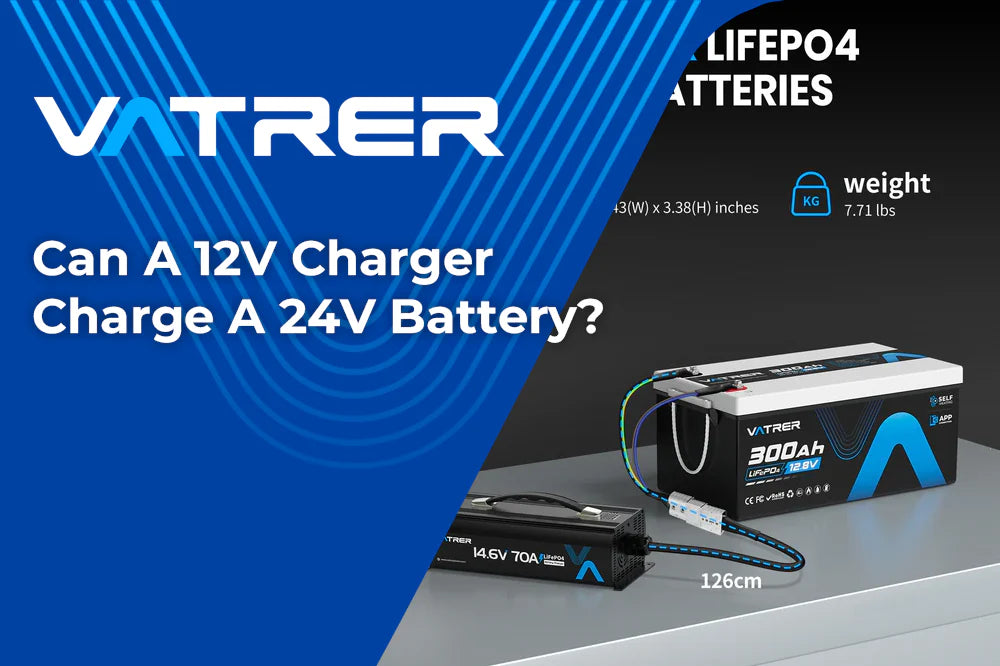
No, a 12V charger cannot safely charge a 24V battery. The voltage of the charger needs to match or exceed the voltage of the battery being charged to ensure effective and safe charging. Using a charger with a lower voltage than the battery can lead to incomplete charging and potentially damage the battery.
Wiring a 24V Battery for an Electric Scooter

Blog

Wiring a 24V Battery for an Electric Scooter

by VatrerZachary on Dec 27 2024
Introduction Wiring a 24V battery for an electric scooter is not just a matter of connecting a few cables. A clean, correctly protected battery setup helps your scooter accelerate smoothly, protects the controller and motor, and reduces the risk of shorts, overheating, or premature battery failure. For many riders in the United States, a 24V scooter is used for short neighborhood trips, campus transportation, campground mobility, or light recreational riding. Whether you are replacing a worn battery pack or building a simple 24V system from two 12V batteries, the key is to match voltage, polarity, wire size, fuse protection, and charger type before powering anything on. Why Correct Wiring Matters Electric scooter wiring carries high current in a compact space. A loose terminal, reversed polarity, undersized wire, or missing fuse can cause poor throttle response, voltage drop, melted connectors, controller damage, or battery failure. Proper wiring also makes future maintenance easier because each connection is secure, insulated, and easy to inspect. How a 24V Scooter Battery System Works A basic 24V scooter battery system is commonly made with two 12V batteries connected in series. This raises total system voltage to 24V while keeping the amp-hour capacity the same as one battery. For example, two 12V 20Ah batteries wired in series become a 24V 20Ah battery bank, not a 24V 40Ah bank. The battery bank sends power to the scooter controller. The controller then manages current delivery to the motor based on throttle input, braking signals, and built-in protection features. For best results, the battery, controller, motor, charger, and wiring must all be rated for a 24V system. Parts and Tools Needed for a 24V Scooter Battery Setup Before starting, confirm that every component is compatible with 24V operation. Mixing parts designed for different voltages can damage the scooter and create safety risks. Battery Pack You can use a single 24V battery pack or two matching 12V batteries connected in series. If using two separate 12V batteries, they should be the same chemistry, capacity, age, and state of charge. Do not pair a lithium battery with a lead-acid battery in the same series string. Controller The controller should be clearly rated for 24V input and for the motor’s current demand. A controller rated for a different voltage may not operate correctly and may fail when connected to a 24V pack. Motor The scooter motor should also be a 24V motor. A mismatched motor may run poorly, overheat, or draw more current than the wiring and controller can safely handle. Wiring, Connectors, and Protection Use battery cable that is suitable for the scooter’s current rating. Many small 24V scooters use moderate current, but upgraded motors and controllers may require heavier wire. Use quality crimp connectors, heat-shrink tubing, terminal covers, and a fuse or circuit breaker installed close to the battery’s positive output. Component What to Check Why It Matters Two 12V batteries or one 24V pack Same voltage, chemistry, capacity, and condition Prevents imbalance and weak performance 24V controller Voltage and current rating Protects the motor and electronics Fuse or breaker Installed near battery positive Helps protect against short circuits Battery cable Correct gauge for current draw Reduces heat and voltage drop Multimeter DC voltage testing Confirms polarity and pack voltage before startup Understanding Series Wiring for a 24V Scooter Series vs. Parallel Battery Connections Series wiring increases voltage. Parallel wiring increases capacity. To build a 24V battery bank from two 12V batteries, you need a series connection. That means one battery’s positive terminal is connected to the other battery’s negative terminal. The two unused outer terminals become the 24V output. Parallel wiring is different. If two 12V batteries are wired positive-to-positive and negative-to-negative, the system remains 12V while capacity increases. That setup is not suitable when your scooter controller requires 24V input. Positive and Negative Terminals Battery terminals are usually marked with “+” for positive and “-” for negative. Red wires are typically used for positive connections, while black wires are commonly used for negative connections. Always verify with a multimeter instead of relying only on wire color, especially on older scooters or modified wiring harnesses. Step-by-Step Guide to Wiring a 24V Scooter Battery Prepare the Scooter and Workspace Turn the scooter off and disconnect the charger. Remove the key or power switch connection if your scooter has one. Work in a dry, well-lit area away from loose metal tools. Wear eye protection and insulated gloves when handling batteries. Inspect the battery tray for corrosion, sharp edges, or damaged wiring before installing the pack. Connect Two 12V Batteries in Series Identify each terminal: Label Battery 1 and Battery 2, then locate the positive and negative terminals on both batteries. Create the series bridge: Connect the negative terminal of Battery 1 to the positive terminal of Battery 2 using a short, properly sized jumper cable. Find the 24V output terminals: The free positive terminal on Battery 1 and the free negative terminal on Battery 2 are now the main 24V output points. Secure and insulate: Tighten each connection, cover exposed metal with terminal boots or heat-shrink, and make sure the jumper cannot rub against the scooter frame. Verify voltage: Use a multimeter across the two free output terminals. A charged 24V lead-acid system may read above 24V at rest, while lithium voltage depends on chemistry and state of charge. Wire the Controller to the Battery Pack Connect the main positive lead: Run the battery pack’s positive output through a properly rated fuse or circuit breaker before connecting it to the controller’s positive input. Connect the main negative lead: Connect the battery pack’s negative output to the controller’s negative input. Check connector fit: Make sure plugs, ring terminals, or spade connectors are tight and cannot loosen from vibration. Insulate all exposed metal: Any uncovered positive terminal can create a direct short if it touches the frame or another conductor. Connect the Motor to the Controller Identify motor wires: Most small brushed scooter motors use two main wires, while brushless motors may use phase wires and sensor wires. Match the controller outputs: Connect the motor wires to the controller terminals according to the scooter wiring diagram. Avoid guessing on brushless systems: If your scooter uses hall sensors or multiple phase wires, follow the manufacturer’s wiring chart to prevent rough operation or controller damage. Test before riding: Lift the drive wheel off the ground and apply light throttle only after confirming voltage and polarity. Safety Checks Before Powering On Battery Handling Tips Never place tools across battery terminals. Do not charge the battery with a charger that does not match the battery voltage and chemistry. Do not install swollen, leaking, cracked, or heavily corroded batteries. Keep lithium battery packs away from direct heat and use packs with a suitable BMS. Use a fuse or breaker that matches the scooter’s expected current draw and wiring capacity. How to Avoid Short Circuits A short circuit can happen instantly if a positive terminal touches the frame, the negative terminal, or an uninsulated tool. Keep one battery terminal covered while working on the other, route wires away from moving parts, and secure the harness with clips or cable ties. Testing the 24V Battery Wiring Check Voltage and Polarity Before connecting the scooter’s main power switch, use a multimeter to confirm that the battery pack output is positive-to-positive and negative-to-negative. If the meter shows a negative reading, the polarity is reversed and must be corrected before the controller is connected. Test Scooter Functionality Turn the scooter on while the drive wheel is raised. Apply very light throttle and listen for smooth motor response. Check that the power switch, brake cut-off, lights, and throttle behave normally. After a short test, feel the wires and connectors. Warm is a warning sign; hot means the system should be shut down immediately and inspected. Troubleshooting Common 24V Scooter Wiring Problems Problem Likely Cause What to Check No power Blown fuse, loose battery lead, incorrect polarity, discharged batteries Battery voltage, fuse continuity, controller input voltage Motor does not run Controller not receiving signal, motor wires disconnected, brake cut-off stuck Throttle plug, brake switch, motor output wiring Scooter cuts out under load Weak battery, undersized wires, poor connector, BMS protection Voltage sag, connector heat, battery condition Connector gets hot High resistance or loose connection Crimps, terminal tightness, wire gauge Battery drains quickly Old battery, wrong capacity, dragging brake, overpowered controller Battery health, tire pressure, brake adjustment, current draw Maintenance Tips for a Reliable 24V Scooter Battery System Inspect battery terminals every few weeks during frequent use. Keep the battery tray clean and dry. Recharge with a charger designed for the exact battery chemistry. Replace damaged connectors instead of taping over weak connections. Store the scooter indoors during long periods of non-use and avoid extreme heat. Conclusion A properly wired 24V electric scooter battery system gives you safer operation, steadier power delivery, and longer component life. The most important steps are simple: use matching batteries, wire them in series correctly, protect the positive lead with a fuse or breaker, verify voltage with a multimeter, and test the scooter carefully before riding. When in doubt, consult the scooter wiring diagram or a qualified technician before applying power.
How Long To Charge 12V Deep Cycle Battery At 10 Amps?

Blog

How Long To Charge 12V Deep Cycle Battery At 10 Amps

by Emma on Dec 26 2024
Want to know how to quickly charge a 12V deep cycle battery for your RV camping, solar energy system or boat? Whether using a 10A lithium battery charger or a standard charger, understanding charging time is crucial for efficient charging and long battery life. Below, we'll guide you through charging 12V deep-cycle batteries, such as lead-acid and lithium (LiFePO4), to provide reliable power for your adventures. Mastering the 12V Deep Cycle Battery Charging Process Charging a 12V deep cycle battery transfers energy from a battery charger to restore its battery capacity, measured in amp hours (Ah). Unlike starter batteries, deep cycle batteries are built for sustained backup power in solar systems, boats, or RVs. The charging process involves three stages: bulk (constant current, 60%-80% of charging time), absorption (constant voltage), and float (trickle charger mode for maintenance). Battery types like lead-acid batteries and lithium (LiFePO4) differ in efficiency, with lithium's Battery Management System (BMS) optimizing current for faster, safer charging. Factors Affecting 12V Deep Cycle Battery Charging Time Several factors influence how long it takes to charge a 12V deep cycle battery at 10 amps: Battery Capacity: Key to Charging Time Battery capacity, measured in amp hours (Ah), determines how much energy a 12V deep cycle battery can store. A 12V 100Ah battery takes longer to charge than a 20Ah one at the same charging rate. Deep cycle batteries typically range from 50Ah to 200Ah, suiting applications like solar or RV camping. Vatrer batteries offer larger capacity models: 100Ah-560Ah, all to meet your power needs. State of Charge: Impact on 12V Battery Charging The initial state of charge (SOC) affects charging time. A fully discharged 12V deep cycle battery takes longer to reach full charge than a partially discharged one. For example, a 100Ah battery at 50% SOC (about 12.2V, measurable with a voltmeter) needs roughly half the time compared to a fully drained battery. Charging Current: Speeding Up Your 12V Battery Charge The charging rate, measured in amperes, controls how fast energy flows into the battery. A 10A lithium battery charger delivers 10 amps per hour, outpacing a 5-amp charger. Lithium batteries support higher charging rates (10A-20A or 70A) without overheating risks, unlike lead-acid batteries, but always match the rate to the battery type. Charging Efficiency: Maximizing 12V Battery Performance Not all energy from a battery charger is stored, some is lost as heat due to internal resistance and chemical reactions. Lead-acid batteries have 70%-85% efficiency, while lithium batteries reach 85%-95%, reducing charging time. For accurate calculations, divide theoretical time by the efficiency factor (like 0.85 for lead-acid). Temperature: Optimizing Your 12V Battery Charging Environment Temperature affects the charging process. Cold conditions (below 0°C) reduce efficiency by 10%-20%, while high temperatures risk overheating, shortening battery life. Lithium batteries (LiFePO4) charge efficiently from -20°C to 60°C, outperforming lead-acid batteries. Charge in a well-ventilated 15°C-27°C (60°F-80°F) environment for best results. Calculating 12V Deep Cycle Battery Charging Time To estimate charging time for a 12V deep cycle battery, use: Charging Time (hours) = Battery Capacity (Ah) ÷ Charging Current (Amps) ÷ Efficiency Deep cycle batteries typically range from 50Ah to 200Ah, but some solar systems using 300Ah+. Below are example calculations and a comparison table for lead-acid batteries and lithium (LiFePO4) batteries at 10 amps, assuming a fully discharged state. Lithium batteries charge faster due to higher efficiency (90% vs. 80% for lead-acid).   Example Calculations 100Ah battery at 10 amps (lead-acid, 80% efficiency): Charging Time = 100 Ah ÷ 10 Amps ÷ 0.8 = 12.5 hours 100Ah battery at 10 amps (lithium, 90% efficiency): Charging Time = 100 Ah ÷ 10 Amps ÷ 0.9 = 11.1 hours 100Ah battery at 50% SOC (lithium, 90% efficiency): Charging Time = (100 Ah × 0.5) ÷ 10 Amps ÷ 0.9 = 5.6 hours   Charging Time Comparison The table below compares estimated charging times for 12V deep cycle batteries at 10 amps for a clearer comparison: Lead-Acid Batteries Battery Capacity (Ah) Charging Rate (Amps) Efficiency Estimated Charging Time (Hours) 20 Ah 10 Amps 80% 2.5 Hours 50 Ah 10 Amps 80% 6.3 Hours 100 Ah 10 Amps 80% 12.5 Hours 200 Ah 10 Amps 80% 25 Hours 300 Ah 10 Amps 80% 37.5 Hours 400 Ah 10 Amps 80% 50 Hours   Lithium (LiFePO4) Batteries Battery Capacity (Ah) Charging Rate (Amps) Efficiency Estimated Charging Time (Hours) 20 Ah 10 Amps 90% 2.2 Hours 50 Ah 10 Amps 90% 5.6 Hours 100 Ah 10 Amps 90% 11.1 Hours 200 Ah 10 Amps 90% 22.2 Hours 300 Ah 10 Amps 90% 33.3 Hours 400 Ah 10 Amps 90% 44.4 Hours Practical Tips for Efficient 12V Deep Cycle Battery Charging To cut charging time: Use a higher-amp charger: A 12V 10A lithium battery charger is efficient, but a 20A charger halves the time for compatible batteries (lithium). Ensure the charger matches the battery's rated current, noting higher costs. Charge in optimal conditions: Maintain 15°C-27°C with good ventilation to prevent overheating. Choosing the Right 12V Deep Cycle Battery: Lead-acid batteries (AGM, Gel) require slower charging rates to avoid damage, with AGM charging slightly faster than Gel. Lithium batteries, with built-in Battery Management Systems (BMS), support faster, safer charging. Lithium batteries (like LiFePO4) charge faster and offer 2,000-5,000 cycles vs. 200-500 for lead-acid batteries. Always follow manufacturer guidelines for your battery type. Safety and Maintenance for 12V Deep Cycle Batteries Avoiding Overcharging: Protecting Your 12V Battery Life Overcharging reduces battery life and may cause capacity loss or battery swelling. Use a battery charger with automatic shut-off or a trickle charger for maintenance. Lithium batteries with BMS automatically prevent overcharging, ensuring safety. Monitoring Your 12V Battery Charging Process Track the charging process using a voltage meter or a 12V 10A lithium battery charger with a display. Voltages of 12.6V (lead-acid) or 13.2V (lithium) indicate near full charge, ensuring safety and efficiency. Maintenance Tips for Long-Lasting 12V Deep Cycle Batteries Lithium batteries: Avoid full discharge, check BMS status, and store at 50% SOC for longevity. Lead-acid batteries: Monitor electrolyte levels (if applicable) and avoid deep discharges. Follow manufacturer guidelines for efficient charging and extended battery life. Conclusion: Power Up Your 12V Deep Cycle Battery Efficiently Charging a 12V deep cycle battery at 10 amps is simple with the right knowledge. Understand battery capacity, charging rates, and factors affecting charge time to optimize the charging process. Lithium batteries, with higher efficiency and BMS, outshine lead-acid batteries for faster, safer charging. Use a 10A lithium battery charger and charge in optimal conditions for best results. Ready for reliable backup power? Check Vatrer LiFePO4 batteries and smart chargers to enhance your experience! FAQs Can I use a 10A lithium battery charger for both lithium and lead-acid batteries? While a 10A lithium battery charger is optimized for lithium (LiFePO4) batteries, it may not be suitable for lead-acid batteries (AGM or Gel). Lithium chargers often lack the specific voltage profiles needed for lead-acid's absorption and float stages, which can lead to undercharging or damage. Check the charger's specifications for compatibility with your battery type. For versatility, choose a multi-mode battery charger that supports both lithium and lead-acid, adjusting charging rates automatically. Always follow manufacturer guidelines to ensure efficient charging and avoid reducing battery life. How do I know if my 12V deep cycle battery is fully charged without a voltmeter? If you don’t have a voltmeter, most 12V 10A lithium battery chargers with displays show charge status (percentage or LED indicators). For lead-acid batteries, a green light or “float mode” on a trickle charger often signals full charge. Invest in a smart charger or lithium battery with a built-in display for real-time status. Alternatively, observe the charger’s behavior—lithium chargers typically stop or reduce current significantly when the battery reaches 13.2V, while lead-acid chargers enter maintenance mode at 12.6V-12.8V. This ensures safe and efficient charging. What should I do if my 12V deep cycle battery takes longer than expected to charge? If your charging time exceeds calculations (such as over 12.5 hours for a 100Ah lead-acid battery at 10 amps), factors like low state of charge (SOC), cold temperatures, or a faulty charger may be at play. First, verify the charging rate with a multimeter to ensure the 10A lithium battery charger delivers 10 amps. Charge in a 15°C-27°C environment to avoid efficiency losses. If the battery is old, test its battery capacity with a professional tester, as degradation can extend charging time. Replace the battery if capacity is below 80% of its rated amp hours (Ah). Is it safe to leave my 12V deep cycle battery charging overnight with a 10A lithium battery charger? Leaving a 12V deep cycle battery charging overnight is generally safe with a 10A lithium battery charger equipped with automatic shut-off or a trickle charger mode, especially for lithium batteries with a Battery Management System (BMS). However, lead-acid batteries are more prone to overcharging risks if the charger lacks smart features. Use a smart charger with overcharge protection for both battery types. For lead-acid batteries, monitor periodically to prevent capacity loss or swelling. Ensure good ventilation to avoid heat buildup, preserving battery life. How can I extend the battery life of my 12V deep cycle battery beyond charging practices? Beyond efficient charging, battery life depends on usage and storage habits. Frequent deep discharges or improper storage can degrade both lithium and lead-acid batteries. For lithium batteries, maintain 20%-80% SOC during use and store at 50% SOC in a cool, dry place. For lead-acid batteries, avoid discharges below 50% and check electrolyte levels monthly (if applicable). Use a trickle charger for long-term storage to maintain full charge. Regular cycling and proper maintenance can extend battery life to 2000-5000 cycles for lithium or 200-500 for lead-acid. Can I charge a 12V deep cycle battery faster than 10 amps, and what are the risks? Yes, lithium 12V deep cycle batteries can often handle higher charging rates (like 20A-50A), but lead-acid batteries typically require slower rates to avoid damage. Exceeding recommended charging rates can overheat lead-acid batteries, reducing battery life. For lithium, use a 12V 10A lithium battery charger or higher (like 20A or 70A) if the battery's specs allow, ensuring the BMS manages safety. For lead-acid, stick to 10%-20% of the battery capacity (like 10A-20A for a 100Ah battery). Always consult manufacturer guidelines to balance speed and safety. How does a trickle charger differ from a 10A lithium battery charger for maintaining my battery? A trickle charger delivers a low current (1A-2A) to maintain a full charge without overcharging, ideal for long-term storage of 12V deep cycle batteries. A 10A lithium battery charger is designed for faster charging but may not sustain low-current maintenance. Use a trickle charger for lead-acid batteries during storage to prevent sulfation. For lithium batteries, a smart 10A lithium battery charger with a maintenance mode is sufficient, as the BMS prevents overcharging. Choose based on your battery type and storage needs.