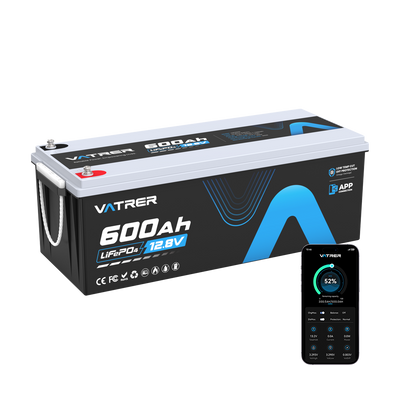
Stacking Self-Heating Lithium Batteries: Safe Setup for Cold-Weather Power
Reading time: 6 minutes
What Does Stacking Self-Heating Lithium Batteries Mean?
Stacking self-heating lithium batteries means using more than one battery to create a larger energy system. This may involve connecting batteries in parallel to increase capacity, in series to increase voltage, or in a series-parallel layout to increase both.
For European users, this can apply to motorhome leisure battery banks, campervan power systems, marine batteries, off-grid solar storage, golf buggy batteries, backup power, and mobile work systems. Self-heating batteries are especially useful when charging may happen in cold weather or in unheated storage areas.
It is important to separate two meanings of stacking. Electrical stacking means wiring batteries together. Physical stacking means placing batteries on top of or very close to each other. Both require planning, but physical stacking should only be done if the manufacturer allows it.

How Self-Heating Lithium Batteries Work
Self-heating lithium batteries are designed to warm the cells before charging when temperatures are too low. This is important because LiFePO4 batteries should not normally be charged below 0°C unless low-temperature charging protection or a heating system is included.
In many designs, the heating function uses incoming charge power to warm the battery first. Once the cell temperature reaches a safe range, normal charging begins. This helps protect cell health and improves charging reliability in winter, mountain regions, cold garages, marine storage, and off-grid locations.
Self-heating does not mean the battery can ignore temperature limits. It means the battery has a controlled way to prepare itself for safer charging under cold conditions.
Why Stack Self-Heating Lithium Batteries?
A single battery may be enough for a small campervan or basic leisure system. Larger systems often need more stored energy, higher voltage, or stronger current support. Stacking makes that possible when the batteries are designed for it.
Common reasons include:
- More capacity: Parallel connections increase amp-hours for longer runtime.
- Higher voltage: Series connections create 24V, 36V, or 48V systems.
- Better solar storage: Larger banks can store more energy from solar panels.
- Longer off-grid use: Useful for motorhomes, boats, cabins, and remote sites.
- Cold-weather charging support: Self-heating helps prepare batteries for charging near freezing conditions.
Before stacking batteries, always confirm the manufacturer’s allowed series and parallel configuration. Some batteries support expansion; others do not.
Series and Parallel Connections Explained
Series and parallel wiring have different purposes. Choosing the wrong configuration can damage equipment or create safety problems.
| Connection Type | What It Increases | Example | Common Use |
|---|---|---|---|
| Series | Voltage | Two 12V batteries create 24V | 24V systems, larger inverters, certain marine and solar systems |
| Parallel | Capacity | Two 12V 100Ah batteries create 12V 200Ah | Motorhome leisure banks, boats, solar storage |
| Series-Parallel | Voltage and capacity | Four batteries create a larger 24V or 48V bank | Larger off-grid systems and backup power |
When self-heating is involved, the heating function, charger profile, BMS limits, cable size, and system voltage all need to work together.
Electrical Stacking: What to Check First
Electrical stacking can be safe when the batteries are compatible and the system is designed correctly.
Before connecting batteries, check:
- Same battery model: Use matching batteries whenever possible.
- Same voltage and capacity: Do not mix different ratings in one bank.
- Similar age and cycle history: Avoid mixing new and old batteries.
- Similar state of charge: Bring batteries to the same charge level before connection.
- Allowed configuration: Follow manufacturer limits for series and parallel wiring.
- Compatible charger: The charger must match the full bank voltage and LiFePO4 chemistry.
- Correct cable sizing: Cables must handle the current safely.
- Fuses and disconnects: Use suitable protection for the system.
Incorrect wiring or mismatched batteries can cause BMS shutdowns, uneven charging, overheating, or reduced battery life.
Physical Stacking: Can Batteries Be Placed Together?
Physical stacking should never be assumed safe just because the batteries fit. Battery cases may not be designed to carry weight from another battery. Tight packing can also reduce airflow and make heat management harder.
With self-heating batteries, proper spacing is especially important. When the heating system activates, each battery needs room to manage temperature evenly. A cramped compartment can trap heat or create uneven warming.
Before physically stacking or tightly grouping batteries, check:
- Manufacturer approval for vertical stacking.
- Maximum case load or shelf requirements.
- Required clearance around each battery.
- Ventilation and heat dissipation needs.
- Access to terminals, fuses, and disconnects.
- Protection from vibration and movement.
- Moisture protection in boats, motorhomes, and storage spaces.
In mobile applications, batteries should be secured so they cannot slide, tip, or vibrate loose during travel.
Thermal Management and Cold-Weather Charging
Thermal management is one of the most important parts of stacking self-heating lithium batteries. A battery bank may charge, discharge, and heat unevenly if installation conditions are poor.
This is relevant for motorhomes stored outside, boats in winter storage, solar batteries in sheds, and off-grid systems in cold regions. The battery compartment should be dry, protected, and suitable for the temperature conditions.
Good thermal practices include:
- Keep recommended spacing between batteries.
- Avoid sealed compartments with no airflow unless the manufacturer allows it.
- Keep batteries away from heaters, engines, and other heat sources.
- Do not cover batteries with insulation unless approved.
- Monitor battery temperature when Bluetooth or BMS data is available.
- Do not charge LiFePO4 below 0°C unless heating or low-temperature protection is active.
The goal is controlled temperature, not simply maximum warmth.
Safety Considerations for Stacked Heated Lithium Batteries
Stacked lithium systems must be designed around safety. A good battery includes a BMS, but the installation still needs correct wiring, protection, and monitoring.
- BMS protection: Each battery should protect against overcharge, over-discharge, overcurrent, short circuit, and temperature issues.
- Battery matching: Use matching batteries with similar state of charge.
- Correct charging: Use LiFePO4-compatible mains chargers, solar controllers, or DC-DC chargers.
- Fusing: Install fuses or breakers suitable for the battery bank.
- Cable sizing: Use cables rated for expected current and distance.
- Terminal protection: Prevent accidental short circuits.
- Secure mounting: Protect the batteries from vibration and movement.
For high-capacity motorhome, marine, or off-grid systems, professional installation or inspection is often the safest approach.
Where Stacked Self-Heating Lithium Batteries Make Sense
| Application | Why Self-Heating Helps | Why Stacking Helps |
|---|---|---|
| Motorhomes and Campervans | Supports cold-weather charging during touring or storage | Adds capacity for fridges, lighting, water pumps, inverters, and devices |
| Marine Systems | Useful in cold mooring or winter storage conditions | Supports electronics, trolling motors, and house loads |
| Off-Grid Solar Storage | Helps when batteries are installed in sheds or colder spaces | Stores more solar energy for evening and overnight use |
| Golf Buggies and Utility Vehicles | Improves cold-weather charging support | Can support higher voltage or longer runtime where approved |
| Backup Power | Helps maintain readiness in cold environments | Extends runtime during outages |
The best system depends on the required voltage, capacity, inverter size, charging source, installation space, and temperature conditions.
Common Mistakes to Avoid
- Mixing different battery brands, models, ages, or capacities.
- Connecting batteries at different charge levels.
- Using a charger that does not match LiFePO4 chemistry.
- Exceeding the manufacturer’s series or parallel limits.
- Physically stacking batteries without approved support.
- Ignoring spacing and ventilation requirements.
- Charging below 0°C without low-temperature protection or heating.
- Using undersized cables or missing fuses.
- Installing batteries in damp, hot, or poorly protected areas.
Most safety issues can be avoided by planning the battery bank as a complete electrical and thermal system.
Conclusion: Is Stacking Self-Heating Lithium Batteries Practical?
Stacking self-heating lithium batteries can be practical when the batteries are designed for the intended configuration and installed correctly. It can increase capacity, support higher-voltage systems, and improve charging reliability in cold-weather applications.
Electrical stacking requires matched batteries, correct wiring, compatible charging, fusing, and BMS protection. Physical stacking requires manufacturer approval, secure mounting, ventilation, and safe heat management.
For motorhomes, campervans, boats, solar storage, golf buggies, and backup power systems, self-heating lithium batteries can be a strong choice in colder conditions. The safest and most reliable setup is one that follows manufacturer limits and treats temperature, wiring, mounting, and monitoring as part of the same system.
Share