





48V LiFePO4 Golf Cart Battery
4 products


€1.537,70 EUR
Unit price per
Best Selling Vatrer Lithium Golf Cart Batteries
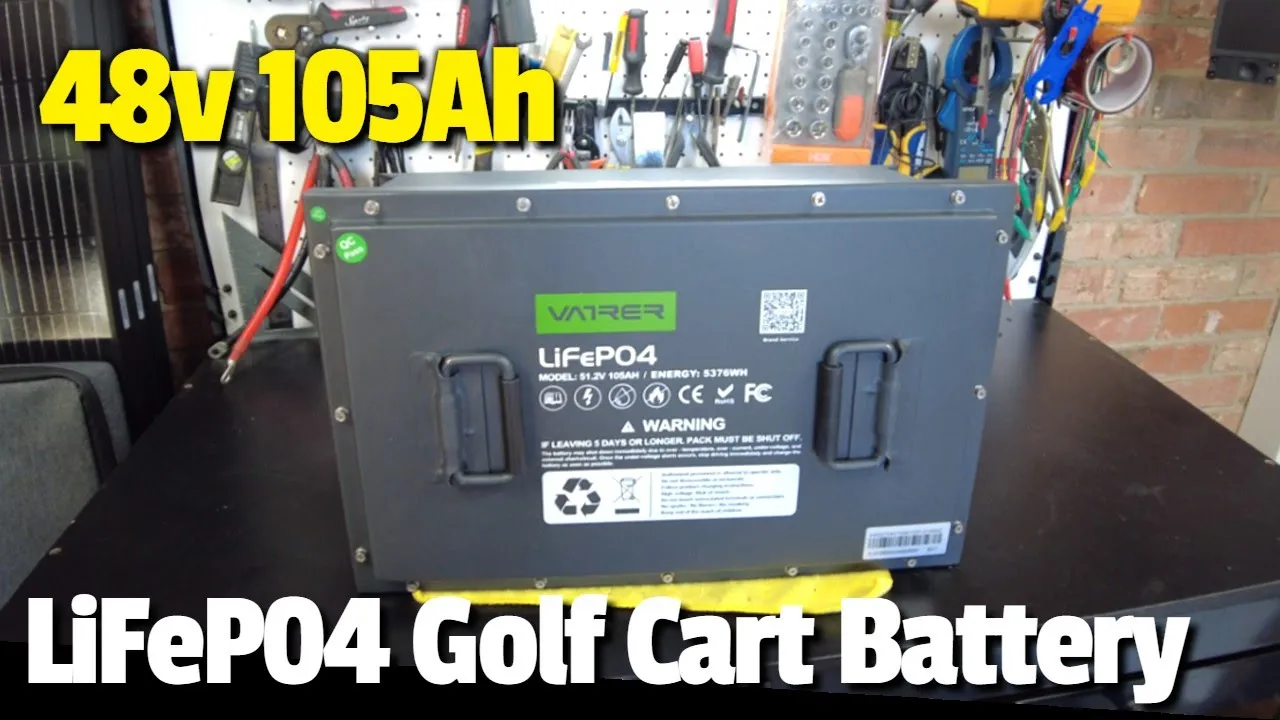
Vatrer Review on YouTuBe





FAQs
Yes. A 48V golf cart or golf buggy can often be converted from several lead-acid batteries to one 48V LiFePO4 golf cart battery, provided the controller, motor and charging system are compatible. Measure the battery compartment first and replace the lead-acid charger with a suitable lithium charger. Vatrer golf cart battery conversion kits combine the battery, lithium charger, LCD monitor and connection hardware, reducing the number of separate components needed for the conversion.
Start with the longest realistic working day rather than an average round. A Vatrer 48V 105Ah lithium battery provides 5.376kWh and up to around 50 miles, while the 150Ah lithium battery provides 7.68kWh and up to around 70 miles. Resorts, estates and commercial fleets that run several shifts or carry passengers should leave additional reserve for gradients, stop-start driving and accessory loads.
Choose Vatrer 48V 105Ah when the cart normally returns to a charging point each day and up to roughly 50 miles is sufficient. Choose Vatrer 48V 150Ah when avoiding mid-day charging, supporting longer resort routes or carrying passengers regularly is more important than minimising battery size and weight. Capacity mainly determines energy reserve; it should not be confused with BMS current capability, which determines how much power can be delivered under heavy load.
Charging time depends on capacity, starting SOC and charger output. The Vatrer 48V 105Ah use a matched 58.4V 20A LiFePO4 charger and can recharge in roughly five to five-and-a-half hours. For fleet use, charging between operating periods can reduce downtime without requiring the battery to be completely discharged before every recharge.
Do not assume it is compatible. Lead-acid chargers may use voltage stages that are unsuitable for LiFePO4 batteries, so a 48V LiFePO4 golf cart battery charger with the correct charging profile is the safer solution. Vatrer golf cart batteries include a matched lithium charger, removing one of the common compatibility problems during a lead-acid conversion.
LiFePO4 removes many of the routine tasks associated with flooded lead-acid batteries, including electrolyte-water checks. You should still keep connections secure, inspect cables periodically and monitor battery condition. Bluetooth and the LCD display provide a more useful maintenance routine: check SOC, temperature and electrical data instead of maintaining individual lead-acid batteries.
A normal cart does not automatically need the highest-current BMS. Vatrer 48V 105Ah and 150Ah golf-cart configurations support 200A continuous discharge, while the higher-output 105Ah option provides 300A continuous discharge and up to 15.36kW for more demanding vehicles. For steep terrain, heavier utility work or upgraded controllers, check the controller’s peak and continuous current requirements before choosing the 300A option.
Yes, when the battery’s discharge capability matches the vehicle. LiFePO4 maintains voltage more consistently under load, which helps reduce the power fade commonly experienced as lead-acid batteries discharge. For heavier carts, frequent passenger transport or steep resort routes, prioritise BMS current capability as well as Ah capacity.
Yes, but charging below freezing needs protection. Vatrer 48V golf cart batteries include low-temperature cutoff protection that stops charging around 0°C and discharging at -20°C, protecting the cells when carts are stored or operated through colder European winters. If charging is blocked by temperature protection, allow the battery to warm before reconnecting the charger.
Bluetooth is particularly useful for golf clubs, resorts and fleet operators because battery condition can be checked without opening the battery compartment or relying on a simple dash gauge. The Vatrer 48V LiFePO4 golf cart battery supports app monitoring across the current golf cart models, making SOC and operating data easier to check before sending a vehicle back into service.
Other LiFePO4 Batteries Recommended

€1.343,03 EUR
Unit price perBlog Center

100Ah vs 150Ah Battery: Energy, Runtime and Sizing Explained

Bluetooth Golf Cart Batteries: Useful Upgrade or Not?


Yamaha Golf Buggy Battery Guide for Drive, G29 & Drive2





- Reliable Power, Empowering Lives.
- Vatrer specializes in LiFePO4 lithium batteries for golf carts, RVs, home energy storage, and off-grid applications, designed for reliable performance and long-term use.
