Shipping Lithium Batteries in Europe: ADR & IATA Rules
Reading time: 12 minutes

Share
Shipping lithium batteries across Europe involves more than choosing a courier and printing a label. Whether you are sending a replacement battery for an e-bike, a LiFePO4 leisure battery for a campervan, or a battery pack for an off-grid solar installation, the applicable shipping requirements depend on the battery's capacity, classification, condition, and transport route.
Smaller lithium batteries can often travel under simplified dangerous goods provisions. Larger batteries, including many 12V 100Ah LiFePO4 models, generally require regulated transport arrangements and appropriate documentation.
This guide explains the European rules for lithium battery shipping, including ADR road transport requirements, air freight restrictions, UN classifications, packaging, cross-border delivery, and the documentation needed for commercial shipments.
Why Are Lithium Batteries Regulated During Transport?
Lithium Battery Fire Risks
Rechargeable lithium batteries contain stored electrical energy and must be protected against external short circuits, mechanical damage, and excessive heating during transport.
A severe battery failure can trigger thermal runaway, releasing heat and flammable gases. This can become particularly dangerous in aircraft cargo compartments, road freight vehicles, and shipping containers.
LiFePO4 batteries are generally more thermally stable than some other lithium-ion chemistries. Nevertheless, lithium iron phosphate batteries remain subject to lithium-ion dangerous goods transport rules.
Which Regulations Apply in Europe?
European battery shipments may be covered by different legal frameworks depending on the transport method.
Within the European Union, Directive 2008/68/EC provides a framework for the inland transport of dangerous goods. Road shipments follow the applicable ADR provisions, railway shipments follow RID, and inland waterway transportation may fall under ADN.
ADR is also used beyond the EU by participating European countries. However, individual countries and carriers may apply additional operational restrictions.
European Lithium Battery Transport Framework
| Transport Method | Main Regulations | Typical Application |
|---|---|---|
| Road transport | ADR 2025 | Domestic and cross-border parcel delivery, pallet freight, and commercial transport |
| Rail transport | RID | International rail freight carrying batteries and energy storage products |
| Inland waterways | ADN | Relevant river and inland waterway transport |
| Air freight | ICAO Technical Instructions and IATA DGR | European and international air cargo |
| Sea freight | IMDG Code | Container shipments and applicable ferry or maritime freight services |
For current road transport provisions, consult the UNECE ADR 2025 regulations. The EU framework is available through EUR-Lex Directive 2008/68/EC.
Lithium Battery UN Numbers and Shipping Classifications
UN3480 and UN3481 Explained
Correct classification is the first step in arranging a compliant shipment. The distinction between a standalone battery and a battery shipped with equipment affects packaging, labelling, documentation, and air transport eligibility.
UN Numbers for Common Battery Shipments
| UN Number | Description | Example |
|---|---|---|
| UN3480 | Lithium-ion batteries shipped separately | Standalone LiFePO4 leisure battery or spare e-bike battery |
| UN3481 | Lithium-ion batteries packed with equipment | Battery supplied separately alongside the equipment it powers |
| UN3481 | Lithium-ion batteries contained in equipment | Battery installed in a compatible electronic device |
| UN3090 | Lithium metal batteries shipped separately | Non-rechargeable lithium metal batteries |
| UN3091 | Lithium metal batteries with or inside equipment | Equipment containing primary lithium batteries |
| UN3556 | Vehicle powered by lithium-ion batteries | Applicable complete battery-powered vehicle shipments |
| UN3557 | Vehicle powered by lithium metal batteries | Applicable complete vehicles powered by lithium metal batteries |
A charger placed in the same box as a standalone lithium battery does not automatically qualify the shipment as UN3481. The equipment must actually be powered by the battery.
E-Bikes, Electric Vehicles, and Battery Packs
A loose replacement e-bike battery generally falls under UN3480. A complete electric vehicle with its battery installed may fall under the vehicle-specific UN3556 classification instead.
Under ADR 2025, the updated vehicle classifications distinguish lithium-ion-powered vehicles from lithium-metal- and sodium-ion-powered vehicles. These distinctions are especially important for logistics providers handling complete e-bikes, mobility vehicles, and other powered vehicles.
ADR Rules for Shipping Lithium Batteries by Road
ADR Special Provision 188: Batteries Up to 100 Wh
ADR Special Provision 188 provides simplified transport conditions for qualifying small lithium cells and batteries. It is particularly relevant to European online retailers, equipment suppliers, and businesses shipping small replacement batteries.
For lithium-ion batteries, the main energy thresholds are:
- Individual cells: Maximum 20 Wh.
- Battery packs: Maximum 100 Wh per battery.
- Standalone battery packages: Maximum 30 kg gross mass under the applicable provision.
Meeting the energy threshold is not enough on its own. Batteries must satisfy the relevant design testing, terminal protection, packaging, and marking requirements.
For qualifying packages, ADR Special Provision 188 generally requires appropriate inner and outer packaging and the lithium battery mark unless a specific marking exception applies. Packages containing batteries not installed in equipment must also meet the prescribed 1.2 m drop capability.
What If the Battery Is Larger Than 100 Wh?
A typical LiFePO4 leisure battery is considerably larger than the 100 Wh threshold.
Battery energy = Nominal voltage × Capacity in amp-hours
For example:
- 12.8V × 50Ah = 640 Wh
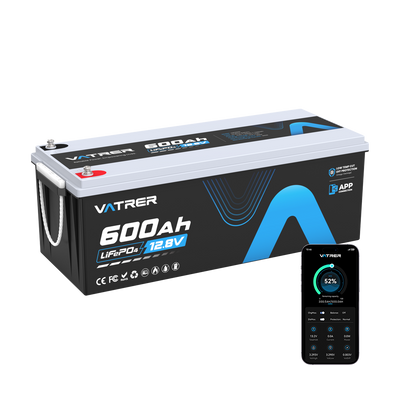
- 12.8V × 100Ah = 1,280 Wh
- 25.6V × 100Ah = 2,560 Wh
These batteries generally require fully regulated Class 9 dangerous goods transportation rather than the small-battery exception.
For normal standalone lithium-ion battery shipments, ADR Packing Instruction P903 is commonly relevant. Appropriate UN-approved packaging or a specifically permitted alternative must be used according to the battery and transport conditions.
ADR Road Shipping Requirements: Small vs Large Batteries
| Requirement | Qualifying SP188 Batteries | Fully Regulated UN3480 Batteries |
|---|---|---|
| Battery capacity | Up to 100 Wh per battery | Typically above 100 Wh or otherwise outside the exception |
| Packaging | Strong protective packaging meeting SP188 conditions | Packaging meeting P903 or another applicable instruction |
| Transport markings | Lithium battery mark, unless exempt | UN number and appropriate Class 9 lithium battery label |
| Dangerous goods transport document | Generally not required under a fully compliant SP188 exception | Generally required |
| Carrier | Carrier must accept the battery configuration | Carrier must accept fully regulated dangerous goods |
| Training | Instruction appropriate to the limited-risk activity | Applicable ADR dangerous goods training requirements |
Illustration note: The following graphic illustrates US lithium battery ground-shipping requirements. European consignments must follow ADR rather than the US provisions shown in the image.

Damaged Batteries and Recycling Shipments
Damaged or defective lithium batteries require a different shipping procedure from new or normally functioning batteries.
ADR provides dedicated provisions for damaged or defective batteries, including Special Provision 376 and applicable packing instructions such as P908 or P911, depending on the hazard presented.
Batteries being transported for recycling or disposal may be subject to Special Provision 377 and the appropriate packaging instructions, provided their condition permits that route.
Do not use an ordinary parcel service for a swollen, leaking, overheated, or safety-recalled battery. Contact the manufacturer or an appropriately qualified waste-battery logistics provider.
Shipping Lithium Batteries Across European Borders
Can Lithium Batteries Be Shipped Between EU Countries?
Yes. Lithium batteries may be shipped between EU countries when the shipment complies with applicable dangerous goods transport requirements and the carrier accepts it.
For example, a fully regulated battery shipped from France to Spain by road must comply with ADR requirements, including the relevant packaging, labelling, transport documents, and carrier procedures.
Movement between EU Member States does not normally require customs declarations for Union goods moving within the EU customs territory. However, this does not remove dangerous goods obligations.
Shipments involving countries outside the EU customs territory, including the United Kingdom and Switzerland, can introduce separate customs and import requirements.
Courier Rules Are Not the Same Across Europe
There is no single European postal service with one lithium battery acceptance policy. National postal operators and commercial couriers can differ significantly in what they accept.
A courier may accept a small battery installed in a laptop but refuse the same battery shipped separately. Another service may permit standalone batteries only through approved business accounts.
Before booking a shipment, check:
- The carrier's acceptance policy for lithium batteries.
- Whether the battery is shipped separately or with equipment.
- Whether the route uses road, rail, air, or sea transport.
- Whether the carrier accepts dangerous goods from private customers.
- Whether the destination requires customs or additional local documentation.
Air Shipping Lithium Batteries in Europe: 2026 IATA Rules
Standalone Batteries and the 30% State-of-Charge Rule
International air transport follows ICAO Technical Instructions and the applicable IATA Dangerous Goods Regulations.
Standalone rechargeable lithium-ion batteries classified as UN3480 under PI 965 are normally prohibited as cargo on passenger aircraft and must meet cargo-aircraft requirements when transportation is permitted.
The batteries generally must be offered for transport at no more than 30% state of charge unless specific regulatory approval has been obtained.
From 1 January 2026, lithium-ion batteries packed with equipment under PI 966 Section I must also be offered at no more than 30% SoC. The same requirement applies under Section II when the cell or battery is rated above 2.7 Wh.
2026 IATA Rules for Lithium-Ion Battery Air Freight
| Packing Instruction | Battery Configuration | Passenger Aircraft | SoC Requirement |
|---|---|---|---|
| PI 965 | UN3480, standalone | Normally prohibited | Maximum 30%, except with applicable approvals |
| PI 966 | UN3481, packed with equipment | Subject to applicable limits | Maximum 30% under Section I and Section II above 2.7 Wh |
| PI 967 | UN3481, contained in equipment | Subject to applicable limits | 30% SoC or 25% indicated capacity recommended |

Air Freight Documentation and Airline Acceptance
A package that meets the applicable IATA packing instruction is not automatically accepted by every airline. Airlines and freight forwarders can impose additional restrictions or refuse certain standalone battery shipments.
Fully regulated air cargo may require a Shipper's Declaration for Dangerous Goods, approved packaging, package labels, and acceptance checks by trained dangerous goods personnel.
How to Package Lithium Batteries for European Shipping
Short-Circuit and Impact Protection
Whether shipping a small e-bike component battery or a large leisure battery, packaging should prevent electrical shorts, physical impacts, movement, and unintended activation.
- Insulate exposed terminals: Use secure terminal caps or other suitable non-conductive protection.
- Separate batteries: Prevent direct contact between batteries and conductive items.
- Use suitable inner packaging: Where required, use non-metallic inner packaging that completely encloses the battery.
- Prevent movement: Cushion and secure batteries against movement during handling and transport.
- Use compliant outer packaging: Choose packaging approved or otherwise permitted for the exact shipment.
- Protect installed batteries: Make sure equipment cannot activate accidentally.

UN Packaging for Large LiFePO4 Batteries
Fully regulated batteries commonly require UN-tested outer packaging meeting the relevant performance requirements. Certain robust batteries weighing at least 12 kg may qualify for alternative arrangements under applicable large-battery provisions.
These alternatives are not blanket exemptions. Batteries must still be secured, protected from damage, and transported according to the relevant rules.
European Packaging Requirements by Shipment Type
| Battery Shipment | Packaging and Handling Check |
|---|---|
| SP188 small battery | Meet terminal protection, inner packaging, drop capability, and marking conditions |
| Fully regulated standalone battery | Apply P903 or another applicable packing instruction |
| Heavy battery with robust outer casing | Confirm eligibility for applicable alternative packaging arrangements |
| Air cargo | Apply the correct IATA packing instruction and package quantity limits |
| Damaged battery | Use the applicable damaged-battery classification and specialized packaging |
Overpacks, Pallets, and Mixed Freight
When several prepared packages are secured onto a pallet, required dangerous goods marks and labels must remain visible or be reproduced on the overpack where applicable.
The OVERPACK marking is required in specified circumstances. For mixed dangerous goods consignments, segregation and compatibility requirements must also be checked.
Lithium Battery Shipping Documents and Certifications
UN38.3 Testing and Battery Identification
Lithium batteries generally must pass applicable tests under the UN Manual of Tests and Criteria, subsection 38.3, before being offered for routine transport.
These tests assess how a battery design responds to environmental stresses and electrical abuse conditions relevant to transportation.
Manufacturers and subsequent distributors must make applicable UN38.3 test summaries available. A valid test summary does not automatically expire each year, although a material battery design change can trigger additional testing.
A Safety Data Sheet may also be requested by carriers, but it does not replace the UN38.3 test summary.
ADR Transport Documents and Other Paperwork
Fully regulated ADR shipments generally require a dangerous goods transport document containing the appropriate shipping description and quantity information.
For international air freight, a Shipper's Declaration for Dangerous Goods is required for specified regulated packing instruction sections.
Documentation for European Lithium Battery Shipments
| Document | ADR Road Freight | Air Freight |
|---|---|---|
| UN38.3 test summary | Must be available as applicable | Must be available as applicable |
| SDS | May be requested by carrier | May be requested by carrier |
| Dangerous goods transport document | Generally required for fully regulated consignments | Dangerous goods information required as applicable |
| Shipper's Declaration | Not an ADR requirement | Required for specified regulated air shipments |
| Customs paperwork | Depends on origin, destination, and customs territory | Depends on international trade route |
Common Lithium Battery Shipping Mistakes in Europe
Assuming All Batteries Under 100 Wh Can Be Posted
ADR Special Provision 188 can simplify the regulatory requirements for small batteries, but it does not force postal operators or couriers to accept them. Always confirm the carrier's actual battery policy.
Using the Wrong UN Classification
A standalone battery must not be described as installed in equipment simply because it is packaged with accessories. Likewise, a complete battery-powered vehicle requires classification appropriate to the vehicle itself.
Ignoring the Transport Route
A road freight booking may include a ferry crossing or other transport mode. Where this occurs, the applicable maritime or intermodal provisions must also be considered.
Incorrect classification, missing documents, or unsuitable packaging can result in refused freight, delays, enforcement action, or additional charges. Penalties depend on the applicable national law and circumstances.
Frequently Asked Questions
Can I ship lithium batteries by courier in Europe?
Yes, if the courier accepts the battery type and the shipment satisfies the applicable requirements. Small batteries may qualify under ADR Special Provision 188, while larger standalone batteries often require specialized dangerous goods services.
Can I ship a LiFePO4 battery over 100 Wh in Europe?
Yes, commercial road freight may be possible. A battery over 100 Wh generally falls outside the standard SP188 small-battery exception and must meet the relevant fully regulated Class 9 dangerous goods requirements.
Can lithium batteries be shipped between EU countries without customs?
Union goods moving within the EU customs territory generally do not require conventional customs declarations. However, ADR and carrier restrictions still apply, and special territories or routes may be subject to additional requirements.
Are LiFePO4 batteries classified as dangerous goods?
Yes. LiFePO4 batteries are rechargeable lithium-ion batteries. For shipping purposes, standalone batteries generally fall under UN3480, while batteries packed with or installed in equipment generally fall under UN3481.
Can lithium batteries be shipped by air in 2026?
Yes, provided the shipment is permitted under its IATA packing instruction and accepted by the airline. Standalone UN3480 batteries are normally restricted to cargo aircraft and have a maximum 30% state-of-charge requirement unless specially approved.
Conclusion: Planning a Compliant Lithium Battery Shipment
Shipping lithium batteries in Europe becomes easier when you identify the battery's UN classification, watt-hour capacity, and transport route before selecting a carrier.
ADR Special Provision 188 simplifies eligible small-battery shipments, but larger LiFePO4 leisure and solar batteries normally need fully regulated dangerous goods transportation. Air and maritime transport also introduce their own packing, labelling, and documentation requirements.
Before dispatching a battery, obtain its correct UN38.3 test summary, verify the applicable packing instruction, and confirm that the carrier accepts the shipment. For cross-border transport, check both dangerous goods requirements and any relevant customs rules.
Sources & References
- UNECE — ADR 2025 Road Transport Regulations
- European Union — Directive 2008/68/EC
- European Commission — Transport of Dangerous Goods
- IATA — Battery Guidance Document 2026
- IMO — International Maritime Dangerous Goods Code
Share