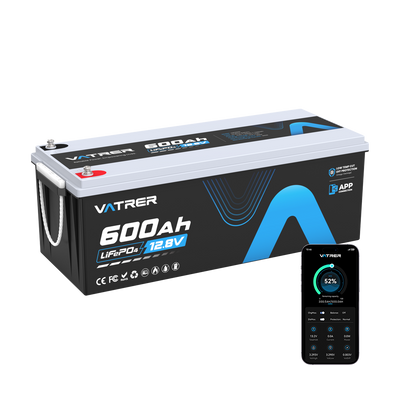
LiFePO4 vs Lead-Acid Batteries: The Smarter Choice
Reading time: 6 minutes
For most motorhome, caravan, marine, solar, and off-grid applications, LiFePO4 batteries are the better long-term option. They are lighter, charge faster, provide more usable capacity, hold voltage better, and usually last far longer than traditional lead-acid batteries.
Lead-acid batteries are still common across Europe because they are familiar, widely available, and cheaper to buy. For basic use, they can still do the job. But if you depend on battery power for longer trips, off-grid touring, solar storage, boating, or backup energy, LiFePO4 is usually the more practical and cost-effective choice over time.
LiFePO4 vs Lead-Acid: Main Differences
| Feature | LiFePO4 Battery | Lead-Acid Battery |
|---|---|---|
| Usable Capacity | Often 80% or more | Often 30% to 50% if you want longer life |
| Cycle Life | About 2,000 to 5,000 cycles | About 500 to 1,000 cycles |
| Charging Speed | Fast and efficient charging | Slower near full charge |
| Energy Efficiency | Higher efficiency with lower losses | More energy lost as heat and charging waste |
| Voltage Stability | Stable voltage through most of the discharge | Voltage drops more as capacity falls |
| Peukert Losses | Very low in typical use | More noticeable under high loads |
| Size | Compact for the usable energy provided | Larger for the same usable energy |
| Weight | Much lighter | Much heavier |
| Maintenance | Low maintenance | Flooded types need more care |
| Upfront Cost | Higher | Lower |
Usable Capacity: LiFePO4 Gives You More of What You Paid For
One of the biggest mistakes people make is comparing batteries only by the Ah rating on the label. A 100Ah LiFePO4 battery and a 100Ah lead-acid battery may look similar on paper, but they do not deliver the same usable energy in real life.
Lead-acid batteries do not like being deeply discharged again and again. To protect lifespan, many owners avoid using more than about half of the rated capacity. That means a 100Ah lead-acid leisure battery may only give around 30Ah to 50Ah of practical usable energy.
LiFePO4 batteries can usually be discharged much deeper without the same level of wear. A 100Ah LiFePO4 battery can often provide 80Ah or more of usable energy. For motorhomes, campervans, boats, and solar storage, that makes a big difference.
Charging: Lithium Makes Better Use of Mains, Solar, and Alternator Charging
Charging speed is another major advantage for LiFePO4. Lead-acid batteries charge reasonably quickly when they are low, but charging slows down as they approach full. That final stage can take a long time.
LiFePO4 batteries accept charge more efficiently and can reach full charge faster with the correct charger. This is useful when you are relying on solar panels, a DC-DC charger, campsite mains hook-up for a short stay, or limited generator time.
For touring users, faster charging means more flexibility. You can recover more energy during a drive, make better use of daylight, and spend less time worrying about whether the battery bank is fully topped up.
Lifespan and Reliability
LiFePO4 batteries usually offer a much longer cycle life than lead-acid batteries. A typical lead-acid battery may provide around 500 to 1,000 cycles, depending on the depth of discharge, charging method, temperature, and maintenance. LiFePO4 batteries commonly offer around 2,000 to 5,000 cycles.
This longer lifespan can make LiFePO4 cheaper in the long run, even though it costs more upfront. If you use your battery often, replacing lead-acid batteries several times can cost more than buying one quality lithium battery.
LiFePO4 is especially useful for:
- Motorhome leisure battery upgrades
- Campervan electrical systems
- Caravan off-grid power
- Marine and canal boat batteries
- Solar energy storage
- Portable power systems
- Backup power for homes and workshops
Voltage Sag and High-Load Performance
Lead-acid batteries suffer more from voltage sag. As the battery discharges, voltage drops. Under heavier loads, such as inverters, pumps, compressors, or motors, the drop can be even more noticeable.
This can cause appliances to perform poorly or shut down earlier than expected. It can also make the battery feel weak even when some capacity remains.
LiFePO4 batteries hold voltage much more steadily through most of the discharge cycle. That means your inverter, lights, fridge electronics, water pump, and other 12V equipment can run more consistently.
Size and Weight: A Big Advantage for Motorhomes and Boats
Weight matters in European leisure vehicles. Many motorhomes and campervans already run close to payload limits, and every kilogram counts. Lead-acid batteries are heavy, especially if you need several of them to get enough usable capacity.
LiFePO4 batteries are much lighter for the same usable energy. This can free up payload for water, bikes, tools, outdoor gear, passengers, or luggage. It can also make installation easier in compact battery lockers.
For boats, the weight saving can also help with handling, balance, and general efficiency.
Maintenance and Safety Features
LiFePO4 batteries are generally low maintenance. A quality lithium battery includes a built-in Battery Management System, also known as a BMS. The BMS helps protect the battery from overcharge, over-discharge, excess current, short circuits, and temperature-related problems.
Lead-acid batteries need more attention. Flooded lead-acid batteries may require water checks, ventilation, and terminal cleaning. AGM and gel batteries are easier to manage, but they still need correct charging and should not be repeatedly discharged too deeply.
If you want a battery system that is easier to manage during long trips or seasonal storage, LiFePO4 has a clear advantage.
Environmental Impact
Lead-acid batteries contain lead and acid, so proper recycling is essential. Recycling systems are well established, but lead is still a hazardous material and must be handled responsibly.
LiFePO4 batteries do not contain lead or acid and typically last much longer. Because they need fewer replacements, they can reduce waste over the full life of the system. They still need to be recycled correctly at end of life, but their long service life and high efficiency make them a strong option for users looking for cleaner energy storage.
When Lead-Acid Batteries Still Make Sense
Lead-acid batteries can still be a sensible choice in some situations. Not every user needs lithium.
- You need the lowest purchase price: Lead-acid is cheaper upfront.
- You mainly use electric hook-up: Heavy battery cycling may not be common.
- You only need occasional backup power: A basic battery may be enough.
- Your system is already designed for lead-acid: Staying with the same chemistry can keep things simple.
- Weight is not a concern: In fixed installations, heavy batteries may be acceptable.
When LiFePO4 Batteries Are the Better Choice
LiFePO4 is usually the better choice when the battery is used regularly and performance matters.
- You travel off-grid: More usable capacity gives longer time away from mains hook-up.
- You use solar charging: Lithium batteries make better use of available sunlight.
- You run an inverter: Stable voltage helps with higher-demand equipment.
- You need to save weight: This is especially important for motorhomes and campervans.
- You want longer service life: More cycles mean fewer replacements.
- You prefer low maintenance: No watering and fewer routine checks.
Conclusion
LiFePO4 batteries are usually better than lead-acid batteries for modern energy storage. They provide more usable capacity, faster charging, longer lifespan, steadier voltage, and much lower weight. For motorhomes, campervans, caravans, boats, solar systems, and backup power, those advantages can make a real difference.
Lead-acid batteries still have value when the budget is tight or the battery will only be used lightly. But if you rely on your battery often, LiFePO4 is usually the smarter long-term investment. It costs more at the beginning, but it gives you more power, less hassle, and better value over time.
Share