





48V Lithium Golf Cart Battery
Sort by:
4 products


Best Selling Vatrer Lithium Golf Cart Batteries
Vatrer Review on YouTuBe



FAQs
Yes. A properly matched 48V lithium golf cart battery can replace the multi-battery lead-acid bank in many 48V carts. Before converting, confirm the cart voltage, battery-compartment dimensions, controller requirements, cable layout and any 12V accessories. Vatrer golf cart battery conversion kits simplify the upgrade with a single LiFePO4 battery, matched lithium charger, LCD monitor and installation accessories.
Range depends on terrain, passengers, tyre condition, speed, accessories and temperature. Vatrer 48V 105Ah lithium golf cart batteries provide up to about 50 miles under suitable conditions, while the Vatrer 48V 150Ah provides up to about 70 miles. For Canadian cottages, campgrounds or hilly properties, leave extra range reserve instead of choosing capacity based only on your normal route distance.
Charging LiFePO4 cells below freezing requires temperature protection. Vatrer 48V golf cart batteries include low-temperature protection that stops charging around 0°C and allows charging to resume after the battery warms to a safe recovery temperature. If charging is blocked on a winter day, park the cart in a warmer garage and allow the battery temperature to rise rather than forcing the charging process.
For seasonal storage, disconnect unnecessary loads and avoid allowing the battery to sit deeply discharged for months. Keep the cart or battery in a dry location protected from prolonged extreme cold, and check the state of charge periodically. The built-in BMS and Bluetooth monitoring make it easier to check battery condition without relying only on the cart’s original battery gauge.
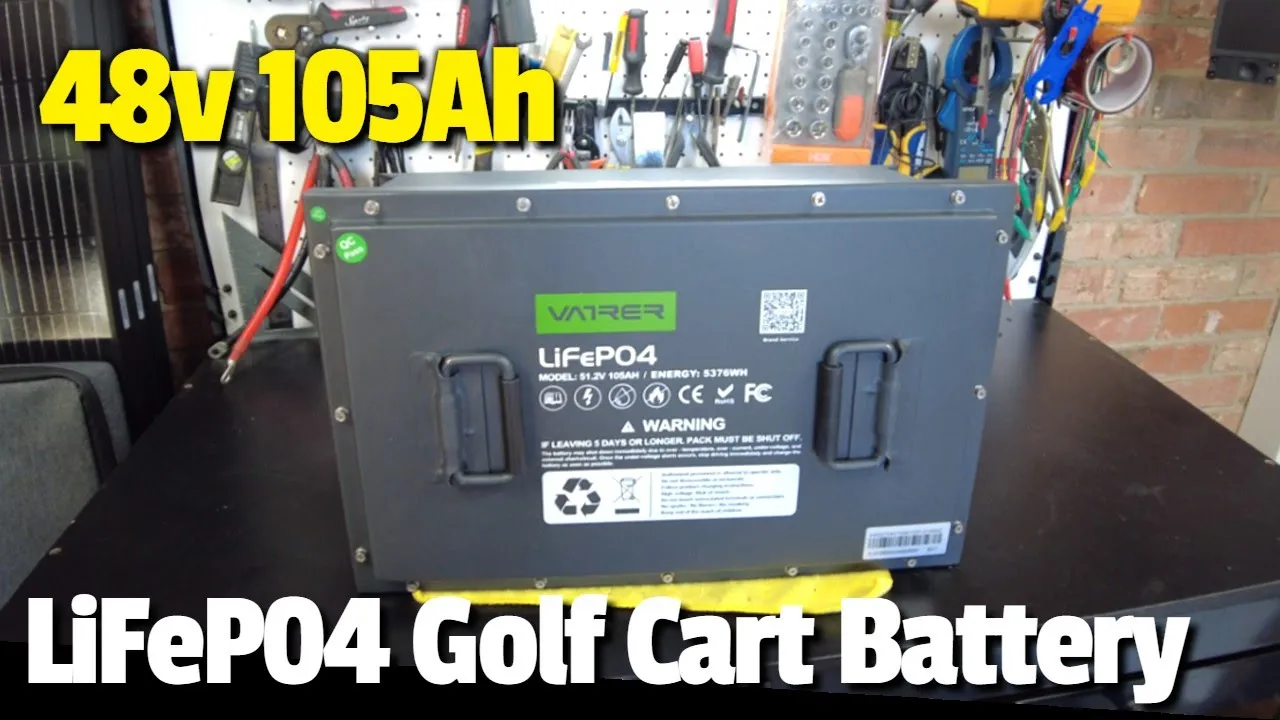
For normal golf-course, neighbourhood and property use, Vatrer 48V 105Ah offers a practical balance of size, range and power, with 5.376kWh and up to about 50 miles of driving range. A 48V 150Ah golf cart battery provides 7.68kWh and up to about 70 miles, which is more suitable for repeated daily trips, additional passengers or longer routes. Choose capacity based on your hardest typical day rather than the shortest trip you normally make.
Many 48V Club Car, EZGO and Yamaha carts can be converted to lithium, including common Precedent, DS, Onward, TXT, RXV, Drive, Drive2 and G29 configurations. Compatibility still depends on model year, controller, battery-compartment dimensions and wiring, so confirm these details before ordering rather than choosing solely by brand.
Yes. Use a charger with the correct LiFePO4 charging profile instead of assuming an original lead-acid charger is suitable. The Vatrer 48V lithium golf cart battery kit includes a matched LiFePO4 charger, with a full recharge taking about five hours under normal conditions.
A lithium upgrade can provide more consistent power on hills because LiFePO4 maintains voltage more steadily under load than an ageing lead-acid bank. Most Vatrer golf cart batteries support 200A continuous discharge and up to 10.24kW continuous output; a 300A model reaches up to 15.36kW for more demanding loads. Motor, controller, tyres, gearing, passenger weight and slope still determine the final climbing performance, so match BMS output to the cart rather than assuming the largest battery automatically produces the best result.
A properly maintained LiFePO4 golf cart battery can provide thousands of charge cycles. The Vatrer 48V lithium golf cart battery is designed around 4,000+ cycles, with service life potentially reaching roughly 8–10 years depending on depth of discharge, temperature, charging habits and storage. Using the correct charger and avoiding long periods at a deeply discharged state helps preserve capacity.
Yes, especially for carts used around large properties, campgrounds or seasonal locations where battery condition matters before a long trip. Vatrer Bluetooth monitoring lets you check information such as SOC, voltage, current and temperature from a phone, helping identify a low state of charge before it turns into range anxiety on the course or property.
Other LiFePO4 Batteries Recommended

$1,732.00 CAD
Unit price per





- Reliable Power, Empowering Lives.
- Vatrer specializes in LiFePO4 lithium batteries for golf carts, RVs, home energy storage, and off-grid applications, designed for reliable performance and long-term use.
