How to Ship Lithium Batteries in Canada: Rules & Packaging
Reading time: 13 minutes

Share
Need to ship a lithium battery within Canada or send one across the border? The process depends on more than the size of the box. Battery chemistry, watt-hour capacity, packaging condition, destination, and transport method all affect which shipping services you can use.
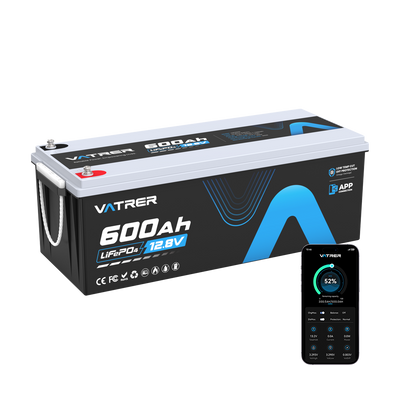
A small rechargeable battery installed in an electronic device may qualify for simplified shipping requirements. A standalone 12V LiFePO4 battery for an RV, boat, or off-grid solar system is a different story, particularly when it exceeds 100 watt-hours (Wh).
This guide explains Canada's lithium battery shipping regulations, how Canada Post handles different battery configurations, what to expect from regulated freight services, and how to prepare batteries for safe ground or air transportation.
Why Is Shipping Lithium Batteries Regulated in Canada?
Understanding the Fire and Short-Circuit Risks
Lithium-ion batteries store a considerable amount of energy in a relatively compact package. If a battery is crushed, overheated, internally damaged, or short-circuited, it may enter thermal runaway. This reaction can generate intense heat and flammable gases and may spread to neighbouring cells.
LiFePO4 batteries generally offer better thermal stability than some other lithium-ion chemistries. However, they are still classified as lithium-ion batteries for transportation purposes. A battery marketed as safer or more thermally stable is not automatically exempt from dangerous goods requirements.
Canadian Lithium Battery Shipping Regulations
Canada regulates dangerous goods transportation under the Transportation of Dangerous Goods Regulations (TDG Regulations), administered by Transport Canada.
Different rules apply depending on whether batteries travel by road, rail, air, or vessel. Commercial carriers also maintain acceptance policies that may be stricter than the minimum legal requirements.
Regulatory Framework for Shipping Lithium Batteries in Canada
| Transport Method | Applicable Regulations | Practical Considerations |
|---|---|---|
| Road and rail | Canadian TDG Regulations | Battery classification, packaging, marks, shipping documents, and possible exemptions |
| Domestic air cargo | TDG Regulations and applicable aviation dangerous goods requirements | Restrictions on standalone batteries, packing instructions, and airline acceptance |
| International air cargo | ICAO Technical Instructions and applicable IATA Dangerous Goods Regulations | State-of-charge restrictions, package limits, and dangerous goods declarations |
| International ocean freight | IMDG Code and applicable Canadian requirements | Marine dangerous goods documentation, packing, and container handling |
| Canada Post parcels | TDG requirements and Canada Post acceptance rules | Battery configuration, destination, and whether the parcel travels by air or surface |
Lithium Battery UN Numbers: How to Classify Your Shipment
UN3480 vs UN3481
Before arranging shipment, determine whether the battery is travelling alone, packed alongside equipment, or installed inside the equipment it powers.
These differences determine the applicable UN classification and, for air transport, the packing instruction.
Common Lithium Battery Shipping Classifications
| UN Number | Battery Type | Typical Shipping Situation |
|---|---|---|
| UN3480 | Rechargeable lithium-ion battery | A replacement LiFePO4 battery shipped separately |
| UN3481 | Lithium-ion battery packed with equipment | A replacement battery packed with the actual equipment it powers |
| UN3481 | Lithium-ion battery contained in equipment | A rechargeable battery installed inside an electronic device |
| UN3090 | Lithium metal battery | Non-rechargeable lithium metal batteries shipped separately |
| UN3091 | Lithium metal battery packed with or contained in equipment | Eligible devices containing primary lithium batteries |
Important: Packing a standalone RV battery with a charger, mounting bracket, or battery monitor does not automatically change its classification from UN3480 to UN3481. The accompanying equipment must be equipment that the battery actually powers.
How Are Battery-Powered Vehicles Classified?
Shipping a complete electric golf cart or mobility vehicle is different from sending its replacement battery. Canada has specific domestic vehicle classification provisions, while international transport rules include UN3556 for lithium-ion-battery-powered vehicles and UN3557 for lithium-metal-battery-powered vehicles.
Do not use the classification for a loose battery when shipping an entire vehicle. Confirm the correct UN entry for the route and transport mode with the carrier.
Canadian Ground Shipping Rules for Lithium Batteries
What Is TDG Special Provision 34?
Special Provision 34 provides reduced regulatory requirements for qualifying lithium batteries when all applicable conditions are satisfied.
For lithium-ion batteries, the familiar capacity limits are:
- Lithium-ion cells: A maximum of 20 Wh per cell.
- Lithium-ion batteries: A maximum of 100 Wh per battery.
- Standalone battery packages: Generally limited to 30 kg gross mass per package under the provision.
The exception also includes requirements for battery identification, short-circuit protection, inner and outer packaging, and marks. Except for specified exceptions, packages must be capable of withstanding a 1.2 m drop without releasing their contents or allowing dangerous contact between batteries.
Calculate battery energy using:
Watt-hours (Wh) = Nominal voltage (V) × Capacity (Ah)
For example, a 12.8V 100Ah LiFePO4 battery contains approximately 1,280 Wh of nominal energy. That exceeds the standard 100 Wh threshold, so it cannot use Special Provision 34's small-battery exemption.
Shipping Batteries Over 100 Wh
Many batteries used in Canadian RVs, fishing boats, cabins, and home backup systems exceed 100 Wh. These batteries are not automatically prohibited from transportation, but they generally need a carrier equipped to handle fully regulated dangerous goods.
For a fully regulated standalone UN3480 shipment, expect requirements involving suitable tested packaging, the Class 9 lithium battery hazard label, the appropriate shipping description, documentation, and trained personnel.
Some large, strong-cased batteries may qualify for specific alternative packaging arrangements. These exceptions need to be checked against the applicable TDG packaging provisions rather than assumed from the battery's weight alone.
Small vs Large Lithium Battery Ground Shipping Requirements
| Requirement | Qualifying Batteries Up to 100 Wh | Fully Regulated Batteries Over 100 Wh |
|---|---|---|
| Typical shipping category | May qualify for TDG Special Provision 34 | Usually Class 9 regulated dangerous goods |
| Packaging | Protective packaging meeting the applicable exception conditions | Approved dangerous goods packaging or an authorized alternative |
| Package marks | Lithium battery mark, unless an exception applies | Applicable UN marking and Class 9 lithium battery label |
| Shipping documents | Generally exempt from full TDG documentation when all conditions are met | TDG shipping documentation generally required |
| Training | Reduced requirements may apply | Applicable TDG training and certification requirements |
| Carrier acceptance | Must still be confirmed | Dangerous goods service must be arranged |
Illustration note: The following comparison graphic was originally prepared using US ground-shipping examples. For Canadian shipments, use the TDG requirements in the table above rather than the US-specific figures shown in the graphic.

Can You Ship Lithium Batteries Through Canada Post?
Canada Post accepts certain lithium batteries, but its rules depend on how the battery is packed and which service is used.
According to Canada Post's battery acceptance requirements:
- Battery installed in equipment: Certain qualifying shipments can travel through domestic air and surface services.
- Battery packed with equipment: Eligible shipments can generally travel through domestic surface services, subject to applicable conditions.
- Standalone lithium batteries: Qualifying batteries may be accepted through domestic surface services, but not domestic air services.
- Remote Air Stage destinations: Surface-labelled services may still be unavailable when transportation requires an aircraft.
- International parcels: Canada Post's lithium battery acceptance is limited to Canada and the United States, with additional restrictions on parcels going to the US.
Canada Post's standard US parcel acceptance is limited to qualifying batteries installed in equipment. Standalone batteries and batteries merely packed with equipment are not accepted through that service.
A large 100Ah LiFePO4 battery does not become eligible for regular postal shipping simply because you select a surface delivery option. Use a commercial dangerous goods freight provider when required.
Shipping Damaged or Defective Lithium Batteries
Swollen, leaking, overheated, physically damaged, or safety-recalled batteries must not be sent through ordinary parcel services.
Transport Canada's Special Provision 137 addresses damaged or defective lithium batteries, including specified packaging under UN packing instructions P908 or LP904. Particularly unstable batteries may be prohibited from transportation under normal provisions.
If your battery needs to be returned for a safety-related defect, contact the manufacturer or supplier before packaging it. Never book a standard return label and assume the original packaging is sufficient.
Shipping Lithium Batteries by Air in 2026
Passenger Aircraft Restrictions and the 30% Charge Limit
Air cargo requirements are considerably stricter than ordinary ground transportation rules.
Under the 2026 IATA Dangerous Goods Regulations, standalone lithium-ion batteries classified as UN3480 under Packing Instruction 965 are prohibited as cargo on passenger aircraft under normal procedures. Approved cargo-aircraft transport may be possible, with batteries generally limited to a maximum 30% state of charge (SoC).
From January 2026, the 30% SoC requirement also applies to lithium-ion batteries packed with equipment under PI 966 Section I, as well as Section II batteries rated above 2.7 Wh. Batteries installed inside equipment under PI 967 follow different provisions, with a reduced charge level strongly recommended rather than generally mandatory.
2026 Lithium-Ion Battery Air Cargo Rules
| Packing Instruction | Configuration | Passenger Aircraft | State of Charge |
|---|---|---|---|
| PI 965 | UN3480, shipped alone | Normally prohibited | Maximum 30%, unless specially approved |
| PI 966 | UN3481, packed with equipment | Permitted within applicable limits | Maximum 30% under Section I and Section II above 2.7 Wh |
| PI 967 | UN3481, contained in equipment | Permitted within applicable limits | 30% recommended, or indicated capacity no higher than 25% |

What About Air Freight to Northern Communities?
Canada's geography creates a practical complication: a destination that looks domestic on a shipping label may only be served by aircraft.
If you are sending batteries to northern or remote communities, confirm whether the final transport leg involves air service. A battery approved for road transportation may not be acceptable for a remote Air Stage delivery.
For larger LiFePO4 batteries, it may be necessary to arrange an authorized dangerous goods cargo service or another permitted transport route.
How to Package Lithium Batteries for Shipping
Protect the Terminals and Prevent Movement
Proper packaging starts with preventing electrical contact and physical damage.
- Protect the terminals: Use suitable insulating terminal caps or other secure non-conductive protection.
- Separate conductive materials: Keep batteries away from loose tools, metal accessories, and exposed wiring.
- Use appropriate inner packaging: Enclose and protect batteries according to the applicable packing instruction.
- Prevent movement: Use suitable cushioning and restraints so batteries cannot shift or strike each other.
- Secure installed batteries: Ensure equipment cannot activate accidentally during transit.

Choosing Outer Packaging for Heavy LiFePO4 Batteries
For large RV and marine batteries, the outer package must be appropriate for the battery's mass, dimensions, and shipping classification.
Fully regulated shipments commonly require UN-approved packaging or another permitted packaging arrangement. A box marked with a UN packaging code is not automatically suitable for every battery weight or packing configuration.
Where a heavy battery is secured on a pallet, it must be restrained against movement and protected from impacts. Terminals must not carry the weight of other cargo.
Packaging Checks Before Dispatch
| Shipping Situation | What to Verify |
|---|---|
| Small qualifying battery | Protective packaging, 1.2 m drop capability where required, and applicable lithium battery mark |
| Fully regulated UN3480 battery | Approved packaging or authorized alternative, Class 9 label, and documents |
| Battery packed with equipment | Correct UN3481 classification, separation, cushioning, and relevant packing instruction |
| Heavy battery secured to a pallet | Applicable large-battery provisions, mechanical restraint, and terminal protection |
| Damaged or defective battery | Separate classification and transport authorization before packaging |
Overpacks and Pallet Shipments
An overpack combines prepared packages into a larger handling unit. If required package markings or labels are concealed, the applicable markings must be reproduced on the outside along with an OVERPACK marking where required.
Wrapping multiple battery boxes on a pallet does not remove their individual dangerous goods obligations.
Required Documents for Lithium Battery Shipping in Canada
UN38.3 Test Summary and Safety Data Sheet
Lithium battery designs generally must satisfy the testing requirements of subsection 38.3 of the UN Manual of Tests and Criteria.
A UN38.3 test summary documents the battery design's compliance with applicable transport tests, including vibration, shock, thermal cycling, and short-circuit testing.
Shippers should obtain the correct test summary from the manufacturer or supplier and make it available when required. It is not normally necessary to place a printed copy in every parcel.
An SDS (Safety Data Sheet) contains different hazard and handling information. A carrier may request it, but an SDS is not a substitute for UN38.3 documentation.
Shipping Documents and Dangerous Goods Declarations
Fully regulated shipments normally require the applicable dangerous goods shipping document identifying the UN number, proper shipping name, class, quantity, and other prescribed information.
Regulated air cargo may also require an IATA Shipper's Declaration for Dangerous Goods, depending on the packing instruction and section.
Documents You May Need
| Document | Canadian Ground Freight | International Air Freight |
|---|---|---|
| UN38.3 test summary | Applicable battery design evidence must be available | Applicable battery design evidence must be available |
| SDS | May be requested by carrier | May be requested by carrier |
| Dangerous goods shipping document | Generally required for fully regulated shipments | Required dangerous goods information as applicable |
| IATA Shipper's Declaration | Not applicable to road-only shipment | Required for specified regulated packing instruction sections |
| Customs documentation | Not normally needed for domestic transport | Required where international customs procedures apply |
Common Lithium Battery Shipping Mistakes in Canada
Booking an Ineligible Parcel Service
One common mistake is assuming that a battery can travel through Canada Post whenever its watt-hour rating is below 100 Wh. Canada Post also considers whether the battery is installed, packed with equipment, or shipped alone, as well as the destination and transportation service.
Another mistake is selecting a surface parcel service for a destination that requires air transportation.
Incorrect Labels, Packaging, or Battery Capacity
Using a lithium battery mark when a fully regulated Class 9 hazard label is required can result in a non-compliant shipment. Likewise, a 100Ah battery should not be mistaken for a 100Wh battery.
Do not assume that reusing a manufacturer's carton automatically satisfies the current transportation rules. Confirm whether its packaging approval applies to your exact battery configuration.
Improper Battery Returns
Never send a safety-defective battery through an ordinary return service. A battery that no longer holds its rated capacity may not necessarily be classified as dangerous due to damage, but swelling, leaking, thermal damage, or an internal safety fault requires a more cautious assessment.
Canadian TDG violations can lead to enforcement action and financial penalties. Businesses handling fully regulated shipments also need to follow applicable training and certification requirements.
Frequently Asked Questions
Can I mail a lithium battery through Canada Post?
Yes, certain batteries qualify. Standalone lithium batteries are generally restricted to eligible domestic surface services, while batteries installed in equipment may qualify for additional services. Batteries over 100 Wh generally require a regulated freight solution rather than ordinary postal delivery.
Can I ship a 12V 100Ah LiFePO4 battery in Canada?
Yes, transportation may be possible through an authorized dangerous goods freight carrier. A 12.8V 100Ah battery is rated at approximately 1,280 Wh and does not meet the standard 100Wh small-battery exception.
Can lithium batteries be shipped from Canada to the United States?
Yes, through an appropriate carrier and service. Canada Post accepts only certain qualifying batteries installed in equipment for US parcel services. Commercial freight shipments must meet the applicable cross-border dangerous goods and customs requirements.
Are LiFePO4 batteries considered dangerous goods?
Yes. LiFePO4 is a lithium-ion battery chemistry and is covered by applicable lithium-ion transportation requirements, generally under UN3480 or UN3481 depending on its packaging configuration.
Can I ship lithium batteries to remote Canadian communities?
It depends on the transport route and battery classification. Some remote communities require air transportation, even when a surface parcel service is selected. Confirm carrier acceptance before sending batteries to northern or remote destinations.
Conclusion: Choosing the Right Lithium Battery Shipping Method
Shipping lithium batteries safely in Canada begins with three checks: identify the correct UN classification, confirm the watt-hour rating, and verify the transport service's acceptance requirements.
Small batteries may qualify for simplified TDG rules, while large LiFePO4 batteries for RVs, marine applications, and off-grid systems generally need specialized freight arrangements. Air transportation introduces additional restrictions, particularly for standalone lithium-ion batteries.
Before arranging collection, check the battery manufacturer's transport documentation and confirm packaging, labelling, and service eligibility with the carrier. This can prevent refused shipments, unexpected delays, and unnecessary return costs.
Sources & References
- Transport Canada — Transporting Batteries
- Government of Canada — Transportation of Dangerous Goods Regulations
- Canada Post — ABCs of Mailing: Batteries
- IATA — 2026 Battery Guidance Document
- International Maritime Organization — IMDG Code
Share