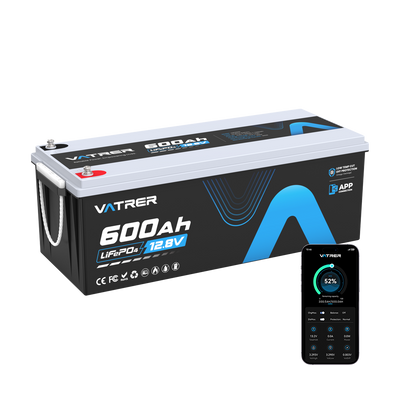
Are Budget Lithium Trolling Motor Batteries Safe?
Reading time: 17 minutes

Share
A budget lithium trolling motor battery can be safe, but the price tag is not enough to tell you whether it belongs in your boat. A dependable battery should use clearly identified LiFePO4 cells, include a properly rated Battery Management System, match the voltage and current demands of your trolling motor, and come with clear charging and installation instructions.
Fire risk is only one part of the safety question. On Canadian lakes, rivers, and coastal waters, an undersized BMS can shut the motor off while you are working against wind or current. Incorrect cable sizing, loose terminals, moisture, and cold-weather charging can also create problems even when the cells themselves are functioning normally.
The safest approach is to compare specifications rather than marketing claims. A lower-priced battery may be a practical choice when its electrical limits are transparent and suitable for your motor.


Can a Cheap Lithium Trolling Motor Battery Be Safe?
A low purchase price does not automatically mean unsafe construction. Some manufacturers reduce costs by selling directly online, using a basic enclosure, limiting accessories, or leaving out optional features such as Bluetooth monitoring and self-heating.
Those savings are not necessarily a concern. The problems begin when a manufacturer cuts costs in areas that affect electrical stability, moisture resistance, quality control, or customer support.
Acceptable Ways a Manufacturer May Lower the Price
A reasonably priced battery may still be dependable if the savings come from features such as:
- A basic moulded battery case
- No Bluetooth app or built-in display
- No automatic heating system
- Fewer cables or mounting accessories
- A shorter but clearly written warranty
- Online-only sales rather than a large retail network
Bluetooth monitoring can be convenient for checking temperature, voltage, and estimated state of charge. However, Bluetooth does not replace the BMS and does not make an electrically unsuitable battery safe for a high-current motor.
A simple battery with a correctly sized BMS may be a better purchase than a feature-packed model that does not publish its continuous discharge limit.
Warning Signs in a Budget Battery Listing
Be cautious when you notice any of the following:
- The listing says “built-in BMS” but does not state its current rating.
- Only a peak or surge current is shown.
- The voltage, amp-hour, watt-hour, and power figures do not agree.
- The battery appears unusually small or light for its claimed capacity.
- No operating manual can be downloaded before purchase.
- Temperature limits vary between the product page and manual.
- The warranty is described in advertising graphics but not in written terms.
- The seller cannot explain how the battery restarts after a BMS shutdown.
You can check whether the capacity claim is reasonable by comparing voltage, amp-hours, and watt-hours.
12.8V × 100Ah = 1,280Wh
A 12.8V 100Ah battery should therefore store approximately 1,280 watt-hours of rated energy. If the same listing states only 640Wh, the battery contains energy closer to a 50Ah model. Conflicting numbers are a strong reason to look elsewhere.
Check the Cell Chemistry and Internal Construction
For deep-cycle trolling motor use, look for a battery that clearly identifies its chemistry as LiFePO4, also known as lithium iron phosphate. This chemistry is widely used for marine energy storage because it maintains a relatively stable voltage during discharge and is less thermally sensitive than several higher-energy lithium-ion chemistries.
However, the chemistry name alone does not confirm good build quality. Cell matching, internal connections, terminal construction, sensors, busbars, and enclosure design all affect long-term reliability.
Specifications a Trustworthy Battery Should Publish
A credible lithium trolling motor battery should provide most of the following information:
- Nominal voltage
- Rated amp-hour capacity
- Total energy in watt-hours
- Recommended charging voltage
- Maximum charging current
- Continuous discharge current
- Peak discharge current and duration
- Charging and discharging temperature ranges
- Battery dimensions and weight
- Series or parallel connection limits
- Relevant safety and transport test information
- A complete installation and operating manual
Closely matched cells are especially important. If one cell reaches its high- or low-voltage limit before the others, the BMS may disconnect the entire battery even though some energy remains. To the boat owner, this can look like a motor fault, a charger problem, or an inaccurate battery monitor.
Marketplace terms such as “Grade A cells” are difficult to verify on their own. Consistent technical data, documented capacity tests, traceable support, and a clear warranty are more useful than an unsupported cell-grade label.
Why the BMS Rating Matters
The Battery Management System monitors cell voltage, battery current, and internal temperature. When the battery moves beyond a safe operating limit, the BMS disconnects charging or discharging to protect the cells.
A suitable trolling motor battery should normally provide protection against:
- Overcharging
- Excessive discharge
- Overcurrent
- Short circuits
- High-temperature operation
- Charging below the permitted temperature
- Serious cell imbalance
A long list of protections is useful, but the BMS current rating remains critical. A battery may have every common cutoff function and still be unable to power your motor at full speed.
Important BMS Ratings for Trolling Motor Use
| BMS rating | What it means | What to verify |
|---|---|---|
| Continuous discharge current | Current the battery can deliver for an extended period | It should meet or exceed the motor’s maximum draw |
| Peak discharge current | Short-duration surge capability | Check both the current and permitted duration |
| Overcurrent cutoff | Current level that causes the BMS to disconnect | It should remain above normal full-load demand |
| Maximum charge current | Highest permitted charger output | The charger must remain within this limit |
| High-temperature cutoff | Temperature at which charging or output is stopped | Check charging and discharging limits separately |
| Low-temperature charge cutoff | Prevents charging when the cells are too cold | Often operates near 0°C, depending on the battery |
| Recovery method | Procedure required after a protection event | May involve removing the load, connecting a charger, or pressing reset |
Do not confuse peak current with continuous current. A battery advertised with a 200A peak rating may still have a continuous limit of only 50A. If your trolling motor can draw 55A for more than a brief moment, that battery may shut down during sustained operation.
For reference, a 12V 100Ah lithium battery contains approximately 1,280Wh of rated energy. Some available BMS configurations may provide 100A or 150A of continuous output. Capacity and current rating should be compared separately because amp-hours do not describe how much current the battery can safely deliver at one time.
Match the Battery to Your Trolling Motor
Even a well-manufactured lithium battery can be unsafe or unreliable when it is connected to the wrong motor. Start with system voltage, then compare the motor’s maximum current demand with the battery’s continuous BMS rating.
Use the Correct System Voltage
Trolling motors are designed to operate at a specific voltage. Your battery or battery bank must supply the same system voltage.
Common Trolling Motor Battery Configurations
| Motor system | Typical lithium arrangement | LiFePO4 nominal voltage |
|---|---|---|
| 12V | One compatible 12V battery | 12.8V |
| 24V | One 24V battery or two approved 12V batteries in series | 25.6V |
| 36V | One 36V battery or three approved 12V batteries in series | 38.4V |
| 48V | One 48V battery or four approved 12V batteries in series | 51.2V |
LiFePO4 nominal voltage is slightly higher than the common name of the system. For example, a battery sold for a 12V motor normally has a nominal voltage of 12.8V because it contains four 3.2V cells connected in series.
Do not connect several 12V batteries in series unless the manufacturer specifically approves that configuration. Some BMS designs are intended for single-battery operation and may not tolerate the total voltage of a series-connected bank.
Increasing capacity does not correct a voltage mismatch. A 100Ah 12V battery is still unsuitable for a motor designed for a 24V system.
Compare Continuous Current with Motor Draw
Amp-hours indicate how much energy the battery stores. Continuous discharge current indicates how much electrical load it can support without shutting down.
Think of amp-hours as the size of a fuel tank and the continuous current rating as the size of the fuel line. A large tank cannot supply equipment properly when the outlet is too restricted.
For a trolling motor with a maximum draw of 55A:
- 100Ah battery with a 50A BMS: likely to trip under sustained full load.
- 100Ah battery with a 60A BMS: technically above the stated draw but with limited margin.
- 100Ah battery with a 100A BMS: provides substantial current headroom.
The motor will not automatically pull 100A simply because the battery is capable of supplying it. The motor and operating conditions determine the current demand.
Use these four figures when checking compatibility:
- Motor system voltage
- Motor maximum amp draw
- Battery continuous discharge rating
- Battery overcurrent cutoff level
It is sensible to leave some margin above the motor’s published maximum draw. Manufacturing tolerances, heavy weeds, propeller damage, a loaded boat, strong current, and extended full-speed use can all increase demand.
There is no universal rule saying every trolling motor battery needs a 100A BMS. A compact motor drawing a maximum of 30A may operate comfortably with a 50A continuous rating. A larger motor may need 80A, 100A, or more.
Understand What Happens After a BMS Trip
When the BMS disconnects the output, the motor normally stops immediately. Some batteries automatically recover when the load is removed. Others require a charger connection, a power cycle, or a manual reset.
This difference matters on open water. A temporary shutdown near a sheltered dock is inconvenient. The same shutdown while crossing a windy Canadian lake or moving through river current can become a serious operational problem.
Using Multiple Batteries in Series
For 24V, 36V, or 48V systems, all series-connected batteries should behave as similarly as possible.
Use batteries that match in:
- Brand and model
- Rated capacity
- BMS current rating
- Age and usage history
- State of charge
- Operating temperature
If one battery is older or less balanced, it may reach its voltage limit before the others. Its BMS can then shut down the entire battery bank even when the remaining batteries still hold usable energy.
The charger must also suit the bank. Depending on the installation, you may use a multi-bank lithium charger that charges each 12V battery separately or a charger designed for the complete 24V, 36V, or 48V system.
Do not assume that a charger with several 12V outputs can charge a single-case high-voltage lithium battery. Follow the battery and charger manufacturers’ connection instructions.
Is the Battery Built for Canadian Marine Conditions?
LiFePO4 chemistry does not make a battery waterproof or vibration-proof. The enclosure, terminal seals, mounting method, cables, and installation location determine how well it handles spray, rain, vibration, cold storage, and rough water.
Water and Ingress Protection
Look for a published ingress-protection rating. An IP65 enclosure, for example, is tested against dust and water jets. It is not designed for submersion or long-term exposure to standing bilge water.
A marine lithium battery for trolling motor use should ideally include:
- Protected or recessed terminals
- Secure terminal covers
- Corrosion-resistant fasteners
- A rigid case around the terminal area
- Strong handles or mounting points
- Internal support against repeated vibration
- Clear marine installation instructions
Install the battery above the lowest part of the bilge. Use a rigid battery tray or box with straps that prevent sliding, tipping, or striking nearby equipment. Support heavy cables separately so that wave action and vibration do not place stress on the battery terminals.
Salt residue can attract moisture, create conductive paths, and accelerate corrosion. Disconnect the battery before cleaning the exterior, use fresh water carefully, and dry the terminals and enclosure completely before restoring power.
Vatrer battery enclosures with an IP65 rating can resist splashes and water spray under the applicable test conditions. Even so, the battery should still be installed above the waterline and protected from flooding.
When to Stop Using the Battery
Disconnect and remove the battery from service if you notice:
- A swollen or distorted enclosure
- Cracks around the terminals
- Melted insulation or connectors
- Unexpected heat while the battery is idle
- A burning or chemical smell
- Water inside the sealed case
- A terminal that rotates or pulls loose
Do not open a sealed lithium battery to inspect or repair the internal cells. Contact the manufacturer, supplier, or an appropriate battery recycling facility.
Check the Warranty and Canadian Support Options
A long warranty period is only useful when the claims process is practical. Before ordering, read the complete warranty terms rather than relying on a promotional badge.
Confirm:
- Which battery failures are covered
- Whether marine use is included
- Whether capacity loss is covered and at what threshold
- What proof of purchase is required
- Who pays return shipping
- Where returns or inspections are handled
- Whether service is available within Canada
- Which installation mistakes void the warranty
Shipping a heavy battery across the border can make a warranty claim expensive or inconvenient. Canadian buyers should check whether replacement stock, technical support, and return service are available domestically.
Individual negative reviews do not necessarily indicate a defective product line. Look for repeated patterns involving early capacity loss, unexplained BMS trips, swelling, contradictory specifications, or unanswered warranty requests.
Choose the Right Capacity for Your Boat
Capacity determines how long the motor can run, but it does not correct an undersized BMS, incorrect voltage, or unsafe wiring. Choose capacity according to average current draw, boat weight, trip duration, weather exposure, and the reserve needed to return safely.
50Ah vs 100Ah Lithium Trolling Motor Batteries
At the same voltage, a 100Ah battery stores approximately twice the energy of a 50Ah battery.
| Comparison | 12V 50Ah LiFePO4 | 12V 100Ah LiFePO4 |
|---|---|---|
| Nominal voltage | 12.8V | 12.8V |
| Rated energy | Approximately 640Wh | Approximately 1,280Wh |
| Relative runtime | Baseline | Approximately twice as long |
| Typical application | Short outings and lighter boats | Longer trips and heavier loads |
| Physical size | Usually more compact | Usually larger |
| Weight | Lower | Higher |
| Charging time with the same charger | Baseline | Approximately twice as long |
A 50Ah battery may be enough for a canoe, kayak, compact inflatable, or small aluminum fishing boat used for short trips at low or moderate speed.
A 12V 100Ah lithium trolling motor battery provides more reserve for longer distances, strong wind, changing current, extra fishing gear, and colder conditions. The trade-offs are a larger enclosure and a longer charging time when the same charger is used.
A larger amp-hour rating does not automatically make the battery safer. It only increases stored energy. The BMS must still support the motor’s maximum current.
Estimate Runtime Conservatively
Use the following planning formula:
Estimated runtime = usable capacity ÷ average current draw
For trip planning, using 80% to 90% of the rated capacity leaves a reserve for battery age, low temperatures, changing wind, and the return journey.
Approximate Runtime Using 85% of Rated Capacity
| Average current draw | 50Ah battery | 100Ah battery |
|---|---|---|
| 10A | 4.25 hours | 8.5 hours |
| 20A | 2.1 hours | 4.25 hours |
| 30A | 1.4 hours | 2.8 hours |
| 40A | 1.1 hours | 2.1 hours |
| 50A | 0.85 hour | 1.7 hours |
For example:
100Ah × 0.85 ÷ 20A = 4.25 hours
This is a planning estimate rather than a guaranteed runtime. Real current draw changes with speed and operating conditions.
Runtime may be reduced by:
- Strong headwinds
- River or tidal current
- Extra passengers and equipment
- Weeds wrapped around the propeller
- A bent or damaged propeller
- Continuous high-speed use
- Low battery temperature
- Fish finders or other loads connected to the same battery
Aim to return with approximately 15% to 25% capacity remaining. That reserve can be valuable when weather changes quickly or the return route takes longer than expected.
Use a Compatible Lithium Charger
Many 12.8V LiFePO4 batteries charge at approximately 14.4V to 14.6V, but the battery manual should always be treated as the final reference.
Before using a charger, verify that:
- It provides a suitable LiFePO4 charging profile.
- Its maximum voltage remains within the battery’s limit.
- Its current output does not exceed the permitted charge current.
- Equalization and desulphation modes can be disabled.
Some lead-acid chargers happen to use a voltage profile that works with certain LiFePO4 batteries. Others use high-voltage recovery pulses, equalization, or long float stages that may not be suitable. Compare the complete charger profile with the battery manual rather than relying only on the label.
Approximate charging times include:
- 100Ah battery with a 10A charger: about 10 to 12 hours
- 100Ah battery with a 20A charger: about 5 to 6 hours
- 50Ah battery with a 10A charger: about 5 to 6 hours
Cold-Weather Charging in Canada
Charging LiFePO4 cells below approximately 0°C can cause permanent cell damage. A low-temperature cutoff stops incoming charge current when the cells are too cold. A self-heating system actively warms the battery before charging resumes.
These are separate features. A battery can have low-temperature protection without having a heater.
For winter storage, ice-fishing support equipment, early spring launches, or unheated boathouses, a self-heating lithium battery may be worth considering. Some systems stop charging close to 0°C, warm the cells, and resume charging after the internal temperature rises to a safer level.
Bluetooth monitoring may display the internal temperature, but it cannot block unsafe charging unless the BMS includes a low-temperature cutoff.
Install the Battery, Wiring, and Protection Correctly
The battery’s internal BMS protects the cells. It does not replace the external fuse or circuit breaker needed to protect the boat’s cables and connected equipment.
Install a correctly sized fuse or marine-rated circuit breaker close to the positive battery terminal. Follow the trolling motor manufacturer’s recommendations for:
- Maximum current draw
- Fuse or breaker rating
- Cable gauge
- Maximum cable length
- Plug and receptacle rating
Long cable runs increase electrical resistance and voltage drop. High-current 12V motors may require heavier cable than expected, especially when the battery is installed far from the motor.
A safe physical installation should include:
- A rigid battery tray or box
- Straps that prevent movement in every direction
- Covers over both terminals
- Cable support near the battery
- Protection from sharp metal edges
- No loose tools or fishing tackle near the terminals
- Clearance above standing water
- Clean and securely tightened connections
Follow the specified terminal torque. Overtightening may damage the threaded insert, while a loose connection creates resistance and heat.
When Is a Budget Battery Good Enough?
A lower-cost LiFePO4 trolling motor battery may be suitable when:
- The motor uses a moderate-current 12V system.
- Trips are short and remain reasonably close to shore.
- The boat is a kayak, canoe, inflatable, or small fishing boat.
- The continuous BMS rating is clearly stated.
- The charging requirements are easy to verify.
- The enclosure is suitable for the installation location.
- You have paddles, an auxiliary motor, or another way to return safely.
Do not sacrifice compatibility simply to obtain a lower price. A 100Ah battery with a 50A BMS is still a poor match for a trolling motor that can continuously draw 55A.
When Is It Worth Paying More?
A higher price is justified when it provides a feature that solves a real problem in your installation.
| Operating condition | Feature worth considering | Practical benefit |
|---|---|---|
| 24V or 36V motor | Approved series support or one high-voltage battery | Fewer balancing and compatibility issues |
| High-current motor | Higher continuous BMS current | More margin before a shutdown |
| Cold-weather charging | Low-temperature cutoff and self-heating | Improved charging protection near or below 0°C |
| Remote fishing locations | More reserve capacity and monitoring | Earlier warning before energy runs low |
| Coastal use | Better sealing and corrosion-resistant hardware | Reduced risk of moisture-related faults |
| Frequent seasonal use | Documented cycle performance and practical warranty service | Better long-term value |
| Limited battery space | Accurate dimensions and greater energy density | Easier installation without reducing capacity |
A premium logo does not compensate for missing electrical data. Pay more for measurable current capacity, environmental protection, cold-weather performance, documentation, or support—not for vague marketing language.
Budget Lithium Trolling Motor Battery Checklist
Before ordering, confirm that:
- The chemistry is clearly identified as LiFePO4.
- The nominal voltage matches the trolling motor.
- The amp-hour and watt-hour ratings agree.
- The continuous BMS current is published.
- The continuous rating exceeds the motor’s maximum draw.
- The peak-current duration is stated.
- Overcurrent, short-circuit, and temperature protections are listed.
- The low-temperature charging limit is explained.
- Series connection is approved when required.
- Ingress-protection or marine enclosure information is available.
- Charger voltage and current requirements are published.
- The warranty terms can be read before purchase.
- Canadian return and support arrangements are practical.
- The manufacturer provides a complete manual.
- Reviews do not show a repeated pattern of shutdowns, swelling, or failed claims.
Reject any battery that hides its chemistry, continuous discharge rating, charger limits, or BMS recovery procedure. Missing technical information is not worth accepting simply to save money.
Conclusion
Cheap lithium trolling motor batteries are not automatically unsafe. A well-specified budget LiFePO4 battery can be a sensible option for moderate 12V loads, lighter boats, and shorter trips.
Safety depends on whether the battery matches the motor voltage, supports the full current demand, has a suitable BMS, charges safely in Canadian temperatures, and is installed with correct wiring, circuit protection, and moisture control.
For remote lakes, fast-moving rivers, coastal water, cold-weather charging, or higher-current 24V and 36V systems, additional current headroom, reserve capacity, stronger enclosure protection, and dependable Canadian support may justify paying more. When the essential specifications are missing or inconsistent, remove the battery from your shortlist regardless of its price.
Share