Golf Cart Weight and Wet Grass Traction: How to Stay in Control
Reading time: 10 minutes

Share
Anyone who has driven a golf cart early in the morning, after rain, or across damp fairways knows the feeling. The grass looks fine, but the moment you press the accelerator, the rear tires hesitate, spin, or slide just enough to make you ease off the pedal.
On wet courses, traction is not just about speed. It is about control, steering confidence, stopping distance, and protecting the turf. One factor many owners overlook is golf cart weight. More specifically, traction depends on how much the cart weighs, where that weight sits, what tires are fitted, and how the cart is driven.
For Canadian golfers, campground owners, course operators, and cart users on cottage properties, wet grass is common in spring, after summer storms, and during cool fall mornings. Understanding how weight affects traction helps you drive with more confidence and reduce turf damage.


Why Golf Cart Weight Matters on Wet Courses
Wet grass behaves differently from dry turf. A thin layer of water between the tire and grass reduces friction. On flat ground, this may only feel like a slight delay. On hills, turns, or during braking, that reduced friction can quickly become wheel spin or sliding.
Weight affects how firmly the tires press into the ground. Some weight helps the tread stay in contact with the surface. Too little pressure can make the tires skim across wet grass. Too much weight can compress saturated turf, squeeze water upward, and create a slick surface under the tires.
On wet fairways, cart weight can influence:
- How easily the rear tires spin when starting.
- How stable the cart feels while turning.
- How long it takes to stop safely.
- How much the cart marks or damages soft turf.
- How predictable the cart feels on slopes.
This is why two carts can behave very differently in the same wet conditions. One may feel planted and easy to control, while another slides, spins, or feels nervous through corners.
How Golf Cart Weight Affects Traction on Wet Grass
Traction comes from friction between the tires and the ground. On wet grass, available friction is already reduced, so weight becomes more noticeable.
A moderate amount of weight can improve tire contact and help the tread grip through the grass. But once the cart becomes too heavy for the surface, the benefit starts to disappear. Instead of improving grip, excess weight can flatten the turf, increase rutting, and make sliding worse during turns or braking.
In real use:
- Light carts may feel nimble but can lose rear-wheel traction on wet slopes.
- Medium-weight carts often provide the best balance of grip, control, and turf protection.
- Very heavy carts may feel stable in a straight line but can take longer to stop and may damage soft turf.
General Weight Reference for Wet Course Use
| Cart Weight Category | Typical Total Vehicle Weight | Wet-Grass Traction | Handling Feel | Turf Impact |
|---|---|---|---|---|
| Light | Under about 900 - 1,000 lbs | Moderate, may spin on slopes | Easy to steer | Low |
| Medium | About 1,000 - 1,200 lbs | Balanced and predictable | Stable | Moderate |
| Heavy | Over about 1,200 lbs | Strong in a straight line, weaker in sudden turns | Slower to respond | Higher |
The goal is not to make the cart as heavy as possible. The goal is controlled tire contact. A well-balanced cart with the right tires and smooth driving can outperform a heavier cart that is poorly set up.
Heavy vs Light Golf Carts: Wet-Traction Trade-Offs
Heavier carts often feel more planted when moving straight ahead. The added weight can help the drive tires press into the surface, which is useful when starting uphill or pulling away from a stop.
However, heavy carts also carry more momentum. On wet grass, that momentum can make the cart harder to stop or turn. If the turf is saturated, extra weight can also increase compaction and leave deeper marks.
Heavy carts may offer:
- Better straight-line grip from a stop.
- More planted feel on flat paths.
- Less rear-wheel spin in some uphill starts.
But they may also create:
- Longer stopping distance on wet grass.
- More sliding risk during tight turns.
- More turf damage on soft fairways.
- More load on tires, brakes, and suspension.
Lighter carts are usually easier to steer and gentler on turf. They respond quickly, which can feel good in dry conditions. On wet grass, though, a cart that is too light over the rear axle may struggle to put power down without wheel spin.
Wet-Course Handling Comparison
| Cart Setup | Main Advantage | Main Risk | Best Use |
|---|---|---|---|
| Light cart | Easy steering and lower turf damage | Wheel spin on wet slopes | Flat courses and careful drivers |
| Medium-weight cart | Balanced grip and control | Still needs correct tire pressure | Most golf course conditions |
| Heavy cart | Good straight-line planted feel | Longer braking and more turf impact | Firm paths and controlled routes |
Why Weight Distribution Matters as Much as Total Weight
Total weight only tells part of the story. Two carts can weigh the same and still behave differently because the weight is positioned differently.
Most golf carts are rear-wheel drive. That means rear axle loading is important for traction. If too much weight is toward the front, the rear tires may not press into the grass enough to grip. If too much weight sits high or unevenly, the cart can feel unstable through turns.
Good wet-course weight distribution usually means:
- Slightly more weight over the rear axle than the front axle.
- Heavy components mounted low in the chassis.
- Even side-to-side balance.
- No loose cargo shifting during turns.
- No unnecessary weight placed high on the cart.
A practical target for many carts is roughly 55% to 60% of the weight toward the rear and 40% to 45% toward the front. This helps keep the drive wheels loaded without making the cart feel nose-light or unstable.
Weight Distribution Effects
| Weight Layout | Likely Wet-Grass Behaviour | What to Adjust |
|---|---|---|
| Too much weight forward | Rear tires may spin under acceleration | Move cargo lower and closer to rear axle |
| Too much weight high | More body roll and less confidence in turns | Keep heavy items low |
| Uneven side-to-side load | Cart may slide unpredictably | Balance bags, tools, and cargo |
| Balanced low rear-biased weight | More stable traction and steering | Maintain this setup |
How Battery Weight Changes Golf Cart Traction
The battery pack is one of the heaviest parts of an electric golf cart. Traditional lead-acid batteries add a lot of weight, while lithium LiFePO4 batteries can reduce the total cart weight significantly.
This often raises a practical question: if lithium batteries make the cart lighter, will the cart lose traction on wet grass?
Not automatically. Lithium golf cart batteries reduce weight, but traction depends on the full setup: battery placement, tire type, tire pressure, rear axle loading, and driving style.
Lead-acid packs can help the rear tires feel planted, but they also increase turf compaction and braking distance. Lithium packs reduce weight, improve responsiveness, and can reduce course damage when paired with the right tire setup.
Battery Type and Wet-Grass Traction
| Battery Type | Typical 48V System Weight | Weight Impact | Wet-Course Behaviour |
|---|---|---|---|
| Flooded lead-acid | About 300 - 360 lbs | Heavy baseline | Strong rear pressure, but more turf compaction and longer stopping distance |
| AGM lead-acid | About 260 - 320 lbs | Slightly lighter than flooded | Similar traction behaviour with less maintenance |
| LiFePO4 lithium | About 90 - 130 lbs | Much lighter | More responsive handling with stable traction when tires and weight balance are correct |
Switching from lead-acid to lithium can remove more than 200 lbs from some carts. That changes how the cart feels, but it does not mean the cart becomes unsafe on wet grass. In many cases, the cart becomes easier to control because it has less mass pushing through turns and less weight pressing into saturated turf.
Practical Tips to Improve Traction on Wet Courses
Improving wet-course traction is not about one single fix. The best results come from combining proper tire pressure, balanced loading, suitable tread, and smoother driving.
Set tire pressure for wet turf
Tire pressure affects the contact patch. If the tires are overinflated, the contact patch becomes smaller and the tread may skim over wet grass instead of gripping it.
Practical tire pressure reference:
- Turf or all-terrain tires: about 12 - 16 PSI.
- Standard low-profile tires: about 14 - 18 PSI.
Always stay within the tire manufacturer’s safe range. If the cart feels fine on dry ground but spins easily on wet grass, reducing pressure by 2 - 3 PSI within the approved range may help.
Use added weight carefully
Adding weight can help traction, but only when done correctly. Random ballast can make the cart harder to stop, more unstable, or more damaging to soft turf.
If adding weight, follow these rules:
- Keep added weight low.
- Place it near the rear axle rather than high or far forward.
- Avoid overloading the cart.
- Keep side-to-side balance even.
- Limit added ballast to small amounts, often around 5% to 10% of total cart weight.
If your cart is already heavy, adding more weight may not improve traction. It may simply increase sliding and turf damage.
Choose tires for the course, not just appearance
Tire tread matters more than many owners realize. Aggressive tread is not always better on manicured fairways. The goal is to disperse water and maintain grip without tearing the turf.
Tread choices:
- Fine turf tread: Best for maintained golf course fairways.
- Hybrid turf/all-terrain tread: Useful for slopes, campgrounds, cottage roads, and mixed surfaces.
- Deep off-road tread: Can damage turf and may trap water on soft courses.
If your tires leave visible ruts or lift turf after passing, the tread or pressure may be too aggressive for the conditions.
Drive smoothly in wet conditions
Even a well-set-up cart can lose traction if driven too aggressively on wet grass. Sudden throttle, sharp steering, and hard braking all reduce control.
Better wet-course driving habits include:
- Apply throttle gradually.
- Start more slowly on slopes.
- Begin turns earlier and use wider arcs.
- Brake sooner and more gently.
- Avoid sudden direction changes.
- Stay on paths when the course is saturated.
If the wheels spin before the cart reaches a slow walking pace, the issue may be throttle input, rear axle loading, tire pressure, or a combination of all three.
Fleet and course management tips
For golf courses, resorts, campgrounds, and communities, traction management is not just about the cart. It is also about route control and maintenance consistency.
Useful operating practices include:
- Restrict cart traffic on steep slopes during heavy rain.
- Redirect carts to reinforced paths when fairways are saturated.
- Standardize tire pressure across the fleet.
- Remove unnecessary cargo from carts.
- Inspect tires before wet-weather use.
- Train staff and users to avoid hard acceleration and sharp turns.
These steps can reduce slipping incidents and protect the turf more effectively than adding weight alone.
Common Misconceptions About Cart Weight and Wet Traction
There are a few common myths about golf cart traction on wet courses. Believing them can lead to poor setup choices.
Heavier always means safer
Extra weight can improve straight-line grip up to a point, but too much weight increases stopping distance, sliding risk, and turf damage. Stability comes from balance, not weight alone.
Light carts cannot handle wet grass
Lightweight carts, including carts upgraded with lithium batteries, can perform well on wet grass when tire pressure, tread, and weight distribution are correct.
Adding ballast fixes everything
Weight cannot compensate for worn tires, poor tire pressure, bad distribution, or aggressive driving. Traction is a system.
Aggressive tires are always better
Deep tread can damage turf and sometimes reduce grip on wet manicured grass. Golf course traction is about controlled water dispersion, not digging.
Conclusion
Golf cart traction on wet courses depends on more than the number on the scale. Weight matters, but only when it works with tire pressure, tread design, weight distribution, and driving technique.
A medium-weight, well-balanced cart often performs better than a cart that is simply heavy. Lead-acid batteries add weight and can increase rear tire pressure, but they may also increase turf compaction and stopping distance. Lithium batteries reduce unnecessary weight and can improve handling, especially when paired with the right tires and balanced loading.
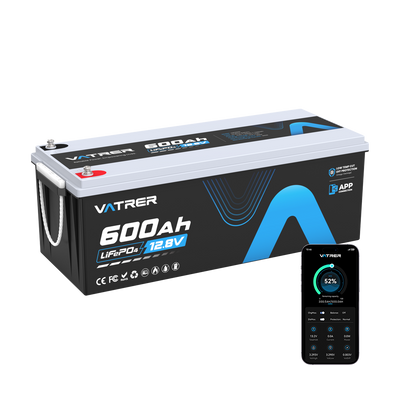
Vatrer lithium golf cart batteries help reduce excess battery weight while maintaining stable power output. With a lower, cleaner battery setup and the right wet-course adjustments, owners can improve control without relying on unnecessary mass.
Share