How Do You Make a Golf Cart Faster?
Reading time: 8 minutes

Share
Most golf carts are built to be safe, quiet, and predictable, not fast. From the factory, many models are limited to around 12-15 mph, which works fine on a golf course but often feels sluggish in real-world use. Once a cart is used in a community, on private property, or around a farm, that safe speed can start to feel like a bottleneck.
Over time, even carts that used to feel decent can slow down. Acceleration becomes soft, hills feel harder, and top speed just isn't what it used to be. For many owners, the cart isn't broken, it's simply being held back by design limits, aging components, or conservative settings.


What Determines Golf Cart Speed?
Golf cart speed is the result of a system working together, not one single part.
At a basic level, speed is influenced by how much electrical power the system can deliver, how efficiently that power is converted into motion, and how much resistance the cart has to overcome. If any one part becomes a bottleneck, the cart slows down, even if other components are upgraded.
Here are the key factors that determine golf cart speed:
System voltage (36V / 48V / 72V)
Voltage sets the ceiling for how much power the system can deliver. Most older or entry-level carts run on 36V systems, while newer models from brands like Club Car and EZ-GO commonly use 48V. Higher voltage allows the motor to spin faster and maintain speed under load, assuming the rest of the system can support it.
Battery output and condition
Two carts with the same voltage can feel completely different depending on battery health. Weak or aging batteries struggle to deliver current, especially during acceleration or hill climbs. This is why a cart can feel slow even if it technically has the right voltage.
Motor speed and efficiency
The motor converts electrical energy into motion. Stock motors are often optimized for torque and reliability rather than speed. High-efficiency or high-RPM motors can increase top speed, but only if they receive stable power from the battery and controller.
Controller limits (current and speed)
The controller acts like a traffic cop. Many manufacturers, including Yamaha, program conservative speed and current limits to protect components and meet safety standards. Even with strong batteries, the controller may cap speed unless it's reprogrammed or upgraded.
Gear ratio in the rear differential
Gearing determines how motor rotation translates to wheel rotation. High-speed gears allow higher top speed but reduce torque. This trade-off is especially noticeable when climbing hills or carrying passengers.
Tire size, traction, and rolling resistance
Larger tires increase the distance traveled per rotation, while better traction ensures power is actually transferred to the ground. However, oversized or aggressive tires can also add weight and resistance if not matched properly.
Vehicle load and terrain
Passenger weight, cargo, hills, and surface conditions all affect real-world speed. A cart that feels fast on flat pavement may struggle on grass or inclines, even with the same setup.
Understanding these factors will help you understand why there is no one-size-fits-all upgrade solution. Only by addressing the weakest link in the system can you maximize the overall speed of the golf cart.
How Battery Performance Affects Golf Cart Speed
Batteries do far more than determine how long a golf cart runs. They directly affect how fast it accelerates, how well it holds speed, and whether power drops off under load. This is especially noticeable in electric golf cart fast performance comparisons between new and aging systems.
With traditional lead-acid batteries, voltage sag is the most common issue. When you press the accelerator or climb a hill, voltage drops sharply. The controller responds by limiting output, which feels like sluggish acceleration or a cart that runs out of breath at higher speeds, even when the batteries show a full charge.
As batteries age, this problem gets worse:
- Acceleration becomes softer
- Top speed becomes inconsistent
- Speed drops quickly under load
By contrast, lithium battery systems maintain a much flatter voltage curve. That stability allows the motor and controller to operate closer to their intended performance limits.
Different Types of Battery Performance Impact on Speed
| Battery Type | Voltage Stability Under Load | Acceleration Feel | Top-Speed Consistency |
|---|---|---|---|
| Flooded Lead-Acid | Low | Soft, delayed | Drops quickly |
| AGM Lead-Acid | Moderate | Better than flooded | Still limited |
| Lithium (LiFePO4) | High | Immediate, responsive | Stable at speed |
Battery upgrades don't just increase range. Upgrading to a lithium golf cart battery often restores lost speed and unlocks acceleration that the cart performance already had on paper but couldn't use in practice.
How to Make a Golf Cart Faster Without Major Modifications
Not every speed improvement requires new hardware. In many cases, carts feel slow simply because they're no longer operating efficiently. These steps won't turn a stock cart into a performance machine, but they can recover speed that's already being lost.
Start with the basics. Many carts are electronically limited by a speed governor or controller setting. On certain EZ-GO and Club Car models, adjusting or reprogramming this limit can restore factory-allowed speed ranges, typically bringing carts back into the 14-17 mph range.
Routine maintenance also plays a larger role than many expect:
- Tire pressure: Most standard golf cart tires perform best between 18-22 PSI. Low pressure increases rolling resistance and can reduce speed by 1-2 mph.
- Brake drag: Slightly dragging brakes can quietly rob both speed and range.
- Electrical connections: Corroded or loose battery cables reduce effective power delivery.
These adjustments won't push past design limits, but they're often the first step before investing in upgrades. Think of them as removing unnecessary friction rather than adding power.
How Tires and Gearing Affect Golf Cart Speed
Once basic efficiency is restored, mechanical changes can further influence speed. Tires and gearing don't create power, but they determine how effectively that power translates into motion.
Larger-diameter tires increase the distance traveled per wheel rotation. For example, moving from an 18-inch to a 22-inch tire can increase top speed by roughly 10-15%, depending on the setup. The trade-off is slightly reduced acceleration, especially on hills.
Tire traction also matters. Tires with better grip allow available power to be used instead of wasted through slip, especially on grass, gravel, or uneven terrain.
Changing the rear differential gear ratio is another option. High-speed gears are designed to raise top-end speed, but they reduce torque output.
Tire and Gear Changes: Speed vs Trade-Offs
| Upgrade | Typical Speed Change | Acceleration Impact | Best Use Case |
|---|---|---|---|
| Larger Tires (18" - 22") | +2 to +4 mph | Slightly reduced | Flat terrain |
| High-Traction Tires | 0 to +1 mph (indirect) | Improved control | Mixed surfaces |
| High-Speed Gears | +4 to +8 mph | Noticeably reduced | Light loads |
Tires and gears shape how speed feels. These upgrades are most effective when the battery and controller can supply consistent power to support the higher demands.
Upgrading Golf Cart Batteries for More Speed and Acceleration
If there's one upgrade that consistently delivers noticeable results, it's the battery system. A stronger, more stable power source improves acceleration, cruising speed, and overall drivability without stressing mechanical parts.
Lithium battery systems provide higher usable voltage under load, meaning the cart responds faster and maintains speed more easily. Many owners notice that the cart simply feels lighter and more responsive, even without changing motors or controllers.
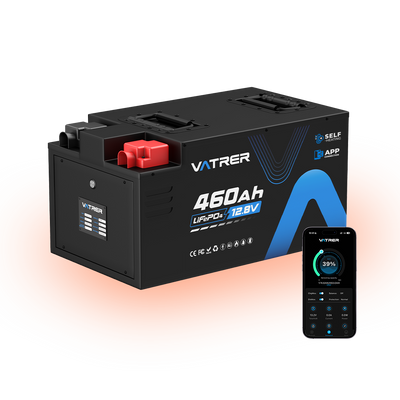
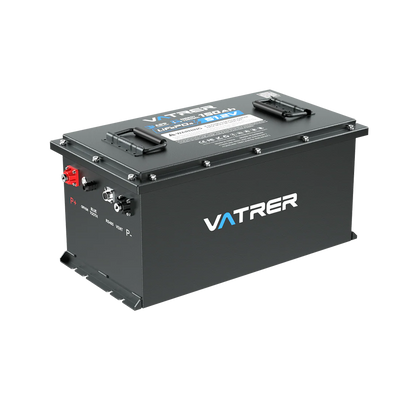
Modern lithium batteries, such as those from Vatrer Power, are designed as plug-and-play solutions for common platforms. With high output capability and integrated battery management systems, they support stronger acceleration while keeping installation straightforward and system protection intact.
Increasing Golf Cart Speed by Changing Voltage Systems
Voltage determines how much power can be delivered to the motor. Increasing system voltage, such as moving from 36V to 48V, can significantly improve both speed and acceleration.
In real-world terms:
- 36V systems: typically 12-14 mph
- 48V systems: commonly 18-20 mph
- 72V systems: often 25+ mph with proper support
However, voltage upgrades are not universal. Controllers and motors must be rated for higher voltage. Without proper compatibility, excess heat and premature failure become real risks.
Voltage upgrades make sense when:
- The cart is used on private property
- Supporting components are correctly matched
- Long-term reliability matters as much as speed
Other Performance Upgrades That Can Make a Golf Cart Faster
Beyond batteries and voltage, performance-focused users may consider deeper system upgrades.
- High-output controllers allow more current to reach the motor, improving acceleration.
- High-speed motors increase RPM potential but must be matched carefully to voltage and gearing.
- Aerodynamic add-ons like front or rear spoilers don't dramatically increase speed at typical golf cart ranges, but they can improve stability once higher speeds are reached, especially on open, flat paths.
These upgrades work best as part of a balanced system rather than isolated changes.
Is It Safe to Make a Golf Cart Faster?
Safety should always guide performance decisions. As speed increases, braking distance grows and stability margins shrink. Most stock carts are not designed for aggressive speeds without upgrades to brakes, suspension, and tires.
A practical guideline is to prioritize power delivery first, then evaluate control and stopping capability. Responsible upgrades focus on smooth, predictable performance, not just maximum speed.
Conclusion
Making a golf cart faster isn't about a single trick or shortcut. Meaningful improvements come from understanding how voltage, batteries, and mechanical components work together. For many owners, restoring efficiency and upgrading the battery system delivers the biggest improvement with the least compromise.
High-output lithium battery solutions, such as those from Vatrer Power, often strike the right balance between performance, reliability, and ease of installation. When upgrades are chosen with a clear goal and realistic expectations, a faster golf cart can also be smoother, safer, and more enjoyable to drive.
Share