





17 products
Sort by:
17 products
17 products


FAQs
Yes, if the battery bank and inverter are sized for both your daily energy use and peak loads. Start with essential circuits first, refrigeration, lights, Wi-Fi, outlets, and well pumps, then decide whether HVAC and other heavy loads also need backup.
For larger whole home battery backup, Vatrer 51.2V server rack batteries can scale from 5.12kWh to 51.2kWh with up to 10 units in parallel.
Use this starting point:
Battery capacity (kWh) = Daily backup load × Backup days ÷ Usable DOD ÷ System efficiency
If essential loads use 8kWh/day, assuming 90% usable capacity and 90% system efficiency:
8 ÷ 0.9 ÷ 0.9 ≈ 9.9kWh
A 10–12kWh home backup battery bank would be a practical starting point, with another 20%–30% reserve for longer outages. One Vatrer 51.2V 100Ah lithium battery stores 5.12kWh, therefore, backup needs increase, multiple batteries of the same model and specifications can be added for expansion.
Yes. A battery can charge from the grid through a compatible inverter/charger, so solar panels are not required for outage backup.
For a Vatrer 48V home energy storage battery system, support CAN/RS485 communication with compatible inverters, helping the battery and inverter share operating data. For automatic outage operation, use a properly designed transfer/islanding setup rather than a basic battery-and-inverter connection.
Match voltage to the size of the system. The same 3,000W load draws roughly 250A at 12V, 125A at 24V, and 62.5A at 48V, so higher-voltage systems make high-power installations easier to manage.
Use a 12V for smaller cabins and lower-power systems, 24V for mid-sized setups, and 48V for larger solar and home backup systems. Vatrer offers high-capacity 12V lithium batteries, such as a 600Ah lithium battery with 7.68kWh, while 51.2V lithium batteries simplify larger 48V installations.
Yes, but only with batteries designed for series connections. Four 12.8V batteries in series create a 51.2V nominal battery bank.
For example, Vatrer 12V 600Ah lithium battery supports up to 4P4S, allowing a compatible bank to expand to 51.2V 2400Ah. Use the same battery model, capacity, age, and state of charge, and balance the batteries before connecting them. For a large home system, a 48V lithium battery can reduce wiring and series-balancing complexity.
Add the wattage of loads that may run together, then choose an inverter with about 20%–25% headroom. Also check startup surge from AC compressors, refrigerators, and well pumps.
For Vatrer 48V off-grid lithium batteries, CAN/RS485/RS232 communication and compatibility with inverter platforms including Victron, Growatt, Deye, GoodWe, SMA, SRNE, and Sofar provide several system integration options. Always verify the exact inverter model and communication protocol before building a closed-loop system.
Yes, if both continuous output and startup surge stay within the battery and inverter limits.
Use:
Running watts × runtime = energy required
Then separately check the appliance’s startup watts. A Vatrer 51.2V 100Ah server rack lithium battery supports up to 5.12kW continuous output, while Vatrer 12V 600Ah battery provides 300A continuous discharge and can support a properly matched 3,000W inverter. For larger HVAC or pump loads, don’t just add kWh—check BMS and inverter output first.
Start with:
Daily energy use × days of autonomy = required usable storage
A cabin using 5kWh/day needs about 10kWh for two days before adding reserve. Then make sure the solar array can recharge what you use.
For smaller off-grid systems, Vatrer 12V 600Ah lithium battery stores 7.68kWh and supports solar, LiFePO4 charger, and generator/DC-to-DC charging options. If winter sun is limited, size around winter production and consider 2–3 days of battery reserve rather than relying on summer solar numbers.
Yes, but LiFePO4 batteries should not charge below freezing without protection. Vatrer batteries automatically stop charging below 32°F and stop discharging below -4°F.
For an unheated garage, shed, or off-grid cabin, choose a Vatrer self-heating lithium battery. Heating starts below 32°F and stops around 41°F, then charging can resume. If you use a non-heated model, keep the battery in an insulated or temperature-controlled space instead of bypassing the low-temperature cutoff.
Yes, especially with solar or time-of-use electricity rates. Store energy when it is cheaper or when your solar panels are producing, then use it when grid rates are higher.
The value can be estimated as:
Energy shifted × difference between high and low electricity rates
Selected Vatrer 48V lithium batteries add Wi-Fi, Bluetooth, and display monitoring, so you can track battery SOC and energy availability more easily. Charging and discharge schedules should be configured through the compatible inverter or energy-management system based on your utility rate plan.
Other LiFePO4 Batteries Recommended
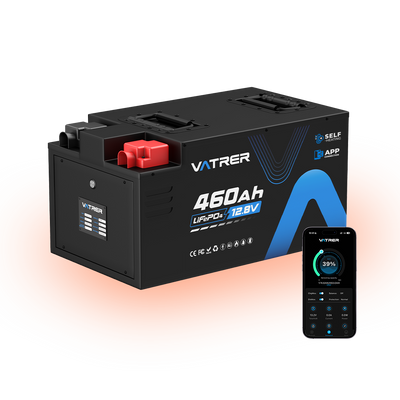
12V 460Ah Heated Lithium Battery

12V 560Ah Heated Lithium Battery

12V 300Ah Heated Lithium Battery

12V 300Ah Dual-Purpose Lithium Battery

12V 600Ah Bluetooth Lithium Battery

12V 300Ah Heated Lithium Battery with Cooling Fan
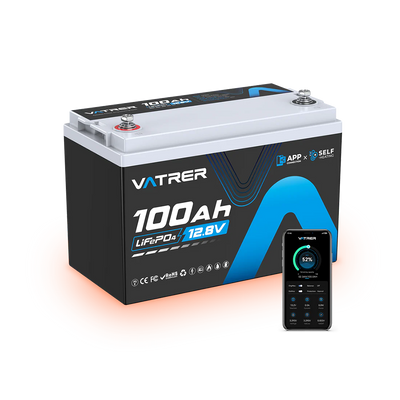
12V 100Ah Heated Lithium Battery

Vatrer 51.2V 100Ah Server Rack Lithium Battery





- Reliable Power, Empowering Lives.
- Vatrer specializes in LiFePO4 lithium batteries for golf carts, RVs, home energy storage, and off-grid applications, designed for reliable performance and long-term use.
