





Sort by:
7 products

$219.99 USD
Unit price per

$74.99 USD
Unit price per


$179.99 USD
Unit price per
$179.99 USD
Unit price perFAQs
Match battery chemistry, system voltage, and recommended charging current. A 12V LiFePO4 battery normally uses a 14.6V charger; 24V uses 29.2V. Vatrer also provides 43.8V, 58.4V, and 79.2V chargers for its 36V, 48V, and 72V battery systems.
Always check the battery’s maximum charging current before choosing the charger. Correct voltage is mandatory; charger amperage mainly determines how quickly the battery can recharge.
It may work in some cases, but it is not the preferred solution. Lead-acid chargers can use float, equalization, or desulfation stages that do not match LiFePO4 charging requirements, and some may never fully charge the battery.
For regular charging, use a LiFePO4-specific charger. Vatrer battery chargers use charging profiles designed around lithium batteries instead.
Choose a charging current that stays within your battery’s maximum recommended charge current. A higher Ah battery can generally benefit from higher-current chargers, provided the battery specifications allow it.
Vatrer offers 10A and 20A options for everyday 12V charging and a 70A fast charger for higher-capacity 12V systems. Other voltage platforms use appropriately matched outputs, including 20A for 24V and 25A for 36V.
Use this quick estimate:
Charging time ≈ Battery capacity (Ah) ÷ Charger current (A)
For example, a 200Ah lithium battery with a 20A charger takes about 10 hours from empty, plus some additional time for charging taper and system losses.
For faster charging, choose a higher-current charger only if the battery’s maximum charging current supports it. Vatrer offers multiple charger current options so you can balance charging speed with battery capacity and charging limits.
No. More amps reduce charging time, but the battery must be designed to accept that current. An oversized charger can trigger BMS protection or exceed the battery manufacturer’s recommended charging rate.
For example, Vatrer gives a 12V battery a choice between 10A, 20A, and 70A chargers rather than treating one charger as suitable for every capacity. Use lower current when charging speed is not critical and higher current when the battery capacity and specifications support fast charging.
Yes, if the charger voltage matches the finished battery-bank voltage and the batteries themselves support that wiring configuration.
For example, four compatible 12.8V lithium batteries in series create a 51.2V lithium battery, so you need a charger designed for that higher-voltage system, not a 12V charger connected across the full bank. For parallel batteries, voltage stays the same but Ah capacity increases, so charging takes longer unless charger current is increased within the batteries’ limits.
Before charging a multi-battery bank, make sure the batteries are matched and balanced.
First check AC power, connector polarity, battery voltage, battery temperature, and whether the BMS has entered protection mode.
A deeply discharged battery may have its BMS output disabled. The Vatrer smart battery charger includes a pre-charge stage designed to gently activate deeply discharged or BMS-protected batteries before normal charging begins. Its LED system can also flag overheating, overvoltage, short circuit, or reverse polarity instead of leaving you guessing why charging stopped.
If the charger continues showing a fault, correct the underlying battery or wiring issue rather than repeatedly reconnecting it.
LiFePO4 batteries do not need the same continuous trickle charging used with traditional lead-acid batteries. Lithium-specific chargers reduce or stop charging once the target voltage is reached, and keeping a lithium battery continuously at maximum charge voltage is generally unnecessary.
Vatrer smart LiFePO4 battery chargers automatically move through controlled charging stages and provide a full-charge indication. Once charging is complete, disconnect the charger for long-term storage unless the specific battery/charger instructions call for otherwise.
Only if the battery is specifically designed to handle cold-temperature charging. Many LiFePO4 batteries, including Vatrer batteries with low-temperature protection, block charging below 32°F to protect the cells.
If charging will not start in freezing weather, do not bypass the BMS. Warm a standard battery above its recovery temperature, or use a Vatrer self-heating lithium battery that warms the cells before charging.
Other LiFePO4 Batteries Recommended
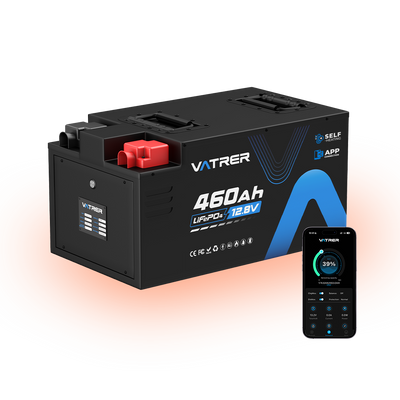
12V 460Ah Heated Lithium Battery

12V 560Ah Heated Lithium Battery

12V 300Ah Heated Lithium Battery

12V 300Ah Dual-Purpose Lithium Battery

12V 600Ah Bluetooth Lithium Battery

12V 300Ah Heated Lithium Battery with Cooling Fan
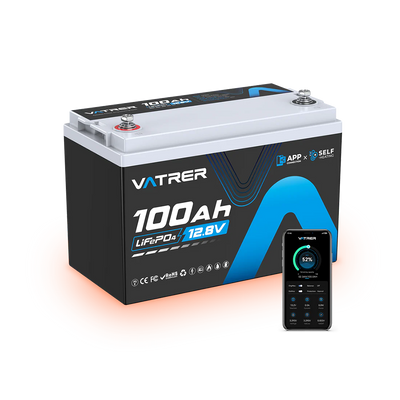
12V 100Ah Heated Lithium Battery

48V 100Ah Server Rack Bluetooth Lithium Battery





- Reliable Power, Empowering Lives.
- Vatrer specializes in LiFePO4 lithium batteries for golf carts, RVs, home energy storage, and off-grid applications, designed for reliable performance and long-term use.
