What Are the Differences Between On-Grid and Off-Grid Solar?
Reading time: 8 minutes

Share
Solar power systems are no longer limited to remote cabins or experimental homes, they’re everywhere, from suburban rooftops to large farms and RVs. Yet, one of the most common questions people still ask is: “What’s the difference between on-grid and off-grid solar systems?”
Understanding these two setups is crucial before you invest in solar energy. Choosing the right system affects your energy independence, total cost, and even your long-term savings potential.
Key Takeaways
- On-grid solar systems connect to the public utility grid and send excess electricity back for credits.
- Off-grid solar systems operate independently and store power in batteries for later use.
- Hybrid systems combine both, offering flexibility and backup power.
- On-grid setups cost less initially but depend on the grid, while off-grid systems provide full independence at a higher upfront cost.
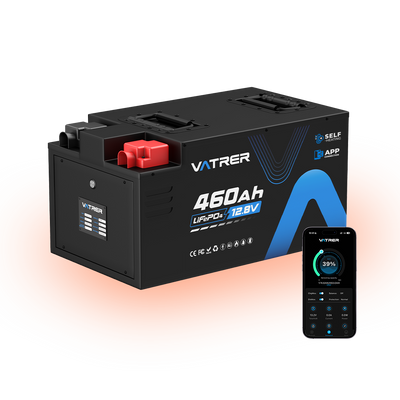
- Battery storage, especially modern LiFePO4 lithium batteries from Vatrer Battery, plays a key role in reliable off-grid and hybrid performance.

What Is an On-Grid Solar System?
An on-grid (or grid-tied) solar system is directly connected to your local utility grid. It generates power during the day and automatically feeds extra electricity back into the grid through a process called net metering. When the sun sets or demand exceeds generation, your home draws energy from the utility again.
Main components include:
- Solar panels: Convert sunlight into DC power.
- Inverter: Changes DC into AC for household use.
- Net meter: Tracks both power consumption and energy returned to the grid.
Advantages:
- Lower installation cost (no batteries required).
- Eligible for net-metering credits and government incentives.
- Simple maintenance and compact system design.
Drawbacks:
- Can't operate during grid outages (for safety disconnection).
- Depends on local grid reliability and utility policy.
Best for urban homes, small businesses, or areas with stable utility connections and incentive programs. In short, on-grid systems offer affordability and simplicity, but they rely on external infrastructure.
What Is an Off-Grid Solar System?
An off-grid solar system works entirely independently from the public grid. It generates, stores, and manages its own electricity, making it ideal for rural homes, remote cabins, RVs, or farms where power lines don't reach.
Main components include:
- Solar panels for power generation.
- Charge controller to regulate energy flow to the battery.
- Battery bank (often LiFePO4 lithium) to store energy.
- Inverter to convert DC to AC power for daily use.
Advantages:
- 100% energy independence and self-sufficiency.
- Works during grid outages or in remote areas.
- Suitable for sustainable living and disaster-preparedness setups.
Drawbacks:
- Higher upfront investment, mainly due to battery storage.
- Requires ongoing monitoring and battery maintenance.
Best for off-grid cabins, RV travelers, farms, or anyone who values full control over their energy. For users who need reliable storage, Vatrer LiFePO4 battery solutions provide long cycle life (5,000+ cycles), integrated BMS protection, and consistent performance even in extreme weather, making them a solid choice for off-grid applications.
On-Grid vs Off-Grid Solar: What Differences
When comparing on-grid and off-grid solar systems, it's not just about where the power goes, it's about how each system manages energy, cost, and independence. The right choice depends on your goals, budget, and location.
Below is a detailed comparison of the two systems:
| Aspect | On-Grid Solar System | Off-Grid Solar System |
|---|---|---|
| Power Source | Connected to the public grid; imports and exports energy through net metering | Fully independent from the grid; all power generated and stored on-site |
| Battery Requirement | Typically no batteries needed unless paired with hybrid backup (optional) | Batteries are essential for storing energy for night use or cloudy days (required) |
| Energy Independence | Still depends on grid stability (partial) | Operates even during grid outages (complete) |
| Initial Cost | Lower setup cost (fewer components) | Higher due to batteries, inverter, and charge controllers |
| Maintenance | Panels and inverter only (minimal) | Includes battery upkeep and monitoring (moderate) |
| Backup During Outage | Shuts down automatically during blackouts (no) | Continues running on stored power (yes) |
| Net Metering & Incentives | Eligible for utility rebates and credits | Not applicable, fully self-reliant |
| Best For | Urban and suburban homes with reliable utilities | Remote homes, farms, RVs, or regions with unstable grids |
- Energy Flow and Reliability
An on-grid system acts as a partnership with your local utility. During sunny hours, it powers your home and sends excess energy back to the grid. When the sun sets or on cloudy days, your utility fills the gap, making it smooth and predictable.
By contrast, off-grid systems must generate, store, and manage their own power 24/7. The battery bank is your only backup, so sizing and battery quality matter tremendously. Systems using LiFePO4 batteries maintain stable voltage, long lifespan (4,000+ cycles), and strong discharge performance, ensuring consistent off-grid operation even in harsh climates.
- Cost and Long-Term Value
The initial cost for an on-grid system is typically 30-50% lower because it skips the battery storage. However, this affordability comes at the cost of dependency, if the grid goes down, your solar shuts off too.
Off-grid systems require a larger upfront investment, mainly for the battery bank and power management devices, but they eliminate electricity bills entirely. Over time, the savings and autonomy can outweigh the higher starting price, especially in areas with high utility rates or unreliable service.
Tip: For those looking to balance cost and reliability, a hybrid system offers the middle ground, grid connection with battery backup for outages.
- Independence and Lifestyle Fit
Choosing between on-grid and off-grid solar isn't just a technical decision, it's also about lifestyle and energy priorities:
Choose On-Grid if convenience, incentives, and minimal maintenance matter most.
- Best for homeowners who want solar savings but don't need full independence.
- Ideal for regions with stable electricity and supportive net-metering policies.
Choose Off-Grid if you prioritize autonomy, resilience, or remote living.
- Perfect for cabins, RVs, and rural properties where power lines are unreliable or unavailable.
- Appeals to those who want full control over their energy production and usage.
Example: A homeowner in California with consistent sunshine and net-metering benefits will likely prefer on-grid, while someone with a remote vacation cabin in Montana or an RV traveler will find off-grid more practical.
- Environmental and Resilience Considerations
Both systems contribute to reducing carbon emissions, but off-grid setups go a step further by eliminating reliance on fossil-fueled grids altogether.
Still, resilience is where off-grid truly shines, with battery-backed independence, you're immune to grid failures, storms, or peak-hour surcharges. On the other hand, grid-tied users may contribute to a cleaner grid collectively but still depend on the larger power network's stability.
Therefore, on-grid solar is best for convenience and cost-effectiveness, off-grid solar is for independence and resilience. The choice depends on what matters more to you, saving money today or securing energy freedom tomorrow.
Would it Be Better to Use Hybrid Solar Systems?
If you want the best of both worlds, a hybrid solar system might be your solution. It connects to the utility grid and includes batteries for backup storage.
How it works
During the day, solar panels supply your power and send excess energy to the grid or to your battery. When the grid goes down, the inverter switches to battery power seamlessly, keeping your lights on.
Pros:
- Reliable backup during power outages.
- Access to both net-metering credits and stored power.
- Flexible energy management.
Cons:
- Higher cost than on-grid systems.
- Slightly more complex installation.
Best for homeowners in regions with frequent blackouts who still want to benefit from net metering. By pairing a hybrid setup with Vatrer LiFePO4 solar batteries, owners can achieve smooth power transitions and maximize solar efficiency throughout the year.
On-Grid vs Off-Grid vs Hybrid Solar: Cost, Maintenance and Efficiency
When deciding between systems, cost and efficiency often determine the outcome:
| Factor | On-Grid | Off-Grid | Hybrid |
|---|---|---|---|
| Upfront Cost | Lowest | Highest | Medium-High |
| Battery Needed | No | Yes | Yes |
| Long-Term Savings | Depends on grid tariffs | High energy independence | Balanced |
| Maintenance | Very low | Battery upkeep required | Moderate |
| Lifespan | 20+ years | 10–20 years (battery dependent) | 15–20 years |
Tip: Off-grid systems with LiFePO4 lithium batteries significantly reduce lifetime maintenance compared to lead-acid options, saving both time and replacement costs. Ultimately, your total value depends not just on cost, but on how consistently your system meets your energy needs.
On-Grid vs Off-Grid Solar: Environmental and Long-Term Sustainability
Both on-grid and off-grid systems contribute to a cleaner environment, but in different ways:
- On-grid systems help reduce utility-scale carbon emissions and support community energy sharing.
- Off-grid systems eliminate dependence on fossil fuel–based grids, ideal for sustainable living.
However, battery sustainability matters too. LiFePO4 batteries, like those from Vatrer Battery, are non-toxic, cobalt-free, and recyclable, offering a safer and greener alternative to older lithium-ion chemistries.
Transitioning to renewable power isn't just about lower bills, it's about building long-term resilience and environmental responsibility.
How to Choose Between On-Grid and Off-Grid Solar
Here's a quick decision guide to help narrow down your choice:
| Your Situation | Recommended System | Reason |
|---|---|---|
| Live in a city with reliable electricity | On-Grid | Lower cost, simple setup |
| Rural or remote location | Off-Grid | Full independence from utilities |
| Want backup for outages but still grid access | Hybrid | Best flexibility |
| Aim for eco-friendly independence | Off-Grid / Hybrid | Zero emissions, self-sustaining |
Before deciding, evaluate your:
- Energy consumption patterns (daily kWh use).
- Grid reliability (frequent blackouts or stable supply).
- Budget and long-term goals (saving vs independence).
Tip: Always size your solar and battery bank correctly. Undersized systems lead to poor performance, oversized systems increase unnecessary costs. For off-grid users, Vatrer Battery’s high-capacity lithium solar battery, ranging from 12V to 48V, offer scalable options for home, RV, and solar storage setups.
Which Off-Grid Solar System Is Right for You?
Choosing between a grid-tied or off-grid solar system boils down to a trade-off between control and convenience. If you want lower costs and the convenience of grid power, choose a grid-tied system. If you want energy independence and reliable power in remote or blackout-prone areas, choose an off-grid system. For a balance of flexibility and backup power, consider a hybrid system.
No matter which path you choose, pairing your system with safe, long-lasting LiFePO4 batteries ensures dependable energy storage.
If you're planning an off-grid or hybrid solar setup, explore Vatrer Battery's range of lithium solar batteries. Their intelligent BMS, high-cycle LiFePO4 battery, and real-time monitoring deliver performance you can trust, helping you stay powered, sustainably and efficiently.