What Is The Most Common Problem With Electric Golf Carts?
Reading time: 19 minutes

Share
The most common problem with electric golf carts is usually a power delivery issue. In many cases, that starts with low battery voltage, an aging battery pack, a weak charger, or loose and corroded cable connections. Most electric golf carts use 36V, 48V, or 72V systems, so even a small voltage drop can affect starting, climbing, speed, and range.
But not every problem is a battery problem. A cart that will not move may have a bad solenoid. A cart that runs slowly may have a controller issue, dragging brakes, low tire pressure, or motor wear. Good electric golf cart troubleshooting starts with the power system, then checks the parts that control movement.


Common Power Issues in Electric Golf Carts
An electric golf cart depends on a chain of parts working together. The battery pack stores power. The charger restores it. Cables carry it. The solenoid opens the high-current path. The controller manages power output. The motor turns that power into motion.
When one part in that chain weakens, the symptoms can overlap. A no-start cart may have low battery voltage, but it may also have a failed solenoid. A slow cart may have old batteries, but it could also be fighting brake drag or low tire pressure.
Battery and Charging Checks
The battery and charging system are checked first because they affect almost every major symptom: no start, short range, weak acceleration, charging failure, and sudden power loss.
Common Electric Golf Cart Voltage Systems
| Nominal System Voltage | Typical Fully Charged Lead-Acid Pack Voltage | Common Use Case |
|---|---|---|
| 36V | About 38.2V | Older carts, light-duty driving |
| 48V | About 50.9V | Many modern neighborhood and golf carts |
| 72V | About 76.4V | Higher-power carts, heavier loads, lifted carts |
These are resting voltage estimates for lead-acid battery packs. A battery pack can look acceptable while sitting still, then drop quickly when you press the accelerator. That voltage sag is why some golf cart battery problems are hard to confirm with only the dashboard meter.
Several issues can create the same “weak cart” feeling:
- Low battery voltage: The cart may not start, or the charger may not detect the battery pack. Long storage, deep discharge, and battery age are common causes.
- Bad charger or charging port: The charger may appear to run, but the battery pack may never reach a healthy charge.
- Corroded terminals: Corrosion adds resistance. The cart may feel weak even if the batteries still have some charge.
- Loose or damaged cables: High-current battery cables must be clean and tight. A poor connection can cause heat, power loss, or sudden cut-outs.
- Flooded lead-acid maintenance issues: Low water level can reduce performance and shorten battery life. AGM, gel, and lithium batteries do not need watering.
If your cart uses a lithium golf cart battery, the built-in BMS may also shut off charging or discharging under unsafe conditions, such as over-discharge, over-current, high temperature, or low-temperature charging.
What to Check After the Power System
Battery checks come first, but they should not become the whole diagnosis. Once battery voltage, charger function, and cable connections look normal, the next likely causes are control and drive components.
- If the cart has voltage but will not move, check the solenoid, key switch, controller input, and wiring.
- If the cart starts but drives unevenly, check the speed controller, potentiometer, and motor circuit.
- If it only moves forward or reverse, check the direction switch and related wiring.
- If it feels slow or heavy, check brakes, tire pressure, oversized tires, and mechanical resistance.
The battery is the fuel source, but the solenoid, controller, wiring, and motor are the path to the wheels. The fuel source can be fine while another part blocks power from reaching the motor.
Common Symptom of Electric Golf Cart Problems
Most owners notice the symptom before they know the part causing it. Maybe the cart will not start, will not charge, runs slowly, or cuts out while driving. That symptom is the best place to start your troubleshooting.
Won’t Start
A no-start issue is one of the most common electric golf cart problems. It can come from the battery pack, but it can also come from a switch, cable, solenoid, controller, or wiring fault.
Common signs include:
- No response at all: You turn the key and press the pedal, but nothing happens. Check battery pack voltage, the key switch, main cables, and wiring.
- Click but no movement: You hear a click, but the cart does not move. The solenoid may be activating, but the high-current path may still be failing.
- No click: The solenoid may not be receiving the signal to close. Battery voltage, the key switch, pedal switch, and wiring should be checked.
- Intermittent starting: The cart works one day and fails the next. Loose cables, corroded terminals, or worn solenoid contacts are common causes.
Do not jump straight to motor failure. Motors are expensive, and many no-start problems come from easier-to-check parts.
Not Charging
Charging problems can be misleading. A charger light does not always mean the battery pack is charging correctly. The charger may turn on, flash, click, or hum, but still fail to complete a proper charge.
Common causes include:
- Faulty charger: Many golf cart chargers operate around 15A to 25A, depending on voltage and model. If output is too low or unstable, the battery pack may not charge fully.
- Loose charging port: A dirty, loose, or corroded port can interrupt charging. The issue may appear only when the plug moves.
- Battery voltage too low: Some chargers will not start if the battery pack is deeply discharged below the detection range.
- Battery and charger mismatch: A lead-acid charger is not always correct for a lithium battery system unless it is designed for that chemistry.
- Lithium battery BMS protection: The BMS may block charge or discharge if the battery is outside a safe operating range.
If you are upgrading from lead-acid batteries, match the charger to the new battery voltage and charging profile. Vatrer lithium golf cart battery kits are commonly paired with a lithium charger, which helps reduce one common source of charging confusion.
Runs Slow or Feels Weak
A slow cart is not always a dying battery pack. The problem may come from speed control, tires, brakes, load, or the motor.
Look at when the weakness happens:
- Weak from the start: Low battery voltage, a weak battery pack, or controller limitation may be involved.
- Weak only uphill: Hills expose voltage sag, heavy load, tire pressure issues, and motor strain.
- Weak after 10–20 minutes: Heat may be affecting the controller, motor, cables, or aging batteries.
- Weak with passengers or cargo: Extra weight raises current draw. The difference is easy to feel on hills or grass.
Tire pressure matters more than many owners expect. Many golf cart tires run around 18–25 psi, depending on tire type and manufacturer recommendation. A tire that is 5 psi low can add rolling resistance and make the cart feel sluggish.
Jerks, Cuts Out, or Loses Power
A cart that jerks or cuts out often has an unstable connection or a component that fails under heat, load, or vibration.
Common causes include:
- Loose wiring: A connector may lose contact when the cart hits bumps.
- Corroded terminals: Corrosion may pass small current but fail when the motor demands more power.
- Failing solenoid: Worn contacts may work sometimes and fail under load.
- Controller overheating: Heavy loads, hills, oversized tires, or poor ventilation can push the controller too hard.
- Damaged cable: A frayed or internally damaged cable can create heat and voltage drop.
Stop using the cart if you smell burning, see melted insulation, or notice a cable getting unusually hot. Electric golf carts can draw hundreds of amps during acceleration, so heat should not be ignored.
Only Goes Forward or Reverse
If the cart moves in one direction but not the other, the battery pack is usually not the main suspect. The issue is more likely tied to direction control.
Common causes include:
- Worn forward/reverse switch: Frequent direction changes wear the contacts over time.
- Loose switch connection: A loose wire can stop one direction from engaging.
- Controller input problem: The controller may not receive the correct forward or reverse signal.
- Wiring fault: Damaged wiring between the switch and controller can create one-direction failure.
This issue is common on older carts and used golf carts. Replacing batteries will not solve it unless the cart also has clear low-voltage symptoms.
Main Parts That Commonly Cause Electric Golf Cart Problems
Once you know the symptom, it helps to connect that symptom to the most likely parts. You do not need to become a technician. You just need enough context to avoid guessing.
Battery Pack and Charger
Battery pack and charger problems affect starting, charging, speed, and range, so they remain the first checkpoint.
Common signs include:
- Short runtime: Lead-acid golf cart batteries often last about 3–5 years with normal care. Poor maintenance or deep discharging can shorten that range.
- Voltage sag: The cart may show charge at rest but lose power when accelerating.
- Uneven battery pack: In a multi-battery lead-acid setup, one weak battery can drag down the entire system.
- Charging failure: A charger, port, or cable issue may prevent the battery pack from reaching full charge.
For flooded lead-acid batteries, water level should cover the plates, but the cells should not be filled to the cap. Use distilled water only. AGM, gel, and lithium batteries do not need watering.
Lithium battery systems reduce many lead-acid maintenance issues. There is no watering, less acid-related corrosion, and more stable voltage through much of the discharge cycle. They will not fix bad wiring, a failed solenoid, a worn motor, or a faulty controller, so the cart still needs a proper diagnosis.
Solenoid
The solenoid is a high-current switch. When you turn the key and press the pedal, it helps send power from the battery pack toward the controller and motor.
Common symptoms include:
- No click: The solenoid may not be activating, or the activation circuit may have a problem.
- Click but no movement: The solenoid may click but fail to pass high current through worn contacts.
- Intermittent start: Internal contacts can work one moment and fail the next.
- Heat or burnt smell: Resistance, overload, or failing contacts may be involved.
A solenoid handles serious current. If you are not comfortable working around high-voltage DC systems, this is a good place to stop and get the cart checked.
Speed Controller and Potentiometer
The speed controller manages how much current reaches the motor. The potentiometer, or throttle input device, tells the controller how much speed you are asking for.
When either part acts up, the cart may start but drive poorly.
- Uneven acceleration: The cart may surge, hesitate, or feel jumpy.
- Low top speed: The cart may never reach normal speed, even on flat ground.
- Delayed pedal response: You press the accelerator, but the cart reacts late.
- Cut-out under load: The controller may reduce output or shut down when stressed.
Controller issues can be confused with battery problems because both can make the cart feel weak. If voltage is healthy but speed remains erratic, the controller or throttle input deserves attention.
Motor
The motor is not usually the first part to blame, but it can fail, especially on older carts, lifted carts, overloaded carts, or carts used on steep hills.
Watch for these signs:
- Burning smell: Stop driving and inspect the cart.
- Unusual noise: Grinding, squealing, or scraping may point to motor or drivetrain wear.
- Overheating: A motor that gets very hot after a short drive may be overloaded or failing.
- No movement with good power: If the battery pack, solenoid, controller, and wiring check out, the motor becomes more likely.
Avoid jumping straight to motor replacement. A motor can be blamed for problems caused by low voltage, poor cables, a bad solenoid, or a failing controller.
Wiring, Cables, and Connectors
Wiring issues are easy to overlook because they do not always look dramatic. A cable can appear fine from the outside and still have internal damage or a weak connection.
Common trouble spots include:
- Battery cables: Loose, corroded, or undersized cables can create heat and voltage drop.
- Controller connectors: Dirt, vibration, or corrosion can interrupt signals.
- Ground connections: Poor grounding can create strange intermittent faults.
- Pedal and switch wiring: A small signal wire can stop the cart even when the battery pack is healthy.
If a problem appears after hitting bumps, washing the cart, or driving in wet conditions, wiring and connectors should move higher on your list.
Direction Switch, Brakes, and Tires
Some common electric golf cart problems are not really electrical failures. They only feel that way from the driver’s seat.
- Direction switch: If the cart only moves forward or only moves in reverse, check the forward/reverse switch and wiring.
- Dragging brakes: A brake that does not fully release can make the cart feel weak and reduce range.
- Low tire pressure: Underinflated tires increase rolling resistance and make the motor work harder.
- Oversized tires: Larger tires can reduce torque and put more strain on the controller and motor, especially on hills.
These checks save time. Not every slow cart needs new batteries.
How to Troubleshoot Electric Golf Cart Problems?
A good troubleshooting order prevents expensive guesswork. Start with visible, low-risk checks. Move toward high-current electrical parts only when the simple causes are ruled out.
Step 1: Check the Simple Power Basics
Start with the items you can inspect safely.
- Confirm charger power: Make sure the outlet works and the charger turns on normally. If the charger has an error code, note it before unplugging.
- Check battery pack voltage: Use a voltmeter if you are comfortable doing so. Compare the reading with your cart’s 36V, 48V, or 72V system.
- Inspect cable connections: Look for loose nuts, corrosion, melted insulation, or frayed cables.
- Check the charging port: A loose or dirty port can cause charging failure even when the charger is good.
- Check lead-acid water level: Only do this for flooded lead-acid batteries. Wear gloves and eye protection.
This step often finds the problem in 5–15 minutes. If you find severe corrosion, melted cables, or a burning smell, do not keep testing the cart under load.
Step 2: Listen and Watch for Clues
Small clues can point you toward the right part.
Symptom Clues for Electric Golf Cart Troubleshooting
| Symptom | What You Notice | More Likely Area to Check | Why It Matters |
|---|---|---|---|
| No sound, no movement | Key on, pedal pressed, nothing happens | Battery voltage, key switch, wiring | The control circuit may not be powering up |
| One click, no movement | Solenoid clicks but cart does not move | Solenoid contacts, controller, motor circuit | Low-current activation may work while high-current flow fails |
| Charger will not start | Plugged in but no charge behavior | Charger, port, pack voltage | Charger may not detect the battery pack |
| Slow uphill | Runs on flat ground but struggles on grade | Battery sag, brakes, tires, motor load | Hills expose weak power delivery |
| Cuts out after driving | Works briefly, then stops | Controller heat, loose wiring, weak cables | Heat and vibration can trigger intermittent faults |
The pattern matters. A cart that fails only after 15–20 minutes may have a heat-related issue. A cart that fails after a bump may have loose wiring, a weak connector, or a cable problem.
Step 3: Match the Symptom to the Likely Part
Use the symptom to narrow the list.
- Won’t start: Check battery voltage, main cables, key switch, solenoid, wiring, and controller input.
- Not charging: Check the charger, outlet, charging port, battery pack voltage, battery age, and lithium battery BMS status.
- Runs slow: Check battery sag, tire pressure, brake drag, speed controller, potentiometer, and motor condition.
- Jerks or cuts out: Check loose wiring, corroded connectors, solenoid contacts, controller heat, and cable damage.
- Only one direction works: Check the forward/reverse switch, direction wiring, and controller signal.
This step helps you avoid replacing the wrong part. New batteries will not fix a bad solenoid. A new controller will not fix a loose cable.
Step 4: Know When to Stop DIY Troubleshooting
Some checks are fine for most owners. Others are not worth the risk unless you have the right tools and experience.
DIY Checks vs. Professional Repair
| Problem Area | Typical Time to Check | DIY-Friendly? | Better Left to a Technician? | Notes |
|---|---|---|---|---|
| Charger outlet and plug | 2–5 minutes | Yes | No | Check the outlet, plug fit, and charger indicator before assuming the charger is bad. |
| Tire pressure | 2–5 minutes | Yes | No | Many golf cart tires run around 18–25 psi, but always follow the tire sidewall or cart manual. |
| Visible terminal corrosion | 5–10 minutes | Yes, with safety gear | If severe | Light corrosion can be cleaned carefully; heavy corrosion or heat damage needs inspection. |
| Loose battery cable | 5–10 minutes | Sometimes | Yes, if heat or melting is present | A loose cable can cause voltage drop, heat, and intermittent power loss. |
| Solenoid testing or replacement | 15–45 minutes | Not ideal for beginners | Yes | The solenoid handles high current, so testing should be done carefully. |
| Controller diagnosis | 30–60+ minutes | No | Yes | Controller issues can mimic weak battery symptoms and need proper testing. |
| Motor testing | 30–90+ minutes | No | Yes | Test the motor after battery pack, solenoid, controller, and wiring checks. |
| Damaged wiring harness | 30–120+ minutes | No | Yes | Wiring faults can be intermittent and may require tracing, testing, and safe repair. |
The dividing line is high current. If the repair involves the solenoid, controller, motor, or damaged wiring, professional testing is usually safer and cheaper than guessing.
How to Prevent Common Electric Golf Cart Problems
Prevention comes down to reducing heat, voltage drop, corrosion, and mechanical strain. Those four things cause many of the failures owners notice first.
Keep the Power System Healthy
A healthy power system keeps the rest of the cart from working harder than it should.
- Use the right charger: Match voltage and battery chemistry. A 48V lead-acid charger is not automatically correct for a 48V lithium battery system.
- Avoid long low-charge storage: Lead-acid batteries suffer when stored discharged. Lithium batteries should also be stored within the manufacturer’s recommended state-of-charge range.
- Inspect connections monthly: A quick look at terminals, cables, and the charging port can catch corrosion or looseness early.
- Maintain flooded lead-acid batteries: Check water level and use distilled water. Do not apply this to AGM, gel, or lithium batteries.
If your repeated issues are tied to range loss, watering, corrosion, or unstable voltage, a lithium golf cart battery may be worth comparing. Vatrer Battery offers lithium golf cart battery options with built-in BMS protection and monitoring features, which can make daily battery checks easier than managing a flooded lead-acid battery pack.
Protect the Electrical Components
Electrical parts fail faster when they are hot, overloaded, wet, or loose.
- Avoid repeated overloads: Heavy passengers, cargo, hills, and oversized tires raise current draw. That extra strain can heat the controller, motor, and cables.
- Keep connectors dry: Water and corrosion are a bad mix. After washing or wet driving, avoid parking the cart where moisture stays trapped around electrical parts.
- Watch for heat signs: Melted insulation, a hot cable smell, or repeated cut-outs are warning signs. Stop using the cart until it is checked.
- Do not ignore intermittent faults: A problem that happens once a week can become a no-start failure without much warning.
A cart that cuts out under load is giving you a warning. It may still drive today, but the weak point is already showing up.
Reduce Mechanical Strain
Mechanical drag makes electrical parts work harder. It can make a healthy cart feel weak and make a weak cart fail sooner.
- Check tire pressure: Stay within the tire manufacturer’s recommended range, commonly around 18–25 psi for many golf cart tires.
- Look for brake drag: If the cart feels slow and one wheel area gets unusually warm after a short drive, the brake may not be releasing fully.
- Avoid unnecessary weight: Extra cargo increases current draw. On hills, the load difference can be easy to feel.
- Be careful with oversized tires: Bigger tires change the effective gearing. The cart may look better but lose low-speed torque.
A slow cart with low tire pressure and dragging brakes may not need a controller or battery pack at all.
Should You Repair, Replace, or Upgrade Golf Cart Parts?
Once you identify the likely problem area, the next question is cost and effort. Some fixes are quick. Some need a technician. Some point to a larger upgrade decision.
Quick Fixes
A few issues can be solved without major repair.
- Loose charger plug: Make sure the charger is fully seated and the outlet is live. A weak outlet or extension cord can cause misleading charging behavior.
- Light terminal corrosion: Clean carefully with proper protection and make sure the connections are tight afterward.
- Low tire pressure: Inflate to the recommended range. Recheck after a few days to catch slow leaks.
- Flooded lead-acid water level: Add distilled water only when needed. Do not overfill.
- Dirty charging port: A visual inspection may reveal dirt, corrosion, or a loose connection.
Do not keep tightening, cleaning, and retrying if you see melted insulation or smell burning. That is no longer a quick fix.
Repair Shop Issues
Some repairs are better handled by a golf cart technician because the parts carry high current or require proper diagnostic tools.
- Faulty solenoid: Clicking does not always prove the solenoid is good. The contacts may still fail under load.
- Controller failure: A controller can be expensive, so testing matters before replacement.
- Motor overheating: Heat, smell, or noise should be checked before more damage occurs.
- Repeated power cut-out: Intermittent faults can come from wiring, controller heat, or failing high-current parts.
- Direction switch failure: The switch and wiring may need proper testing, especially on older carts.
Guessing gets expensive. A technician can usually confirm whether the problem is electrical, mechanical, or battery-related before you replace parts.
Battery Replacement or Upgrade
Battery replacement makes sense when the cart’s main issues are range, voltage stability, charging reliability, or lead-acid upkeep.
Signs include:
- Short range after full charge: If runtime has dropped sharply and charger output is normal, the battery pack may be near the end of life.
- Weak hills and heavy voltage sag: A battery pack that drops voltage under load will make the cart feel tired.
- Aged lead-acid batteries: Many lead-acid golf cart battery packs last about 3–5 years, depending on use, charging habits, storage, and maintenance.
- Rising maintenance burden: Frequent watering, corrosion cleanup, and uneven batteries can become a pattern.
- Repeated charger confusion: Old or deeply discharged lead-acid batteries can become difficult for some chargers to recover.
Lithium battery replacement is not a fix for every cart issue. It will not repair a bad solenoid, damaged wiring, worn motor, or faulty controller. It can reduce several lead-acid pain points: no watering, less maintenance, lighter weight, stronger voltage stability, and easier monitoring.
A typical 48V lead-acid golf cart battery pack can weigh roughly 300–400 lbs, depending on battery size and count. A lithium replacement system may weigh about 80–150 lbs, depending on capacity and design. That weight reduction can improve efficiency and handling, especially on carts used for neighborhood driving, camping, farm work, or longer rides.
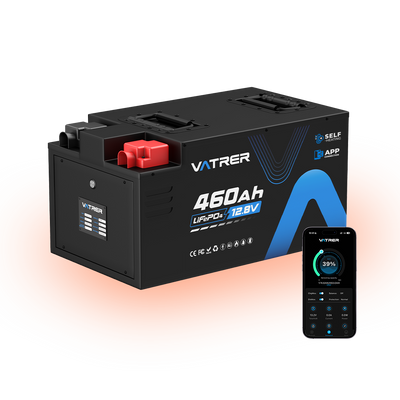
For owners who want easier monitoring, Vatrer 48V lithium golf cart batteries include a dedicated lithium charger, built-in BMS protection, and LCD or app-based battery monitoring. That does not replace troubleshooting, but it does make the battery side of ownership more predictable.
Conclusion
Start with the battery pack, charger, cables, and terminals. These parts affect starting, charging, speed, and range, so they are usually the fastest way to narrow down electric golf cart problems.
If the power system checks out, match the symptom to the next likely part. Clicking or no-start issues may point to the solenoid. Speed problems often involve the controller, potentiometer, tires, brakes, or motor load. Forward/reverse failure usually points to the direction switch or wiring.
Minor corrosion, a loose cable, low tire pressure, or a charger plug issue may be easy to fix. Burning smells, repeated cut-outs, hot cables, controller faults, solenoid problems, and motor issues should be tested by a professional.
Share