Why Golf Cart Batteries Drain Faster on the Back 9
Reading time: 7 minutes

Share
You know the feeling, the cart feels normal, the front 9 runs smoothly, and you're not even considering how long the battery will last. Then it begins around holes 12-14. Unlike before, the cart does not leap off the line. The top speed decreases. All of a sudden, you're mentally performing the calculations. Am I limping back, or do we really finish 18?
You're not dreaming about that back 9 battery drain. It usually depends on a number of factors, including how golf carts use power over time, what the course requires later in the round, and how much power your battery can actually provide when it isn't fully charged.


What Back 9 Battery Drain Means for Golf Carts
Rarely do people mean that a golf cart shuts off instantly at hole 10 when they say it dies on the back 9. More frequently, it's a gradual, annoying decline in performance, with the cart feeling heavy even on level terrain, poorer acceleration, and less capacity to climb hills.
It's not just golfers, either. The same pattern is observed by community cart owners and course maintenance teams: a cart may appear reliable in the morning but become unreliable in the afternoon. This is because the battery system is tested in harsher conditions, lower state of charge, increased heat soak, increased voltage sag, and increased load sensitivity in the back 9.
Why Golf Cart Batteries Drain Faster on The Back 9
A battery doesn't deliver power the same way at 90% charge as it does at 40%. As the round goes on, the cart is working with less easy energy. That's when normal demands: starting, stopping, climbing, carrying passengers, begin to feel expensive.
Also, the battery doesn't just lose capacity. It loses usable capacity under load. So you might still have charge left on paper, but when you press the pedal, the voltage dips harder than it did earlier. The cart controller reacts by limiting output or the system hits low-voltage protection sooner. That's why people often describe it as it was fine, until it wasn't.
How Terrain And Driving Patterns Cause Back 9 Battery Drain
Golf carts burn the most energy during starts, climbs, and long pulls, not during steady cruising. The back 9 often stacks more of those together: you're stopping to wait at tee boxes, rolling through soft grass near greens, climbing bridges or slopes, then accelerating again.
Driving style matters too, even if you're not driving crazy. Two patterns drain batteries fast in the second half:
- Punch-and-coast driving (hard acceleration, then letting off repeatedly)
- Slow crawling with frequent stops (controller stays in a less efficient zone longer)
If your course has even modest elevation changes, the back 9 can expose it. A cart that can climb fine at 80% charge may struggle at 45%, same hill, different battery behavior.
Golf Cart Battery Age And Type Behind Back 9 Power Loss
If your battery pack is aging, the back 9 is usually where it shows first. That's because older batteries tend to have:
- higher internal resistance (more voltage drop under load)
- less real capacity than the label suggests
- slower recovery after a hard pull (like a hill)
This is especially common with lead-acid batteries. They can feel okay early because the voltage starts high, but performance can fall off quickly once you're deeper into the discharge curve. In real life, that looks like the front 9 is normal, and the back 9 feels like you're towing something.
Lithium LiFePO4 batteries generally hold voltage more consistently through the discharge cycle, so the cart tends to feel more the same all day. That's one reason many owners consider a lithium golf cart battery upgrade when they're tired of back-9 fade.
How Temperature And Time of Day Worsen Back 9 Battery Drain
A lot of golfers don't notice this until summer, the cart drains faster in the afternoon. That's not just coincidence.
Heat changes the system in two ways:
- Battery and controller heat soak: components run warmer after an hour or two of use. Warm electronics often reduce output earlier to protect themselves.
- Course conditions: hot afternoons can mean softer turf and more rolling resistance, which quietly increases the load.
Cold can also reduce range, but back 9 drain is more commonly an afternoon heat and load story. If your cart is already borderline (older pack, heavy use, hilly course), heat can be the difference between finishing 18 comfortably and finishing with anxiety.
Is It Normal for Golf Cart Batteries To Drain Faster on The Back 9?
Sometimes, yes. If the cart is used hard and the battery pack is small or older, you'll naturally feel a drop late in the round. But normal has limits. Here's a way to judge it:
- If the cart still maintains reasonable speed and only feels slightly softer late in the round, that can be normal, especially with older lead-acid.
- If the cart starts slowing dramatically after 9-12 holes, struggles on hills it normally climbs, or the battery gauge drops suddenly under acceleration, that's a strong sign something's off.
Back 9 holes symptoms and what they usually mean
| What you notice on the back 9 | Most likely cause | Quick at-home check | When it’s time to act |
|---|---|---|---|
| Speed drops, especially on hills | Voltage sag under load (often aging battery) | Drive up a known hill at 80% vs 40% SOC and compare | Big performance drop after mid-round |
| Battery gauge falls fast under acceleration | Weak cells / high internal resistance | Watch voltage / SOC while accelerating | Sudden dips repeat every round |
| Cart feels fine until “hole 12” then fades | Capacity not keeping up with demand | Note total runtime vs past months | Noticeable decline over weeks |
| Range varies wildly day-to-day | Charging inconsistency or connection issues | Check charge completion, inspect cables | Inconsistent finish even on same course |
| Gets worse in hot afternoons | Heat and higher rolling resistance | Compare morning vs afternoon on same route | Afternoon becomes reliably worse |
How To Reduce Golf Cart Battery Drain on The Back 9
If you want the fastest improvement with no parts swapping, focus on load smoothing. You're trying to keep the system out of those expensive high-current spikes.
Start with driving changes that actually matter:
- Accelerate like you're carrying a cup of coffee, firm but not aggressive.
- Avoid repeated full stops when you can safely roll slowly instead.
- If you're waiting at a tee box, don't creep forward constantly. Stop, then go.
Then check the basics that cause hidden drain:
- Make sure the battery pack is fully charging to completion, not just plugged in.
- Keep tires properly inflated, low pressure increases drag more than people think.
- Reduce unnecessary weight, extra cargo shows up most on the back 9 holes.
If you're running lead-acid batteries, maintenance and charge quality matter even more. If you're running lithium batteries, the key is monitoring and avoiding deep discharge habits that push the pack into low-voltage cutoffs mid-round.
When a Battery Upgrade Fixes Back 9 Drain for Good
There's a point where you can drive perfectly and still get back-9 fade, because the battery pack simply can't deliver stable power late in the discharge cycle anymore. That's usually when owners start looking at lithium.
What tends to change with a lithium golf cart battery upgrade is consistency. Instead of strong early, weak late, many owners get a more even feel through the whole round because voltage stays steadier and usable capacity is higher under load.
Lead-acid vs lithium batteries behavior on the Back 9 holes
| Comparison point | Lead-acid | LiFePO4 lithium |
|---|---|---|
| Back 9 power feel | Often fades as SOC drops | More consistent through discharge |
| Voltage under acceleration | More sag as battery pack ages | Generally steadier under load |
| Gauge anxiety late round | Common (sudden dips) | Less common with good monitoring |
| Maintenance | Watering/terminal care (flooded types) | Typically maintenance-free |
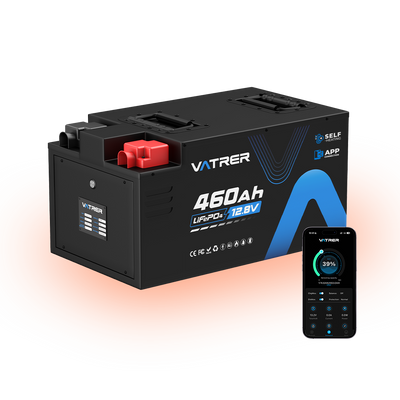
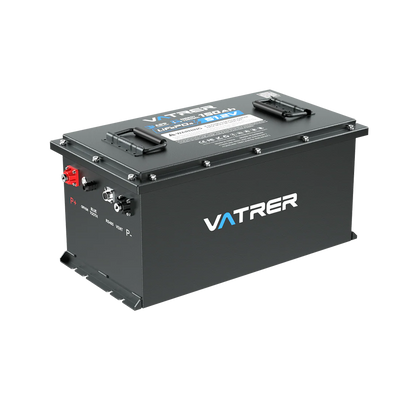
If you are considering upgrading to a lithium battery, Vatrer lithium golf cart batteries won't experience power fade on the back nine holes even after extended use, and they feature built-in monitoring functions, allowing you to view the battery status in real time. Our golf cart battery conversion kit includes not only the battery but also a charger and all necessary installation accessories, perfectly compatible with mainstream brands such as Club Car and Yamaha golf carts, offering plug-and-play convenience.
Conclusion
Back 9 holes battery drain is usually not a mystery failure, it's a pattern. The second half of the round stacks three things against you: lower state of charge, higher sensitivity to load, and real-world conditions (terrain, stops, heat) that demand more current. The clean way to solve it is step-by-step:
- Confirm the pattern (same holes, same conditions, same fade).
- Reduce load spikes (smoother starts, less stop-go).
- Use simple standards to judge abnormal decline (sudden voltage dips, big hill weakness, shrinking runtime).
If the battery pack is aging out, stop fighting physics and move to a setup that delivers stable power later in the discharge.
If you want to maintain the same stable performance on the back nine as you had on the front nine, Vatrer batteries, with their built-in BMS protection and real-time monitoring features via Bluetooth and LCD display, allow you to focus on your golf experience, not battery life.
Share