






66 products
Sort by:
66 products
66 products


FAQs
Yes. Vatrer LiFePO4 batteries with low-temperature protection automatically stop charging when the battery temperature drops below 32°F, helping prevent lithium plating and cold-weather charging damage. Discharging is also protected at very low temperatures, with cut-off typically triggered below -4°F.
Vatrer self-heating lithium batteries start heating when the internal temperature is below 32°F and a compatible charger is connected. The heating process stops once the battery reaches about 41°F, then the battery resumes normal charging.
A lithium battery may show 0V when the built-in BMS enters low-voltage, short-circuit, or over-current protection mode. In many cases, the battery can be reactivated by disconnecting all loads and connecting a compatible LiFePO4 charger to wake the BMS.
Disconnect the load first, then charge the battery with a proper LiFePO4 charger that matches the battery voltage. If the battery was deeply discharged, allow the charger several minutes to communicate with or activate the BMS before assuming the battery has failed.
A golf cart battery may cut off during hill climbing or hard acceleration if the motor draws current above the BMS discharge limit. This is more common on modified EZGO, Club Car, Yamaha, or Icon carts with upgraded controllers or motors, so the battery’s continuous discharge current and peak discharge current should match the cart’s real power demand.
No, a lead-acid charger is not recommended for Vatrer LiFePO4 batteries. Lead-acid chargers use float, equalization, or desulfation stages that are not suitable for lithium batteries, while Vatrer lithium batteries should be charged with a compatible LiFePO4 charger matched to the correct system voltage.
Yes. Before wiring LiFePO4 lithium batteries in series or parallel, fully charge each battery individually and make sure their voltages are close to each other. For example, a 12V LiFePO4 battery keeping the voltage difference within about 0.05V–0.10V before connection helps reduce surge current and improves system balance.
This is normal for a 12V LiFePO4 battery. 14.6V is the charging voltage near the top of charge, while the resting voltage often settles around 13.4V–13.6V after the surface charge fades, and that does not mean the battery is losing capacity.
A LiFePO4 charger may switch between charging and standby near the end of charging because the battery voltage rises quickly in the final stage. This can also happen when the BMS is balancing cells near full charge, especially around the upper charging range of a 12V LiFePO4 battery at about 14.2V–14.6V.
Direct alternator charging is not recommended for most RV lithium battery setups. A DC-DC charger is the safer choice because it controls charging current, protects the alternator from overheating, and provides the correct LiFePO4 charging profile for Vatrer 12V RV batteries.
Many Vatrer RV batteries and off-grid backup batteries support series and parallel expansion, but the specific limitations depend on the model you purchase. For example, the Vatrer 12V 300Ah supports up to 4S4P configurations, while the 51.2V 100Ah server rack battery supports up to 10PCS. Therefore, users should follow the battery's product manual for system expansion setup.
Store the battery at about 50%–80% state of charge and disconnect it from loads before long-term winter storage. For best battery health, check the voltage every 3 months and avoid charging the battery below 32°F unless it is a self-heating model connected to a compatible charger.
Yes, Vatrer lithium batteries can be used for trolling motors and marine power setups when installed in a protected battery compartment. For open boat decks, the battery should be kept away from direct rain, standing water, and saltwater spray, even if the case is designed for durable RV, marine, and outdoor power use.
Lithium golf cart batteries are much lighter than lead-acid battery packs, often reducing cart weight by about 200–300 lbs depending on the original pack size. This improves acceleration and range efficiency, but some carts may feel lighter in the rear, so tire pressure, suspension condition, and cargo balance should be checked after conversion.
Regenerative braking can send charging current back into the battery, and if the battery is already full, the voltage may rise high enough to trigger BMS over-voltage protection. To reduce this risk, avoid starting a long downhill ride immediately after charging to 100%, and make sure the Vatrer golf cart battery is compatible with the cart’s controller and regenerative braking behavior.
Other LiFePO4 Batteries Recommended
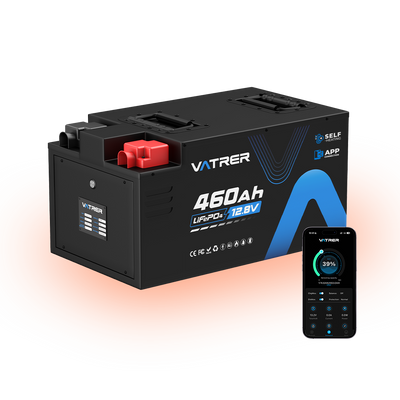
Vatrer 12V 460Ah Self-heating Lithium RV Battery

Vatrer 12V 560Ah Self-heating Lithium RV Battery

Vatrer 12V 300Ah Self Heating Lithium Battery

Vatrer 12V 300Ah Lithium Battery

Vatrer 12V 600Ah Lithium RV Battery

Vatrer 12V 300Ah Deep Cycle RV Battery with Self-heating
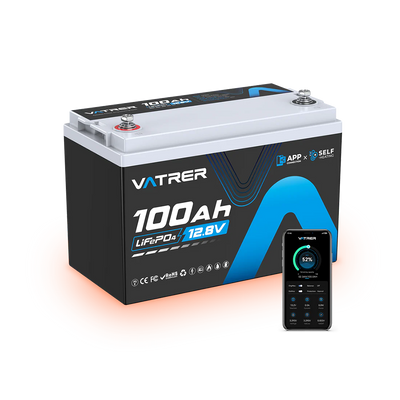
Vatrer 12V 100AH LiFePO4 Heated Lithium Battery

Vatrer 51.2V 100Ah Server Rack Lithium Battery





- Reliable Power, Empowering Lives.
- Vatrer specializes in LiFePO4 lithium batteries for golf carts, RVs, home energy storage, and off-grid applications, designed for reliable performance and long-term use.
