AGM vs Lithium Battery Life: What You Should Know
Reading time: 11 minutes

Share
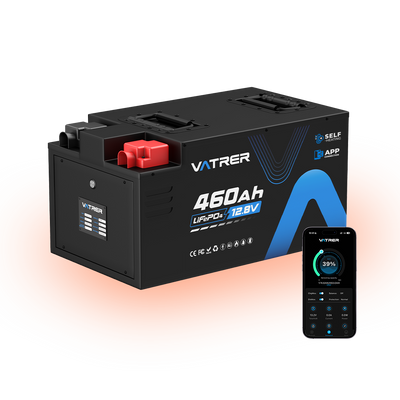
A LiFePO4 lithium battery usually lasts much longer than an AGM battery in deep cycle use. A typical AGM battery lasts about 3–5 years and often delivers 300–800 cycles. A quality LiFePO4 lithium battery commonly lasts 8–10 years or longer and delivers 3,000–5,000+ cycles. Many Vatrer lithium batteries are rated for 4,000+ cycles.
The gap gets wider when the battery is charged and discharged often. Battery life is not only the number of years on the label. It depends on how many cycles the battery can handle, how deeply you discharge it, and how much usable capacity you get before performance drops.
AGM vs Lithium Battery Life: Quick Comparison
The fastest way to compare AGM and lithium is to look at lifespan, cycle life, usable capacity, weight, and cost over time. These are the factors that decide whether the higher upfront price of lithium makes sense.
AGM Battery vs Lithium Battery Lifespan Comparison
| Comparison Factor | AGM Battery | LiFePO4 Lithium Battery |
|---|---|---|
| Typical service life | 3–5 years | 8–10+ years |
| Typical cycle life | 300–800 cycles | 3,000–5,000+ cycles |
| Vatrer lithium battery cycle life | Not applicable | 4,000+ cycles |
| Recommended usable capacity | About 50% for longer life | 80%–100% DOD support |
| Usable power from a 100Ah battery | About 50Ah | About 80–100Ah |
| Nominal voltage | 12V class | 12.8V for 12V LiFePO4 |
| Typical 100Ah battery weight | About 60–70 lbs | About 22–31 lbs |
| Typical 100Ah upfront price range | About $180–$350 | About $250–$700 |
| Storage maintenance | Recharge/check every 1–3 months | Check every 3–6 months when stored partly charged |
| Best lifespan value | Light use, backup power | Frequent deep cycle use |
AGM has the lower upfront price. Lithium usually gives you more usable power, more cycles, and fewer replacements. That is the main lifespan difference behind the lithium battery vs AGM battery comparison.


How Long Does an AGM Battery Last?
AGM battery life depends heavily on discharge depth and charging habits. It can perform well in light-duty use, but repeated deep discharge shortens its service life quickly.
Typical AGM Battery Lifespan
AGM battery lifespan is usually about 3–5 years. Mild temperatures, shallow discharges, and correct charging can stretch that number. Deep discharge, heat, long storage without charging, and heavy loads shorten it.
AGM stands for Absorbent Glass Mat. It is a sealed lead-acid battery, so it does not need watering like a flooded lead-acid battery. That lowers maintenance, but it does not remove the limits of lead-acid chemistry.
A lightly used AGM battery may last several years. The same battery used under frequent deep cycling may wear out much sooner.
Why AGM Battery Life Drops Faster
AGM batteries do not handle repeated deep discharge as well as LiFePO4 lithium batteries. Occasional deep discharge may happen, but making it a habit speeds up capacity loss.
Common reasons AGM batteries fail early include:
- Frequent deep discharge: Draining an AGM battery below about 50% state of charge on a regular basis shortens its life.
- Undercharging: Leaving an AGM battery partly charged for days or weeks can cause sulfation. Once that builds up, the battery may not hold a full charge.
- Overcharging: Too much charging voltage can damage the sealed internal structure. Many 12V AGM batteries use absorption charging around 14.4V–14.7V, but the exact setting depends on the manufacturer.
- High heat: Heat speeds up battery aging. An AGM battery that might last 5 years in mild conditions may last only 2–3 years in repeated high-heat use.
- Oversized loads: A small AGM battery bank running a large inverter or motor drains deeper and works harder. That shortens service life.
AGM works best when discharge stays shallow and charging stays consistent.
How Long Does a Lithium Battery Last?
Lithium battery lifespan is usually longer because LiFePO4 chemistry is built for repeated cycling. It also lets you use more of the rated capacity without the same lifespan penalty AGM batteries face.
Typical Lithium Battery Lifespan
LiFePO4 lithium battery lifespan is usually 8–10 years or longer with proper use. Many quality models are rated for 3,000–5,000+ cycles.
Some lithium batteries advertise 6,000–10,000 cycles, but real-world life still depends on charging settings, operating temperature, storage habits, discharge rate, and battery build quality.
A lithium battery also gives you more usable capacity during its life. A 12V 100Ah LiFePO4 lithium battery can often provide 80–100Ah of usable energy. A 100Ah AGM battery is commonly treated as about 50Ah of usable energy when long life is the goal.
Why LiFePO4 Battery Life Is Higher
LiFePO4 chemistry handles frequent cycling better than AGM. It also keeps voltage more stable during discharge, so motors, inverters, and DC appliances often run more consistently until the battery is nearly empty.
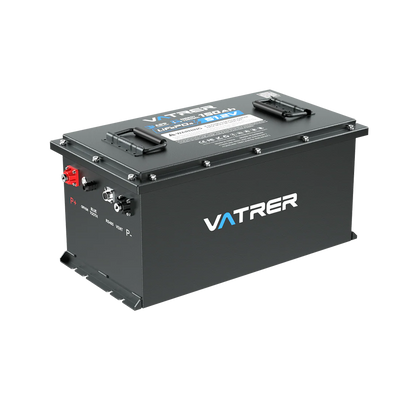
A good lithium battery also includes a built-in BMS. For example, Vatrer lithium batteries include BMS protection against overcharge, over-discharge, overcurrent, high temperature, and low-temperature cutoff. BMS protection does not replace correct charging or proper system sizing, but it helps reduce damage from common electrical problems.
Lithium lasts longer mainly because it combines:
- more charge cycles
- deeper usable capacity
- lower weight
- less routine maintenance
- fewer replacements over time
When an AGM battery bank wears out early or feels undersized, the problem is often limited usable capacity and low cycle life. A Vatrer LiFePO4 lithium battery addresses both with 4,000+ cycles, high DOD support, and built-in protection.
Depth of Discharge Affects Battery Life
Depth of discharge explains why two batteries with the same Ah rating can perform very differently. The label may say 100Ah on both batteries, but the usable energy is not the same in regular deep cycle use.
Why 100Ah Is Not Always 100Ah
A 100Ah AGM battery and a 100Ah LiFePO4 lithium battery do not deliver the same usable power in deep cycle use.
AGM batteries are often sized around 50% depth of discharge for longer life. That means a 100Ah AGM battery may provide about 50Ah of practical usable energy before you should recharge it.
LiFePO4 lithium batteries can usually discharge much deeper. Many Vatrer lithium batteries support 80%–100% DOD, so a 100Ah lithium battery can often provide about 80–100Ah of usable energy.
Think of AGM as a battery you try not to drain past halfway. Lithium lets you use much more of the rated capacity before recharging.
Deeper DOD Means More Usable Power
Depth of discharge changes runtime and lifespan. A deeper DOD gives more power per charge, but only some battery chemistries tolerate that pattern well.
100Ah AGM vs 100Ah Lithium Usable Capacity
| Battery Type | Rated Capacity | Recommended Usable Range | Practical Usable Capacity |
|---|---|---|---|
| 100Ah AGM battery | 100Ah | About 50% DOD for longer life | About 50Ah |
| 100Ah LiFePO4 lithium battery | 100Ah | 80%–100% DOD | About 80–100Ah |
Lithium gives you two practical advantages: more usable energy per charge and more total cycles before replacement.
AGM vs Lithium Battery Cycle Life
Cycle life gives a more practical view of battery life than calendar years alone. A battery that sits on standby ages differently from a battery that cycles several times per week.
Cycle life is the number of charge and discharge cycles a battery can deliver before its capacity drops to a defined level, often around 80% of original capacity.
AGM batteries are usually measured in the hundreds of cycles. LiFePO4 lithium batteries are usually measured in the thousands of cycles. That difference matters most when the battery cycles often.
Cycle Life and Replacement Frequency Example
| Battery Type | Typical Cycle Life | Example Use Pattern | Approximate Replacement Pattern |
|---|---|---|---|
| AGM battery | 300–800 cycles | 2 cycles per week | About 3–7 years |
| AGM battery | 300–800 cycles | 5 cycles per week | About 1–3 years |
| LiFePO4 lithium battery | 3,000–5,000+ cycles | 2 cycles per week | 20+ years by cycles, calendar life may limit first |
| LiFePO4 lithium battery | 3,000–5,000+ cycles | 5 cycles per week | About 11–19 years by cycles |
Cycle math does not account for every real-world factor. Heat, charging quality, storage, and battery design still matter. The pattern is clear: frequent cycling favors lithium.
Battery Efficiency and Weight in Real Use
Efficiency and weight do not replace cycle life, but they affect how much usable value you get from the battery system. A lighter battery with deeper usable capacity can reduce system strain and increase practical runtime.
Lithium batteries are usually much lighter than comparable AGM batteries. A typical 100Ah AGM battery weighs about 60–70 lbs. A typical 100Ah LiFePO4 lithium battery weighs about 22–31 lbs.
Weight does not directly extend battery life, but it affects mobility, load demand, and system design. Saving 30–45 lbs per 100Ah battery matters more when the battery bank has multiple batteries or the system has strict weight limits.
Charging behavior also differs. AGM batteries spend more time in the absorption stage near full charge. Lithium batteries usually accept charge more directly until full, as long as the charger profile is correct.
100Ah Battery Charging Example With a 20A Charger
| Battery Type | Usable Capacity Refilled | Typical Charge Time | Notes |
|---|---|---|---|
| 100Ah AGM battery | About 50Ah | About 4–6 hours | Final absorption stage can slow charging |
| 100Ah LiFePO4 lithium battery | About 80–100Ah | About 4–6 hours | Needs a compatible lithium battery charger |
A lithium battery can refill more usable energy in a similar charging window. That helps when charging time is limited.
AGM vs Lithium Battery Cost Over Time
The better value is not always the cheaper battery on day one. Cost over time depends on usable capacity, cycle life, and how often the battery needs replacement.
Upfront Cost vs Lifetime Cost
AGM batteries usually cost less at checkout. A 12V 100Ah AGM battery often costs about $180–$350. A 12V 100Ah LiFePO4 lithium battery often costs about $250–$700, depending on brand, BMS rating, heating function, Bluetooth monitoring, warranty, and build quality.
The lower AGM price is attractive, but lifetime cost depends on usable capacity and replacement frequency.
Example Cost Per Cycle Comparison
| Battery Type | Example Price | Typical Cycle Life | Estimated Cost Per Cycle |
|---|---|---|---|
| 100Ah AGM battery | $250 | 500 cycles | $0.50 per cycle |
| 100Ah LiFePO4 lithium battery | $500 | 4,000 cycles | $0.13 per cycle |
This example uses round numbers, not fixed market pricing. It shows why lithium can cost less per cycle even when the purchase price is higher.
When Lithium Becomes More Cost-Effective
Lithium becomes easier to justify when the battery cycles often. Daily or weekly deep cycling uses up AGM life quickly, while LiFePO4 batteries are built for repeated cycling.
Lithium usually makes more financial sense when:
- The battery cycles weekly or daily: At 250–365 cycles per year, AGM batteries can reach their cycle limit quickly. Lithium has much more cycle headroom.
- Loads drain the battery deeply: High draw from motors, inverters, or stored energy systems pushes AGM batteries harder. Lithium tolerates deeper discharge better.
- Runtime matters more than purchase price: A 100Ah lithium battery can provide about 80–100Ah of usable energy, while AGM is commonly managed closer to 50Ah.
- Replacement labor adds cost: Replacing heavy batteries every few years costs time and effort. Fewer replacements make lithium more attractive.
For golf cart upgrades, Vatrer golf cart battery conversion kits include installation accessories and a dedicated lithium charger. That reduces the risk of charger mismatch, which is one of the easiest ways to hurt lithium battery performance after replacing AGM.
AGM can still be economical for backup power that cycles only 5–20 times per year.
When AGM Battery Still Makes Sense
AGM still has a clear role when deep cycling is rare and upfront cost matters most. It is not the longest-lasting option for frequent cycling, but it can be practical for light use.
AGM battery is a reasonable choice for:
- Lower-budget replacements: A 12V 100Ah AGM battery may cost $100–$300 less than a comparable LiFePO4 lithium battery.
- Occasional backup power: A battery that cycles only 5–20 times per year may not need thousands of cycles.
- Simple starting applications: AGM batteries can work well in certain engine-starting roles. A deep cycle lithium battery is not always a direct starter battery replacement unless it is rated for that use.
- Light-duty systems: Small loads, shallow discharge, and steady charging are friendly to AGM batteries.
Low use favors AGM’s lower purchase price. Heavy cycling favors lithium’s longer service life.
When Lithium Battery Is Better
Lithium becomes the stronger choice when the battery cycles often or needs to deliver more usable energy from the same rated capacity. The more often you discharge and recharge the battery, the more its cycle life matters.
Lithium battery is a better fit for:
- Frequent deep cycle use: LiFePO4 batteries can often deliver 5–10 times the cycle count of AGM batteries.
- Higher usable capacity: A 100Ah lithium battery can often provide 80–100Ah of usable energy. A 100Ah AGM battery is commonly limited to about 50Ah for longer life.
- Weight-sensitive systems: Saving 30–45 lbs per 100Ah battery helps where battery weight affects performance or installation space.
- Lower maintenance: AGM does not need watering, but it still needs regular charging during storage. Lithium batteries can usually be stored longer when kept at a partial state of charge.
- Long-term value: More cycles and fewer replacements lower the cost per year in high-use systems.
Vatrer lithium batteries are a strong fit when an AGM setup wears out early or cannot provide enough runtime. The useful advantages are practical: 4,000+ cycles, BMS protection, low-temperature protection, and 80%–100% DOD support.
AGM vs Lithium Battery Life: Final Choice
The right choice depends on cycle frequency, usable capacity, and upfront budget. AGM favors low-use systems. Lithium favors repeated deep cycling and long-term replacement savings.
Which Battery Should You Choose?
| Your Priority | Better Choice | Why It Fits |
|---|---|---|
| Lowest upfront cost | AGM battery | Typical 100Ah price around $180–$350 |
| Longest lifespan | LiFePO4 lithium battery | Often 8–10+ years with thousands of cycles |
| Frequent deep cycling | LiFePO4 lithium battery | Supports 80%–100% DOD on many models |
| Backup power only | AGM battery | Low cycle demand makes AGM cost-effective |
| Higher usable capacity | LiFePO4 lithium battery | 100Ah battery often delivers 80–100Ah usable energy |
| Cold-weather charging | Protected lithium model | Low-temperature cutoff or self-heating helps protect battery life |
| Simple starting use | AGM battery | Often better suited for traditional starting applications |
Choose AGM when you need lower upfront cost and only cycle the battery occasionally. Choose lithium when the battery is used frequently and you want more usable energy across more years.
Conclusion
Lithium usually wins on battery life because it delivers more cycles and more usable capacity per cycle. AGM still makes sense for lower-cost, light-use, backup, and some starting applications.
The real comparison is not only purchase price. It is usable Ah, cycle life, charger compatibility, temperature protection, and how often the battery will need replacement.
Share