






 Days
Hours
Minutes
Seconds
Days
Hours
Minutes
Seconds

The Gift That Keeps Her Powered Up


- 10240W | 5376Wh | 4000+ Cycles


- 5120Wh | 5120W | 5000+ Cycles


- 5888Wh | 3840W | 5000+ Cycles


- 3840Wh | 2560W | 5000+ Cycles

- 7680Wh | 3840W | 5000+Cycles

- 10240W | 5376Wh | 4000+ Cycles
Golf Cart Battery


- 10240W | 5376Wh | 4000+ Cycles
- Weight: 102.3 LBs , Up to 50 Mile
- 10240W | 5376Wh | 4000+ Cycles
- Weight: 90.57 LBs , Up to 50 Miles

- 15360W | 5376Wh | 6000+ Cycles
- Weight: 102.3 LBs , Up to 50 Miles

- 10240W | 7680Wh | 4000+ Cycle
- Weight: 138.8 LBs, UP to 70 Miles

- 7680W | 4032Wh | 4000+Cycles
- Weight: 83.3 LBs, UP to 50 Miles

- 14080W | 7392Wh | 6000+ Cycles
- Weight: 132.27 LBs, UP to 70 Miles
RV Battery


- Heated & Bluetooth
- 3,840W Load Power
- 5,000+ Cycle Lifespan
- 5,888Wh Energy Capacity

- Bluetooth
- 2,560W Load Power
- 5,000+ Cycle Lifespan
- 3,840Wh Energy Capacity


- Bluetooth
- 3,840W Load Power
- 5,000+ Cycle Lifespan
- 7,680Wh Energy Capacity
Home Storage Battery


Trolling Battery
- -4°F to 140°F Operating Range: Functions reliably from -4°F to 140°F.
- 5,000+ Deep Cycles: Enjoy over 5,000 deep cycles.
- 33% Lighter Design: Weighs 33% less than lead-acid batteries.
- 100% Charging Efficiency: Achieves up to 100% charging efficiency.


- 20.47x10.59x8.66 Inch
- 200A Continuous Discharging
- Built for 100-200 LBs Trolling Motor

- 10.24x6.61x8.23 Inch
- 150A Continuous Discharging
- Built for 30-70 LBs Trolling Motor

- 15.16x7.56x9.76 Inch
- 200A Continuous Discharging
- Built for 100-200 LBs Trolling Motor

- 13.07x6.88x8.62 Inch
- 50A Continuous Discharging
- Built for 30-70 LBs Trolling Motor
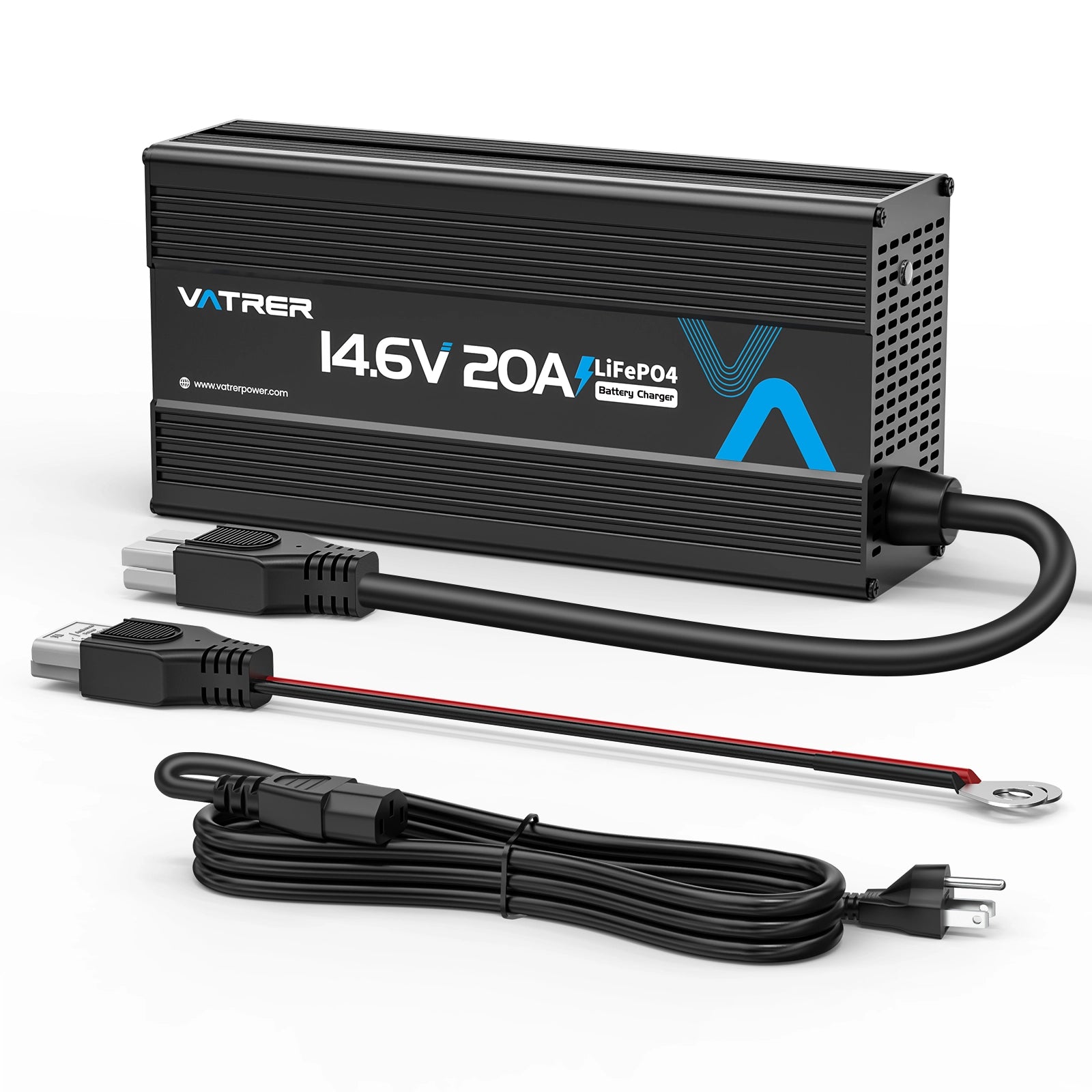
Vatrer Accessories



Why Upgrade This Summer?

than lead-acid

voltage output

maintenance
This Independence Day, don’t rely on the grid.


FAQs
Yes, many Vatrer LiFePO4 batteries are built as drop-in replacements, but the charger matters. An older lead-acid charger may only bring a lithium battery to about 80%-90%, so a LiFePO4-compatible charger or a charger with a lithium mode is the better match for full capacity and longer battery life.
A properly matched lithium golf cart battery will not damage the controller or regen system. Vatrer golf cart lithium battery kits are designed for high-current drive loads, and the built-in BMS helps manage overcurrent and overvoltage protection on carts such as EZGO TXT, Club Car DS, and Yamaha Drive models.
Do not wire an RV alternator straight to a lithium battery. A DC-DC charger, often in the 20A-60A range, limits charging current so the alternator is not overloaded while your Vatrer lithium battery charges safely on the road.
Yes, a 100Ah LiFePO4 battery can often deliver close to the usable power of a 150Ah-200Ah lead-acid setup. Lead-acid batteries are usually limited to about 50% usable capacity, while Vatrer lithium batteries support 80%-100% depth of discharge with stable voltage under load.
Most RV air conditioners need at least a 300Ah-600Ah lithium battery bank, a 3000W pure sine wave inverter, and a soft starter to handle the startup surge. A Vatrer lithium battery setup gives you the steady deep-cycle power needed for cooling, but air conditioning is still one of the highest-demand loads in an RV.
Yes, LiFePO4 batteries are much more thermally stable than many other lithium chemistries. Vatrer lithium batteries include a built-in BMS that helps protect against overcharge, over-discharge, overcurrent, and high-temperature conditions.
Charging a standard LiFePO4 battery below 32°F can damage the cells, so Vatrer batteries include low-temperature charging protection. Vatrer heated lithium battery models start warming the battery when the temperature drops below 32°F and stop heating around 41°F, so charging can resume safely in cold weather.
Most deep cycle lithium batteries are not made for engine starting because cranking requires very high instant current. Vatrer marine trolling motor lithium batteries are built for steady deep-cycle output, so an outboard engine should use a lithium battery clearly rated as “cranking” or “dual-purpose.”
Yes, lithium batteries handle vibration well because they do not use loose liquid acid like lead-acid batteries. Marine-ready Vatrer lithium batteries use a solid internal structure, durable casing, and water-resistant protection such as IP65-rated designs to handle wet decks, boat vibration, and trolling motor use.
A Bluetooth app is accurate enough for checking battery voltage, current, temperature, and state of charge on most single-battery setups. Vatrer smart lithium batteries let you monitor real-time status through the Vatrer app, while many battery models also support LCD display monitoring for quick checks during use.



- Reliable Power, Empowering Lives.
- Vatrer specializes in LiFePO4 lithium batteries for golf carts, RVs, home energy storage, and off-grid applications, designed for reliable performance and long-term use.
