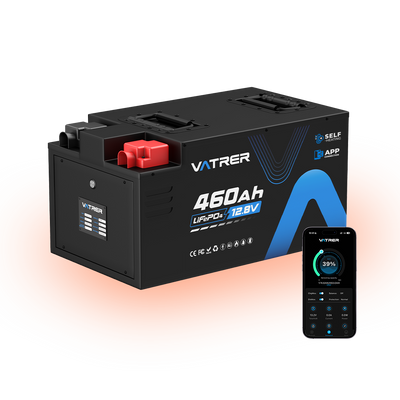
Everything You Wanted to Know About 400Ah Lithium Battery
Reading time: 6 minutes
Introduction
A 400Ah lithium battery is a high-capacity power solution designed for users who need long runtime, stable output, and dependable energy storage. In the United States, this battery size is commonly considered for RVs, off-grid cabins, solar backup systems, boats, van builds, emergency power stations, and large 12V accessory systems.
Compared with traditional lead-acid batteries, lithium batteries offer more usable energy, faster charging, lighter weight, and longer cycle life. For users who regularly camp off-grid, run appliances from an inverter, power marine electronics, or prepare for outages, a 400Ah lithium battery can provide a strong balance of capacity and efficiency.

What Does 400Ah Mean?
Ah stands for amp-hours, which measures how much electrical charge a battery can deliver over time. A 400Ah battery can theoretically provide 400 amps for 1 hour, 40 amps for 10 hours, or 10 amps for 40 hours under ideal conditions.
For lithium batteries, the actual usable runtime depends on battery voltage, inverter efficiency, load size, temperature, wiring quality, and the battery management system. A common 12V LiFePO4 battery has a nominal voltage of about 12.8V. That means a 12.8V 400Ah lithium battery stores approximately:
12.8V × 400Ah = 5,120Wh, or about 5.12kWh of energy.
This amount of stored energy can support many common RV, marine, and backup power loads, especially when paired with efficient appliances and a properly sized inverter.
Key Specifications to Check Before Buying
Not every 400Ah lithium battery is built the same. Before choosing one, buyers should compare the main specifications and confirm that the battery fits the intended application.
| Specification | Why It Matters |
|---|---|
| Nominal Voltage | Determines whether the battery is suitable for 12V, 24V, or 48V systems. |
| Energy Capacity | A 12.8V 400Ah battery provides about 5.12kWh of stored energy. |
| Continuous Discharge Current | Shows how much current the battery can safely deliver to inverters, motors, and appliances. |
| Maximum Charge Current | Helps determine how fast the battery can be charged with a lithium charger, solar controller, or DC-DC charger. |
| Cycle Life | Indicates how many charge and discharge cycles the battery can deliver before major capacity loss. |
| Temperature Range | Important for RV storage, outdoor solar sheds, boats, and winter use. |
| BMS Protection | Protects against overcharge, over-discharge, overcurrent, short circuit, and temperature issues. |
Why Choose a 400Ah Lithium Battery?
The main advantage of a 400Ah lithium battery is high usable capacity in a relatively compact package. Lead-acid batteries should not be deeply discharged on a regular basis, while LiFePO4 batteries can usually provide a much higher percentage of usable energy without the same level of performance decline.
- More usable power: Lithium batteries deliver a larger portion of their rated capacity compared with lead-acid options.
- Longer service life: A quality LiFePO4 battery can support thousands of cycles when charged and used correctly.
- Lower weight: Lithium batteries are typically much lighter than equivalent lead-acid battery banks.
- Faster charging: Many lithium batteries can accept higher charge current, reducing downtime.
- Stable voltage: Lithium batteries hold voltage better under load, which helps inverters and electronics run more consistently.
- Low maintenance: No watering, acid checks, or equalization charging are required.
Fast Charging and High Output Capability
A 400Ah lithium battery can often charge faster than a comparable lead-acid battery bank, provided the charger and wiring are properly sized. For example, a 40A charger may take roughly 10 to 12 hours to recharge a deeply discharged 400Ah battery, while a 100A charger can reduce that time significantly if the battery supports that charge rate.
High discharge capability is also important. RV air conditioners, microwaves, induction cooktops, water pumps, refrigerators, and power tools can create large current demands when connected through an inverter. Before using these loads, confirm that the battery’s BMS can support the inverter’s continuous and surge current requirements.
Best Applications for a 400Ah Lithium Battery
RV and Camper Power Systems
A 400Ah lithium battery is a strong choice for Class A, Class C, fifth wheel, travel trailer, and camper van electrical systems. It can support lighting, fans, water pumps, refrigerators, laptops, small kitchen appliances, and entertainment equipment. When paired with solar panels and a DC-DC charger, it can help RV owners stay off-grid longer.
Off-Grid and Solar Energy Storage
For cabins, workshops, and independent power systems, a 400Ah lithium battery can store solar energy for evening and overnight use. It is especially useful in solar energy storage systems where long cycle life and efficient charging are important.
Marine and Fishing Applications
Boaters may use 400Ah lithium batteries for house power, navigation electronics, trolling motors, lighting, refrigeration, and communication equipment. The lower weight of lithium can also be valuable on boats where every pound affects handling and efficiency.
Emergency Backup Power
For homes, garages, and small businesses, a 400Ah lithium battery can be part of a backup system for essential loads such as routers, medical devices, lighting, refrigerators, sump pumps, and communication equipment. The right inverter and charger are essential for safe backup power design.
How Long Can a 400Ah Lithium Battery Run Appliances?
Runtime depends on the load. A 12.8V 400Ah battery stores about 5.12kWh before inverter losses. With inverter efficiency considered, usable AC energy may be closer to 4.5kWh to 4.8kWh in many setups.
| Example Load | Approximate Power Draw | Estimated Runtime from 5.12kWh Battery |
|---|---|---|
| LED lights | 50W | 80+ hours |
| 12V refrigerator | 40W to 80W average | Several days, depending on cycling |
| Laptop and router | 100W | 40+ hours |
| Microwave | 1,000W to 1,500W | Several short cooking sessions |
| RV air conditioner | 1,200W to 1,800W | A few hours, depending on compressor cycling |
These are general estimates. Real runtime depends on appliance efficiency, inverter losses, ambient temperature, and how deeply the battery is discharged.
Charging a 400Ah Lithium Battery
A 400Ah lithium battery should be charged with a LiFePO4-compatible charger, solar charge controller, or DC-DC charger. A proper lithium charging profile helps protect the battery and ensures efficient charging.
- Use the correct voltage: A 12V LiFePO4 battery often charges around 14.2V to 14.6V, depending on the manufacturer.
- Match the charger current: Choose a charger that stays within the battery’s maximum charge current rating.
- Avoid lead-acid repair modes: Equalization and desulfation modes are not suitable for lithium batteries.
- Use proper wiring: Large batteries require correctly sized cables, fuses, and connectors.
- Protect from cold charging: Charging below freezing should be avoided unless the battery has low-temperature protection or self-heating.
Safety Features to Look For
A 400Ah lithium battery stores a large amount of energy, so safety features are essential. The battery should include a quality BMS that monitors voltage, current, temperature, and cell balance.
- Overcharge protection
- Over-discharge protection
- Overcurrent protection
- Short-circuit protection
- High-temperature protection
- Low-temperature charging protection
- Cell balancing
- Bluetooth monitoring, if available
Things to Consider Before Purchasing
Before buying a 400Ah lithium battery, confirm the system voltage, available installation space, inverter size, charging sources, and required runtime. A battery that works well for an RV may not be the right choice for a high-power home backup system or a 48V solar bank.
It is also important to review the user manual, warranty, certifications, BMS rating, and customer support options. A high-capacity battery should come from a supplier that clearly lists specifications and provides practical installation guidance.
Conclusion
A 400Ah lithium battery is a powerful and efficient energy storage option for RVs, boats, off-grid solar systems, backup power, and mobile living. With about 5.12kWh of energy in a 12.8V configuration, it can support many daily loads while offering the advantages of lithium technology, including long cycle life, fast charging, stable voltage, and lower maintenance.
For U.S. users who need dependable long-duration power, a 400Ah lithium battery can be an excellent investment. The key is to choose a battery with the right voltage, BMS rating, charging compatibility, temperature protection, and safety features for the application.
Share