Should I Upgrade My Golf Cart to Lithium? Exploring the Benefits and Considerations
Reading time: 10 minutes
Is Upgrading a Golf Cart to Lithium Actually Worth It?
If your golf cart still runs on lead-acid batteries, you have probably wondered whether switching to lithium is worth the money. It is one of the most common upgrades for electric golf carts today, especially for owners who want more usable range, less battery maintenance, and more consistent performance.
For many golf cart owners, the answer is yes, upgrading to lithium can be worth it. But that does not mean every cart needs the conversion right away. The real question is whether the benefits of lithium match how often you drive, where you use your cart, what condition your current batteries are in, and how much you are willing to spend upfront.
This guide breaks down the practical benefits of lithium golf cart batteries, what changes you may notice after upgrading, the compatibility issues you need to check, and the situations where sticking with lead-acid may still make sense.

What Changes When You Switch a Golf Cart from Lead-Acid to Lithium?
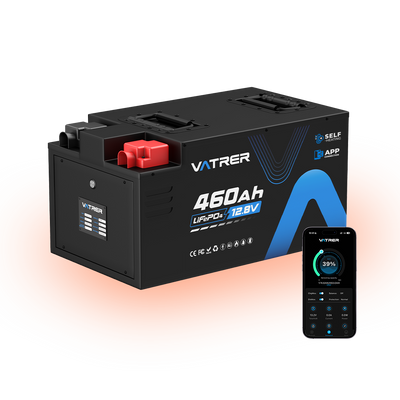
Most lithium golf cart upgrades use LiFePO4, or lithium iron phosphate, batteries. Compared with traditional flooded lead-acid batteries, they are lighter, require far less routine maintenance, and usually maintain their voltage more consistently as the battery discharges.
That last point makes a noticeable difference behind the wheel. A lead-acid battery pack may feel strong immediately after charging but gradually lose some punch as the state of charge drops. A properly sized lithium system can deliver more consistent power through a larger portion of the drive.
That does not mean lithium automatically turns a stock golf cart into a high-speed cart. Top speed still depends heavily on the motor, controller, gearing, tire size, programming, and other components. What lithium can improve is voltage stability, usable energy, acceleration consistency, and overall drivability.
Main Benefits of Upgrading Your Golf Cart to Lithium
1. More Usable Range Between Charges
Range is one of the biggest reasons golf cart owners consider lithium. Lithium batteries can provide a larger amount of usable energy without the same voltage drop you commonly notice with lead-acid batteries.
This can be especially useful if you use your cart for more than a quick nine holes. Owners driving around large properties, RV resorts, gated communities, farms, campgrounds, or neighborhood roads may appreciate being able to make longer trips without constantly watching the battery gauge.
Actual range still depends on battery capacity, vehicle weight, passenger load, hills, tire pressure, speed, accessories, temperature, and driving habits, so do not choose a battery based only on a manufacturer's maximum-range claim.
2. More Consistent Performance
A major advantage of lithium is the way it delivers power. Instead of gradually feeling weaker as the battery discharges, a properly configured lithium golf cart can feel much more consistent through most of the charge cycle.
This can be particularly noticeable when:
- Climbing hills or driving on uneven terrain
- Carrying multiple passengers
- Running larger tires
- Using headlights, audio systems, fans, or other accessories
- Driving a modified cart with higher current demands
If your cart has an upgraded motor or controller, make sure the lithium battery's continuous and peak discharge ratings can support the system. Matching voltage alone is not enough.
3. Much Less Battery Weight
Traditional lead-acid golf cart battery packs are heavy. Replacing them with lithium can remove a significant amount of weight from the vehicle.
Less weight may improve responsiveness and efficiency, and it makes the battery compartment easier to work around. It can also reduce some of the load the cart has to move every time you accelerate or climb a hill.
However, lighter is not always automatically better in every situation. Golf carts were originally designed around a certain battery weight and distribution, so the new battery should be securely mounted and the vehicle's handling should be considered after a major weight reduction.
4. No Watering or Acid Cleanup
If you are tired of checking electrolyte levels, adding distilled water, cleaning corrosion, and keeping battery terminals free of acid residue, lithium is a major convenience upgrade.
A sealed lithium golf cart battery with a properly designed battery management system does not require the watering routine associated with flooded lead-acid batteries.
For owners who use their cart frequently—or simply do not want battery maintenance on their weekend checklist—that can be one of the most valuable improvements.
5. Longer Service Potential
Quality lithium batteries generally offer substantially more charge-discharge cycles than conventional lead-acid batteries when both are used correctly.
That does not mean every lithium battery will automatically last for years without issues. Battery quality, cell design, BMS quality, charging habits, temperature, storage conditions, and the electrical demands of the cart all matter.
When comparing prices, look beyond the initial purchase cost and consider cost over the expected ownership period.
Lithium vs. Lead-Acid Golf Cart Batteries at a Glance
| Factor | Lithium | Lead-Acid |
|---|---|---|
| Upfront Cost | Higher | Lower |
| Weight | Much lighter | Heavier |
| Routine Maintenance | Minimal | Regular maintenance required for flooded batteries |
| Power Delivery | More consistent through the discharge cycle | Greater voltage drop as charge decreases |
| Charging | Often faster with a compatible charger | Generally slower |
| Cycle Life | Typically higher | Typically lower |
| Initial Installation | May require charger, wiring, gauge, or mounting changes | Usually straightforward when replacing like-for-like |
What Should You Check Before Converting to Lithium?
1. Confirm Your Golf Cart's System Voltage
Start with the basics. Determine whether your golf cart uses a 36V, 48V, 72V, or another electrical system.
The lithium battery must be designed for the appropriate golf cart voltage. Do not assume that simply connecting enough smaller lithium batteries in series will produce a suitable system. Some lithium batteries are approved for series connections and others are not.
Follow the battery manufacturer's configuration requirements rather than building a battery bank based only on nominal voltage.
2. Check Motor and Controller Current Demand
This is one of the most overlooked parts of a lithium conversion.
A stock golf cart and a modified golf cart can place very different loads on a battery. Upgraded controllers, high-torque motors, larger tires, rear seats, heavy loads, and steep hills can all increase current demand.
Check both the continuous discharge current and peak discharge current supported by the battery and its BMS. An undersized system may trigger BMS protection during hard acceleration or climbing.
3. Make Sure the Charger Is Compatible
Do not automatically continue using your old lead-acid charger after converting to lithium.
Lithium batteries have their own recommended charging profiles and voltage limits. Some existing golf cart chargers can be reprogrammed or may have a compatible lithium mode, while others should be replaced.
The safest approach is to use a charger specifically approved by the battery manufacturer for the pack you install.
4. Check the Battery Gauge
Your old battery meter may not provide an accurate reading after the conversion. Lead-acid gauges often estimate charge based heavily on voltage, while lithium voltage remains relatively flat through much of the discharge cycle.
A lithium-compatible state-of-charge meter, often using a shunt or communication connection to the battery, can provide a much more useful reading.
5. Think About Accessories and Voltage Reduction
Golf carts commonly run 12V accessories such as lights, horns, stereos, USB chargers, and fans.
If those accessories are currently powered by tapping part of a lead-acid pack, the electrical setup may need to change after installing lithium. A properly sized DC-to-DC converter is often used to supply lower-voltage accessories from the main pack.
6. Confirm Fitment and Mounting
A lithium battery may be smaller than the lead-acid pack it replaces, but it still needs to be securely mounted.
Before buying, check:
- Battery compartment dimensions
- Terminal locations
- Cable reach and cable size
- Hold-down brackets or battery trays
- Main fuse and disconnect requirements
- Clearance around seats and body panels
A battery should never be allowed to slide or bounce around inside the compartment.
What Are the Downsides of a Lithium Golf Cart Upgrade?
Higher Upfront Cost
The biggest drawback is still purchase price. A quality lithium golf cart battery, compatible charger, installation hardware, and any required electrical upgrades can cost considerably more upfront than simply installing another set of lead-acid batteries.
That higher initial expense is easier to justify if you use the golf cart regularly and expect to keep it for several more years.
The Cheapest Lithium Battery Is Not Always the Best Deal
Lithium batteries depend heavily on their internal battery management system. The BMS monitors important conditions such as voltage, current, and temperature and can disconnect the battery when operating limits are exceeded.
Before purchasing, compare more than amp-hour capacity. Look at:
- Continuous and peak output ratings
- BMS protection features
- Low-temperature charging protection
- Warranty terms
- Technical documentation
- Availability of customer or dealer support
Cold-Weather Charging Needs Attention
If you use or store your golf cart in freezing weather, check the battery's specified charging temperature range. Many LiFePO4 systems restrict or stop charging when the cells are too cold unless the battery includes low-temperature charging protection or an internal heating system.
This matters for carts stored in unheated garages during winter. Follow the exact charging and storage limits provided for the battery you purchase rather than assuming all lithium packs behave the same way.
How Much Lithium Battery Capacity Do You Actually Need?
More amp-hours usually means more available energy, but buying the largest battery you can fit is not always necessary.
Think about your longest normal day of driving rather than your shortest trip. Consider hills, passengers, cargo, oversized tires, accessories, and whether you want extra reserve capacity.
For a cart that mostly makes short trips around a neighborhood, a moderate-capacity pack may be enough. A cart used for long-distance community driving, resort transportation, hunting, property work, or repeated rounds of golf may benefit from additional capacity.
It is also useful to compare batteries by usable energy and supported current output, not amp-hours alone.
Who Should Seriously Consider Upgrading to Lithium?
A lithium conversion tends to make the most sense if you:
- Use your golf cart several times a week
- Want longer or more predictable driving range
- Regularly drive on hills
- Are replacing an aging lead-acid battery pack anyway
- Want to eliminate watering and corrosion maintenance
- Use the cart around a neighborhood, property, resort, campground, or jobsite
- Plan to keep the golf cart for several more years
- Want to reduce vehicle weight
When Might You Be Better Off Keeping Lead-Acid Batteries?
You do not need to convert simply because lithium is newer technology.
Keeping your current system may make more sense if your lead-acid batteries are still relatively new, your driving distance is short, the cart is rarely used, or minimizing upfront cost matters more than reducing maintenance.
If a cart only travels a few miles occasionally and the existing batteries easily handle that job, the financial benefit of replacing a healthy pack early may be limited.
Before You Buy: Use This Lithium Conversion Checklist
- Voltage: Match the battery to the cart's electrical system.
- Capacity: Choose enough usable energy for your real driving needs.
- Current output: Make sure the BMS can support the motor and controller.
- Charger: Confirm the charger has the correct lithium charging profile.
- Battery meter: Check whether your existing gauge will remain accurate.
- Accessories: Verify how 12V accessories will receive power.
- Fitment: Measure the battery compartment before ordering.
- Mounting: Secure the new battery with suitable brackets or a tray.
- Temperature: Check charging, operating, and storage limits.
- Support: Review the warranty, documentation, and manufacturer support.
So, Should You Upgrade Your Golf Cart to Lithium?
For a lot of golf cart owners, lithium is a worthwhile upgrade—especially when the existing lead-acid batteries are already nearing replacement.
You can gain a lighter battery system, more consistent power, more usable range, less maintenance, and potentially a longer service life. Those improvements are particularly valuable when the golf cart is used frequently rather than sitting in the garage most of the year.
Just do not treat lithium as a simple battery swap without checking the rest of the electrical system. Battery voltage, BMS current capacity, charger compatibility, accessory power, mounting, temperature protection, and state-of-charge monitoring all need to work together.
If your current batteries are due for replacement and you plan to keep using the cart regularly, that is often the best time to compare the total cost of another lead-acid pack with a properly matched lithium conversion. Choose based on how you actually use the cart, not simply on which battery has the biggest capacity number.
Share