What Are the Pros and Cons of Battery-Operated Lawn Mowers
Reading time: 11 minutes

Share
In recent years, battery-operated lawn mowers, also known as cordless or electric lawn mowers, have become a popular alternative to traditional gas mowers. They're quieter, easier to maintain, and better for the environment. However, compared with gas-powered machines, these mowers have some limits, such as shorter run times and higher upfront costs.
They're ideal for small to medium-sized lawns, but for very large areas or overgrown grass, a battery mower may not always deliver the power or endurance you need. Understanding these trade-offs can help you decide whether a battery mower fits your yard and lifestyle.

What Types of Battery-Operated Lawn Mowers
Different types of mowers cater to different lawns and user needs. Understanding their differences will help you make the best choice.
Tips: Match your lawn size to your mower's battery voltage and amp-hour (Ah) rating to avoid underperformance.
Push Mower
A push mower works best for small or moderately sized lawns. With an average run time of 30-60 minutes, it's efficient for weekly maintenance but may require recharging for larger yards. Most models operate on 18V-60V lithium batteries and are compact, lightweight, and easy to store.
Riding Lawn Mower
Electric riding mowers serve large lawns and are increasingly replacing gas-powered riding lawn mowers. They typically cover up to two acres per charge, using advanced lithium-ion or LiFePO4 mower batteries. Prices start around $3,000 and can reach $8,000, but they deliver quiet performance and lower long-term operating costs.
Robotic or Remote-Controlled Mower
For tech-oriented homeowners, remote-control or robotic electric models are a cutting-edge solution. Using LiFePO4 batteries (like 56V 18Ah configurations), these mowers run longer, charge faster, and are safer to operate than older lithium-ion designs.
What Pros of Battery-Operated Lawn Mowers
Quieter Operation
Battery-powered lawn mowers operate at a fraction of the noise level of gas engines, eliminating the need for hearing protection and allowing early or late mowing without disturbing neighbors.
Lower Maintenance Costs
There's no oil, spark plugs, or air filters to replace. Maintenance costs are minimal, and users can save money long term compared with gas-powered models, which require frequent servicing.
Environmentally Friendly
Battery mowers produce zero tailpipe emissions, reducing CO2 output by up to sixteen times compared with gas mowers. This makes them an eco-conscious choice for sustainable lawn care.
Easy Start and User Convenience
Starting a battery-operated lawn mower is as simple as pressing a button, no pulling cords or mixing fuel. The intuitive controls make mowing less strenuous and more efficient.
Better Handling and Control
Many electric lawn mowers feature lightweight designs and instant torque motors that provide smooth acceleration and easier control, particularly when maneuvering around trees, fences, and tight corners.
Long-Term Cost Efficiency
Although the initial price is higher, the absence of fuel costs and lower maintenance offset this investment over time. LiFePO4 batteries, in particular, offer 2,000–3,000 charge cycles, giving years of consistent performance.
What Cons of Battery-Operated Lawn Mowers
Limited Run Time
Most models run for 30-120 minutes per charge, depending on terrain and grass height. This can be restrictive for large yards unless you keep a spare battery.
Charging Time and Downtime
Charging can take 30 minutes to 12 hours, depending on the charger and battery type. If you don't have a second battery, mowing may require multiple sessions.
Higher Upfront Cost
The purchase price for electric models is typically higher, ranging from $200-$600 for basic push mowers and $3,000-$8,000 for riding models.
Battery Replacement Costs
Over time, mower batteries lose capacity. Replacement costs for lithium batteries generally range from $100 to $250+, depending on brand and voltage.
Power Limitations
While advanced lithium systems have improved torque output, battery-operated lawn mowers still can't match the raw power of gas-powered engines on thick or wet grass.
Weight and Storage
Batteries add extra weight, especially on push mowers. This can make maneuvering harder on slopes or uneven terrain. Some models are also bulkier, requiring more storage space.
Battery-Operated vs Gas-Powered Lawn Mowers
When comparing battery-operated lawn mowers with gas-powered models, the decision often comes down to your priorities, whether you value convenience, quiet operation, and low maintenance, or prefer raw power and unlimited runtime.
The table below highlights the key differences to help you identify which type of mower better suits your lawn care needs.
| Feature | Battery Operated Lawn Mower | Gas-Powered Lawn Mower |
|---|---|---|
| Upfront Cost | Higher (for most basic and mid-range models) | Lower initial purchase price |
| Operating Cost | Lower (electricity is cheaper than gasoline) | Higher (fuel and oil costs add up) |
| Maintenance | Minimal—no oil, spark plugs, or filters | Requires regular servicing (oil, air filter, spark plugs) |
| Noise Level | Very quiet; minimal vibration | Loud operation often needs hearing protection |
| Emissions | Zero during use; environmentally friendly | Produces exhaust gases and CO₂ |
| Run Time | 30–90 minutes per charge | Several hours per tank, easy refueling |
| Performance on Thick Grass | Adequate for regular lawns, may slow down on dense or wet grass | Excellent cutting power, ideal for tall or dense grass |
| Refueling or Charging | Requires battery charging, downtime between sessions | Quick refueling, continuous operation possible |
| Weight and Handling | Lighter overall, easier to push and store | Heavier due to fuel tank and engine components |
| Best Suited For | Small to medium lawns, eco-conscious users, quiet neighborhoods | Large or rugged lawns, heavy-duty or commercial mowing |
While both types of mowers can achieve great results, their strengths cater to different needs:
- Battery-powered lawn mowers are perfect for homeowners who value simplicity, lower maintenance, and environmental friendliness. They're best for regular trimming and maintaining neat, smaller lawns.
- Gas mowers, on the other hand, remain ideal for users who handle large areas, uneven terrain, or thick overgrown grass where constant power and extended runtime are critical.
From a long-term perspective, battery mowers help save money on operating costs and are far quieter and cleaner. However, if uninterrupted performance and raw torque are your top priorities, gas-powered mowers still lead in practicality for demanding jobs.
Tips: If your lawn is under one acre and you mow weekly, a battery-operated lawn mower offers better overall value and convenience. For properties larger than two acres or with challenging terrain, consider a riding lawn mower or stay with a gas-powered model for continuous runtime and higher torque.
Which Battery Type Is Best for a Lawn Mower
Selecting the right mower battery is one of the most important factors influencing your lawn mower's power, runtime, and long-term performance. Each battery type offers distinct trade-offs in cost, weight, and durability, so understanding the differences will help you make a smarter investment.
| Battery Type | Description | Pros | Cons |
|---|---|---|---|
| Lead-Acid | Traditional heavy batteries once common in early electric lawn mowers. | Affordable upfront cost, easy to source, simple charging system. | Very heavy, slow charging, shorter cycle life (≈300–500 cycles), poor cold-weather performance. |
| Lithium-Ion (Li-Ion) | Standard in most battery powered lawn mowers today; uses modern lithium chemistry for higher energy density. | Lightweight, compact size, faster charging, efficient power output, better energy-to-weight ratio. | Can degrade faster under high heat; capacity may drop after several hundred cycles. |
| LiFePO4 (Lithium Iron Phosphate) | The most advanced and stable battery chemistry for lithium battery operated lawn mowers. | Exceptional safety and thermal stability, long cycle life (2,000–4,000+), flat voltage curve for steady performance, excellent in hot or cold climates. | Higher upfront cost, requires a compatible BMS and charger. |
How to Choose the Right Battery for Your Lawn Mower
Match Battery Voltage and Capacity
Always confirm your mower's rated voltage (like 36V, 48V) and amp-hour (Ah) capacity before upgrading or replacing a battery. Using mismatched batteries can reduce power output or damage the mower's controller.
Consider Your Lawn Size and Mowing Frequency
For small yards and light weekly maintenance, a lithium-ion pack provides a good balance of cost and performance. For larger lawns, frequent use, or riding lawn mowers, investing in a LiFePO4 system ensures longer run time and reduced battery wear.
Think About Climate Conditions
LiFePO4 batteries perform well across temperature ranges, including hot summers and cold winters. Lead-acid batteries can lose capacity quickly in cold weather and may require trickle charging during storage seasons.
Charging and Maintenance Habits
Use a manufacturer-approved charger to maximize battery life. Avoid leaving lithium batteries at 0% or 100% charge for extended periods, maintain around 40-60% for off-season storage.
Evaluate Long-Term Cost and Sustainability
Although LiFePO4 batteries cost more upfront, their 3–5× longer lifespan means fewer replacements and less waste over time, making them more cost-effective in the long run.
Tips: If your mower allows upgrades, replacing older lead-acid packs with LiFePO4 batteries can instantly reduce weight, extend runtime, and improve torque delivery. Always verify the battery dimensions, connector type, and BMS compatibility before installation.
Who Should Choose a Battery-Operated Lawn Mower
Choosing a battery-operated lawn mower largely depends on your yard size, mowing frequency, and what you value most: convenience, cost, or cutting power.
Homeowners with Small to Medium Lawns
If your lawn area is under one acre, a battery-powered lawn mower is a great match. These mowers typically offer 30-90 minutes of run time, which is enough for most residential lawns. They start instantly, run quietly, and require minimal upkeep, no oil, gas, or complicated maintenance routines. For small spaces or suburban homes where noise restrictions exist, the low operating sound is a major advantage.
Users Seeking Low Maintenance and Easy Operation
Electric lawn mowers appeal to homeowners who want a hassle-free mowing experience. There's no need to store fuel, check spark plugs, or handle engine maintenance. Simply charge the battery, press the power button, and start mowing. This convenience especially benefits busy families, older adults, or anyone who prefers simple, reliable tools over mechanical upkeep.
Environmentally Conscious Consumers
For those aiming to reduce their carbon footprint, battery-operated lawn mowers offer a cleaner, greener way to maintain your yard. They produce zero direct emissions, consume renewable electricity instead of gasoline, and reduce local noise and air pollution. If sustainability is a priority, switching from a gas-powered mower to an electric model aligns with eco-friendly lifestyle choices.
Residential Areas with Noise or Emission Restrictions
In neighborhoods, retirement communities, or properties near schools and hospitals, noise control and emission standards are often stricter. Because electric lawn mowers operate quietly and release no exhaust fumes, they comply easily with such restrictions, making them ideal for sensitive or high-density areas.
Homeowners Focused on Long-Term Savings
While the upfront investment is higher, battery-powered mowers save money over time due to their lower operating and maintenance costs. There's no need to buy gas, oil, or filters, and high-quality lithium or LiFePO4 mower batteries can last several years with minimal degradation. Over the lifespan of the mower, this results in meaningful long-term savings compared with gas models.
Users with Moderate Terrain or Smooth Lawns
Battery mowers work best on even, maintained lawns with short to medium grass. They may struggle slightly with thick weeds, steep slopes, or overgrown areas that demand higher torque. If your yard is mostly level and regularly trimmed, an electric mower provides efficient, consistent performance without the extra weight or vibration of gas engines.
Who May Not Be the Best Fit
For very large properties, rough terrain, or heavy-duty commercial mowing, a gas mower may still be more practical. Gas engines provide unlimited runtime as long as fuel is available and handle dense vegetation more effectively. In these cases, electric models may require multiple battery swaps or recharges, which could interrupt workflow.
Conclusion
Battery-powered lawn mowers are quieter, cleaner, and easier to maintain than gas models, making them a great fit for most homeowners. However, limited runtime, longer charging periods, and higher upfront costs remain important considerations.
If your goal is convenient, low-noise, and environmentally friendly mowing, a battery-operated lawn mower is an excellent long-term investment. For very large or dense lawns, gas mowers may still offer the power and runtime required.
Power Your Mower with Vatrer Battery
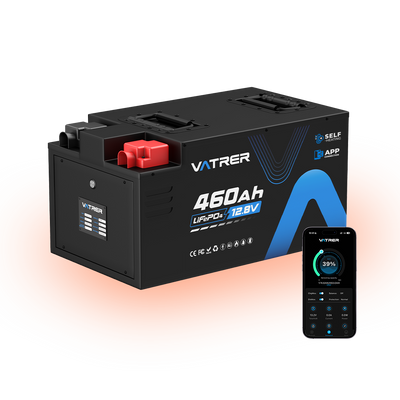
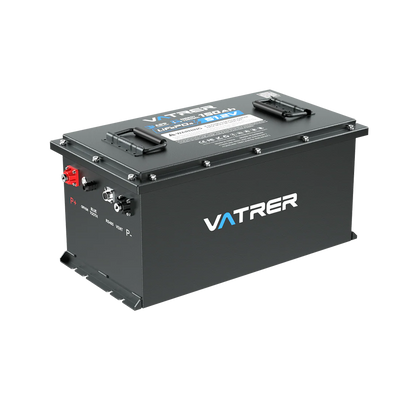
When choosing a lithium battery operated lawn mower, the quality of your battery defines performance. Vatrer Battery provides durable, high-efficiency LiFePO4 batteries designed for outdoor power equipment. With built-in safety systems, fast charging, and over 4,000 cycles, they deliver reliable power for years of mowing.
Tips: Always match your mower's voltage and amp-hour requirements when selecting a new battery to ensure optimal performance and battery health.
FAQs
How Long Do Mower Batteries Really Last Per Charge?
The run time of a battery-operated lawn mower depends on several factors—battery capacity (Ah rating), voltage, grass thickness, and mowing speed. On average, most electric lawn mowers last between 30 and 90 minutes per charge, while high-capacity lithium or LiFePO4 mower batteries can extend up to 2 hours or more under ideal conditions.
If your yard is large, having a second fully charged battery ready can help you finish mowing without interruption.
Tips: Keeping blades sharp and mowing dry grass reduces energy strain, allowing your mower to operate longer on a single charge.
How To Maintain And Extend Lithium Mower Battery Life?
Proper care can significantly extend the lifespan of your lithium battery operated lawn mower. Follow these best practices:
- Charge Correctly: Avoid leaving batteries at 0% or 100% for long periods. For seasonal storage, maintain around 40-60% charge.
- Use the Right Charger: Always use the manufacturer-approved charger to prevent overcharging or overheating.
- Store Properly: Keep batteries in a cool, dry place away from direct sunlight and freezing temperatures. Extreme heat or cold shortens battery life.
- Clean Battery Terminals: Wipe terminals regularly with a dry cloth to maintain strong electrical contact.
- Avoid Deep Discharges: Recharging before the battery is completely empty helps reduce cycle wear.
With good care, quality LiFePO4 batteries can last over 2,000-4,000 charging cycles, often translating to 5-10 years of service life.
Can i Swap Batteries Between Mower Models?
In most cases, battery packs are not interchangeable between different mower brands or even across models from the same manufacturer. Each type of mower has specific voltage, connector, and Battery Management System (BMS) requirements.
Swapping incompatible batteries can cause electrical faults or damage both the mower and the battery.
Tips: Always check the voltage (V), amp-hour (Ah), and connector type before using a battery in another mower. If you plan to upgrade, consult the manufacturer or refer to the mower's manual to confirm compatibility.
Share