Upgrading Your Golf Cart Batteries: Lead-Acid to Lithium Compatibility Considerations
Reading time: 9 minutes
Switching a golf cart from lead-acid batteries to lithium can make a noticeable difference in everyday use. A properly matched lithium setup can reduce battery weight, provide more consistent power, shorten charging time, and require far less routine maintenance. But a lithium upgrade is not simply a matter of removing the old batteries and installing a new pack.
Before you buy anything, you need to make sure the lithium battery works with your cart's voltage, controller, charger, wiring, accessories, and physical battery compartment. The good news is that many 36V and 48V golf carts can be converted successfully without a complicated redesign when the replacement battery is built for golf cart use.
Here's what you should check before replacing your lead-acid golf cart batteries with lithium.
Can You Put Lithium Batteries in a Golf Cart That Originally Used Lead-Acid?
In many cases, yes. Older EZGO, Club Car, Yamaha, and similar golf carts that originally came with lead-acid batteries can often run on lithium batteries as long as the new battery system matches the cart's electrical requirements.
The important word is matches. A battery that physically fits is not automatically electrically compatible. Before converting, confirm the cart's system voltage, controller current demand, charging requirements, cable arrangement, and any accessories powered from the traction battery.
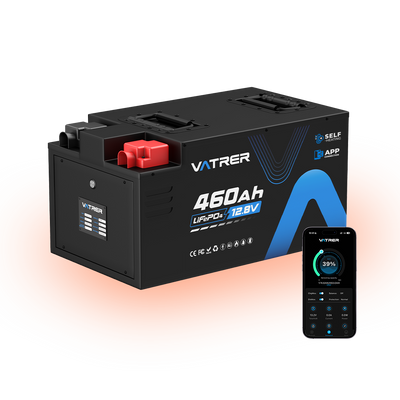
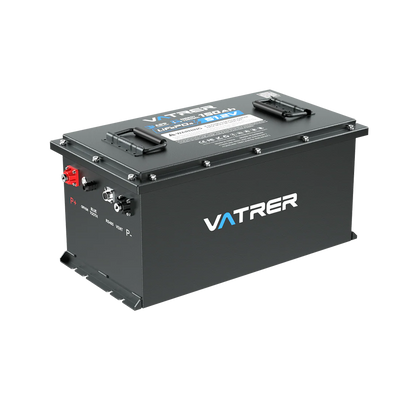
For many owners, a purpose-built 36V or 48V lithium golf cart battery is easier to integrate than trying to assemble a replacement system from several general-purpose batteries.
1. Check Battery Compartment Size and Mounting
Start with the easiest part: measure the battery tray or battery compartment. Lithium golf cart batteries are often smaller and lighter than an equivalent lead-acid battery bank, but that does not mean every pack will drop directly into place.
Measure the available length, width, and height, then check the manufacturer's dimensions for the lithium pack. Also look at where the battery terminals, communication ports, power switch, display cable, and mounting brackets are located.
A smaller lithium battery may also need a hold-down bracket, spacer, or mounting tray so it cannot move while the cart is being driven. Avoid relying on loose blocks or improvised restraints. The battery should remain securely mounted over bumps, turns, and rough terrain.

2. Match the Golf Cart's System Voltage
Voltage compatibility is one of the first specifications to verify. If your cart is a 36V system, use a lithium battery solution designed for a 36V golf cart. If it is a 48V cart, use a battery designed for a 48V system.
Do not judge compatibility only by the number printed on the old batteries. A 48V lead-acid cart, for example, may use six 8V batteries or four 12V batteries, while a lithium conversion may replace the entire bank with one integrated lithium pack.
Lithium iron phosphate batteries also have different nominal and fully charged voltages from lead-acid batteries. That is normal. What matters is that the battery is specifically engineered to operate within the voltage range expected by the golf cart's controller and electronics.
3. Make Sure the BMS Can Handle Controller Current
Voltage alone does not tell you whether a lithium battery can power your cart. Golf carts can pull substantial current during acceleration, climbing hills, carrying passengers, or driving on soft terrain.
The lithium battery's battery management system (BMS) must support both the cart's normal continuous current and short bursts of peak current. If the BMS current limit is too low, the battery may shut down when you accelerate hard or climb a steep hill even though it still has plenty of stored energy.
Before choosing a battery, compare its continuous and peak discharge specifications with the requirements of your controller and motor setup. This is especially important for upgraded controllers, larger motors, lifted carts, hunting carts, or vehicles carrying heavy loads.
4. Do Not Assume Your Lead-Acid Charger Will Work
Charger compatibility is one of the most common issues during a lead-acid-to-lithium conversion.
Lead-acid chargers use charging profiles intended for flooded, AGM, or gel batteries. Lithium iron phosphate batteries require a different charging strategy and normally do not need the same equalization or maintenance charging stages.
Some existing golf cart chargers can be reprogrammed or have a lithium-compatible mode, but many older chargers should be replaced. The safest approach is to use a charger approved by the lithium battery manufacturer for that specific battery voltage and chemistry.
Also check the cart's charging receptacle. In some conversions, the original charge port can be retained with the correct charger or adapter. In others, the charging connection needs to be modified.
5. Inspect Cables, Connectors, Fuses, and Contactors
A lithium battery upgrade is a good time to inspect the rest of the high-current electrical system. Old battery cables may have corrosion, damaged insulation, loose lugs, or resistance that was less noticeable with the previous battery bank.
Make sure cable size is appropriate for the expected current and verify that terminal lugs are clean and properly tightened. The main fuse, contactor or solenoid, disconnect switch, and connectors should also be suitable for the battery voltage and current.
Do not automatically increase fuse size because the new lithium battery can deliver more current. The fuse is there to protect the wiring and electrical system, so its rating should be based on the complete circuit design.
6. Determine Whether Your Golf Cart Needs Battery Communication
This is where lithium conversions can vary significantly from one golf cart to another.
Many traditional golf carts do not require the traction battery to communicate digitally with the motor controller. In those carts, the controller mainly responds to battery voltage and current, so a properly matched lithium battery can often operate without CAN communication.
Newer vehicles, factory lithium models, and more sophisticated controllers may be different. They may exchange information with the battery about state of charge, temperature, fault status, available power, or charging conditions.
When CAN or Other Communication Protocols Matter
Some systems use CAN bus or another communication protocol between the battery, charger, controller, or vehicle display. If your cart depends on this connection, the replacement battery must support the correct protocol or be supplied with an appropriate interface.
Do not assume that two batteries with the same voltage will communicate with the same controller. Communication compatibility depends on both hardware and software.
When Battery Communication Is Not Required
If your cart originally used a conventional lead-acid battery bank without digital battery communication, you may not need CAN or SMBus support at all. In that situation, voltage, discharge capability, charger compatibility, and wiring are usually more important concerns.
7. Check Whether the Existing Battery Gauge Will Still Be Accurate
Lead-acid battery gauges often estimate remaining charge based largely on voltage. That method does not work as well with lithium iron phosphate batteries because lithium voltage stays relatively flat through much of the discharge cycle.
As a result, your old dashboard battery meter may show an inaccurate state of charge after the conversion.
A lithium battery with a dedicated SOC display, Bluetooth monitoring app, or coulomb-counting battery meter can provide a much more useful reading. If knowing your remaining range matters, plan for the gauge at the same time as the battery upgrade.
8. Check 12V Accessories and Voltage Reducers
Lights, stereos, USB ports, fans, and other accessories are often designed to run on 12V even though the golf cart's traction system is 36V or 48V.
Lead-acid carts are sometimes wired in ways that draw 12V from part of the battery bank. That approach should not simply be copied when installing one large lithium pack.
If your accessories need 12V power, use an appropriately sized DC-to-DC voltage reducer designed for the cart's lithium system. This gives accessories a stable supply while avoiding uneven battery loading.
9. Consider Temperature and Storage Conditions
Lithium iron phosphate batteries can work very well in golf carts, but charging temperature limits deserve attention. Many LiFePO4 batteries should not be charged below freezing unless the battery includes low-temperature charge protection or a heating system designed for cold-weather charging.
If you use or store your cart in a cold climate, check the battery's specified operating and charging temperature range. A BMS with low-temperature charging protection can prevent battery damage when temperatures drop.
For seasonal storage, follow the battery manufacturer's recommendations for state of charge, disconnecting loads, and periodic inspection rather than treating the lithium pack exactly like a lead-acid battery bank.
Lead-Acid to Lithium Golf Cart Conversion Checklist
| Compatibility Item | What to Verify |
| System voltage | Battery is designed for your 36V, 48V, or other golf cart system |
| Battery compartment | Pack dimensions, terminal location, mounting, and clearance |
| BMS output | Continuous and peak discharge current are sufficient for the controller and motor |
| Charger | Charging profile and output voltage are approved for the lithium battery |
| Wiring | Cables, lugs, connectors, fuse, and contactor are in good condition and properly rated |
| Communication | CAN or other communication is supported if the cart actually requires it |
| Battery gauge | Existing SOC display is compatible or a lithium-specific monitor is installed |
| 12V accessories | An appropriate DC-to-DC converter is used when required |
| Temperature | Battery includes suitable protection for your operating and charging conditions |
One Large Lithium Pack or Multiple 12V Lithium Batteries?
Golf cart owners sometimes try to recreate their old lead-acid battery bank by connecting several 12V lithium batteries in series. That can work only when the battery manufacturer specifically states that the batteries are approved for the required series configuration.
You should not assume every 12V LiFePO4 battery can be connected in series. Individual BMS units can shut down independently, and unsupported configurations may create charging, balancing, or reliability problems.
For many golf cart conversions, a single integrated battery designed specifically for the cart's total system voltage is the simpler option. It can reduce cable connections and gives one BMS control over the entire battery pack.
When Should You Ask a Golf Cart Battery Expert?
If you have a stock cart with a straightforward 36V or 48V electrical system, compatibility may be relatively easy to confirm. However, professional guidance becomes more valuable if the cart has a high-performance controller, upgraded motor, custom accessories, regenerative braking, an onboard charger, or factory battery communication.
When contacting a battery supplier or technician, have your cart model, year, system voltage, controller model, motor details, charger information, and available battery-compartment dimensions ready. Those details make it much easier to identify a compatible lithium setup instead of guessing.
Final Thoughts
Converting a golf cart from lead-acid to lithium can be an excellent upgrade, but compatibility involves more than matching a voltage number. A successful conversion should account for physical fit, BMS current capability, charging, wiring, accessory power, battery monitoring, temperature protection, and communication requirements when applicable.
Check those items before ordering the battery and the installation becomes much more predictable. With a lithium system properly matched to the cart, you can get the lower maintenance, reduced weight, consistent performance, and convenient charging that make lithium upgrades appealing in the first place.
Share