What Is an RV Battery and What Does It Power?
Reading time: 8 minutes

Share
Owning an RV is all about freedom, the freedom to travel anywhere while still having the comforts of home. But all that convenience depends on one essential component: your RV battery. Without it, the lights won’t turn on, the water pump won’t run, and your appliances won’t function when you’re off the grid.
In this guide, we'll break down what an RV battery is, how it works, what it powers, and why upgrading to a lithium option can completely transform your camping experience.
Key Takeaways
- An RV battery is a deep-cycle power source that provides steady electricity for appliances and lights when you're not connected to shore power.
- It powers your RV's lighting, fridge, water pump, fans, and other 12V systems, sometimes even 120V devices via an inverter.
- RV batteries come in several types: flooded lead-acid, AGM, gel, and lithium (LiFePO4), each with distinct advantages and maintenance needs.
- Knowing how much capacity your RV needs helps you plan the right setup for off-grid camping or boondocking.
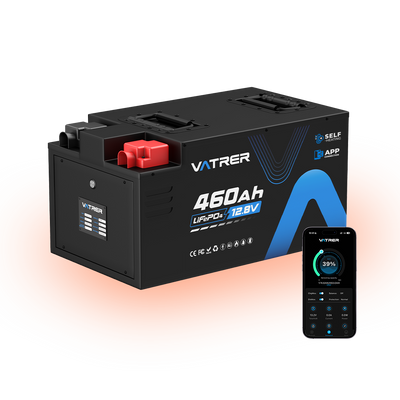
- Lithium RV batteries, like a 12V 100Ah LiFePO4 battery, deliver longer lifespan, faster charging, and higher efficiency than traditional lead-acid batteries.
- Regular maintenance, proper charging, and safe storage keep your RV battery performing well for years.


What Is an RV Battery and How Does It Work?
An RV battery is a deep-cycle power source designed to provide consistent energy over long periods, unlike a car’s starter battery that delivers short bursts of high current to crank the engine. In simple terms, it’s the “house battery” that keeps everything in your living space running smoothly when you’re not plugged into a power outlet.
RV batteries work by converting chemical energy into electrical energy. Inside, chemical reactions between electrodes and electrolytes release electrons, producing DC (direct current) electricity. This DC power runs your 12V systems, and when connected to an inverter, it can be converted into 120V AC to power household appliances like TVs and coffee makers.
Modern lithium RV batteries include a Battery Management System (BMS) that monitors temperature, voltage, and current to prevent overcharging, deep discharging, and short circuits. This built-in protection makes them safer, more efficient, and longer-lasting compared to older lead-acid types.
What Does an RV Battery Power?
Your RV battery powers nearly every essential system when you're off-grid. It keeps your home-on-wheels functional and comfortable wherever you park.
Common systems powered by the RV battery include:
- Interior and exterior lights
- Water pump for sinks and showers
- Ventilation fans and heater control panels
- Refrigerator and other 12V appliances
- Charging ports for phones, tablets, and cameras
- Safety devices such as CO₂ detectors and control boards
If you use aninverter, your battery can also supply power to 120V appliances, like microwaves, hair dryers, or laptops. However, these larger devices consume more power, so understanding your energy demand is crucial for preventing over-discharge.
In essence, your RV battery is what keeps your living space functional, especially during off-grid camping or long road trips where external power is unavailable.
Types of RV Batteries and Their Performance Differences
RV batteries come in several forms, each with different characteristics, maintenance needs, and lifespan. Understanding these differences helps you pick the right one for your travel style.
| Battery Type | Description | Pros | Cons |
|---|---|---|---|
| Flooded Lead-Acid | Traditional battery filled with liquid electrolyte | Affordable, widely available | Requires maintenance, heavy, shorter lifespan |
| AGM (Absorbed Glass Mat) | Sealed lead-acid with fiberglass separators | Maintenance-free, resistant to vibration | More expensive than flooded, moderate lifespan |
| Gel | Electrolyte in gel form, sealed design | Works well in extreme temperatures | Slower charging, sensitive to overcharging |
| Lithium (LiFePO4) | Advanced technology with BMS protection | Lightweight, long lifespan, fast charging, high efficiency | Higher upfront cost, needs lithium-compatible charger |
Among these, the lithium RV battery, specifically LiFePO4 chemistry, is becoming the top choice for modern travelers. It provides stable voltage, longer cycle life (4,000-6,000 cycles), and zero maintenance.
How Much Battery Capacity Does My RV Need?
Battery capacity determines how long your RV can operate before recharging. It's measured in amp-hours (Ah), and you can estimate your needs based on daily power use.
For example, if your fridge uses 100 watts and runs for 10 hours, it consumes 1,000 watt-hours (1 kWh). On a 12V system:
1,000÷12=83Ah
That means you'd need at least 83Ah of capacity to run the fridge alone for a day, plus extra for lights, fans, and charging electronics.
Most RVs use 100Ah to 600Ah of capacity, depending on size and usage. A 12V 100Ah lithium RV battery is a common starting point for small to mid-size setups, offering a good balance between power and portability.
Tip: Always leave 20-30% of your capacity in reserve to avoid over-discharging and extend battery life. If you need more precise calculations, you can also use the Vatrer online calculator tool.
How to Choose the Best RV Battery for Your Needs
Choosing the right RV battery depends on how you travel, how often you camp off-grid, and your power usage habits. Here's a step-by-step guide:
- Assess your energy consumption: List all 12V and 120V appliances and estimate daily power use.
- Consider your travel style: Occasional weekend camper? Standard AGM may suffice. Long-term boondocker? Lithium is a better investment.
- Check compatibility: Ensure your charging system, inverter, and solar setup support your chosen battery type.
- Evaluate total cost of ownership (TCO): Lithium batteries have higher upfront costs but last much longer, saving money over time.
- Review weight and installation space: Lithium batteries are about 50% lighter than comparable lead-acid models.
Tip: Upgrading to a Vatrer lithium RV battery means you'll benefit from lightweight construction, longer cycle life, and built-in smart monitoring, ideal for both new RV owners and seasoned travelers.
Why Many RV Owners Upgrade to Lithium RV Batteries
The shift from lead-acid to lithium is one of the biggest changes in the RV industry. Here's why more owners are making the switch:
- Longer lifespan: Up to 10 years or 4,000-6,000 charge cycles.
- Faster charging: Full charge in as little as 4-5 hours.
- Consistent power: Voltage stays stable even as the battery discharges.
- Lightweight design: 30-50% lighter than traditional batteries.
- Maintenance-free: No water refilling or corrosion cleaning.
- Smart protection: Built-in BMS safeguards against overcharge, short circuits, and temperature extremes.
Compared to lead-acid, a lithium setup, especially a 12V LiFePO4 battery, can power more devices for longer and recharge faster via solar panels or generators. It's the go-to option for off-grid RVers who prioritize reliability, safety, and convenience.
How Long Do RV Batteries Last and How to Maintain Them
Battery lifespan varies by type, but your care routine plays a huge role.
- Flooded Lead-Acid: 2-4 years with proper maintenance
- AGM/Gel: 4-6 years
- Lithium (LiFePO4): 10+ years or 4,000-6,000 cycles
To extend your battery life:
- Avoid draining below 20-30% charge.
- Keep terminals clean and corrosion-free.
- For lead-acid, check and refill electrolyte levels regularly.
- Store lithium batteries at about 50-70% charge during long inactivity.
Tip: Temperature affects battery performance, keep your battery cool and shaded whenever possible.
How to Charge an RV Battery Correctly
RV batteries can be charged in several ways:
- Shore Power: Plug into a campground outlet, and your converter/charger replenishes the battery.
- Solar Panels: Sustainable and efficient for off-grid travel.
- Vehicle Alternator: Charges while driving through a DC-DC converter.
- Generator: Reliable backup for cloudy days or high-demand situations.
Lithium batteries require chargers with specific voltage profiles (a 12V battery usually 14.4V-14.6V). Using an incompatible charger can reduce efficiency or cause damage. A Vatrer lithium RV battery comes equipped with a smart BMS that regulates charging safely and efficiently.
RV Battery Storage and Safety Tips
Proper storage and maintenance are key to keeping your RV battery safe, efficient, and long-lasting, especially when your RV goes unused during the off-season. Follow these essential practices to ensure your power system stays in great condition year-round.
General Storage Tips
- Disconnect the battery before storage to prevent parasitic drain from onboard electronics.
- Store in a cool, dry, and well-ventilated area, ideally between 40°F and 70°F. Avoid direct sunlight or places with high humidity.
- Inspect and clean terminals before storage. Remove any corrosion with a baking soda and water solution, then dry thoroughly.
- Check charge levels periodically: Every 3-6 months, verify the battery's voltage and recharge if necessary to prevent deep discharge.
Winter Storage Tips
Cold weather can significantly impact RV battery performance and lifespan. Here's how to prepare for winter storage:
- Charge before storing: Fully charge the battery (or at least to 80%) before long-term winter storage. A charged battery is less likely to freeze than a depleted one.
- Remove the battery from the RV: If possible, store it indoors in a temperature-controlled environment to prevent exposure to extreme cold.
- Maintain charge during winter: For lead-acid batteries, top up every 2-3 months. For lithium batteries, check the charge every 4-6 months and keep it between 50-70%.
Avoid freezing conditions
- Lead-acid batteries can freeze if their state of charge drops too low.
- Lithium (LiFePO4) batteries shouldn't be charged below 32°F (0°C) unless equipped with a self-heating system.
- Reinstall safely in spring: Inspect for cracks, swelling, or corrosion before reconnecting and charging for the next season.
Tip: For detailed maintenance and winter storage advice, check out our related guide:
How to Maintain Lithium Batteries
RV Battery Winter Storage Comprehensive Guide
By following these steps, you'll ensure your RV battery, whether it's a traditional deep-cycle lead-acid or a modern Vatrer lithium RV battery, stays healthy and ready to deliver reliable power once the travel season returns.
Reliable Power for Every Journey
Your RV battery is the heart of your off-grid experience, powering everything from lights to refrigerators. Understanding what an RV battery does, how it works, and what type fits your lifestyle helps you enjoy worry-free adventures anywhere.
If you're ready for more reliable, lightweight, and long-lasting energy, consider upgrading to a Vatrer lithium RV battery. With LiFePO4 technology, a built-in BMS, and high capacity, it's designed to deliver dependable power for every journey, whether you're camping in the woods, by the beach, or exploring the open road.
Share