Why Golf Cart Batteries Lose Charge When Not in Use
Reading time: 8 minutes

Share
You park your golf cart in the garage after a great weekend ride. A few weeks go by. Maybe it's winter, or maybe life just gets busy. When you finally start it up again, you find that it is not responding at all.
At that moment, most owners start second-guessing themselves. Did I forget to charge it? Did I damage the battery by letting it sit? Is this normal aging, or an expensive failure?
That quiet drop in voltage feels personal because you weren't even using the cart. But in reality, batteries don't pause just because we do. Chemistry keeps moving, electronics keep drawing tiny bits of current, and temperature keeps influencing performance.
Understanding why golf cart batteries lose power when not in use is not just out of curiosity, but also to extend battery life, avoid unnecessary replacements.


Is It Normal for Golf Cart Batteries to Lose Charge?
Yes. All batteries lose some charge even when they're not connected to anything.
This is called self-discharge. Inside every battery, chemical reactions continue slowly, even when you're not driving. It's like food spoiling slowly in the fridge, time alone causes change.
Here's where things start to matter: the rate of discharge is different depending on battery chemistry.
- Flooded lead-acid golf cart batteries can lose about 3-5% per month at 77°F. If temperatures rise to 95°F, that rate can double. After 3-4 months without charging, voltage can drop below safe storage levels.
- Under the same conditions, LiFePO4 golf cart batteries usually lose only 1-3% per month under the same conditions. This will produce significant differences over time.
What's Considered Normal Voltage Drop? Here's a reference:
- 48V lead-acid battery pack fully charged: ~50.9-51.5V
- After 1 month idle: ~49-50V (normal)
- Below 47-48V without use: warning zone
- 48V LiFePO4 battery fully charged: ~54.8V
- After 1 month idle: ~53.5-54V (normal)
- Sudden drop below 50V without load: abnormal
If your battery drops dramatically in just a few days, that's not normal self-discharge. That's something else.
What Causes Battery Drain When Not in Use?
If your golf cart battery loses charge faster than expected, several hidden factors may be at play.
Natural Self-Discharge
As mentioned earlier, battery chemical reactions never fully stop. Lead-acid batteries experience internal corrosion and sulfation over time. Lithium batteries are much more stable chemically, which is why their self-discharge rate is lower.
The older the battery, the faster this process accelerates. For example, a 4-year-old lead-acid battery can self-discharge up to 6-8% per month, especially if it has experienced deep discharge cycles.
Parasitic Drain (Hidden Electrical Draw)
Even when the cart is off, certain components may still draw power, such as:
- Speed controller memory
- Digital display
- Voltage reducer
- Alarm system
- Bluetooth modules
- Lights wired directly to the battery
This is called parasitic drain. Typical parasitic draw in a golf cart ranges between 10mA to 50mA. That may sound small, but over 30 days, even 30mA can drain about 21.6Ah from a battery system.
For a 100Ah battery, that's over 20% capacity gone without ever driving.
Battery Management System (BMS) Standby Use
Lithium batteries include a Battery Management System (BMS). This system protects against overcharge, over-discharge, short circuits, and temperature extremes.
Even when idle, the BMS consumes a small standby current, usually between 5mA and 20mA depending on battery design.
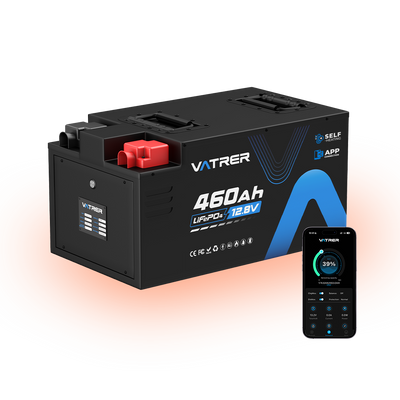
High-quality systems, such as those found in advanced lithium golf cart batteries like Vatrer LiFePO4 batteries, optimize standby draw to minimize idle consumption. Lower-quality systems may consume more and accelerate storage loss.
Temperature Effects
Temperature plays a bigger role than most owners realize.
- At 32°F, lead-acid battery capacity temporarily drops by 20-30%
- At 0°F, usable capacity can drop by 50%
- At 95°F+, internal degradation accelerates
Lithium batteries handle cold better in terms of storage, but charging below freezing without protection can cause damage. That's why quality lithium batteries include low-temperature cut-off protection.
Temperature doesn't just reduce capacity, it changes how voltage behaves. That's why your battery might look dead in winter but recover slightly when warmed.
Aging and Sulfation (Lead-Acid Only)
If a lead-acid battery is left with some charge missing for a time something bad starts to happen. Sulfation starts to form on the lead-acid battery plates. This means the lead-acid battery plates have area that can be used and the lead-acid battery will not be able to hold as much charge as it used to.
For example, a battery that used to hold 100Ah of power may now only be able to hold 70 to 80Ah of power. This is what happens to a battery like this after it has been idle for a while without being fully recharged. On the contrary, lithium batteries do not exhibit sulfation.
Lead-Acid and Lithium Battery Storage Behavior
In terms of storage, even after just a few months of inactivity, the performance differences between lead-acid and lithium-ion batteries are significant.
Lead-acid batteries are more sensitive to partial discharge and idle time, meaning their condition can quietly degrade if not maintained properly.
Lithium LiFePO4 batteries are far more stable during inactivity and less prone to permanent damage from sitting. That doesn't mean lithium is immune to loss, it still self-discharges, but its internal chemistry is more resilient.
Lead-Acid vs Lithium Storage Comparison
| Storage Factor | Lead-Acid Battery | Lithium (LiFePO4) |
|---|---|---|
| Monthly Self-Discharge | 3–5% | 1–3% |
| Risk of Permanent Damage When Idle | High (Sulfation) | Low |
| Ideal Storage SOC | 100% | 50–80% |
| Safe Idle Duration | 1–2 months | 3–6+ months |
| Maintenance Required | Monthly check | Minimal |
Lead-acid batteries must remain fully charged during storage. Letting them drop below 12.4V per 12V unit increases sulfation risk.
Lithium batteries actually prefer partial charge storage. Keeping them at 100% for extended months slightly accelerates internal aging.
That difference alone changes how owners should approach winter battery storage.
How Long Can a Golf Cart Be Parked Without Being Charged?
The answer depends on battery type, state of charge, temperature, and whether the battery remains connected to the system.
The safest approach is to disconnect all load connections and choose an appropriate storage method based on the battery chemistry and expected idle time.
For lead-acid battery systems:
- 2-4 weeks: generally safe
- 1-2 months: recharge recommended
- 3+ months without charging: high sulfation risk
For lithium battery systems:
- 2-3 months: typically safe
- 6 months: usually safe if stored at 50-60% SOC
- 12 months: still recoverable if properly disconnected
If storing more than 30 days, the approach differs slightly.
For lead-acid batteries, using a smart maintenance charger (float or trickle mode) is strongly recommended to prevent sulfation.
For lithium batteries, a maintainer is usually not required if the battery is stored at 50-60% and disconnected, though a lithium-compatible smart LiFePO4 charger can be used for periodic checks. The key is making sure the charger matches the chemistry.
Signs Your Battery Is Losing Charge Abnormally
If your battery seems to drain unusually fast or fails to recover after charging, it's time to investigate.
The difference between normal self-discharge and abnormal loss usually comes down to speed and consistency. A healthy battery loses charge gradually and predictably. A failing battery behaves erratically.
Watch for these red flags:
- Voltage drops more than 1V overnight
- Fully charged battery pack falls below 80% SOC within one week
- Battery struggles to hold charge after 2-3 days idle
- Noticeably shorter driving range after recharge
- Uneven voltage between individual 12V batteries (lead-acid)
Quick Diagnostic Table
| Symptom | Likely Cause |
|---|---|
| Gradual monthly drop | Normal self-discharge |
| Fast overnight drop | Parasitic drain |
| Low capacity after recharge | Aging/sulfation |
| Sudden shutdown under load | BMS protection trigger |
If voltage rebounds slightly after warming up in winter, temperature was likely the issue, not failure.
How to Prevent Golf Cart Battery Drain During Storage
Preventing batteries from running out of power during storage is not complicated, but some measures need to be taken before you park your golf cart for weeks or months.
Disconnect the Battery
Disconnecting the battery's negative terminal or using the main battery circuit breaker can eliminate parasitic current losses in the controller, display, and accessories.
Store at the Proper State of Charge
Lead-acid batteries should always be stored fully charged to reduce sulfation risk. Lithium LiFePO4 batteries perform best when stored between 50% and 80% SOC, rather than at 100% for extended periods.
Use a Smart Charger or Maintainer (When Needed)
When you store things for more than 30 days, you should use a smart float charger or a maintenance charger for your lead-acid batteries. This helps keep the voltage without overcharging them.
Lithium batteries are different. They usually do not need to be charged all the time. If you are storing them for several months, you should check the voltage every now and then using a charger that is made for lithium batteries.
Control Storage Temperature
Store batteries in environments between 40°F and 77°F when possible. Excessive heat accelerates internal aging, while freezing temperatures reduce available voltage and can complicate charging.
Check Voltage Monthly (If Possible)
Actively monitoring voltage can prevent more severe discharge damage, therefore, a quick monthly voltage check with a multimeter helps detect abnormal discharges early. A sudden or significant drop in battery voltage may indicate parasitic current or aging issues.
When Battery Drain Means It's Time to Replace
Sometimes, a drop in battery power isn't due to storage habits, but rather to battery aging.
If your golf cart battery:
- Is over 4-5 years old (lead-acid)
- Shows reduced range even after full recharge
- Loses 20-30% charge within days
- Requires frequent top-offs
- Has visible corrosion or swelling
These conditions indicate that the battery may be nearing the end of its useful life.
Lead-acid batteries typically last 3-5 years.
Quality lithium batteries often exceed 4,000 cycles, translating to 8-10 years in moderate use.
If idle drain is accelerating despite proper storage, internal degradation is likely happening.
Conclusion
Golf cart batteries gradually lose charge due to normal chemical processes when not in use. Temperature, parasitic current, and battery aging all affect the rate of voltage drop, understanding these factors helps distinguish between normal phenomena and early failures.
Lead-acid batteries require regular maintenance and full-charge storage to prevent sulfation, while lithium batteries offer greater stability and lower self-discharge rates during extended periods of inactivity.
For owners storing their golf carts in unheated garages or living in northern climates, lithium batteries with built-in low-temperature protection provide smarter protection during winter downtime.
Vatrer lithium golf cart batteries integrate a Battery Management System (BMS) that works in conjunction with temperature sensors to automatically stop charging below 32°F and automatically stop discharging below -4°F. This collaborative protection mechanism prevents unsafe operation and helps maintain the long-term health of the battery.
Share