How Driving Habits Affect Golf Cart Battery Performance
Reading time: 6 minutes

Share
When performance begins to decline, golf cart owners frequently concentrate on the type, capacity, or quality of the charger. However, in actual use, the way you operate the cart each day is just as important as the battery you choose. In one cart, the same battery may feel dependable for years, but in another, it may be frustratingly short-lived. This is frequently due to driving habits rather than hardware alone.


How Driving Habits Affect Golf Cart Battery Performance
At a basic level, a golf cart battery converts stored energy into motion. The way you ask for that energy, smoothly or aggressively, steadily or in bursts, determines how efficiently the battery can do its job. Sudden power demands, heavy loads, and repeated deep discharges all increase stress on the battery.
Battery performance isn't just about how far a cart goes on a single charge. It also includes:
- How stable the power output feels while driving
- How quickly voltage drops under load
- How many charge cycles the battery can deliver before noticeable capacity loss
Driving habits shape all of these factors. Over time, inefficient driving accelerates wear inside the battery, reducing usable capacity even if the battery still works.
Practical reference:
- Gentle, consistent driving typically supports 80-90% usable capacity over most of the battery's life
- Aggressive or high-stress driving can push usable capacity below 70% much earlier, shortening service life
Aggressive Driving and Its Impact on Battery Performance
Aggressive driving doesn't look dramatic on a golf cart, but the battery feels it immediately. Rapid acceleration, hard braking, and constant throttle changes all force the battery to deliver high current in short bursts.
These sudden power demands can cause the battery to:
- Increase internal heat
- Cause voltage sag during acceleration
- Reduce overall energy efficiency
Over time, repeated current spikes speed up internal aging. For lead-acid batteries, this often shows up as sulfation and reduced capacity. For lithium batteries, the effect is usually slower but still measurable.
Common aggressive behaviors to avoid:
- Flooring the accelerator from a standstill
- Rapid stop-and-go movement over short distances
- Treating a golf cart like a utility vehicle at full throttle
Practical tips:
- Smooth acceleration that reaches cruising speed in 3–5 seconds rather than instantly
- Braking early instead of abrupt stops whenever possible
How Speed and Acceleration Affect Golf Cart Battery Life
Speed itself isn't the only issue, how you reach and maintain that speed matters more. Higher speeds require more power to overcome rolling resistance, drivetrain losses, and aerodynamic drag, even on a small vehicle like a golf cart.
When you drive consistently near top speed:
- The battery operates at higher continuous discharge rates
- Heat buildup increases during longer runs
- Total energy consumption per mile goes up
Acceleration compounds this effect. Fast takeoffs demand short bursts of very high current, which lowers efficiency and accelerates wear.
Typical efficiency ranges:
- Moderate cruising speed (12-15 mph): Most energy-efficient range
- High speed (18-20+ mph): 10-25% higher energy use per mile
- The result is a shorter range per charge and increased stress on the battery system.
Stop-and-Go Driving and Battery Efficiency Loss
Stop-and-go driving is common in gated communities, resorts, and work sites. Each time a golf cart starts moving from rest, the battery must overcome inertia, which requires significantly more power than maintaining speed.
Frequent stops mean:
- Repeated current spikes
- Less opportunity for stable, efficient discharge
- Higher total energy use over short distances
This is one reason two carts traveling the same total distance can consume very different amounts of battery energy depending on driving patterns.
Different Driving Patterns Impact on Battery Efficiency
| Driving Pattern | Typical Energy Use | Battery Stress Level | Expected Range Impact |
|---|---|---|---|
| Steady cruising | Low | Low | Maximum range |
| Moderate stop-and-go | Medium | Medium | 10–15% range loss |
| Frequent stop-and-go | High | High | 20–30% range loss |
Range loss is not gradual, it accelerates as stop frequency increases. Reducing unnecessary stops is one of the easiest ways to improve battery performance without changing hardware.
Driving on Hills and Heavy Loads: Impact of Battery Stress
Hills and heavy loads place sustained demand on the battery. Unlike short acceleration bursts, climbing or hauling requires continuous high current, which is especially challenging for older or undersized battery systems.
Under these conditions:
- Voltage drop becomes more noticeable
- Lead-acid batteries may feel weak halfway up a hill
- Heat builds up faster during long climbs
Weight matters too. Carrying extra passengers, tools, or cargo forces the battery to work harder every time the cart moves.
General reference ranges:
- Flat terrain, light load: Baseline energy use
- Moderate hills or added load: 15–30% higher energy draw
- Steep hills with heavy load: 30–50% higher energy draw
Practical driving tips:
- Maintain steady throttle on inclines instead of accelerating harder mid-hill
- Avoid stopping on hills when possible
- Reduce unnecessary cargo weight
How Driving Habits Influence Battery Lifespan Over Time
Battery lifespan is measured in charge cycles, but driving habits determine how quickly those cycles accumulate and how stressful each cycle becomes. Frequent deep discharges combined with high current demand shorten lifespan faster than steady, moderate use.
Poor driving habits tend to:
- Increase depth of discharge per trip
- Raise operating temperatures
- Reduce effective cycle life
Driving Habits and Battery Lifespan Impact
| Driving Style | Average Discharge Depth | Heat Generation | Expected Lifespan Impact |
|---|---|---|---|
| Smooth, steady | 30–50% per cycle | Low | Longest lifespan |
| Mixed use | 50–70% per cycle | Moderate | Moderate lifespan loss |
| Aggressive/high load | 70%+ per cycle | High | Shortened lifespan |
Lifespan loss compounds over time. Even small improvements in driving behavior can add months or years to usable battery life.
Best Driving Habits to Improve Golf Cart Battery Performance
Good driving habits don't require special tools or technical knowledge. They're about consistency and awareness.
High-impact habits to adopt:
- Accelerate smoothly instead of abruptly
- Maintain moderate cruising speeds whenever possible
- Plan routes to reduce unnecessary stops
- Avoid running the battery below 20-30% state of charge regularly
- Allow brief cooldown periods after heavy use before charging
These habits reduce internal stress and improve energy efficiency, especially in daily-use carts.
Driving Habits vs Battery Type: Lead-Acid and Lithium Compared
Battery chemistry determines how forgiving a system is when driving habits aren't ideal. Lead-acid batteries are more sensitive to deep discharge, high current spikes, and heat. Lithium batteries handle these conditions more efficiently, with less voltage drop and slower degradation.
This doesn't mean driving habits stop mattering with lithium, but the margin for error is wider.
General reference
- Lead-acid batteries show noticeable performance loss when regularly discharged below 50%
- Lithium batteries can safely operate at 80-90% usable capacity without the same level of stress
For carts used frequently, on hills, or with heavier loads, lithium golf cart batteries paired with good driving habits offer the most stable long-term performance.
Conclusion
Golf cart battery performance isn't determined by battery specs alone. Driving habits shape how efficiently energy is used, how much stress the battery experiences, and how long it remains reliable. Smooth acceleration, moderate speeds, reduced stop-and-go movement, and mindful operation on hills all contribute to better performance and longer lifespan.
By understanding how daily driving choices affect battery performance, golf cart owners can make informed decisions that extend battery life, reduce unexpected downtime, and improve the overall driving experience without unnecessary upgrades or guesswork.
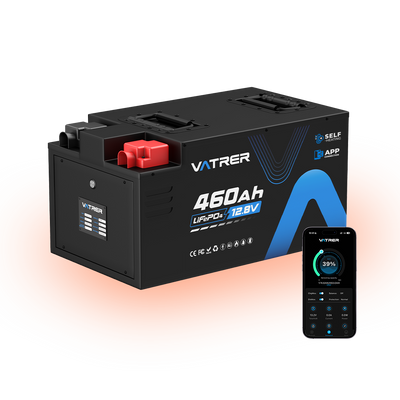
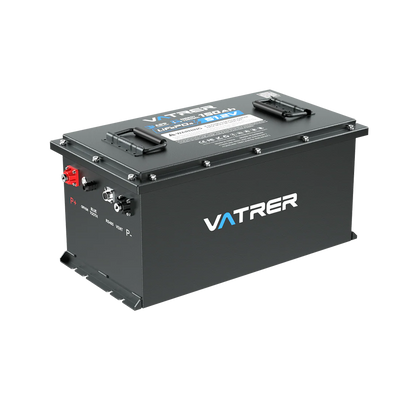
If you are planning to improve your golf cart driving experience, Vatrer lithium batteries offer stable current output, provide 100Ah - 150Ah capacity, have a cycle life of over 4000+, and are perfectly compatible with mainstream golf cart brands such as Club Car and Yamaha, requiring no modifications, simply plug and play.
Share