RV Battery vs Car Battery: What’s the Difference?
Reading time: 6 minutes

Share
When people first get into RV travel, one of the most common questions they ask is surprisingly simple: Aren't RV batteries and car batteries basically the same thing? They often look similar, they're both usually 12V, and they both store electricity, so it's easy to assume they're interchangeable.
In reality, the difference between an RV battery and a car battery is significant, and choosing the wrong one can lead to poor performance, short battery life, or unnecessary costs.
Key Takeaways
- An RV battery and a car battery are designed for very different jobs, even though both are often 12V.
- Car batteries are built for short bursts of high power, not long-term energy supply.
- RV batteries are designed to deliver steady power over long periods and handle deep discharges.
- Using a car battery in an RV may work temporarily, but it usually leads to fast battery failure.
- The best battery for RV use depends on how often you travel and how much power you need.
- Many RV owners are upgrading to lithium RV batteries for a longer lifespan and lower maintenance.


RV Battery vs Car Battery: Why Understanding the Difference Matters
Understanding the difference between an RV battery and a car battery isn't just a technical detail, it directly affects how reliable your RV's power system will be. RV owners rely on batteries to run lights, refrigerators, fans, water pumps, and sometimes even air conditioning through an inverter.
A car battery, on the other hand, plays a much smaller role in daily power usage. Its main job is to start the engine, not to supply electricity for hours at a time. When these two battery types are confused or used interchangeably, problems show up quickly.
Knowing how each battery is designed helps you avoid premature battery failure, unexpected power loss, and higher long-term costs. It also makes it easier to decide whether upgrading your RV battery system, especially to lithium, is worth it.
What Is a Car Battery and What Is It Designed For?
A car battery is what's known as a starting battery. Its primary function is to deliver a large burst of power in a very short time. This surge of electricity turns the starter motor and gets the engine running. Once the engine starts, the alternator takes over and supplies power to the vehicle's electronics while recharging the battery.
Because of this role, car batteries are optimized for high current, short-duration output. They're not designed to be deeply discharged. In fact, regularly draining a car battery below about 80-90% state of charge can significantly shorten its lifespan.
This design works perfectly for cars, where the battery is rarely used for long periods without the engine running. However, it becomes a major limitation when people try to use a car battery for RV living or camping.
What Is an RV Battery and How Does It Work?
An RV battery is typically a deep-cycle battery, meaning it's built to provide a steady flow of power over an extended period. Instead of delivering one quick surge, it supplies electricity slowly and consistently, which is exactly what RV appliances need.
RV batteries are designed to be discharged much deeper than car batteries, often down to 50% or even lower, depending on the battery type, without suffering serious damage. This makes them suitable for overnight stays, off-grid camping, and long periods without shore power.
In practical terms, an RV battery powers everything inside the living space. Lights, control panels, water pumps, USB outlets, and refrigerators all depend on this battery system. That's why understanding what is an RV battery and how it differs from automotive batteries is so important for reliable RV travel.
RV Battery vs Car Battery: Key Differences Explained
The RV battery vs car battery debate comes down to design purpose and usage pattern. While both store energy, they handle that energy in very different ways.
Core differences include
- Design purpose: Car batteries start engines, RV batteries power appliances.
- Discharge behavior: Car batteries deliver short bursts, RV batteries support long, steady output.
- Depth of discharge: RV batteries tolerate deep discharges, car batteries do not.
- Expected lifespan: RV batteries are built for repeated cycling, car batteries wear out quickly when cycled.
RV Battery vs Car Battery Comparison Table
| Feature | Car Battery | RV Battery |
|---|---|---|
| Primary Function | Engine starting | Continuous power supply |
| Discharge Type | Short, high-current burst | Long, steady output |
| Deep Discharge Capability | Very limited | Designed for it |
| Typical Lifespan (cycled) | Short | Much longer |
| Best Use Case | Cars & trucks | RVs, campers, off-grid use |
Can You Use a Car Battery in an RV?
A very common question is: Can I use a car battery in an RV? Technically, the answer is yes, but only in a very limited and temporary sense.
A car battery can power small loads for a short time, especially in an emergency. However, because it's not built for deep cycling, it will degrade quickly if used as a primary RV power source. You'll notice reduced capacity, unstable voltage, and eventually a battery that won't hold a charge at all.
For occasional emergency use, a car battery might get you through a night. But for regular RV use, it's not a reliable or cost-effective solution.
What Happens If You Use the Wrong Battery Type?
Using the wrong battery type often leads to disappointing results. One of the most common outcomes is dramatically reduced runtime. Appliances may shut off sooner than expected, and voltage drops can cause electronics to behave erratically.
Another issue is accelerated battery wear. If you repeatedly deep-discharge a car battery, internal damage builds up quickly. This explains what happens if you use a car battery in an RV, you end up replacing it far sooner than planned.
There are also safety concerns. Overheating, internal plate damage, and charging inefficiencies all increase when a battery is used outside its intended design parameters.
RV Battery vs Car Battery: Which One Should You Choose?
Choosing between an RV battery and a car battery is actually straightforward once you understand their roles. If the battery's job is to support living systems inside an RV, a car battery simply isn't the right tool.
RV owners should always choose a battery designed for deep-cycle use. The exact type depends on how often you travel, how much power you use, and how much maintenance you're willing to handle.
In short, is an RV battery the same as a car battery? No, and selecting the correct one makes daily RV life far more reliable and predictable.
RV Battery Options: Lead-Acid vs AGM vs Lithium Batteries
Not all RV batteries are the same, and choosing the best battery for RV use depends on performance expectations and budget.
- Flooded lead-acid batteries are affordable but heavy and require regular maintenance.
- AGM batteries are sealed and maintenance-free, but still limited in usable capacity.
- Lithium batteries (LiFePO4) offer deep discharge capability, stable voltage, and long lifespan.
Common RV Battery Types Comparison Table
| Battery Type | Maintenance | Usable Capacity | Weight | Typical Lifespan |
|---|---|---|---|---|
| Flooded Lead-Acid | High | ~50% | Heavy | Short |
| AGM | Low | ~50–60% | Medium | Moderate |
| Lithium (LiFePO4) | None | 80–100% | Light | Very long |
This is why many modern RV owners are upgrading to a 12V lithium RV battery, especially for frequent travel or off-grid use.
Choosing the Right Battery for Reliable RV Power
Understanding the difference between RV batteries and car batteries helps you avoid costly mistakes and ensures your RV power system performs as expected. While car batteries are excellent for starting engines, they're not built for the demands of RV living.
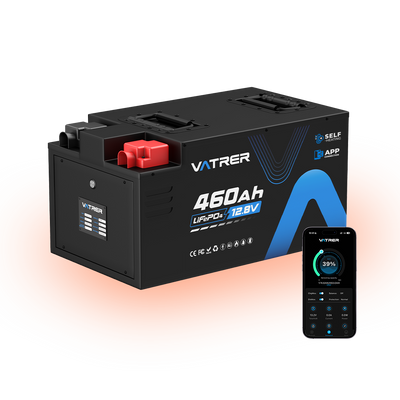
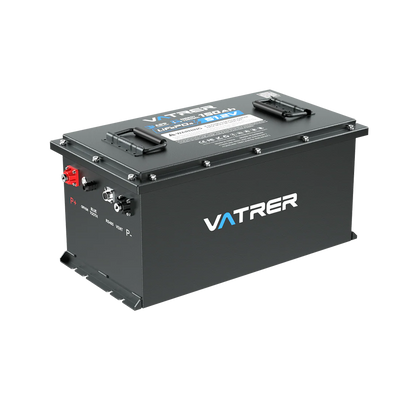
RV batteries, especially lithium options, provide longer runtime, better efficiency, and greater reliability. For RV owners looking to reduce maintenance and maximize usable power, Vatrer lithium RV batteries are designed to deliver stable performance, long cycle life, and dependable energy for life on the road.
If you're considering upgrading your RV power system, exploring a lithium solution from Vatrer can be a practical next step toward safer, more efficient travel.
Share