How Much Does It Cost To Replace Golf Cart Batteries
Reading time: 18 minutes

Share
Replacing golf cart batteries typically costs $500 to $1,850 for a flooded lead-acid battery system, $900 to $3,000 for an AGM battery system, and $1,800 to $4,500 for a LiFePO4 battery system, including typical battery costs, basic labor, and common accessories. These ranges are planning estimates rather than fixed prices. Your final bill depends on system voltage, battery capacity, battery configuration, charger compatibility, installation work, and the parts included with the battery.
The biggest pricing mistake is comparing unlike quotes. A battery-only price does not represent the same purchase as a LiFePO4 conversion kit that includes a charger, display, cables, and mounting accessories. Before choosing golf cart replacement batteries, compare the full installed cost and check which components you can keep from the existing system.


How Much Does Golf Cart Battery Replacement Cost in 2026?
The golf cart battery replacement cost changes considerably by battery chemistry. Flooded lead-acid batteries usually have the lowest upfront price, AGM batteries cost more but remove routine watering, and LiFePO4 batteries require a larger initial budget but may include equipment that would otherwise need to be purchased separately. Installation can also move a project toward the upper end of the range, especially during a lead-acid-to-lithium conversion.
2026 Golf Cart Battery Replacement Cost
| Battery Type | Battery-Only Cost | Installation Labor | Estimated Total Cost | Typical Configuration |
|---|---|---|---|---|
| Flooded lead-acid battery | $400–$1,600 | $75–$150 for a basic replacement | $500–$1,850 | Usually 4–8 batteries |
| AGM battery | $800–$2,800 | About $100–$200 for a basic replacement | $900–$3,000 | Usually 4–8 sealed batteries |
| LiFePO4 battery | $1,500–$4,000 | About $200–$500 depending on conversion work | $1,800–$4,500 | Often one complete high-voltage battery or battery kit |
The battery price alone is only one part of the total. A lower-priced battery can become the more expensive project if it still requires a charger, damaged cable replacement, mounting parts, monitoring equipment, or several hours of installation work.
How Does Battery Type Affect Golf Cart Battery Cost?
Battery chemistry changes how much you spend today and what you may spend later. Flooded lead-acid batteries minimize initial cost but come with regular maintenance. AGM batteries keep the familiar lead-acid battery architecture while removing electrolyte watering. LiFePO4 batteries shift more of the expense into the first purchase because the battery usually contains its own BMS and may be sold with charging, monitoring, and installation hardware.
Flooded Lead-Acid Battery Cost
Flooded lead-acid batteries usually cost about $100 to $200 per battery, with many golf carts requiring four to eight batteries. That puts the battery group around $400 to $1,600 before labor. The exact number of batteries depends on system voltage and the original configuration rather than the golf cart brand alone.
This is the lowest-cost option upfront. It can still make sense if the golf cart sees limited use, the existing charger and wiring are in good condition, and keeping the initial repair budget low matters more than reducing future maintenance.
The tradeoff is routine service. You need to check electrolyte levels, add distilled water when required, inspect terminals, manage corrosion, and keep all batteries in the battery bank in similar condition. Weight is also much higher than with a typical LiFePO4 battery conversion.
AGM Battery Cost
AGM batteries usually cost about $200 to $350 per battery, bringing a complete battery group to roughly $800 to $2,800 before labor. They are sealed lead-acid batteries, so you do not need to add water. That removes one of the main maintenance jobs associated with flooded lead-acid batteries.
AGM can fit a cart where you want to retain the existing multi-battery lead-acid architecture but prefer less routine maintenance. Its higher upfront price needs to be weighed against the condition of the existing charger, how frequently the cart is used, and how long you expect to keep it.
AGM battery performance also varies by model and duty cycle. Charging current, depth of discharge, operating temperature, and the way the cart is used can all affect service life, so price alone is not enough to compare two AGM options.
LiFePO4 Battery Cost
A complete LiFePO4 golf cart battery or conversion kit generally costs about $1,500 to $4,000 before professional installation, depending on voltage, Ah capacity, BMS current rating, included charger, monitoring hardware, and mounting accessories.
The cost structure is different from a conventional lead-acid battery bank. A LiFePO4 battery includes a BMS for cell balancing and protection against conditions such as overcharge, over-discharge, overcurrent, short circuit, and unsafe temperature operation. Many golf cart batteries also support an LCD display, Bluetooth monitoring, or both.
A complete battery kit may include the battery, lithium-compatible charger, display, cables, brackets, and other installation parts. That higher package price can reduce the number of separate components you still need to buy.

How Do Voltage and Capacity Affect Golf Cart Battery Cost?
System voltage determines the basic replacement architecture, while Ah capacity affects stored energy and usually the battery price. A 36V golf cart and a 48V golf cart can both use 100Ah batteries, but the higher-voltage battery stores more total energy. Battery count also matters with lead-acid systems because the required system voltage is built by wiring several lower-voltage batteries in series.
36V Battery Configurations
A 36V golf cart commonly uses six 6V lead-acid batteries connected in series. Other configurations are possible if the cart has been modified, so the existing battery labels and wiring should be checked before ordering replacements.
A LiFePO4 conversion can use one complete 36V battery rather than a group of individual lead-acid batteries. That reduces inter-battery cabling, but the battery still needs to match the golf cart's voltage, controller current demand, battery compartment, charger, and connection layout.
Battery capacity also changes the price. A 36V battery intended for light neighborhood driving does not need the same energy capacity as a battery used for long campground routes, repeated hill climbing, or frequent passenger use.
48V Battery Configurations
A 48V golf cart may use six 8V lead-acid batteries, four 12V lead-acid batteries, eight 6V batteries, or a complete 48V LiFePO4 battery. The correct arrangement depends on the cart's existing electrical system.
This is why two 48V battery replacement quotes can look very different. One quote may cover four individual batteries, another six or eight, and a LiFePO4 quote may cover one high-voltage battery plus a charger and display.
A 48V system also tends to offer a wide capacity range. Higher Ah capacity raises stored energy and can extend driving range, but the extra capacity only has value if your routes and loads make use of it.
72V Battery Configurations
A 72V golf cart requires a battery system built for the cart's existing 72V electrical architecture. A same-voltage battery replacement and a conversion from a lower-voltage cart are two very different jobs.
Replacing the battery in an existing 72V cart mainly involves battery compatibility, charger compatibility, current capability, mounting, and wiring. Converting a 36V or 48V golf cart to 72V can involve the motor, controller, solenoid or contactor, DC-DC converter, charger, cables, and other electrical components. That project should not be priced as a normal battery replacement.
Higher system voltage can support demanding vehicle setups, but the battery, controller, charger, and accessory power system still need compatible voltage ratings.
Capacity and Usable Energy
Ah alone does not tell the full story. Total battery energy depends on both nominal voltage and capacity.
Energy (Wh) = Nominal Voltage (V) × Capacity (Ah)
For a LiFePO4 battery marketed for a 48V golf cart, a common nominal battery voltage is 51.2V. A 51.2V 105Ah battery stores:
51.2V × 105Ah = 5,376Wh = 5.376kWh
At the same nominal voltage, increasing capacity to 150Ah raises stored energy to:
51.2V × 150Ah = 7,680Wh = 7.68kWh
That extra energy generally raises the purchase price and can extend range. Actual range still depends on cart weight, passengers, tire size, terrain, speed, temperature, accessory loads, and driving style.
What Can Increase the Cost to Replace Golf Cart Batteries?
The battery itself does not always account for the complete cost of the job. A direct replacement using the same chemistry, voltage, case layout, and charger can be relatively simple. Cost rises when worn cables need attention, old mounting hardware no longer fits, the charger must change, or the replacement is part of a broader lithium conversion.
Installation Labor
Professional installation can add $75 to $500, depending on how much work is involved. Replacing a standard lead-acid battery group with another battery group of the same voltage and layout is usually a simpler job. A lithium conversion can require charger changes, battery mounting, accessory wiring, monitoring installation, or electrical compatibility checks.
DIY installation removes the labor charge, but the work still includes correct polarity, proper series connections where used, clean cable lugs, secure battery mounting, and correct charger setup. A wiring mistake can damage the battery, charger, controller, solenoid, or other electrical equipment.
Warranty terms can also depend on installation requirements. Check the battery manufacturer's instructions before deciding whether to handle the work yourself.
Quote and Kit Contents
Battery cost also depends on what is included. A lower-priced battery may not include a lithium charger, display screen, Bluetooth monitoring, cables, or mounting accessories. A complete kit may cost more upfront but reduce extra purchases.
Compare the same components before deciding that one quote is cheaper:
- Battery: Chemistry, nominal voltage, Ah capacity, and discharge-current capability.
- Charger: Check whether a compatible charger is included or already available.
- Monitoring: LCD display, shunt monitor, or Bluetooth app support may be part of the kit.
- Cables: Some kits include main cables or adapter wiring; others do not.
- Mounting accessories: Brackets, straps, hold-down parts, or a tray adapter may be required.
- Accessory power: A DC-DC converter may be needed for 12V lights and accessories.
- Warranty: Coverage should be checked for the specific battery model rather than assumed across an entire product line.
A complete battery kit can have a higher checkout price while leaving fewer parts to source later.
Cable and Connector Condition
High-current lithium systems need clean, properly sized cables and tight terminal connections. If your cart has old corroded cables from a lead-acid battery bank, replacing the battery without checking the wiring can limit performance or create heat at the connection points.
This is especially important for lifted carts, carts with rear seats, carts with larger tires, and carts used on hills where current draw is higher. A damaged cable lug or heavily corroded connector can turn a battery replacement into a wiring repair at the same time.
Inspect the main positive and negative cables, solenoid connections, controller terminals, charger-port wiring, and any accessory connections before finalizing the project budget.
Disposal and Recycling
Lead-acid batteries contain lead and sulfuric acid, so they should be recycled through an appropriate collection channel. The final cost depends on the retailer, installer, and local recycling arrangement. Some sellers take the old batteries back as part of the replacement, while others use a refundable core charge.
A core charge temporarily increases the checkout total but is returned after an eligible old battery is brought back. With a four-, six-, or eight-battery lead-acid system, that difference can be noticeable at purchase.
LiFePO4 batteries also require appropriate end-of-life recycling. They do not use the same lead-acid core-return structure, so disposal procedures should be checked separately.
How Much Does It Cost to Convert a Golf Cart to Lithium?
A lead-acid-to-LiFePO4 conversion generally costs $1,800 to $4,500 installed. The battery itself is the largest expense, but charger compatibility, mounting, state-of-charge monitoring, cable condition, and controller demand determine whether the project stays near the lower end or requires more retrofit work.
Battery and Charger
Switching from lead-acid to lithium usually requires a charger that matches the LiFePO4 battery's specified charging profile. A charger selected only because it carries the same 36V, 48V, or 72V system label may still use a charging profile intended for a different battery chemistry.
Many complete golf cart lithium battery kits include the matching charger. If the battery is sold by itself, charger cost should be added before comparing that purchase with a kit that already includes one.
Charging time depends on battery capacity, charger output, battery temperature, and the maximum charging current allowed by the BMS. A higher-output charger can shorten charging time only when the battery is rated to accept that charge current.
Mounting and Fitment
Older lead-acid battery trays may not hold a single lithium battery securely. A lithium battery is often smaller and lighter than the original lead-acid battery group, so the battery must be fixed properly with brackets, hold-down hardware, or a tray adapter.
This matters on carts used on bumpy farm roads, gravel campground paths, or sloped neighborhood streets. A loose battery can stress terminals, cables, or the battery case during vibration.
Battery length, width, height, terminal clearance, cable routing, and seat clearance should all be checked before purchase. A voltage match does not confirm a physical fit.
SOC Monitoring
Lead-acid voltage meters do not always read lithium batteries accurately because lithium battery voltage stays flatter during much of the discharge cycle. A lithium-compatible display, shunt meter, or Bluetooth app gives a more useful view of battery percentage, voltage, current, temperature, and other available diagnostic data.
If the monitor is already included in the battery kit, it does not need to be budgeted as a separate accessory. If the existing cart only has a basic lead-acid voltage gauge, a monitoring upgrade may be part of the conversion.
App-based monitoring can also reduce guesswork when diagnosing unexpected shutdowns because you can check battery SOC, temperature, current, and BMS status without relying only on dashboard voltage.
Electrical Compatibility
The battery has to supply the current demanded by the motor controller during acceleration, climbing, and heavy-load operation. Continuous discharge current and peak discharge current are therefore more useful than Ah alone when checking performance compatibility.
A stock two-passenger cart on level pavement can place less demand on the battery than a lifted cart carrying rear-seat passengers on large tires. Before a lithium conversion, check:
- Controller continuous and peak current demand
- Battery BMS continuous and peak discharge ratings
- Solenoid or contactor rating
- DC-DC converter voltage and power rating
- Main cable condition and size
- Charger and charge-port configuration
- Regenerative braking requirements on applicable carts
For example, the Vatrer 48V 105Ah lithium golf cart battery uses a 200A BMS and supports up to 10.24kW continuous output. The 72V 105Ah lithium battery supports up to 14.08kW continuous output.
Which Golf Cart Replacement Battery Costs Less Over Time?
The lowest upfront price and the lowest ownership cost can lead to different decisions. Flooded lead-acid batteries reduce the first purchase amount but bring regular maintenance and a shorter replacement interval in many applications. AGM batteries reduce maintenance while keeping a lead-acid battery architecture. LiFePO4 batteries shift more cost into the first purchase but can provide much higher cycle life, lower maintenance, and fewer battery replacements if the battery is operated within its specifications.
Cost Comparison Factors
Long-term cost should be calculated across the same ownership period for each option. Include the components that actually change between the alternatives rather than comparing only battery prices.
A practical cost model includes:
- Initial battery cost
- Installation labor
- Charger or conversion components
- Replacement batteries during the ownership period
- Routine maintenance costs
- Cable, tray, or connector work directly related to the replacement
Battery service life is not fixed. Depth of discharge, charging behavior, temperature, maintenance, load, and storage conditions all affect how long a battery remains useful.
10-Year Cost Framework
A ten-year comparison works best with your actual quotes rather than an assumed market average. Use the same calculation for each battery option:
10-Year Cost = Initial Battery System + Installation + Required Accessories + Future Replacement Battery Systems + Maintenance Costs
For a flooded lead-acid battery system, include every full battery group you expect to buy during the ten-year period. For AGM, use the AGM battery price and its expected service interval. For LiFePO4, include the battery kit, charger if it is not included, conversion labor, and any mounting or electrical work.
If the expected service life extends beyond the comparison period, leave that future battery replacement outside the calculation. Apply the same method to each battery type so the comparison stays consistent.
This approach makes the break-even point visible without forcing every golf cart into one lifespan assumption.
Best Fit by Owners Plan
A flooded lead-acid battery system can make financial sense when the immediate budget is tight, the existing charger and battery compartment are already compatible, and the cart may not remain in service long enough to benefit from a higher initial investment.
AGM can fit an existing lead-acid system where watering is undesirable but a complete electrical conversion is not part of the plan. Its higher purchase price should be compared against the convenience of sealed construction and the expected service life of the specific battery.
LiFePO4 becomes more attractive as annual use, expected ownership period, passenger load, hill use, and maintenance avoidance become more important. Capacity still needs to match the actual route. Paying for a 150Ah battery has little economic value if a 100–105Ah battery already covers normal trips with a practical reserve.
How Can You Reduce Future Golf Cart Battery Replacement Costs?
Charging practices, battery maintenance, cable condition, and battery matching can all affect replacement frequency. The goal is to keep the battery operating within its intended electrical and temperature limits while avoiding resistance, chronic undercharging, overcharging, or severe imbalance between batteries in the same battery bank.
Correct Charging
Use a charger that matches the battery chemistry and voltage. A 48V lead-acid charger is not automatically suitable for a 48V LiFePO4 battery because the required charging profiles can differ.
For LiFePO4 batteries, use a charger with the voltage profile specified by the battery manufacturer. For flooded lead-acid and AGM batteries, use charging settings intended for the installed lead-acid battery type.
The charger should also provide a charge current within the battery manufacturer's permitted range. More charger current is useful only when the battery can accept it.
Lead-Acid Maintenance
Flooded lead-acid batteries need periodic electrolyte-level checks and distilled water when required. Clean terminals, remove corrosion, and keep connections tight so resistance does not create heat or unnecessary voltage drop.
Watering frequency depends on use, charging, temperature, and the particular battery. A fixed calendar interval cannot replace inspection of the actual battery condition.
AGM batteries remove routine watering, but terminals, cables, charger operation, and battery condition still need attention.
Battery Group Matching
Four matched 12V deep-cycle batteries can be wired in series to power some 48V golf carts, while other carts use different battery configurations. All batteries in a multi-battery battery bank should be compatible in chemistry, voltage, capacity, and condition.
Do not mix old and new batteries casually. A new battery connected in series with several heavily aged batteries can charge and discharge differently from the rest of the battery bank.
Do not mix flooded lead-acid, AGM, and LiFePO4 batteries in the same traction battery system. Their charging requirements and voltage behavior are different.
Should You Replace All Golf Cart Batteries at the Same Time?
A multi-battery lead-acid battery bank usually ages as a system because the batteries experience the same charging cycles and vehicle loads. If several batteries have lost capacity and the battery bank is already near the end of its useful service life, replacing the full battery bank gives the cart a matched group again. A single failed battery in a relatively new battery bank is a different situation and should be evaluated by testing the complete battery bank.
Full Battery Bank Replacement
If one battery in a lead-acid battery bank fails and the others are already several years old, replacing only one battery may create an uneven battery group. The older batteries can limit overall capacity even though the new battery is healthy.
Replacing the full battery bank at that stage also gives you a clean point to inspect cables, terminal lugs, battery hold-downs, and charger operation. Future battery age and service history are then consistent across the system.
For a complete LiFePO4 conversion, the existing lead-acid battery bank is removed rather than mixed with the new lithium battery system.
Partial Replacement
A single premature battery failure does not always require replacing every battery. Test the remaining batteries and consider their age, capacity, charging history, and condition before deciding.
Partial replacement is more reasonable when the rest of the battery bank is relatively new and performs normally. It is less attractive when several batteries already show weak capacity, slow charging recovery, or large voltage differences under load.
Battery chemistry should remain consistent throughout the traction battery system. Do not substitute one AGM battery into an otherwise flooded lead-acid battery bank, and do not combine a LiFePO4 battery with lead-acid batteries as part of the same traction battery bank.
How Should You Plan Your Golf Cart Battery Replacement Budget?
Start with the cart itself: identify the system voltage, current battery configuration, available battery-compartment space, charger type, and condition of the cables. Then compare the cost of each replacement option on the same basis. For a battery-only quote, add any charger, monitoring hardware, mounting parts, cables, or installation work you still need before comparing it with a complete battery kit.
The final choice should follow how long you plan to keep the cart, how often it is driven, the range and load it actually handles, and how much maintenance you want to continue doing. That keeps the budget tied to real use rather than paying for capacity and performance that the cart will rarely use.
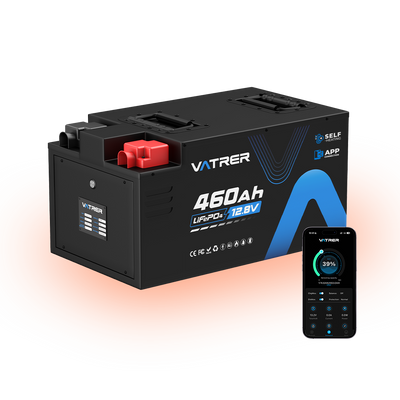
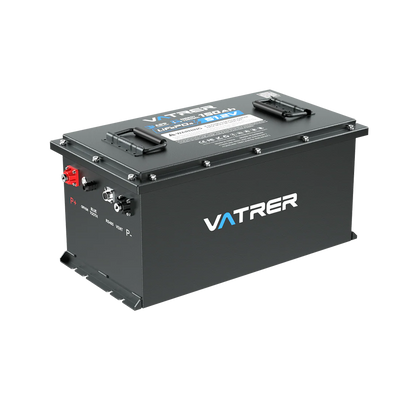
If you plan to use your golf cart for the long term, Vatrer golf cart lithium battery conversion kits offer a comprehensive range of options, covering 36V, 48V, and 72V systems, complete with built-in BMS protection, matching charging solutions, and LCD/Bluetooth monitoring capabilities, while ensuring excellent compatibility with major brands such as Club Car, Yamaha, EZGO, and ICON.
Share