Why Your Lithium Golf Cart Battery is Dies in Winter
Reading time: 6 minutes

Share
When the temperature drops, many golf cart owners are surprised to find their lithium golf cart battery acting “dead.” The cart won’t start, the battery won’t charge, and the voltage reading looks frighteningly low. Yet in most cases, the battery hasn’t failed, it’s simply reacting to cold weather and the way it’s been stored.
This guide explains why lithium batteries lose performance in winter, how to store them properly, and what steps you can take to keep your golf cart batteries healthy all year long.

Why Your Lithium Golf Cart Battery “Dies” in Cold Weather
During winter, the chemical reactions inside a lithium battery slow down dramatically. These reactions drive the flow of lithium ions between the anode and cathode, generating power. When temperatures drop below 32°F (0°C), ion movement becomes sluggish, internal resistance increases, and voltage output falls.
At the same time, most lithium golf cart batteries include a battery management system (BMS) that prevents charging when the temperature is too low to protect the battery from damage. The result? Your battery appears “dead,” but it’s really just in protective sleep mode until it warms back up.
Tips: If your golf cart battery won’t charge on a freezing morning, don’t panic. Wait until the pack warms above 40°F (5°C), then try again. Avoid forcing a charge at freezing temperatures, it can permanently damage the cells.
How Cold Weather Impacts Lithium Golf Cart Battery Performance
Cold weather affects battery performance in several ways:
- Reduced capacity and range: Chemical reactions slow down, decreasing available energy and reducing how far your cart can go per charge.
- Higher internal resistance: Power output drops, and voltage dips faster under load. Even with a charge remaining, the system may hit low-voltage cut-off early.
- Temporary power loss: Once temperatures rise, the lost capacity usually returns.
In short, your golf cart might feel weaker or shut off earlier on cold days, but the battery will typically recover once it's warmed.
Battery Management System (BMS) Built-In Protection, Not Failure
Every lithium golf cart battery has a battery management system (BMS) that continuously monitors voltage, current, and temperature. When the pack temperature nears freezing, the system blocks charging to avoid lithium plating, the buildup of metallic lithium on the anode that can cause internal shorts.
The same BMS can also cut off discharge if the pack voltage or temperature goes outside safe limits. That's why your golf cart may refuse to power on in freezing weather. The battery isn't broken because the BMS is protecting it until conditions improve.
Improper Storage and Its Impact on Lithium Golf Cart Batteries in Winter
Improper winter storage is the number-one reason lithium golf cart batteries appear dead in spring. Many owners park their carts in unheated sheds for months, unaware that small power draws continue even when everything seems off.
These parasitic loads, from the BMS, DC-DC converters, and accessories, gradually drain the pack. Combined with cold weather, the cells can fall below the BMS's low-voltage cutoff, shutting down the system completely.
If your battery was stored at a low charge, this can happen in just a few weeks of freezing weather. Once the voltage drops too low, standard chargers may not detect the pack at all. Fortunately, a qualified technician can usually revive it safely.
Tips: Never try to “jump start” or open the battery yourself. Deep-discharged lithium batteries require specialized recovery equipment and should only be serviced by authorized professionals.
Why Cold Weather Battery Problems Aren't Usually Covered by Warranty
Lithium battery manufacturers classify most winter “no-power” complaints as storage or usage issues, not warranty defects. That's because the problem is caused by temperature and maintenance habits, not faulty components.
Once the battery is warmed and recharged within the proper range (32°F–80°F / 0°C–27°C), performance typically returns to normal. Unless the pack has been repeatedly charged below freezing or stored completely drained for months, it’s rarely permanently damaged.
How to Store Golf Cart Batteries in the Winter the Right Way
Proper winter storage is the best way to avoid trouble later. Follow these recommended steps:
| Step | Recommended Practice | Why It Matters |
|---|---|---|
| Charge before storage | Store at about 80% SOC (≈3.33V per cell) | Provides a buffer against small energy drains |
| Avoid low-charge storage | Don’t store below 30% SOC (≈3.27V per cell) | Low voltage can quickly trigger a shutdown in cold weather |
| Disconnect accessories | Remove connections to the controller, converter, and RS-485 port | Eliminates parasitic draw |
| Store above freezing | Ideal range 32–70°F (0–21°C) | Prevents self-discharge acceleration |
| Check monthly | Measure voltage or use the app | Recharge if the cell voltage approaches 3.28V |
Tips: If your area regularly drops below 14°F (-10°C), move your lithium golf cart battery to a temperature-controlled garage or use an insulated storage box. For more winter storage tips, read on: How To Store Golf Cart Batteries In The Winter
How to Safely Recover a “Dead” Lithium Golf Cart Battery
If your battery shows zero voltage or won’t wake up, don’t assume it’s ruined. A qualified technician can use bench-power recovery or a charger with a wake-up mode to bring the pack back online safely.
Never attempt to jump-start a lithium battery using cables or other batteries. Incorrect handling can cause internal shorts or fire hazards. Follow your lithium battery manufacturer's service guidelines or contact the supplier for approved recovery tools.
Charging Safety and Temperature Guidelines for Lithium Golf Cart Batteries
Working temperature range: –4°F to 140°F (–20°C to 60°C).
Safe charging range: 32°F to 131°F (0°C to 55°C).
Charging below freezing is unsafe and can lead to lithium plating or permanent capacity loss.
Tips: If you must charge in a cold climate, wait until the pack warms above 40°F (5°C), or invest in a self-heating lithium golf cart battery that automatically warms itself before charging.
5 Ways to Keep Lithium Golf Cart Batteries Warm in Winter
A "battery blanket" acts as an insulated wrap around the pack, trapping heat produced by the cells and reducing exposure to cold air. This helps maintain stable internal temperature, improving battery performance during storage or use in low temperatures.
Tips: Always ensure ventilation if using active heating methods, and avoid placing heat sources directly on the battery surface.
Install an Insulated Battery Box
Battery boxes made of insulated materials limit temperature fluctuations and prevent direct exposure to freezing air. Some boxes even include reflective linings to retain warmth generated during discharge.
Pre-Charge Using Solar Panels
Charging your battery before heading outdoors keeps the pack active and slightly warm, which reduces internal resistance and improves efficiency. Solar trickle chargers can maintain this state even when not in use.
Store in a Heated or Temperature-Controlled Space
Keeping your golf cart and battery in a warm garage or storage area significantly reduces the risk of freezing. Even maintaining 40°F–60°F can prevent most cold-related issues and extend battery lifespan.
Upgrade to a Self-Heating Lithium Battery
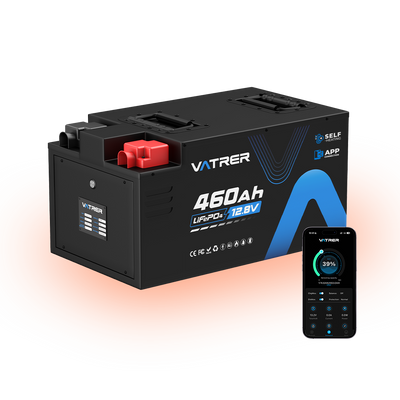
Self-heating designs like Vatrer’s 48V 105Ah battery include built-in heaters that automatically activate below 41°F (5°C). These systems keep the pack within optimal charging and operating temperature ranges without manual intervention.
Conclusion
A lithium golf cart battery that “dies” in winter is rarely defective. In most cases, cold weather slows chemical reactions, the battery management system shuts down to protect the pack, or improper storage drains voltage.
By storing the battery properly, keeping it above freezing, and using the right equipment, you can prevent most winter problems. For drivers in colder regions, upgrading to a Vatrer self-heating lithium battery ensures reliable battery performance throughout the year.
Remember: Take care of your battery in winter, and it will keep your golf cart running smoothly for many seasons to come.
Share