Why Golf Carts Feel Jerky at Low Speeds?
Reading time: 7 minutes

Share
If you've ever parked your golf cart in a tight spot, squeaked through a clubhouse area, or eased down a path and tried to push it forward, you might have noticed something annoying: the cart feels uneven, jerky, or jumpy instead of moving smoothly. Even though you're hardly touching the accelerator, the motion can make it feel like the power is coming and going.
It usually stems from how electric golf carts handle power at very low speeds and how well or poorly, certain parts are performing.
This article explains why golf carts jerk at low speeds and offers doable solutions to improve the feel and control of your cart.


Why Golf Carts Feel Jerky at Low Speeds
Low-speed driving puts an electric golf cart in its most demanding control zone. Unlike cruising at moderate speed, where momentum helps smooth everything out, slow movement relies on extremely precise power delivery. Even tiny changes in voltage or current can be felt immediately by the driver.
Think of it like walking down stairs versus running on a track. When you're moving slowly, every step is noticeable. When you're moving faster, small imperfections fade into the background. Golf carts behave the same way. At low speed, there's no inertia to hide inconsistencies in power delivery, so any interruption feels like a jerk or lurch.
In most cases, the jerkiness isn't caused by a single failure. Instead, it's usually the combined effect of battery behavior, controller logic, and how the motor responds when power is delivered in very small bursts.
Is Jerky Movement at Low Speed Normal or a Problem?
A small amount of uneven movement at very low speed can be normal, especially in older golf carts or carts with traditional lead-acid batteries. Many carts were simply not designed with ultra-smooth low-speed control as a priority, especially models intended mainly for open fairways rather than tight spaces.
However, there's a clear line between minor behavior and a developing issue. The key is consistency and progression. If the cart has always behaved this way and the movement is mild, it may simply be a characteristic of the system. If the jerkiness has become worse over time or started suddenly, that's a sign something isn't working as it should.
Common indicators that the issue deserves attention:
- The jerking is stronger than before or happens more frequently
- The cart feels unpredictable when starting or stopping
- Low-speed control is noticeably worse when the battery charge is low
- The issue begins to affect moderate speeds, not just crawling movement
If any of these apply, it's worth investigating further before the problem leads to premature wear or safety concerns.
What Causes Golf Carts to Feel Jerky at Low Speeds?
Low-speed jerkiness usually comes down to how smoothly electrical power is delivered and controlled. Several components play a role, and problems often overlap.
Battery Output Instability
Batteries are the foundation of smooth operation. At low speeds, the cart draws relatively small but highly controlled amounts of current. Lead-acid batteries, especially older ones, are not very good at delivering consistent voltage at low current levels.
As batteries age, internal resistance increases. Instead of a steady flow of power, voltage can dip and recover in short cycles. Each dip feels like the cart hesitating, each recovery feels like a sudden push forward.
Controller Low-Speed Behavior
The controller acts as the brain of the cart, deciding how much power goes to the motor. Many older or entry-level controllers are optimized for basic operation rather than fine low-speed precision. When you lightly press the accelerator, the controller may apply power in small pulses instead of a smooth ramp.
At higher speeds, those pulses blend together. At low speed, they feel like repeated nudges.
Throttle and Pedal Signal Irregularities
Most golf carts rely on a throttle sensor or pedal-mounted potentiometer to translate foot movement into an electrical signal. Over time, these components can wear unevenly. When that happens, the signal sent to the controller may jump instead of rising smoothly.
The result is inconsistent interpretation of driver input, what feels like steady pressure to you may look like on-off signals to the controller.
Motor Efficiency at Low RPM
Electric motors are generally more efficient once they're spinning. At very low RPM, torque delivery can feel uneven, especially if power input isn't perfectly smooth. Any instability upstream, battery or controller, becomes magnified at the motor level.
Why Jerking Is More Noticeable at Low Speeds
Low speed is where every part of the system is exposed. At higher speeds, momentum acts like a buffer. Once the cart is rolling, small variations in power don't immediately change how the cart feels.
At low speed, there's no buffer. Every change in current translates directly into movement. This is why jerking is often most noticeable when:
- Starting from a complete stop
- Maneuvering slowly in reverse
- Crawling up slight inclines
- Driving on flat ground at walking speed
Human perception also plays a role. We're far more sensitive to uneven acceleration at slow speeds. A small jerk at 3 mph feels much more dramatic than the same jerk at 15 mph.
How to Tell If Jerky Low-Speed Movement Needs Fixing
Before replacing parts, it's important to evaluate whether the behavior is cosmetic or mechanical. The table below helps distinguish between mild characteristics and signs of a deeper issue.
| Symptom | Likely Normal | Needs Attention |
|---|---|---|
| Mild jerk only at very low speed | ✓ | |
| Jerking worsens over time | ✓ | |
| Occurs mainly with low battery charge | ✓ | |
| Accompanied by power loss or poor hill climbing | ✓ | |
| Cart feels unpredictable in tight spaces | ✓ |
If the jerkiness is stable, mild, and unchanged for years, it may be normal for that cart. If it's increasing, spreading to other speed ranges, or affecting control, it's time to address the root cause.
How to Fix or Reduce Jerky Feel at Low Speeds
Low-speed jerkiness usually isn't caused by a single failure, which is why quick fixes don't always work. In most cases, the issue comes from power delivery that isn't smooth enough at low current levels, or from components that can no longer respond precisely to small inputs. The goal of fixing or reducing jerky movement is not just to mask the symptom, but to improve how consistently power flows from the battery to the motor.
Basic Checks
These steps won't eliminate every case of jerkiness, but they are essential starting points:
- Clean and tighten all battery terminals to reduce voltage drop
- Check for uneven battery charge levels within the pack
- Inspect throttle linkage and pedal return for sticking or delayed response
These fixes mainly address inconsistent electrical contact, which can exaggerate jerky movement at low speeds.
Mid-Level Fixes
When basic checks aren't enough, the issue is often related to signal accuracy or aging components:
- Replace worn throttle sensors or potentiometers that send unstable signals
- Test individual batteries for voltage sag under light load
- Recalibrate or reprogram the controller if the model supports it
These actions improve how accurately the cart interprets driver input, making slow acceleration more predictable.
Long-Term Improvements
For carts that feel consistently rough at low speeds, deeper system changes may be required:
- Replace old lead-acid batteries nearing the end of their service life
- Upgrade to a controller with smoother low-speed current mapping
- Improve overall power stability by modernizing the electrical system
These solutions don't just reduce jerkiness, they often improve overall drivability and efficiency.
Common Fixes and Their Impact on Low-Speed Smoothness
| Solution | Typical Cost Range (USD) | Improvement in Low-Speed Smoothness |
|---|---|---|
| Clean battery terminals & cables | $0 – $30 | Mild |
| Replace throttle sensor/potentiometer | $50 – $150 | Moderate |
| New lead-acid battery set | $800 – $1,500 | Moderate |
| Lithium battery upgrade | $1,800 – $3,500 | Significant |
| Controller upgrade | $500 – $1,200 | Significant |
Low-cost fixes mainly reduce symptoms caused by poor electrical contact or worn input components. Moderate investments improve signal accuracy and consistency, while higher-cost upgrades, especially battery and controller improvements, address the root cause of low-speed jerkiness by stabilizing power delivery across the entire system.
Can Upgrading Lithium Batteries Improve Low-Speed Smoothness?
In many cases, yes. Battery upgrades, especially to lithium LiFePO4 technology, address one of the most common causes of jerkiness: unstable voltage delivery.
Lithium golf cart batteries provide a flatter voltage curve, meaning they maintain steady output across a wide state-of-charge range. At low speeds, this translates into smoother current delivery and more predictable acceleration.
Unlike lead-acid batteries, lithium systems also rely on advanced battery management systems (BMS) to regulate output and protect against sudden drops or spikes. This makes low-speed operation noticeably smoother, especially when combined with a compatible controller.
It's important to note that a battery upgrade won't fix mechanical or sensor-related issues, but when jerkiness is power-related, the improvement can be dramatic.
Final Conclusion
Jerky movement at low speeds is one of the most common, and misunderstood golf cart behaviors. In many cases, it's not a sign of failure but a symptom of how electric carts manage power when precision matters most.
That said, worsening jerkiness should never be ignored. It often points to aging batteries, inconsistent voltage delivery, or control components that are no longer responding smoothly. Addressing these issues early improves drivability, safety, and long-term reliability.
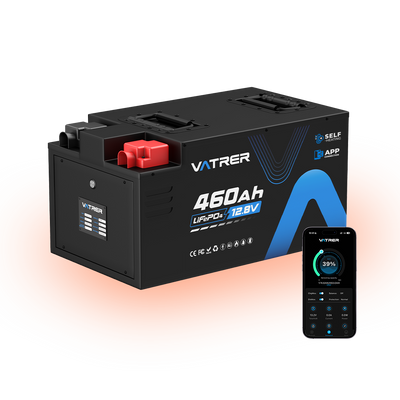
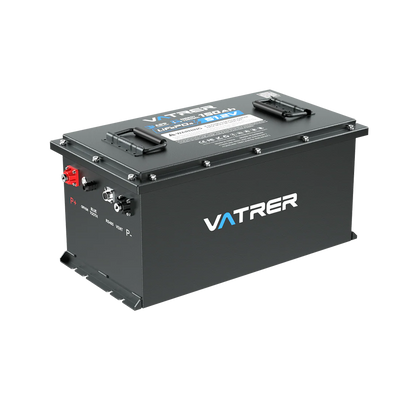
Vatrer lithium golf cart batteries provide stable power output, faster response, and consistent performance across the entire speed range. Compatible with major brands of club cars, Yamaha, and other golf carts, they are plug-and-play, requiring no major modifications, making low-speed driving effortless.