What Is a LiFePO4 Battery? A Complete Guide
Reading time: 12 minutes

Share
In the world of modern energy storage, LiFePO4 batteries (Lithium Iron Phosphate batteries) have rapidly become one of the most trusted and efficient options available. Known for their safety, longer lifespan, and stable performance, LiFePO4 batteries are a type of rechargeable battery that's changing how we power everything from electric vehicles and solar systems to RVs and golf carts.
Unlike traditional lead-acid batteries or older types of lithium-ion batteries, LiFePO4 technology provides consistent power without the risk of overheating or thermal runaway. As the demand for clean and reliable energy grows, understanding LiFePO4 batteries is essential for anyone considering a more efficient and safer power system.

What Is a LiFePO4 Battery and Its Chemistry Design
A lithium iron phosphate battery (LiFePO4) is a type of lithium-ion battery that uses iron phosphate as its cathode material instead of the cobalt or nickel found in traditional lithium cells. This small change in chemistry creates big differences in performance, safety, and sustainability.
Key Chemistrys
- Lithium (Li): The main element responsible for storing and transferring energy during charging and discharging.
- Iron Phosphate (FePO4): The cathode material that gives LiFePO4 its excellent chemical and thermal stability, preventing reactions that could cause the battery to catch fire or explode.
- Graphite Anode: A carbon-based negative electrode that efficiently absorbs and releases lithium ions.
- Electrolyte and Separator: Help transport lithium ions between electrodes while keeping the system stable and insulated.
The chemistry of LiFePO4 batteries is inherently cobalt-free, reducing environmental impact and ethical issues associated with cobalt mining. This makes LiFePO4 one of the most sustainable and safest types of lithium-ion batteries available today.
How Does a LiFePO4 Battery Work
A LiFePO4 battery operates through the controlled movement of lithium ions between the anode and cathode during charge and discharge cycles.
- Charging: Lithium ions move from the iron phosphate cathode to the graphite anode, where they are stored until use.
- Discharging: The process reverses. Lithium ions return to the cathode, releasing stored energy that powers your devices or systems.
Because LiFePO4 batteries maintain a consistent discharge rate, they provide stable voltage and steady power output across the entire cycle. This makes them perfect for applications requiring reliable long-term energy delivery, such as solar storage systems or electric vehicles. Their efficiency, often exceeding 95%, means less energy loss and lower running costs over time.
Key Advantages of LiFePO4 Batteries
LiFePO4 batteries stand out in nearly every important performance category. Here are their main advantages:
Longer Lifespan
LiFePO4 batteries can last 2,000-5,000 charge cycles, depending on depth of discharge and usage conditions. That's roughly 5 to 10 times longer than typical lead-acid batteries and several times longer than other lithium-ion chemistries. In many residential or RV setups, that means over a decade of reliable performance.
High Energy Density
These batteries offer a high energy density, meaning they store more energy per unit of weight or volume. Despite being lighter than lead-acid systems, they can deliver high output power, ideal for golf carts, marine systems, and RV setups where space and efficiency matter.
Wide Operating Temperature Range
LiFePO4 batteries perform reliably in environments ranging from −4°F to 140°F. Compared to other lithium batteries that lose performance outside 32°F–113°F, LiFePO4 ensures stable power even in harsh conditions, making them suitable for both desert and winter climates.
Safety and Stability
LiFePO4 chemistry is naturally resistant to thermal runaway, a condition that can cause other lithium-ion batteries to overheat, catch fire, or explode. Combined with a built-in Battery Management System (BMS) that prevents overcharging, short circuits, and overheating, these batteries are among the safest on the market.
Built-In Low Temperature Protection
Another key advantage of modern LiFePO4 technology is the inclusion of low-temperature protection. This feature automatically prevents charging when internal temperatures drop below safe limits, typically around 32°F to avoid lithium plating and irreversible battery damage. Once the temperature rises to a safe level, charging resumes automatically. This built-in safeguard ensures dependable performance in cold climates, especially for users in northern regions or during winter off-grid operations.
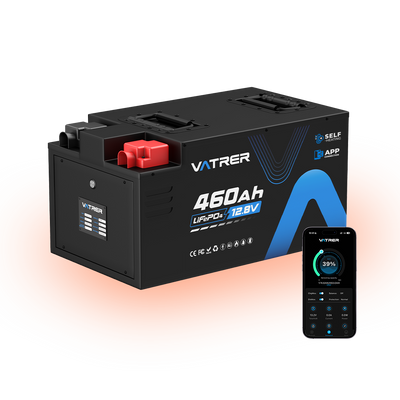
Tips: For enhanced cold-weather performance and smarter power management, Vatrer Battery offers LiFePO4 models with Bluetooth real-time monitoring and an optional self-heating function. These advanced features allow users to track temperature, voltage, and state of charge (SOC) directly from a mobile app, ensuring safe, efficient operation in any environment.
Low Self-Discharge
Even when left unused for months, LiFePO4 batteries lose very little charge, usually less than 3% per month. This makes them perfect for seasonal use in boats, RVs, or emergency power systems that sit idle for long periods.
Environmentally Friendly
Because LiFePO4 batteries are cobalt-free and non-toxic, they are easier to recycle and produce fewer environmental risks during manufacturing. Their long lifespan also means fewer replacements and less electronic waste.
Disadvantages of LiFePO4 Batteries
While LiFePO4 batteries outperform most other options, they do have some drawbacks to consider:
- Lower energy density than NMC or LCO: They may require slightly more space to deliver the same capacity.
- Higher upfront cost: The initial price per watt-hour is higher than lead-acid batteries, but the total cost of ownership is lower due to their longevity.
- Limited cold-weather charging: At temperatures below freezing, charging performance decreases unless equipped with a self-heating system.
- Larger physical size: Slightly bulkier than high-density lithium chemistries, which might be limiting in very compact installations.
Tips: If you plan to use your LiFePO4 battery in extreme cold (like winter camping), choose a model with a built-in heating function or insulated housing.
Common Applications of LiFePO4 Batteries
Because of their reliability and stability, LiFePO4 batteries are used across many industries and lifestyles:
| Application | Typical Use | Use LiFePO4 Battery Benefits |
|---|---|---|
| Golf Carts | Used in recreational and commercial golf carts for smooth, quiet operation | Provides long-lasting propulsion power with stable voltage, replacing lead-acid packs for improved range and weight reduction |
| RVs & Camper Vans | Mobile homes and travel trailers requiring off-grid electricity | Powers lights, appliances, and electronics with high energy efficiency and deep-cycle performance |
| Marine & Boats | Yachts, fishing boats, and trolling motors | Supplies propulsion and onboard electrical systems with stable, safe, and maintenance-free energy |
| Solar Energy Systems | Residential and commercial solar power storage | Stores excess solar energy for nighttime or backup use; ensures consistent power delivery |
| Backup Power / UPS | Emergency home or industrial power systems | Acts as a fast-charging, reliable backup source with long cycle life |
| Electric Vehicles (EVs) | Light-duty EVs, scooters, and low-speed vehicles | Provides consistent discharge and long runtime with enhanced safety against overheating |
| Industrial Equipment | Forklifts, floor scrubbers, and warehouse automation | Delivers high-current discharge and extended uptime for demanding duty cycles |
Whether you're powering a golf cart LiFePO4 battery or an off-grid solar array, these batteries offer steady, reliable energy wherever you need it.
LiFePO4 vs Traditional Lithium-Ion Batteries
| Feature | LiFePO4 | Lithium-ion (NMC / LCO / NCA) | Benefits |
|---|---|---|---|
| Safety | Extremely stable chemistry with low risk of thermal runaway or fire; operates safely under high temperatures | Higher energy density but more sensitive to overheating and short circuits | LiFePO4 is safer and better for applications where reliability and peace of mind are critical |
| Lifespan (Charge Cycles) | 2,000 – 5,000+ cycles, depending on depth of discharge | 500 – 1,500 cycles, degrades faster under stress | LiFePO4 lasts years longer and lowers long-term replacement costs |
| Operating Temperature Range | −4°F to 140°F — wide, stable performance | 32°F to 113°F — narrower, reduced efficiency in cold or heat | Ideal for year-round outdoor or off-grid use |
| Energy Density | Moderate, around 90–120 Wh/kg | Higher, around 150–250 Wh/kg | LiFePO4 batteries are slightly larger but much safer |
| Nominal Voltage per Cell | 3.2V | 3.6–3.7V | Minor difference; performance easily balanced by system design |
| Maintenance & Safety Management | Built-in BMS protects against overcharge, deep discharge, and overheating | Often needs advanced external control to avoid overheating | LiFePO4 requires less oversight and maintenance |
| Best Use | Stationary energy storage, solar systems, RVs, marine, backup power, where safety and longevity matter | High-performance EVs, drones, and compact electronics, where size and power density are key | Choose LiFePO4 if safety, durability, and maintenance-free use are top priorities |
LiFePO4 vs Lead-Acid / AGM Batteries
| Feature | LiFePO4 | Lead-acid / AGM | Benefits |
|---|---|---|---|
| Cycle Life | 2,000–5,000+ cycles | 300–1,000 cycles | LiFePO4 lasts 5–10 times longer, saving money over time |
| Depth of Discharge (DoD) | Up to 100% usable capacity | Typically 50% usable | More usable energy from the same rated capacity |
| Maintenance | Maintenance-free, no watering or acid checks | Requires regular maintenance (water levels, corrosion cleaning) | LiFePO4 saves time and eliminates upkeep tasks |
| Weight | 50–70% lighter, compact design | Very heavy and bulky | Easier installation, higher mobility, improved efficiency |
| Energy Efficiency | ≈95–98% round-trip efficiency | ≈70–80% efficiency | Faster charging, less wasted power |
| Temperature Tolerance | Performs well from −4°F to 140°F | Loses performance outside 32°F–113°F | LiFePO4 provides more consistent power in varying climates |
| Environmental Impact | Non-toxic, cobalt-free, and recyclable | Contains lead and acid, hazardous to handle and dispose | LiFePO4 is cleaner and safer for long-term use |
| Upfront Cost vs. Lifetime Value | Higher initial price, much lower total cost of ownership | Cheaper to buy but frequent replacements add up | LiFePO4 is a better long-term investment |
| Best Use | Solar storage, golf carts, RVs, marine, residential backup | Small-budget, short-term installations | Choose LiFePO4 for reliable, maintenance-free performance that lasts for years |
Why More People Are Choosing LiFePO4 Batteries
As the world shifts toward renewable energy, LiFePO4 batteries represent the perfect balance between performance, affordability, and environmental responsibility. It is mainly driven by the following factors:
- Reliability: LiFePO4 technology offers consistent power with minimal degradation, ideal for long-term setups like solar systems or RVs.
- Safety: With zero cobalt and resistance to thermal runaway, these batteries virtually eliminate the risk of fire or explosion.
- Cost Effectiveness: Although initial costs are higher, fewer replacements and reduced maintenance make them more economical over time.
- Sustainability: LiFePO4 batteries are environmentally responsible, cobalt-free, and increasingly recyclable.
- Global Adoption: Industry leaders such as Tesla, BYD, and other EV manufacturers are switching to LiFePO4 for its balance of safety and longevity.
How to Choose the Right LiFePO4 Battery
Selecting the right LiFePO4 battery depends on your specific energy needs. Here's what to evaluate:
- Voltage and Capacity: Match your device or system's requirements (commonly 12V, 24V, 36V, or 48V).
- Discharge Rate and Power Demand: Consider peak current draw, especially for applications like RVs or electric vehicles that require high surge power.
- Battery Management System (BMS): Ensure your battery includes a smart BMS for protection and performance monitoring.
- Cycle Life and DoD (Depth of Discharge): Look for models rated for at least 4,000 cycles at 80-100% DoD.
- Temperature Tolerance: For cold climates, choose a model with self-heating or Bluetooth control.
- Certification and Brand Reliability: Select a LiFePO4 battery manufacturer that meets safety standards like UL, CE, or UN38.3.
Tips: If you are using LiFePO4 batteries in solar or hybrid systems, make sure your inverter and charge controller are compatible with lithium charging profiles.
LiFePO4 Batteries Maintenance and Best Practices
Proper care extends your LiFePO4 battery's lifespan and performance.
- Keep your battery between 20-80% charge for long-term storage.
- Avoid overcharging or deep discharging whenever possible.
- Store in a cool, dry location away from direct sunlight.
- For long idle periods, recharge every 3-6 months.
- Use a charger specifically designed for LiFePO4 chemistry.
Tips: If you notice reduced performance or inconsistent voltage, check your BMS data for cell imbalance, it may indicate that balancing is required.
Conclusion
LiFePO4 technology has revolutionized the battery industry by combining safety, stability, and long-term efficiency into one sustainable package. From powering electric vehicles to providing backup energy for homes and off-grid setups, LiFePO4 batteries deliver reliable, maintenance-free performance for years.
As energy demands grow and consumers seek cleaner, safer alternatives, LiFePO4 batteries offer a proven, future-ready energy storage solution that balances power, safety, and sustainability.
Vatrer Battery as a trusted advanced LiFePO4 battery manufacturer, provides high-quality lithium batteries for solar, RV, and marine applications. Our products integrate intelligent BMS protection, low temperature, self-heating and Bluetooth Monitor, robust 4,000+ cycle life, and superior 100% efficiency, helping you build smarter, safer, and longer-lasting energy systems.
FAQs
Charging Tips For LiFePO4 Batteries
To maximize the performance and lifespan of your LiFePO4 battery, proper charging practices are essential. Always use a charger designed specifically for LiFePO4 chemistry, as it provides the correct voltage and charging profile (typically 14.4V for a 12V system). Avoid using chargers meant for lead-acid batteries, as their float charging stages can overcharge or damage LiFePO4 cells.
Keep the battery within its safe operating temperature range, ideally above 32°F when charging. Many LiFePO4 batteries include low-temperature charging protection, automatically pausing charging until the internal temperature rises to a safe level. For long-term storage, maintain a state of charge (SOC) between 50-80% and recharge every few months to prevent deep discharge.
Do LiFePO4 Batteries Need A Special Charger
Yes. LiFePO4 batteries require a charger designed specifically for their chemistry. These chargers follow a constant-current/constant-voltage (CC/CV) algorithm optimized for the battery's voltage curve. For example, a 12V LiFePO4 battery typically charges up to 14.4V and stops automatically without entering a float mode. Using a charger meant for lead-acid or NMC batteries could result in incomplete charging, overvoltage, or long-term cell imbalance.
Many reputable brands, including Vatrer Battery, provide matched LiFePO4 chargers with built-in protection, ensuring efficient and safe recharging across all conditions.
Do I Need A Special Inverter For LiFePO4 Battery
In most cases, you don't need a completely special inverter, but it must be compatible with LiFePO4 voltage and discharge characteristics. Check that the inverter supports the correct input voltage range (for example, 12V, 24V or 48V systems) and that it can handle the higher discharge rates typical of LiFePO4 batteries.
If you are upgrading from a lead-acid setup, you may need to reprogram or replace your charge controller to match lithium parameters. Some advanced inverters and solar charge controllers include a dedicated “LiFePO4” mode, which automatically optimizes the charging curve for maximum performance and battery life.
How Long Do LiFePO4 Batteries Last
Most models offer 3,000 to 5,000 charge cycles, depending on usage depth and temperature. This can easily translate to 10 years or more of daily use in off-grid or backup power systems. Unlike lead-acid batteries, LiFePO4 retains over 80% of its original capacity even after thousands of cycles, maintaining consistent power output throughout its service life.
Are LiFePO4 Batteries Good For Solar And Off-Grid Systems
Absolutely. LiFePO4 batteries are increasingly the preferred choice for solar energy storage and off-grid applications due to their high efficiency, longer lifespan, and deep discharge capability. They can safely handle 80-100% depth of discharge (DoD) without reducing their lifespan. Their stable voltage curve provides consistent power output, which is crucial for inverters and solar controllers. When paired with solar panels and compatible charge controllers, LiFePO4 batteries deliver reliable, maintenance-free energy for homes, RVs, and remote installations.
Share