How Long Will a 20 kWh Battery Last? Home Backup Runtime Guide
Reading time: 11 minutes

Share
A 20 kWh battery can last anywhere from about 3 hours to 3 days. The real number depends on how much power your home is using, how much of the battery capacity is actually usable, and whether solar panels can recharge it during the day.
Think of the battery like a water tank. The 20 kWh rating tells you the size of the tank. Your appliances decide how fast the tank drains.
If you run central AC, an electric water heater, an oven, and other large appliances, the battery can drain in a few hours. If you only run a refrigerator, lights, Wi-Fi, laptops, and phone chargers, it can last a full day or longer.
In this guide, “last” means how long the battery can power your home from one charge. That is different from battery lifespan, which refers to how many years the battery can keep working.


Quick Answer: 20 kWh Battery Runtime
Estimated Runtime by Home Load
| Usage Scenario | Average Load | Estimated Runtime |
|---|---|---|
| Critical-only backup | 300–500W | About 1–3 days |
| Essential home backup | 1–2 kW | About 10–20 hours |
| Moderate household use | 2–3 kW | About 6–9 hours |
| Heavy whole-home use | 5–6 kW | About 3–5 hours |
These estimates assume the battery starts near full charge and has about 16–18 kWh of usable energy after battery reserve and inverter losses. Your actual runtime can be shorter if the battery is older, the weather is very cold or hot, or several large appliances run at the same time.
Before You Calculate: Capacity, Load, and Usable Energy
A lot of confusion comes from mixing up kWh and kW. They look similar, but they answer different questions.
kWh and kW Are Not the Same
kWh tells you how much energy the battery stores. A 20 kWh battery stores 20 kilowatt-hours of energy before system limits and losses.
kW tells you how much power your home is pulling at a given time. A 2 kW load means your appliances are drawing 2,000 watts while they are running.
Here is the easier way to see it:
- A 20 kW load could drain a 20 kWh battery in about 1 hour before losses.
- A 2 kW load could run for about 10 hours before losses.
- A 1 kW load could run for about 20 hours before losses.
So when you hear a battery system described by its kW output, treat that as the power it can deliver at one time, not the amount of energy it stores. To estimate runtime, you need the battery capacity in kWh and your average home load in kW.
Rated Capacity vs Usable Capacity
A 20 kWh battery does not always give you the full 20 kWh in real use. Most battery systems keep a reserve to protect the cells from deep discharge.
In many home battery systems, a 20 kWh battery may provide around 16–18 kWh of usable energy after:
- Depth of discharge limits: Many systems reserve about 10%–20% of total capacity. This helps protect long-term battery health.
- Inverter losses: Converting DC battery power into AC household power usually costs about 5%–15% of energy.
- System settings: The battery management system may limit output at low state of charge, high temperature, or low temperature.
This is why runtime estimates should use usable capacity, not just the label on the battery.
Runtime Formula
Use this formula:
Estimated runtime = usable battery capacity ÷ average load
If your 20 kWh battery gives you about 18 kWh of usable energy and your home averages 2 kW, the estimate is:
18 kWh ÷ 2 kW = about 9 hours
That number is much more useful than guessing from appliance names alone. A microwave may draw 1,200W, but it usually runs for minutes. Central AC may cycle on and off, but when it runs often during hot weather, it can drain a battery much faster.
Runtime Estimates for Different Home Uses
The easiest way to estimate runtime is to group your loads by how you plan to use the battery during an outage.
Critical-Only Backup
Critical-only backup means you are trying to keep the basics alive, not run the house like nothing happened.
Typical loads may include:
- Refrigerator
- A few LED lights
- Wi-Fi router
- Phone charging
- Laptop
- Small fan
If these loads average 300–500W, a 20 kWh battery may last about 1–3 days. The lower end is more realistic if the refrigerator runs often, the fan stays on, or the battery has closer to 16 kWh of usable energy. The higher end is possible when your load stays closer to 300W and you avoid larger appliances.
This setup works well during storms and short grid outages because it protects food, communication, lighting, and basic comfort.
Essential Home Backup
Essential backup gives you a little more normal home use while still avoiding the big energy hogs.
Typical loads may include:
- Refrigerator
- Lights
- Wi-Fi
- TV
- Laptops
- Small fans
- Occasional small appliances
If your average load sits around 1–2 kW, a 20 kWh battery may last about 10–20 hours. This is the range many homeowners care about because it can cover an evening, an overnight outage, or a short blackout without running every circuit in the house.
The biggest mistake is adding one large appliance without thinking about the total load. A few lights and a router barely move the needle. An electric space heater rated at 1,500W can use as much power as several small devices combined.
Moderate Household Use
Moderate use feels more comfortable, but the battery drains faster.
Typical loads may include:
- Essential backup loads
- TV and computers
- Microwave for short periods
- Washing machine
- Well pump or sump pump
- Some kitchen appliances
If your home averages 2–3 kW, a 20 kWh battery may last about 6–9 hours. This can work well for evening use, short outages, or storing solar energy for nighttime power.
Pumps, microwaves, and washing machines do not always run continuously. That helps. But if several of them run in the same hour, the battery will drop faster than the daily average on your utility bill might suggest.
Heavy Whole-Home Use
Heavy whole-home use is where a 20 kWh battery starts to feel small.
High-power loads may include:
- Central AC
- Electric water heater
- Electric oven
- Clothes dryer
- Electric heater
- EV charger
- Multiple large appliances
If your average load reaches 5–6 kW, the battery may last only 3–5 hours. If the load climbs above 7 kW, runtime can fall closer to 2–3 hours after losses.
A 20 kWh battery can be part of a whole-home backup system, but load management matters. Running lights, refrigeration, Wi-Fi, and a few outlets is very different from running AC, a dryer, and an EV charger at the same time.
How Solar Panels Can Extend Battery Runtime
A battery without solar panels is a stored energy source. Once it drains, you need the grid, a generator, or another charging source to refill it.
A 20 kWh solar battery changes the picture because solar panels can recharge the battery during the day. That matters a lot during longer outages. It also helps if you want to store daytime solar power and use it at night instead of sending excess energy back to the grid.
Your actual runtime with solar depends on several numbers:
- Solar array size: A 5 kW solar array can produce far less than 5 kW in cloudy weather. On a sunny day, it may still produce enough energy to refill a large part of the battery.
- Sun hours: Many homes get about 3–6 peak sun hours per day, depending on location and season.
- Daytime load: If your home uses most of the solar power during the day, less energy is left to recharge the battery.
- Nighttime use: A night load of 2–3 kW can use 16–24 kWh over 8 hours, so load control still matters.
- Weather: One cloudy day can cut solar production sharply. Several cloudy days can change the whole backup plan.
A properly sized solar setup can turn a 20 kWh battery from a one-time backup source into a daily energy buffer. If you are planning a 48V solar battery setup, check both the battery capacity and the inverter size. Capacity tells you how long it can run. Inverter output tells you what it can run at the same time.
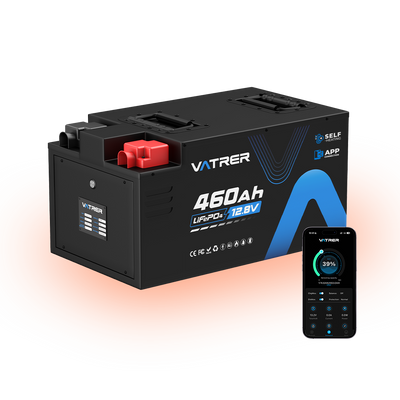
Vatrer battery can fit solar storage projects where you want a practical balance between backup time, stable output, and future expansion. The better starting point is your overnight load, not just the largest battery you can buy.
Is a 20 kWh Battery Enough for a House?
A 20 kWh battery can be enough for a house, but not for every version of “enough.”
Enough for Essential Backup
A 20 kWh battery is a solid size for essential backup. It can keep a refrigerator, lighting, internet, laptops, phone charging, and a few small comfort loads running for many hours.
A home averaging 1 kW can get roughly 16–18 hours from 16–18 kWh of usable energy. A lighter load around 500W can stretch that to 32–36 hours or more.
This is why many backup systems focus on selected circuits rather than the entire panel.

Limited for Heavy Whole-Home Use
A 20 kWh battery may not feel large if you keep using high-power appliances during an outage.
Common High-Power Loads and Runtime Impact
| Appliance or Load | Typical Power Draw | Why It Matters |
|---|---|---|
| Electric space heater | 1,500W | Can use 1.5 kWh in 1 hour |
| Microwave | 1,000–1,500W | High draw, usually short runtime |
| Electric water heater | 3,000–4,500W | Can drain usable capacity quickly |
| Clothes dryer | 3,000–5,000W | Too large for casual backup use |
| Central AC | 3,000–6,000W | Runtime depends heavily on cycling |
| Level 2 EV charger | 7,000–11,000W | Can drain a 20 kWh battery very fast |
One or two short bursts from a microwave are not a major problem. Long-running electric heat, AC, water heating, or EV charging can turn a full-day backup plan into a few hours.
Best Way to Decide
Use your own numbers when possible.
- Check your utility bill: Look for daily energy use in kWh. If your home uses 30 kWh per day, a 20 kWh battery will not run everything for a full day without solar or load control.
- Estimate backup loads: Add only the circuits you actually need during an outage. A smaller backup panel often gives better runtime.
- Separate comfort from survival loads: Refrigerator, Wi-Fi, lights, and medical devices come first. AC, dryers, ovens, and EV charging need a much larger energy plan.
- Think about recharge: Solar panels can extend runtime during the day. Without solar, the battery runtime ends when usable capacity is depleted.
Factors That Affect 20 kWh Battery Runtime
Runtime is not only a math problem. The same battery can perform differently depending on the system and the way you use it.
- Usable battery capacity: A 20 kWh battery may give you about 16–18 kWh of usable AC energy after reserve and conversion losses. Always check the battery’s rated capacity and recommended depth of discharge.
- Inverter efficiency: Many inverters operate around 85%–95% efficiency. A higher-efficiency inverter gives you more useful power from the same battery.
- Battery chemistry and BMS: LiFePO4 battery systems are commonly used for home energy storage because they handle deep cycling well and have stable performance. The BMS protects the battery from over-discharge, overcharge, short circuits, and unsafe temperatures.
- Temperature: Cold weather can reduce available capacity and may limit charging. High heat can speed up battery aging if the system is not managed well.
- Battery age and health: Runtime usually drops as the battery ages because usable capacity slowly decreases with cycles and time. Long-term lifespan depends on depth of discharge, temperature, charging habits, and cycling frequency, so it should not be confused with runtime from one full charge.
- Energy habits: Two homes with the same battery can get very different results. One home may run lights and internet for 30 hours, while another drains the battery in 4 hours with AC and electric heat.
How to Make a 20 kWh Battery Last Longer
You can often gain more runtime by managing loads than by changing the battery.
- Prioritize essential loads: Keep the refrigerator, lights, Wi-Fi, phones, and any medical equipment on backup power. Leave nonessential circuits off during outages.
- Avoid electric heating loads: Space heaters, electric water heaters, and electric ovens can consume 1.5–5 kW each. They shorten runtime faster than most small devices.
- Use high-power appliances in short windows: A microwave or pump may be fine for short periods. Running multiple large loads together is what drains the battery quickly.
- Pair the battery with solar panels: Solar can replace part of the energy used during the day. This can stretch backup time from hours into multiple days when sunlight and load control work together.
- Monitor real-time use: A battery app or energy meter helps you see whether your home is drawing 500W, 2 kW, or 6 kW. That number tells you more than a rough appliance list.
- Charge before storms: If severe weather is forecast, start with the battery near 100% state of charge when your system allows it. A half-charged battery gives you about half the runtime.
If you are planning a backup power system using Vatrer solar batteries, start by listing the loads you wish to keep running. This not only makes it easier to determine the required battery capacity but also helps you avoid paying for unnecessary storage capacity.
Conclusion
A 20 kWh battery does not have one fixed runtime. It depends on your average load.
With critical loads around 300–500W, it may last 1–3 days. With essential home backup around 1–2 kW, expect roughly 10–20 hours. With heavy whole-home loads around 5–6 kW, runtime may fall to 3–5 hours.
The best estimate comes from this formula:
usable kWh ÷ average kW load = estimated runtime
For home backup and solar storage, 20 kWh is a useful capacity. It works best when you manage high-power loads, understand your daily kWh use, and pair the system with solar panels when longer backup time matters.
Share