Common Off-Grid Solar Problems and How to Fix Them
Reading time: 18 minutes

Share
Off-grid solar gives you power without depending on the utility grid, but it also makes your system responsible for everything: energy production, storage, conversion, protection, and backup.
When something goes wrong, the issue is rarely just “bad solar panels” or “a bad battery.” Most off-grid solar problems come from imbalance. Your daily energy use may be higher than expected. Your battery bank may be too small. Your inverter may not handle surge loads. Your panels may be shaded in winter. A loose cable or wrong charge setting can also make a good system act unreliable.
Common Off-Grid Solar Problems at a Glance
Common symptoms, likely causes, and first checks
| Common Problem | Signs You May Notice | Likely Cause | First Thing to Check |
|---|---|---|---|
| Battery drains fast | Power runs out overnight | Battery bank too small, high nighttime loads, inverter idle draw | Daily energy use in kWh |
| Battery will not hold charge | Battery drops quickly after charging | Battery aging, deep discharge, wrong charge profile | Battery SOC, voltage trend, charging history |
| Low solar output | Battery charges slowly | Shade, dirt, snow, poor panel angle | Panel surface and sun exposure |
| Inverter shuts down | Appliances lose power | Overload, surge load, low battery voltage | Inverter fault code |
| Battery not charging | No solar input or very low charging current | Charge controller, fuse, wiring, battery protection | Charge controller display |
| Poor winter performance | Less daily power than summer | Shorter sun hours, snow, lower sun angle, cold battery behavior | Local winter peak sun hours |
| Intermittent power | System turns on and off | Loose connection, voltage drop, corrosion | Terminals, cables, breakers |
The same symptom can come from different causes. A shutdown may look like an inverter issue, but the real cause may be low battery voltage. A battery that never fills may be fine, while the panels are underproducing. Good off-grid solar troubleshooting starts with the whole power chain.


Poor System Sizing Causes Many Off-Grid Solar Problems
Many off-grid systems struggle because they were sized around hopeful numbers. Panel wattage is only one part of the design. You also need to match daily energy use, usable battery capacity, weather reserve, inverter load, and charging speed.
Daily Energy Use Is Underestimated
Start with watt-hours, not panel watts.
A 1,000W solar array does not mean you can run 1,000W of appliances all day. It means the array can produce up to 1,000W under strong sunlight, clean panels, a good angle, and favorable temperature. Real output depends on peak sun hours.
A basic load estimate looks like this:
Appliance watts × hours used per day = watt-hours per day
A 50W internet setup running 24 hours uses 1,200Wh per day. A fridge may average 700–1,500Wh daily, depending on size, insulation, weather, and how often it cycles. These loads do not look large in the moment, but they matter when your system has to run all night.
Loads that are often missed:
- Internet equipment: Routers often draw 5–20W. Satellite internet can draw around 50–75W during use.
- Refrigeration: A fridge or freezer may average 30–100W over time, with a higher startup surge.
- Water pumps: A pump may run for short periods, but it can pull several times its running wattage at startup.
- Inverter idle draw: Many inverters consume 10–50W even when no appliance is running. Over 24 hours, that becomes 240–1,200Wh.
If your load estimate skips always-on devices, the system may look properly sized on paper and still run out of power overnight.
Phantom Loads and Surge Loads Are Missed
Phantom loads are devices that keep drawing power in standby mode. Chargers, routers, TVs, security systems, control boards, and inverter standby consumption all count.
Surge loads are short power spikes. Refrigerators, pumps, power tools, and air conditioners can need 2–5 times their running wattage at startup. If the inverter cannot handle that surge, it may shut down even though the normal running load looks acceptable.
A pure sine wave inverter is usually the better match for refrigerators, pumps, laptops, medical electronics, and sensitive control boards. Modified sine wave units may run some basic loads, but they can cause heat, noise, poor efficiency, or startup trouble with certain appliances.
The System Is Not Designed for Bad Weather
A system that works in July can struggle in December.
Winter brings shorter days, lower sun angle, snow coverage, and longer cloudy stretches. If your battery bank only covers one normal night, two cloudy days can push the system into low-voltage shutdown.
Typical off-grid reserve planning ranges
| Use Pattern | Common Daily Energy Use | Suggested Battery Reserve | Backup Need |
|---|---|---|---|
| Weekend cabin | 1–5 kWh/day | 1–2 days | Optional, based on weather |
| RV or van setup | 1–4 kWh/day | 1–2 days | Helpful in winter or shaded campsites |
| Small off-grid home | 5–15 kWh/day | 2–3 days | Often useful |
| Full-time off-grid home | 10–30+ kWh/day | 2–5 days | Strongly worth planning |
| Remote equipment site | 0.2–3 kWh/day | 3–7 days | Depends on access and uptime needs |
Reserve is not only about comfort. It keeps the battery from being pushed into deep discharge every time the weather turns bad.
Off-Grid Solar Battery Problems
Batteries are the center of an off-grid system. Solar panels make power during the day, but the battery bank decides whether you can run loads at night, during storms, and through winter dips.
Battery Bank Is Too Small
A small battery bank can make the whole system feel unreliable. You may see overnight power loss, inverter low-voltage warnings, or batteries that never seem to stay full.
This does not always mean the battery is defective. It may mean the usable battery capacity is too low for your real loads.
If your home uses 8 kWh per day and your battery bank gives you 5 kWh of usable energy, you do not have one full day of reserve. If a cloudy day cuts solar input by 50–80%, the battery can fall behind quickly.
A healthy off-grid battery plan should account for:
- Nighttime use: Lights, fridge, internet, fans, heating controls, and standby loads continue after sunset.
- Low-sun recovery: The battery needs enough reserve to handle cloudy periods without dropping too low.
- Backup strategy: A generator, alternator charging, or extra solar capacity can reduce how much battery reserve you need.
- Battery lifespan: Batteries last longer when they are not pushed to their limits every day.
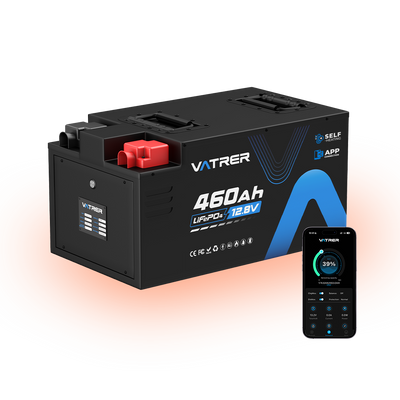
When you compare replacement off grid batteries, look at usable kWh, discharge current, charge limits, temperature protection, and monitoring access. A battery with app-based voltage, current, power, and temperature data can make the next troubleshooting session much less dependent on guesswork.
Rated Capacity Is Not Usable Capacity
The number printed on a battery is not always the amount you should plan to use daily.
A 12V 100Ah lithium battery has about 1,280Wh of rated energy at 12.8V. The usable portion depends on battery chemistry, allowable depth of discharge, temperature, inverter cutoff, and BMS settings.
Rated capacity vs usable capacity by battery type
| Battery Type | Typical Recommended Daily Use | Usable Energy From 12V 100Ah Battery | Notes |
|---|---|---|---|
| Flooded lead-acid | About 50% DoD | Around 600Wh | Needs water checks and ventilation |
| AGM lead-acid | About 50% DoD | Around 600Wh | Lower maintenance, still sensitive to deep discharge |
| Gel lead-acid | About 50% DoD | Around 600Wh | Requires correct charge settings |
| LiFePO4 battery | About 80–100% DoD, based on model specs | Around 1,000–1,280Wh | Higher usable energy and cycle life |
The same “100Ah” label can mean very different usable energy. This is why battery upgrades should be judged by usable kWh and system behavior, not just amp-hours. If you are moving from lead-acid to LiFePO4, a Vatrer off grid Battery with Bluetooth monitoring can help you check whether the battery is actually charging, discharging, or limiting operation because of temperature or protection status.
Battery Will Not Hold a Charge
A battery that drops quickly after charging may have several possible causes.
Common causes include:
- Battery aging: All batteries lose capacity over time. If normal overnight runtime has dropped by 30–50%, aging may be part of the problem.
- Repeated deep discharge: Lead-acid batteries are especially sensitive to being drained too deeply.
- Long-term undercharging: If the solar array is too small or winter production is low, the battery may rarely reach full charge.
- Wrong charge profile: Flooded lead-acid, AGM, gel, and LiFePO4 batteries need different charging settings.
- Cold temperature: Freezing conditions can reduce available performance. Some lithium batteries also block charging below safe temperatures.
- Poor connections: Corrosion or loose terminals can make charging unstable or cause misleading voltage readings.
Do not judge battery health from one voltage reading. Look at state of charge, charge current, load current, voltage trend, and how fast the battery drops under a known load.
Low Solar Power Output From Panels
Low solar output is easy to misread. If the battery is not charging, you may blame the battery first. In many systems, the panels are simply not producing enough energy for the load.
Shade and Poor Panel Placement
Shade has an outsized effect on solar production. A branch, chimney, roof vent, or nearby structure can cut output more than expected, especially when panels are wired in series.
Seasonal shade is harder to catch. A spot that looks perfect in summer may be shaded in winter when the sun sits lower. Trees also grow, and new shade can show up months after installation.
Check sun exposure during different parts of the day. Shade during peak sun hours can cost a large part of your daily harvest.
Dirt, Snow, and Debris Block Sunlight
Solar panels do not need to look spotless every day, but buildup matters. Dust, pollen, leaves, bird droppings, and snow reduce the light reaching the cells.
Snow is a bigger issue for off-grid systems because there is no grid power to cover the gap. A few snowy days can stop charging while loads keep running.
Panel Angle and Seasonal Sun Are Not Considered
Panel angle changes how much energy you collect across the year. A flat panel may work in summer but underperform in winter. A steeper tilt can help winter production and snow shedding, depending on your location.
Peak sun hours also change by season. Some areas may see 5–7 peak sun hours in summer but only 2–4 in winter. If your system was sized on summer numbers, winter battery problems should not be surprising.


Inverter and Charge Controller Problems
The inverter and charge controller sit between your power source, storage, and loads. A wrong setting or mismatch can stop charging, shut off power early, or overload the system under normal use.
Inverter Keeps Shutting Off
An inverter shutdown is a symptom, not a full diagnosis.
Use the timing to narrow the cause:
- Shuts down when a motor starts: Check surge load first. Pumps, fridges, compressors, and air conditioners can briefly pull 2–5 times their running wattage.
- Shuts down late at night: Check battery SOC, overnight loads, and inverter idle draw.
- Shuts down after running for a while: Check ventilation, heat, dust buildup, and load level.
- Shuts down during cloudy weather: Check whether the battery ever reached full charge that day.
Repeated shutdowns should not be treated as normal. The system is either overloaded, undercharged, overheating, or seeing voltage drop.
Inverter Size or Settings Are Wrong
Inverter sizing is not only about the largest appliance. It also has to cover combined loads and startup surges.
Useful inverter checks:
- Continuous wattage: Add the loads that may run at the same time. A 1,000W inverter should not be planned around a constant 950W load.
- Surge rating: Motor loads may need 2–5 times running wattage at startup.
- Battery voltage: A 12V inverter must match a 12V battery bank. The same applies to 24V and 48V systems.
- Low-voltage cutoff: If set too high, it may shut off early. If set too low, it can stress the battery.
- Idle draw: A larger inverter may waste more energy when lightly loaded.
For mixed household loads, a pure sine wave inverter with enough surge rating usually gives fewer problems than a low-cost inverter that only meets the running wattage on paper.
Charge Controller Is Not Charging Correctly
When solar panels are not charging the battery, check the charge controller before replacing hardware.
Look for solar input voltage, battery voltage, and charging current. If the controller shows panel voltage but no charging current, the battery may be full, protected, disconnected, or outside the charge settings. If it shows no solar input, check shade, wiring, fuses, breakers, polarity, and panel connections.
Charge settings matter. Flooded lead-acid, AGM, gel, and LiFePO4 batteries should not share one generic profile. Absorption voltage, float voltage, equalization, and low-temperature behavior need to match the battery type.
An off-grid system needs compatible parts. Mixing equipment without checking voltage and ratings can cause weak performance or damage.
Common mismatch problems:
- Wrong system voltage: 12V, 24V, and 48V parts must match across the battery bank, inverter, and controller.
- Controller input limit: The solar array open-circuit voltage must stay within the controller’s rated input range, including cold-weather voltage rise.
- Battery chemistry mismatch: Old and new batteries, different chemistries, or different capacities should not be mixed casually in one bank.
- Controller type mismatch: PWM controllers can work in small systems, but MPPT controllers often perform better when panel voltage is higher than battery voltage or when conditions vary.
You do not need to become an electrical engineer, but you do need to check that the parts are meant to work together.
Wiring and Connection Problems
Wiring problems can look like battery problems, inverter problems, or charging problems. They also carry safety risks.
Loose or Corroded Connections
Loose terminals and corrosion increase resistance. That can cause heat, voltage drop, charging failure, or intermittent power.
Battery terminals, inverter cables, controller connections, busbars, fuses, and breakers should be inspected on a schedule. Vibration, moisture, and temperature swings can loosen connections over time.
If the system cuts out only when load increases, a weak connection may be heating up or dropping voltage under current.
Undersized Cables Cause Voltage Drop
Thin cables create voltage drop. The longer the cable run and the higher the current, the worse the drop becomes.
This is a common reason an inverter shuts down even when the battery still has charge. The battery voltage may look acceptable at the terminals, but the inverter sees a lower voltage because too much is lost in the cable.
Why system voltage affects cable current
| Load Power | Current at 12V | Current at 24V | Current at 48V |
|---|---|---|---|
| 500W | About 42A | About 21A | About 10A |
| 1,000W | About 83A | About 42A | About 21A |
| 2,000W | About 167A | About 83A | About 42A |
| 3,000W | About 250A | About 125A | About 63A |
Higher system voltage lowers current for the same wattage. Lower current can reduce voltage drop and cable size demands, but only when the entire system is built for that voltage.
Fuses, Breakers, or Grounding Are Wrong
Fuses and breakers protect wiring and equipment. If one keeps tripping or blowing, the system is telling you something.
Do not replace a fuse with a larger one just to stop nuisance trips. That can let the wire carry more current than it can safely handle.
Possible causes include overload, short circuit, damaged insulation, wrong fuse size, incorrect breaker type, or a wiring fault. Grounding and main protection should follow local electrical codes. High-current battery work, grounding problems, and repeated breaker trips belong in professional hands.
Maintenance and Monitoring Problems
Off-grid solar is not a set-and-ignore system. It can run quietly for long periods, but small changes can build up until the system fails during bad weather or high load.
Panels and Connections Are Not Inspected
A monthly visual check can catch many low-output problems early.
Look for new shade, cracked panel glass, loose mounting hardware, dirty surfaces, snow buildup, animal damage, corrosion, and loose connectors. Also look for cables rubbing against sharp edges or hanging where wind can move them.
If the panels are not safely accessible, inspect from the ground and use system data to compare normal output against recent output.
Battery Maintenance Is Ignored
Maintenance depends on battery type.
Flooded lead-acid batteries need water level checks, corrosion control, ventilation, and proper charging. AGM and gel batteries need less physical maintenance, but wrong charge settings can still shorten lifespan. LiFePO4 batteries need less routine care, but BMS status, temperature limits, and charge settings still matter.
A battery monitor helps catch changes early. If your battery used to last 14 hours overnight and now lasts 8 hours under similar loads, the system is warning you before a full outage happens.
System Data Is Not Monitored
Without monitoring, you are guessing.
Useful data includes daily solar input, battery SOC, charging current, load peaks, inverter fault history, and low-voltage events. A weekly check is enough for many small systems. Full-time off-grid systems may need closer checks during winter, storms, or periods of heavy use.
This is also where Bluetooth battery data becomes practical. The Vatter Battery app shows voltage, current, power output, and temperature, you can separate a real battery issue from a load spike, cold-temperature limit, or charging problem much faster.
How to Troubleshoot an Off-Grid Solar System
Good off-grid solar troubleshooting follows the energy path: loads, battery, solar input, inverter/controller, wiring. Do not start by replacing parts.
Start With Recent Load Changes
Ask what changed before the problem started.
Did you add a freezer, water pump, air conditioner, Starlink, heater fan, power tool, or larger inverter? Did someone leave a device running overnight? Did the weather turn cloudy for several days?
A new 100W continuous load uses 2.4 kWh per day. That alone can overwhelm a small battery bank.
Check Battery SOC and Voltage
Look at battery SOC first if you have a monitor or BMS app. Voltage is useful, but it can be misleading with lithium batteries because their voltage stays fairly flat through much of the discharge curve.
Check:
- battery SOC;
- battery voltage under load;
- charging current during daylight;
- lowest voltage recorded overnight;
- whether the BMS has triggered protection.
If SOC drops fast under a moderate load, the battery may be undersized, aging, cold, or not fully charged.
Inspect Solar Input
Check the panels during daylight.
Look for shade, dirt, snow, leaves, and physical damage. Then check the charge controller for solar input voltage and charge current. If input is far below normal on a sunny day, the issue may be panel placement, wiring, fuses, controller limits, or a damaged panel.
A 1,000W array may produce about 4–6 kWh on a strong 4–6 peak-sun-hour day. The same array can produce far less in winter, shade, heavy cloud, or poor panel angle.
Read Inverter and Controller Faults
Fault codes save time. Low voltage, overload, over-temperature, short circuit, and charging faults point in different directions.
Do not keep resetting the same fault without finding the cause. If the inverter repeatedly shuts off during a motor startup, check surge rating. If it shuts off after hours of use, check heat and battery voltage. If the controller shows a battery error, check battery voltage, polarity, settings, and BMS status.
Look for Wiring Problems
Do a visual check only where it is safe.
Look for loose terminals, corrosion, damaged insulation, tripped breakers, blown fuses, discoloration, melted plastic, or cable heat. If wires feel hot, you smell burning, or you see scorch marks, stop using the system and get professional help.
Which Off-Grid Solar Problems Can You Fix Yourself?
Some checks are safe for most owners. Others should not be DIY projects unless you have the right electrical training and tools.
DIY-friendly checks vs professional repair situations
| Usually DIY-Friendly | Call a Professional |
|---|---|
| Cleaning accessible panels | Burning smell or smoke |
| Removing visible leaves or snow from safe access points | Melted wires or scorched terminals |
| Checking shade during the day | Repeated breaker trips |
| Reading battery monitor data | Complex wiring faults |
| Checking basic inverter or controller fault codes | Grounding problems |
| Resetting user-safe settings from the manual | Inverter internal faults |
| Tightening accessible low-risk terminals with power off | Battery swelling or overheating |
The line is safety. Cleaning, monitoring, and basic visual checks are reasonable. High-current wiring, grounding, battery bank modification, fuse size changes, and inverter repair can create shock, fire, or equipment damage risks.
How to Prevent Common Off-Grid Solar Problems
Prevention is mostly about balance. Before you add more panels or replace batteries, confirm that the system is sized and configured around real use.
Practical prevention checklist:
- Calculate real daily watt-hours: Add every load, including appliances that run at night or cycle throughout the day.
- Include phantom and surge loads: Standby power drains batteries slowly. Motor startup loads can trip inverters quickly.
- Size battery storage for low-sun days: Plan for nighttime use plus at least 1–3 days of reserve for many small systems, and more for full-time off-grid homes in harsh weather.
- Compare usable battery capacity: When comparing off grid batteries, look beyond Ah. Usable kWh, discharge rating, cycle life, and low-temperature limits matter more.
- Match the charging profile: Use the correct settings for flooded lead-acid, AGM, gel, or LiFePO4 batteries.
- Check inverter fit: Match continuous watts, surge watts, system voltage, idle draw, and load type. A pure sine wave inverter is usually the safer pick for mixed household loads.
- Inspect wiring and protection: Cable size, fuse ratings, breakers, grounding, and terminals should match the system current and voltage.
- Plan for winter: Use local winter peak sun hours, snow risk, and cloudy-day patterns. Summer output does not tell the full story.
- Monitor performance: Track solar input, SOC, fault history, load peaks, voltage, current, and battery temperature.
If the same battery problem keeps returning after you fix shading, settings, and wiring, the battery bank may not have enough usable capacity for your real load. At that point, comparing LiFePO4 options by usable kWh, BMS protection, low-temperature behavior, and monitoring data gives you a clearer upgrade path than simply buying more amp-hours.
Conclusion
Most off-grid solar problems happen when one part of the system is out of step with the rest. More panels will not fix every issue. A bigger inverter will not help if the battery bank is too small. New batteries will still struggle if shade, winter sun, or wrong charge settings keep them undercharged.
A dependable system starts with real load math. Then it needs enough usable battery capacity, solar input that matches the season, a properly sized pure sine wave inverter, safe wiring, correct controller settings, and routine monitoring.
If you often deal with overnight battery drain, inverter shutdowns, low winter output, or batteries that will not hold a charge, start with daily kWh use and usable battery capacity. Once those numbers are clear, it becomes much easier to decide whether you need better settings, safer wiring, more solar input, or a stronger battery bank.
Share