



What is the Difference Between a Deep Cycle RV Battery and Marine Battery?
Reading time 12 minutes

Share
Imagine pulling into a remote campsite, ready to fire up your RV's coffee maker, only to find the lights dimming. Or picture yourself on a lake, reeling in a big catch, when your trolling motor sputters out. A failing battery can cost hundreds in replacements or leave you stranded miles from help.
RV batteries and marine batteries may look similar on the shelf, but they're built for distinct worlds—one for land-based adventures, the other for the unpredictable sea.
This guide breaks down the differences between an RV battery and a marine battery, from design to real-world performance. We'll provide practical insights to ensure reliable power for your camping or boating trips.

Understanding RV Batteries: Deep Cycle Power for Off-Grid Camping
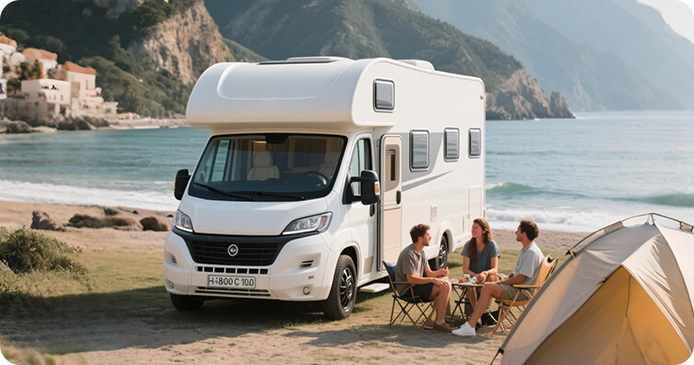
What is an RV battery? It's the energy hub that keeps your recreational vehicle humming when you're off the grid. These batteries power essentials like LED lights, water pumps for showers, or inverters for charging devices. Most RV setups lean on deep cycle batteries, which deliver steady power over hours or days, unlike the quick bursts of starting batteries.
RV batteries are designed for the rigors of road travel—highway vibrations, desert heat, or mountain frost. You'll find lead-acid batteries for budget setups, AGM batteries with an absorbent glass mat for spill-proof reliability, and lithium batteries for a lightweight design that cuts towing weight.
A 12V 100Ah deep cycle battery can run a 12V fridge (5A draw) for about 20 hours before needing a recharge. Many pair seamlessly with 200W solar panels, recharging 100Ah in 5-6 hours of sunlight, a must for boondockers. For weekend campers, an AGM battery offers low maintenance and solid value. For full-time RVers, lithium's longer lifespan—4,000+ cycles versus 500 for lead-acid—means fewer replacements and more time enjoying the open road.
Understanding Marine Batteries: Reliable Power for Harsh Water Conditions
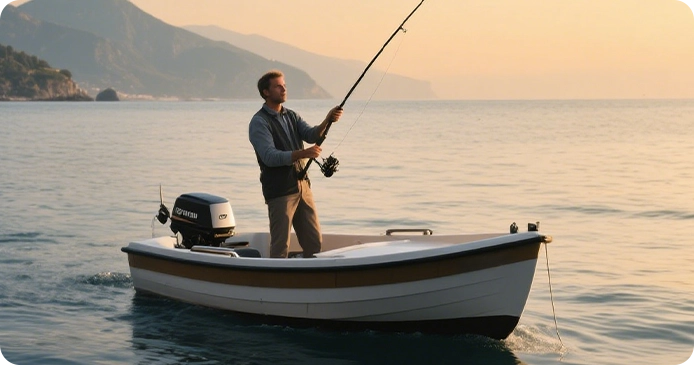
What is a marine battery? It's a rugged power source built for boats, from small skiffs to yachts, ensuring your engine starts and electronics run despite waves and saltwater. Marine batteries come in three types: starting for engine ignition, deep cycle for sustained accessory power, and dual-purpose for both.
These batteries are designed to withstand moisture, corrosion, and vibrations from choppy waters. Lead-acid options are common, but AGM and lithium batteries offer enhanced sealing, often with IP66 or higher ratings to block water ingress, per marine standards. A 100Ah 150A deep cycle marine battery can power a 40A trolling motor for 2-3 hours of continuous use, ideal for fishing or cruising.
tip: Salt air eats away at terminals, so clean them monthly with a baking soda mix to prevent corrosion. This simple step keeps your battery for your boat running smoothly, ensuring you're never left adrift.
Deep Cycle Batteries: The Core of RV and Marine Power Systems
Deep cycle batteries are the backbone of both RV and marine setups, built for long-term energy delivery through repeated deep cycles. Unlike starting batteries, which prioritize short bursts, deep cycles use thicker lead plates in lead-acid models or prismatic cells in lithium to handle discharges down to 80% (or 100% for lithium) with minimal wear.
Battery types include:
- flooded lead-acid batteries, affordable but maintenance-heavy
- AGM batteries, vibration-resistant and spill-proof
- lithium (LiFePO4) batteries, which offer high performance with 95% charge efficiency and 2-3% monthly self-discharge, compared to 5-15% for lead-acid. Lithium's built-in battery management system (BMS) monitors voltage and temperature for safe operation under heavy loads.
Here's how they compare for sustained power needs, including eco and safety factors:
| Aspect | Lead-Acid Batteries | AGM Batteries | Lithium (LiFePO4) Batteries |
|---|---|---|---|
| Cycle Life | 300-500 cycles | 500-1,000 cycles | 4,000-5,000 cycles |
| Weight (100Ah) | ~60 lbs | ~50 lbs | ~25 lbs |
| Charge Time (Full) | 8-12 hours | 6-8 hours | 2-4 hours |
| Environmental Impact | Harder to recycle | Moderate recyclability | Highly recyclable |
| Safety Features | Basic | Moderate | BMS prevents overcharge |
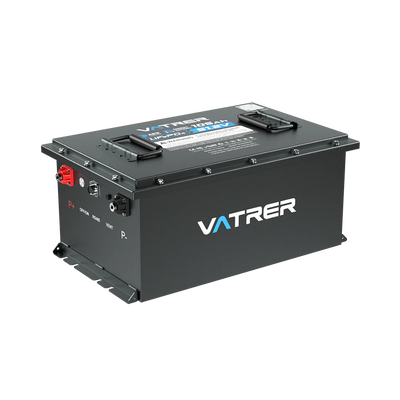
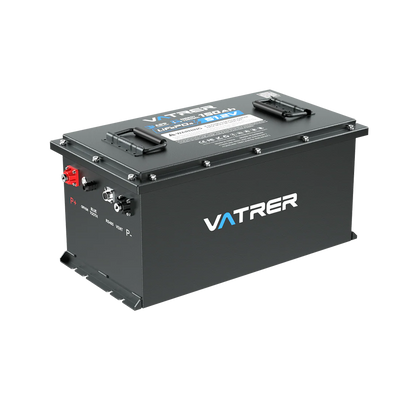
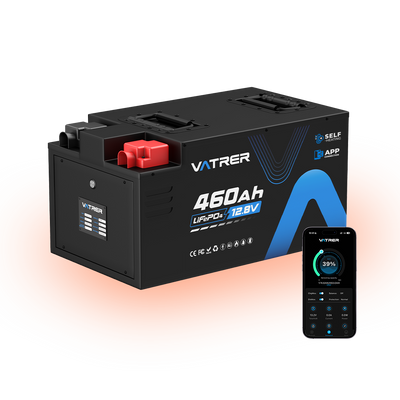
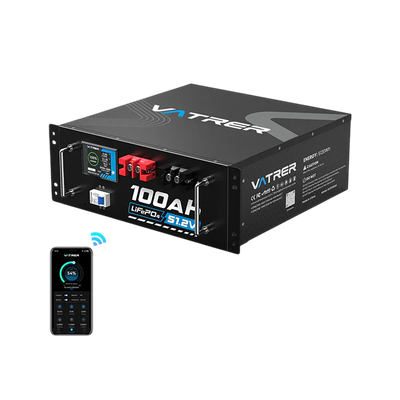
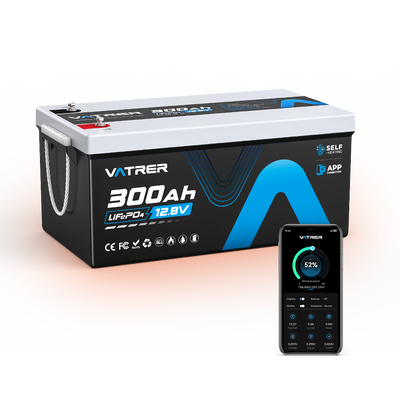
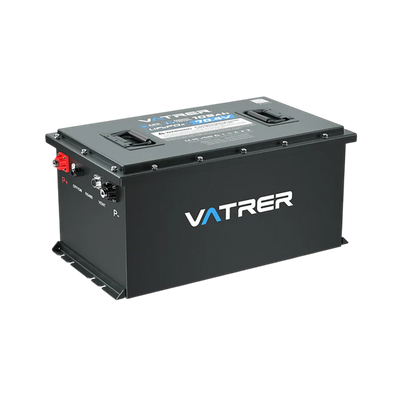
Vatrer marine batteries and RV batteries are equipped with a low-temperature intelligent power-off function, and are also available in self-heating models, ensuring that you can get a stable power supply no matter what climate environment you are in.
What Are the Differences Between RV and Marine Batteries
While both deliver reliable power, their designs, performance profiles, and durability are tailored to distinct environments—land for RVs, water for boats. Below, we break down these differences to help you make an informed decision for your camping or boating needs. These distinctions ensure each battery type delivers reliable power where it’s needed most, setting the stage for understanding their real-world applications.
Battery Construction and Design
Marine batteries are engineered for the harsh marine environment. They feature corrosion-resistant terminals, reinforced casings, and often threaded studs for secure connections to trolling motors. With IP65 or higher waterproof ratings, per marine standards, they withstand saltwater spray and humidity. For example, a marine battery's robust build ensures it holds up against constant wave-induced vibrations.
RV batteries, by contrast, prioritize compact designs to fit tight compartments, such as Group 24 or 31 sizes. They focus on thermal resilience to handle extreme temperatures, from 100°F deserts to 0°F mountain nights, without the need for marine-grade sealing. At lithium batteries in RV setups, weighing just 25 lbs for 100Ah versus 60 lbs for lead-acid batteries, reduce towing strain, while marine versions add durability over weight savings.
Battery Performance and Capacity
Performance hinges on how batteries power your setup. Marine deep-cycle batteries, typically 50-100Ah, are optimized for quick recovery after high draws, like powering fish finders or GPS units during a fishing trip. Starting marine batteries deliver bursts up to 1,000 cold cranking amps for engine ignition, while dual-purpose models balance both roles for smaller vessels.
RV batteries lean toward higher capacities, often 100-200Ah, to support long-term loads like inverters running fridges or air conditioners. They integrate seamlessly with solar panels, recharging 100Ah in 5-6 hours with a 200W setup, ideal for extended boondocking. This capacity edge ensures RV batteries meet the demands of off-grid comfort over days or weeks.
Battery Environmental Resistance
Marine batteries are built to resist saltwater corrosion and engine vibrations, ensuring reliable operation in wet, dynamic conditions. Their sealed designs, like AGM or lithium, prevent leaks even during rough seas. RV batteries, designed for stable, dry environments, focus on withstanding temperature swings.
Battery Lifespan and Maintenance
Durability varies by use and chemistry. Marine AGM batteries last 3-5 years (500-1,000 cycles) in harsh conditions but may need corrosion checks for flooded lead-acid types. RV lithium batteries, with 4,000-5,000 cycles, can reach 8-10 years with zero maintenance, making them ideal for frequent travelers. Such as a Vatrer 100Ah LiFePO4 battery offers maintenance-free operation, saving time and costs compared to lead-acid's water top-ups.
How RV and Marine Batteries Power Your Adventures
Marine batteries shine on the water, starting engines for early launches or running trolling motors at 40 amps for bass fishing. They power GPS, radios, or fridges on multi-day trips, withstanding waves and salt. For example, a liveaboard boater might rely on a 200Ah lithium battery for week-long electronics without recharging.
Note: To avoid damage to the equipment, lithium marine batteries are not recommended for starting engines that require high burst currents due to their current stability design.
RV batteries fuel off-grid comfort and lights for evening card games, water pumps for showers, or microwaves for quick meals. A weekend RVer might power a 12V fan for two nights with a 100Ah AGM, while full-timers pair 12V 200Ah lithium with 200W solar panels for 5-6 hour recharges, extending boondocking.
For crossover users—like RVers towing boats—matching the battery to your primary environment avoids performance gaps, ensuring seamless power across activities.
What RV and Marine Batteries Cost
Prices for these batteries vary based on type, capacity, and the demands of your setup—whether you're running a trolling motor on a fishing boat or keeping an RV fridge humming off-grid. Let's take a look at the costs of RV and marine batteries, from affordable options to high-end choices, so you can plan wisely and avoid surprises.
Marine batteries typically range from $100 to $250 for starting models, which deliver quick bursts to crank engines, and $150 to $500 for deep cycle versions built to withstand saltwater and vibrations. For example, a 100Ah deep cycle marine AGM battery might cost $250, ideal for a day of powering fish finders or lights. RV deep cycle batteries start at around $100 for basic flooded lead-acid models, with AGM options at $200-$350 and lithium (LiFePO4) models reaching $400-$600 for a 100Ah unit. Larger RV setups, like those with multiple appliances, may require two or more batteries, pushing costs higher.
The choice of battery chemistry drives much of the price difference. Lead-acid batteries are the most affordable but require maintenance and have shorter lifespans (300-500 cycles). AGM batteries offer a middle ground, balancing cost and durability with 500-1,000 cycles. Lithium batteries, while pricier upfront, save money over time—$400 for a Vatrer 100Ah LiFePO4 battery can outlast three $150 lead-acid replacements, potentially saving $500 over 10 years due to its 4,000+ cycle lifespan.
Hybrid marine and RV batteries, often lithium-based, provide a cost-effective option for crossover users, blending ruggedness and capacity for around $300-$500. To budget wisely, match your battery to your usage: Weekend trips may only need a $200 AGM, while full-time RVers or liveaboard boaters benefit from lithium's long-term efficiency.
Selecting the Right Battery: Your Guide to Powering RV and Marine Adventures
Choosing the right battery for your RV or boat ensures uninterrupted adventures, but it starts with understanding your specific needs. Whether you're powering a weekend camping trip or a full day on the water, the battery must match your environment, usage, and priorities. Here's a clear, step-by-step guide to picking the best RV or marine battery, tailored to deliver reliable power for your journey.
- Define Your Power Needs: Calculate the energy demands of your setup. For marine use, tally the amps for equipment like trolling motors (like a 40A motor needs ~100Ah for 2-3 hours of fishing). For RVs, list appliances—a 12V fridge (5A) and LED lights (2A) for 20 hours require ~140Ah. Weekend RVers might find a 100Ah AGM sufficient, while commercial fishermen or full-time RVers should opt for 200Ah lithium or higher for extended runtime. Find your ideal solution with the Vatrer online battery calculator.
- Match the Environment: Marine batteries need corrosion resistance and vibration-proofing, like IP65-rated casings for saltwater exposure. RV batteries prioritize thermal resilience for desert heat or freezing nights—look for lithium models with self-heating for sub-zero conditions. For example, a liveaboard boater needs a rugged 100Ah lithium to withstand waves, while a boondocker benefits from a compact Group 24 lithium to fit tight RV bays.
- Choose the Battery Type: Consider your maintenance tolerance and budget. Flooded lead-acid batteries ($100-200) suit budget-conscious users but require venting and water checks. AGM batteries ($200-300) offer spill-proof reliability and moderate vibration resistance, ideal for casual RV campers or small boats. Lithium (LiFePO4) batteries ($400-600 for 100Ah) provide 4,000+ cycles, fast charging, and no upkeep, perfect for frequent travelers. Look for UL or CE certifications, like those on Vatrer Power batteries, for safety assurance.
- Factor in Compatibility and Installation: Ensure the battery fits your 12V system and works with inverters or solar panels (common in RVs). For marine, verify secure terminal connections for trolling motors. Lithium's lightweight design (25 lbs vs. 60 lbs for lead-acid) simplifies RV towing and boat handling. Ventilate lead-acid setups to avoid fumes, and test inverter compatibility early to prevent power gaps.
- Plan for Your Usage Style: Tailor to your routine. Recreational boaters can use dual-purpose marine batteries for starting and electronics, while offshore cruisers need high-capacity deep cycles. Weekend RVers might stick with AGM for simplicity, but full-timers benefit from lithium's solar synergy and longevity. For crossover users (like RVers with boats), a hybrid marine/RV lithium battery, like Vatrer's 100Ah model, balances versatility and durability.
Conclusion: Choosing the Right RV or Marine Battery for Your Journey
RV and marine batteries differ in design, performance, and durability to meet their unique demands—land versus sea. Lithium batteries bridge the gap with efficiency, safety, and longevity, making them a top choice for reliable power. Assess your environment, power needs, and budget to find the right fit.
For tailored performance, Vatrer Power's lithium batteries deliver for both RV camping and boating, with easy monitoring and rugged builds. Use a battery sizing calculator to match capacity to your loads. Gear up and hit the road or water with confidence.
FAQs
How Do i Know If My RV Or Boat’s Electrical System Is Compatible With a New Battery?
Compatibility depends on your system's voltage, wiring, and equipment. Most RVs and boats use 12V systems, making 12V batteries—whether lead-acid, AGM, or lithium (LiFePO4)—a direct fit. However, check your inverter or charger's specs to ensure they support your battery type, as lithium requires specific chargers for optimal performance (like 14.4V charging voltage for LiFePO4).
For marine systems, verify that terminal types (threaded studs for trolling motors) match your battery's connectors. If upgrading to lithium, like Vatrer Power's 100Ah model, ensure your Battery Management System (BMS) aligns with your load demands (like max 100A discharge). Test compatibility by consulting your system's manual or a professional installer, and use a multimeter to confirm voltage alignment before connecting. This prevents power mismatches and ensures seamless operation.
How Can i Extend The Lifespan Of My RV Or Marine Battery?
Extending battery lifespan involves proper charging, storage, and maintenance tailored to the battery type.
- For lead-acid or AGM batteries, avoid deep discharges below 50% to prevent plate damage—use a battery monitor to track charge levels. Charge after each use with a compatible charger (10-20A for 100Ah batteries) to avoid sulfation.
- For lithium (LiFePO4) batteries, like Vatrer's, leverage the BMS to prevent overcharging or overheating, and maintain 20-80% charge during use for optimal cycle life. Store batteries in a cool, dry place (50-77°F) to minimize self-discharge, especially for lead-acid (5-15% monthly loss).
- For marine batteries, rinse terminals with fresh water monthly to remove salt residue.
- Regularly inspect connections for corrosion or looseness, and secure batteries to reduce vibration damage in boats or RVs.
Can i Mix Different Battery Types In My RV Or Boat Setup?
Mixing battery types like lithium and AGM in the same system is generally not recommended due to differing charge and discharge profiles. Lithium batteries charge at higher voltages (14.4-14.6V) and discharge more consistently, while AGM batteries use lower voltages (14.2-14.4V) and degrade faster if overcharged.
Combining them can lead to uneven charging, reducing lifespan or damaging the weaker battery. If you must mix, use a battery isolator to separate charging circuits, but this adds complexity and cost ($50-100).
For best results, replace all batteries with the same type—preferably lithium like Vatrer's 100Ah LiFePO4 for uniform performance. Ensure total capacity and voltage match your system's needs.
What Size Battery Bank Do i Need For My RV Or Boat If i Want To Add Solar Power?
Sizing a battery bank for solar depends on your daily energy use and solar input. Calculate your load:
- For RVs, a fridge (5A at 12V = 60Wh/day), lights (2A for 5 hours = 120Wh), and devices (50Wh) total ~230Wh/day.
- For boats, a trolling motor (40A for 2 hours = 960Wh) and electronics (100Wh) might total 1,060Wh/day.
- Divide by battery voltage (12V) to get amp-hours: ~20Ah/day for the RV, ~90Ah/day for the boat.
Add a 50% buffer for efficiency losses and cloudy days, so aim for 30Ah (RV) or 135Ah (boat) daily capacity. A 100Ah lithium battery suits most RVs; boats may need 150-200Ah. Pair with solar panels (like 200W for RV, 400W for boat) to recharge daily needs in 5-6 hours of sunlight.