How to Set Up an Off-Grid Solar System: Step-by-Step
Reading time: 8 minutes

Share
Setting up an off-grid solar system is not just about installing solar panels. It’s about building a complete power system that can reliably generate, store, and deliver electricity without relying on the utility grid. Whether you’re planning an off-grid home, a remote cabin, an RV setup, or a backup power solution, even if you don't have electrical expertise, we will guide you step-by-step on how to build an off-grid solar system.

How an Off-Grid Solar System Works Before You Set It Up
Before installing anything, it's important to understand how an off-grid solar system works in real life.
An off-grid solar system operates independently from the utility grid. During the day, solar panels generate electricity from sunlight. That electricity first goes through a charge controller, which regulates the power going into the battery bank. The battery bank stores energy so it can be used at night or during cloudy weather. When you need to power household appliances, the inverter converts stored DC power into AC power that standard devices can use.
Unlike grid-tied systems, off-grid solar systems must rely on batteries at all times. There is no external grid to fall back on. This is why system sizing and battery selection play such a critical role in overall reliability.
Core Components Needed to Set Up an Off-Grid Solar System
Every off-grid solar setup is built around a few essential components. Missing or undersizing any of these can lead to system instability or frequent power shortages.
Essential Off-Grid Solar System Components
- Solar Panels: Capture sunlight and convert it into DC electricity.
- Charge Controller: Regulates voltage and current going into the batteries to prevent overcharging.
- Battery Bank: Stores energy for nighttime or low-sun conditions.
- Inverter: Converts DC battery power into usable AC power.
- Wiring & Protection Devices: Includes cables, fuses, breakers, and disconnects for safety.
These components must work together as a matched system. Choosing each part independently without considering compatibility is one of the most common beginner mistakes.
How to Set Up an Off-Grid Solar System: Step-by-Step
Each decision, starting from how much electricity you use, to how you size the battery bank and connect the system, directly affects reliability and long-term performance. The steps below focus on practical actions and common considerations, helping you move from planning to a working off-grid solar setup with fewer surprises along the way.
Step 1: Assess Your Daily Electricity Usage
The first and most important step is understanding how much electricity you actually use each day. An off-grid solar system must be designed around real energy needs, not guesses.
Start by listing all the appliances and devices you plan to run. For each item, note its power rating (in watts) and how many hours per day it is typically used. Multiply watts by hours to get watt-hours (Wh), then add everything together to calculate your total daily energy consumption.
For example, a 100W light used for 5 hours consumes 500Wh per day. A refrigerator running at an average of 150W for 10 hours uses about 1,500Wh per day.
This step matters because:
- It determines how large your battery bank needs to be
- It affects how many solar panels you'll need
- It helps prevent undersized systems that run out of power too quickly
Tip: Always add a safety margin. Daily energy use often increases over time as more devices are added. How much battery capacity do you need? You can use an online calculator tool to help you arrive at your results.
Step 2: Choose the Right Solar Panel Capacity
Once daily energy usage is clear, the next step is deciding how much solar power your system needs to generate.
Solar panels must produce enough energy to:
- Cover daily electricity use
- Recharge the batteries fully
- Compensate for cloudy days or seasonal changes
Panel sizing depends heavily on local sunlight conditions. Areas with fewer peak sun hours require more panel capacity to generate the same amount of energy.
For example, if your system uses 5 kWh per day and your location averages 4 peak sun hours, you'll need more panel capacity than someone in a location with 6 peak sun hours.
Common mistakes at this stage include:
- Choosing panels based only on price
- Ignoring seasonal sunlight variation
- Undersizing the array, which leads to chronic battery undercharging
A slightly larger solar array often improves long-term system reliability and battery health.
Step 3: Size the Battery Bank Correctly
Battery storage is the core of any off-grid solar system. Without enough stored energy, even a large solar array won’t keep your system running overnight or during bad weather.
Battery sizing usually starts with two questions:
- How much energy do you use per day?
- How many days of backup power do you want?
Most off-grid systems are designed for one to three days of autonomy. That means the battery bank should store enough energy to power your loads even if solar production is low.
Lithium batteries, especially LiFePO4 solar batteries, allow much deeper usable capacity compared to lead-acid batteries. This means you can access more of the stored energy without damaging the battery.
When sizing a battery bank, consider:
- Usable capacity, not just rated capacity
- Battery lifespan and cycle limits
- Whether future expansion is likely
Tip: Undersized battery banks are one of the most common reasons off-grid systems fail to meet expectations.
Step 4: Select a Compatible Inverter and Charge Controller
After the battery bank is defined, the inverter and charge controller must be matched to the system.
The inverter should be sized based on:
- Total continuous power demand
- Peak surge power from appliances like refrigerators, pumps, or power tools
Many appliances draw a much higher surge current when starting than when running. If the inverter can’t handle this surge, the system may shut down unexpectedly.
The charge controller must be compatible with:
- Solar panel voltage
- Battery voltage
- Battery chemistry
For lithium battery systems, using a lithium-compatible charge controller is critical. It ensures proper charging behavior and protects battery health over time.
MPPT charge controllers are generally preferred for off-grid solar systems because they improve charging efficiency, especially in variable weather conditions.
Step 5: Connect the System in the Correct Order
Correct wiring order is essential for both safety and performance.
A typical off-grid solar system connection sequence is:
- Connect the charge controller to the battery bank
- Connect the inverter to the battery bank
- Connect solar panels to the charge controller
This order helps protect sensitive components during installation.
Additional safety considerations include:
- Using properly sized cables to handle current load
- Installing fuses or breakers close to the battery
- Adding disconnect switches for maintenance
Incorrect wiring can lead to power loss, overheating, or equipment damage.
Step 6: Test, Monitor, and Fine-Tune the System
Once the system is connected, testing should begin with light loads. Turn on basic devices first and monitor system behavior before adding heavier appliances.
Key things to watch during testing:
- Battery voltage stability
- Inverter performance under load
- Charging behavior during daylight hours
Ongoing monitoring helps identify issues early and improves long-term reliability. Many modern lithium battery systems, including Vatrer battery, offer built-in monitoring features that make it easier to track battery status and system performance in real time.
Regular monitoring allows you to:
- Adjust energy usage habits
- Catch wiring or configuration issues early
- Extend battery and system lifespan
Battery Bank Setup in an Off-Grid Solar System
The battery bank is the heart of an off-grid solar system. It determines how long power is available and how stable the system remains during low-sun conditions.
Lead-Acid vs Lithium Batteries for Off-Grid Solar
| Feature | Lead-Acid Batteries | Lithium (LiFePO4) Batteries |
|---|---|---|
| Usable Capacity | ~50% | 80–90% |
| Maintenance | Regular | Maintenance-free |
| Weight | Heavy | Much lighter |
| Cycle Life | 300–500 cycles | 4,000–6,000+ cycles |
Due to their higher usable capacity and longer lifespan, LiFePO4 batteries are increasingly preferred for off-grid solar systems, particularly where reliability and long-term value are crucial.
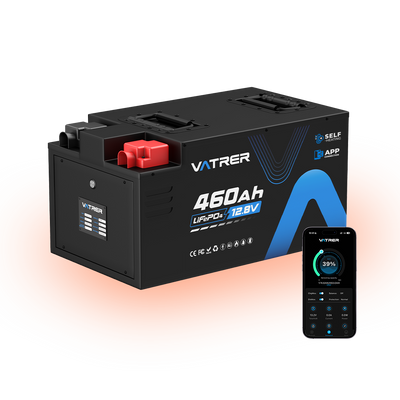
This is where lithium battery solutions like Vatrer battery systems fit naturally into off-grid setups. With built-in battery management systems (BMS), lithium batteries help protect against overcharging, over-discharging, and temperature-related issues, simplifying system design and improving safety.
Inverter and Charge Controller Selection for Off-Grid Solar Setup
Choosing the right inverter and controller ensures the system operates smoothly.
Key considerations include:
- Inverter rated power vs peak appliance demand
- MPPT charge controllers for higher efficiency
- Battery voltage compatibility (12V, 24V, or 48V systems)
Higher-voltage systems generally improve efficiency and reduce wiring losses, especially for larger off-grid installations.
Safety Tips and Common Mistakes When Setting Up an Off-Grid Solar System
Many system issues come from avoidable mistakes:
- Underestimating battery capacity
- Ignoring surge power requirements
- Using incorrect cable sizes
- Mixing incompatible components
Tips: Always design the system around the battery bank first, then match panels, controller, and inverter accordingly. This approach improves system stability and battery lifespan.
Off-Grid Solar System Cost and Realistic Expectations
Off-grid solar systems typically cost more upfront than grid-tied systems due to battery storage requirements. However, they offer energy independence and long-term stability in areas where grid access is unreliable or unavailable.
Costs depend on:
- System size
- Battery type
- Installation complexity
While lithium batteries may have a higher initial price, their longer lifespan and lower maintenance often result in a lower total cost over time.
Is Setting Up an Off-Grid Solar System Right for You?
An off-grid solar system makes sense if:
- Grid access is unavailable or unreliable
- Energy independence is a priority
- Long-term ownership is expected
It may not be ideal if:
- Grid power is stable and inexpensive
- Energy usage is extremely high without backup generation
Evaluating your goals and usage patterns helps determine whether off-grid solar is the right choice.
Conclusion
Learning how to set up an off-grid solar system is about more than installing hardware. It requires thoughtful planning, realistic expectations, and careful selection of components.
A well-designed system starts with an accurate energy assessment, focuses on a properly sized battery bank, and uses compatible components throughout. With modern lithium battery technology, off-grid solar systems are becoming more efficient, reliable, and easier to manage than ever before.
If you're planning a long-term off-grid setup, choosing a LiFePO4 solar battery solution such as Vatrer battery can help improve system stability, reduce maintenance, and support consistent power delivery over many years.