Does Installing Headlights and Accessories on Golf Cart Affect Battery Range?
Reading time: 8 minutes

Share
You finally get your golf cart set up the way you want it. Brighter LED headlights for night rides, a Bluetooth sound system for cruising around the neighborhood, maybe a lift kit and bigger tires to give it that aggressive stance. It feels more capable, more personal.
A few weeks later, you start noticing something. The battery range doesn't feel quite the same. You're plugging in earlier. The cart feels a little weaker on hills at night. And the question starts forming in the back of your mind: Did all those upgrades reduce my golf cart battery range?


Do Headlights and Accessories Reduce Battery Range?
Yes, any electrical accessory you add can reduce battery range, but the size of that impact varies a lot. Some accessories silently consume electricity, while others compete with the motor for available energy. Understanding which is which makes a big difference in how you plan your setup.
Accessory Power Draw Matters More Than Quantity
It's not how many accessories you install, it's how much power they actually use. A GPS screen and USB charger may add almost no noticeable drain, while a high-powered sound system or halogen headlights can pull hundreds of watts continuously. Two carts with the same number of accessories can experience very different battery range loss depending on wattage.
Usage Time Is the Silent Battery Killer
Accessories only drain the battery while they're running, but long usage adds up quickly. A sound system playing for two hours during a night cruise consumes far more energy than briefly switching on headlights at dusk. Many owners underestimate how time-on-load affects usable amp hours.
Battery Capacity Sets the Tolerance Limit
Larger batteries can absorb accessory loads more easily. A 48V 105Ah battery has more buffer than a 48V 80Ah setup, especially during extended night use. Smaller batteries reach their discharge limits faster when accessories are added.
Battery Chemistry Changes the Outcome
Lead-acid batteries experience voltage drop early in discharge, which makes accessory load feel more impactful. Lithium batteries, especially LiFePO4 systems with stable voltage output, handle added loads more gracefully and maintain performance longer into the discharge cycle.
Some Accessories Drain Power Indirectly
Not all upgrades consume electricity directly. A lift kit and larger tires don't draw current, but they increase rolling resistance and torque demand. That extra motor load translates into higher current draw, which reduces overall battery range, especially on hills.
Continuous Load Affects Range More Than Peak Load
Accessories that run continuously, like underglow lights or audio amplifiers, have a greater cumulative effect than short, high-load bursts. Battery range loss is usually gradual and sneaky, not sudden, which is why many owners don’t notice it right away.
How Golf Cart Accessories Use Battery Power
Most electric golf carts operate on 36V or 48V battery systems, while accessories typically require 12V power. That voltage mismatch is handled either by a DC-DC converter or a separate 12V battery. In both cases, the energy ultimately comes from the main battery pack.
Once accessories are turned on, they create a constant electrical load. The cart's battery now has to supply power not only to the motor but also to lights, sound systems, displays, and chargers. Even small loads add up when they run for extended periods.
Common Power Consumption of Golf Cart Accessories
| Accessory Type | Typical Wattage (W) | Relative Impact on Battery Range |
|---|---|---|
| LED headlights | 10–40W | Low |
| Halogen headlights | 70–110W (pair) | Moderate |
| Sound system (basic) | 100–200W | Moderate to High |
| Amplified system | 300–400W | High |
| GPS display | 5–15W | Very Low |
| USB charger | 5–20W | Very Low |
| Underglow kit | 20–60W | Low to Moderate |
| Cooling fans | 20–80W | Moderate |
To convert power draw into battery impact, the formula applies:
Watts ÷ Voltage = Amps
Once you know the current draw, you can estimate how quickly accessories consume amp hours.
How to Calculate Battery Range Loss
Calculating battery drain from accessories sounds technical, but in practice it's very straightforward. You just need to know total wattage, system voltage, and how long the accessories stay on.
Let's look at a realistic setup:
- Battery: 48V 100Ah
- LED headlights: 40W
- Sound system: 200W
- Total load: 240W
240W ÷ 48V ≈ 5 amps
That means your battery supplies an extra 5Ah every hour those accessories run. Two hours of night driving with music equals about 10Ah used before propulsion energy is even considered.
Here's the key point many owners miss, rated capacity isn't the same as usable capacity.
Deffrent Type of Battery Usable Capacity Comparison
| Battery Type | Rated Capacity | Real Usable Capacity | Typical Discharge Limit |
|---|---|---|---|
| Lead-acid | 100Ah | ~50–60Ah | 50–60% recommended |
| AGM | 100Ah | ~60–70Ah | 60–70% recommended |
| LiFePO4 Lithium | 100Ah | 80–100Ah | 80–100% usable |
With lead-acid batteries, accessory use eats into a much smaller usable energy pool. Lithium batteries are more efficient and use a battery management system (BMS) to manage discharge, thus having more usable energy.
Real Golf Carts Driving Impact on Battery Range
In real-world driving, battery range loss rarely shows up as a single dramatic drop. Instead, it feels like shorter trips, earlier charging, or weaker performance near the end of the ride.
Terrain and mechanical upgrades amplify this effect. A lifted cart with oversized tires draws more current even before accessories turn on. Add headlights and a sound system, and total energy demand climbs quickly.
Owners who combine night driving, entertainment systems, and lift kits often see total range reductions of 20-35%, especially on hilly routes. This isn't a flaw, it's simply physics catching up with added load.
Performance of Lithium and Lead-Acid Under Extra Load
Under light use, both lead-acid and lithium batteries can power a golf cart reliably. But once you introduce continuous accessory loads, especially 150W to 400W audio systems, the way each chemistry handles stress starts to separate clearly.
Lead-acid batteries tend to lose voltage steadily as they discharge. When you add extra electrical load, that voltage sag happens faster. You may notice dimming lights, weaker throttle response, or reduced hill-climbing power near mid-discharge.
Lithium batteries, particularly LiFePO4 battery systems with integrated BMS protection, maintain a much flatter voltage curve. That means even when headlights and accessories are running, motor performance remains consistent deeper into the discharge cycle.
Lithium vs Lead-Acid Under Accessory Load
| Performance Factor | Lead-Acid Battery | LiFePO4 Lithium Battery |
|---|---|---|
| Voltage Stability Under Load | Drops steadily as discharge progresses | Remains stable through most of discharge cycle |
| Usable Capacity (100Ah rated) | 50–60Ah | 80–100Ah usable |
| Performance with 200–300W Accessories | Noticeable voltage sag, reduced torque | Minimal voltage drop, consistent output |
| Recovery After High Load | Slower recovery, possible sulfation risk | Fast recovery, no sulfation |
| Heat Management | Heat increases internal resistance | BMS monitors and regulates temperature |
| Cycle Life Under Frequent Load | 300–800 cycles | 3,000–4,000+ cycles |
| Tolerance to Deep Discharge | Shortens lifespan quickly | Designed for deeper discharge use |
Under moderate accessory use, say LED headlights and a GPS unit, you may not feel much difference day to day. But under heavier loads like amplified audio systems or extended night driving, lithium's higher efficiency and stable discharge curve become more noticeable. The motor keeps pulling strong, lights stay bright, and range feels more predictable.
Therefore, different battery chemistry characteristics not only affect driving range but also the stability of the driving experience from start to finish.
How to Reduce Golf Cart Battery Range Loss
Switching to LED lighting is the simplest improvement you can make. LEDs typically use 40-60% less power than halogen lights while providing better visibility and longer service life. Over extended night driving, that reduction alone can preserve several amp hours of usable energy, especially on a 36V or 48V system where every continuous load adds up over time.
Use a high-efficiency DC-DC converter
Lower-quality converters waste energy as heat, which quietly drains your battery faster than most owners realize. A properly sized, high-efficiency DC-DC converter reduces conversion losses and stabilizes voltage to your 12V accessories. This not only protects sensitive electronics like GPS units and USB ports, but also reduces unnecessary load on the main battery.
Add a Dedicated 12V Battery for Audio Systems
High-powered sound systems can draw 150W to 400W continuously, especially when amplifiers are involved. Running that load through your main traction battery shortens usable driving range. Installing a separate 12V battery isolates the entertainment load, allowing your primary golf cart battery to focus on propulsion.
Monitor State of Charge (SOC) In Real Time
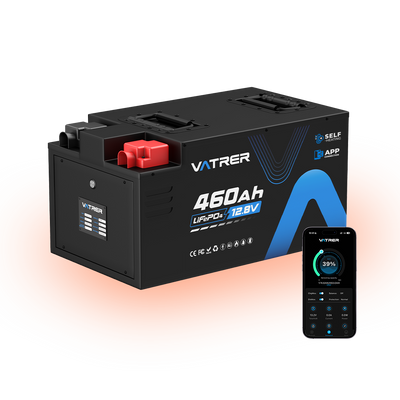
Many lithium golf cart battery systems, such as Vatrer Power, offer Bluetooth monitoring that displays voltage, current draw, and temperature. Watching real-time amp consumption while accessories are running helps you understand how much range you're using. This awareness makes it easier to avoid deep discharge during longer rides or night events.
Increase Amp-Hour Capacity When Usage Demands It
If night driving, music playback, and extended cruising are part of your regular routine, your battery may simply be undersized. Moving from 100Ah to 105Ah or even higher depending on your setup, provides additional energy buffer without changing your accessories. Higher usable capacity gives your system more breathing room and reduces stress during combined motor and accessory loads.
Safety Tips When Adding Cart Accessories
Accessory upgrades should always be installed with safety in mind. Proper fusing, correct wiring, and appropriate cable sizing protect both the battery and accessories. Overcurrent draw and heat buildup are common causes of premature battery failure.
Lithium batteries with integrated BMS provide an additional safety layer by automatically managing overcurrent, overtemperature, and deep discharge events. Lead-acid systems rely entirely on user discipline and wiring quality, making correct installation even more important.
Final Conclusion
When you put headlights and other things on your golf cart it can change how far it can go on a charge. The big question is how power these things use, how long you use them and if your battery can handle it. Some things like lights, phone chargers and GPS do not use a lot of power so they do not hurt your golf carts range very much.. Things, like big stereos and other upgrades that use a lot of power can make your golf cart use a lot more energy.
The type of battery you have is really important when it comes to how much of a difference it makes. If you plan things out carefully pick accessories that do not use much power keep an eye on how much you are using and get a battery that is the right size, for your needs you can enjoy every new thing you get without always worrying about your battery running out of power and needing to get home to charge it.
Because the goal of upgrading your golf cart isn't just to add features, it's to use them freely, without range anxiety getting in the way.
Share