How Much Solar Battery Storage Do i Need for My Off-Grid System?
Reading time: 9 minutes

Share
Living off the grid means total freedom, but it also means you're fully responsible for your own power supply. Finding that answer isn't just about numbers. It's about understanding your lifestyle, your power habits, and how to prepare for cloudy days when the sun isn't shining.
This guide walks you through every step, from understanding how solar batteries work to calculating the exact storage your system needs, choosing the right battery type, and even taking advantage of tax credits that make your investment more affordable.
Key Takeaways
- Solar battery storage systems typically collect and store excess electricity generated by solar panels during the day for use at night or when sunlight is insufficient.
- The amount of battery storage you need depends on your daily energy use, backup days, battery efficiency, and temperature conditions.
- Calculating the required capacity involves knowing your total daily watt-hour consumption and applying a simple sizing formula. You can also use the calculator tool.
- Lithium batteries, especially LiFePO4 battery types, offer longer life, deeper discharge, and higher efficiency compared with traditional lead-acid options.
- Federal and state tax incentives can significantly reduce the overall cost of installing solar battery systems.
- Proper installation, monitoring, and maintenance extend battery life and ensure reliable off-grid energy performance.

Understanding the Importance of Solar Battery Storage in Off-Grid Systems
When you're connected to the grid, the electric company stores your excess energy for you. But once you're off-grid, your battery becomes your personal energy bank. It stores the solar energy your panels produce during the day so you can use it at night or on cloudy days.
Without sufficient storage, your lights, fridge, or water pump could shut off when the sun goes down. That's why the right amount of solar battery storage is what truly makes off-grid living reliable and comfortable.
Solar batteries also smooth out your energy usage, they keep power steady when sunlight fluctuates, ensuring consistent voltage for all your appliances.
Benefits of Installing Solar Battery Storage
Choosing to install solar batteries isn't just about having power at night, it's about independence and peace of mind. When you add solar batteries to your off-grid system, you'll notice the following changes:
- Energy Independence: You're no longer at the mercy of power outages or rising energy prices. With a well-sized off-grid system, you can live comfortably in remote areas without any connection to public utilities.
- Cost Savings: Once installed, a solar-plus-battery system drastically cuts your long-term electricity costs. Instead of relying on generators and fuel, you use clean, stored solar energy.
- Sustainability: Solar energy reduces carbon emissions and promotes a greener lifestyle. The more you store and use your own solar power, the smaller your environmental footprint.
- Reliability During Emergencies: Storms, grid failures, or blackouts won't interrupt your power supply. Your batteries ensure your lights, fridge, and communications equipment stay on when you need them most.
Therefore, installing solar battery storage isn't just an upgrade, it's the foundation of a reliable off-grid lifestyle. Beyond saving money and reducing your carbon footprint, it offers a sense of security and self-sufficiency that traditional grid power can't match. By combining solar panels with a properly sized battery bank, homeowners can enjoy consistent power, predictable energy costs, and true independence from unpredictable utility grids.
Types of Batteries for Off-Grid Solar Systems
Different batteries have different personalities. The one you choose will determine not just how much energy you can store, but also how long your system lasts and how much maintenance it needs.
Typical battery type comparison table
| Battery Type | Lifespan | Depth of Discharge (DoD) | Maintenance | Cost | Ideal For |
|---|---|---|---|---|---|
| Flooded Lead-Acid | 3–5 years | ~50% | High | Low | Budget-friendly setups |
| AGM/Gel Lead-Acid | 4–6 years | ~60% | Medium | Moderate | Small or temporary systems |
| LiFePO4 (Lithium Iron Phosphate) | 8–15 years | 80–100% | Low | Higher | Long-term off-grid homes |
Among these, LiFePO4 lithium batteries have become the gold standard for off-grid systems. They're lighter, safer, and far more efficient than lead-acid options.
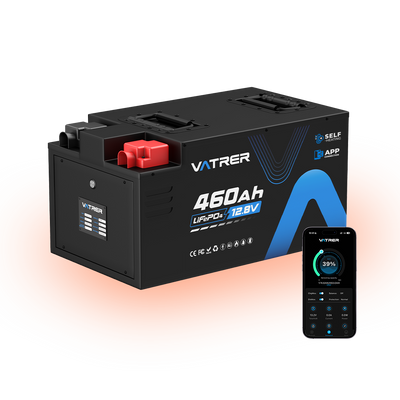
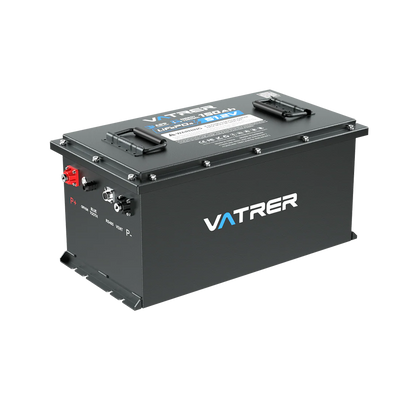
For example, Vatrer Battery's 51.2V 100Ah and 200Ah lithium batteries deliver over 6000 life cycles, provide stable power even in extreme weather, and include built-in BMS protection and Bluetooth remote monitoring for peace of mind. They're an ideal match for off-grid cabins, RVs, and home energy systems.
Key Factors Affecting Solar Battery Storage Capacity
Several real-world variables affect how much battery storage you actually need:
- Daily Energy Consumption: How much energy you use every day is the foundation of your calculation. Appliances like refrigerators, lights, and water heaters all add up.
- Days of Autonomy: This refers to how many days you want your system to run without sunshine. Most off-grid setups are designed for 1-3 days of autonomy, depending on local weather patterns.
- Depth of Discharge (DoD): The deeper your battery can discharge without harm, the more usable energy you get. Lithium batteries can safely use up to 90-100% of their capacity, while lead-acid batteries should only be discharged to about 50%.
- System Efficiency: Energy is lost during charging, discharging, and conversion. It's best to assume around 85-90% efficiency.
- Temperature: Cold weather can temporarily reduce a battery's capacity. That's why solar lithium batteries with built-in self-heating systems are perfect for year-round performance.
In short, while installing solar batteries offers independence, savings, and sustainability, the true performance of your off-grid system depends on how well your battery capacity matches your energy needs. These factors will help you choose the right battery capacity to ensure that your lighting and appliances can operate normally and your energy supply remains stable, no matter the weather.
How to Calculate How Much Solar Battery Storage You Need
Here's a simple way to calculate the amount of storage your system requires, and the following steps can help you come up with an answer for your capacity usage.
Formula: Battery Capacity (Ah) = (Daily Load (Wh) × Days of Autonomy) ÷ (System Voltage × DoD × Efficiency)
Let's break it down step-by-step:
- Find Your Daily Load
Add up all the wattage used by your devices and multiply by the hours they run per day.
Example:
- Fridge: 150W × 8h = 1200Wh
- Lights: 60W × 5h = 300Wh
- Pump: 200W × 2h = 400Wh
- Laptop: 100W × 4h = 400Wh
- Total: 2300Wh/day (≈2.3kWh)
- Set Your Autonomy Days
If you want backup for 2 days: 2.3kWh × 2 = 4.6kWh.
- Adjust for Efficiency and DoD
For a 48V lithium battery (90% efficiency, 90% DoD): 4.6kWh ÷ (48V × 0.9 × 0.9) = ≈118Ah total needed.
You'd need about one 48V 120Ah lithium battery to stay powered comfortably for two cloudy days.
Knowing how to calculate your solar battery storage needs helps transform theory into a practical off-grid plan. Once you understand your daily energy consumption, preferred backup days, and the influence of battery efficiency and discharge depth, you can size your system with confidence. This ensures that your setup delivers steady power through both sunny and cloudy days without overspending on unnecessary capacity. And it becomes the foundation for choosing the right battery type, configuration, and expansion strategy for your off-grid lifestyle.
How Much Solar Battery Storage Is Enough? Example Scenarios
Sizing your solar battery system can feel abstract until you see what it looks like in real-life setups. The following examples break down how different living situations translate into actual storage needs. Each scenario assumes lithium batteries with around 90% efficiency and 90% usable capacity (DoD). This will help you better calculate and select the required number and capacity of batteries.
- Off-Grid Cabin or RV Living
If you live in a small cabin or travel in an RV, your daily energy use is usually between 2-3kWh, enough for lighting, a small refrigerator, and basic electronics.
- Recommended setup: One 51.2V 100Ah lithium battery (5,120Wh usable energy) can easily power your daily needs for 24 hours. For longer trips or cloudy days, consider adding a second unit for redundancy.
- Tip: Lightweight LiFePO4 RV batteries from brands like Vatrer are great for camping trips and mobile equipment because they are compact, vibration-resistant and require no maintenance.
- Off-Grid Country Home
A medium-sized rural home that powers a refrigerator, water pump, lights, fans, and a few electronics typically consumes 8-10kWh per day.
- Recommended setup: Four to five 51.2V 100Ah lithium batteries can provide 2-3 days of backup power. This configuration gives peace of mind for cloudy stretches or heavy-use days, maintaining comfortable living without the need for generators.
- Tip: Using Vatrer rack-mounted batteries can be easily expanded. As the number of homes or appliances increases, simply add more batteries, up to 10 batteries can be connected in parallel to expand to 51.2kWh of energy.
- Home With Emergency Backup or Heavy Power Use
For larger homes or those with backup power needs, such as air conditioning, washing machines, or medical devices, daily consumption may reach 15-20kWh or more.
- Recommended setup: Start with 6-8 units of 51.2V lithium batteries, depending on the exact usage pattern. These systems benefit from modular, wall-mounted battery designs that support expansion beyond 20kWh.
- Tip: Vatrer wall-mounted lithium battery system is easily expandable, giving homeowners the flexibility to add capacity as energy needs or the number of family members grow, supporting up to 30 batteries in parallel.
- Remote Homestead or Small Business
Some off-grid farms or remote offices may run equipment like pumps, freezers, or tools, using 25-30kWh per day.
- Recommended setup: Combine 10 or more 2V 100Ah lithium batteries, or opt for higher-capacity models such as 51.2V 200Ah units to simplify the system. Integrating a hybrid inverter allows simultaneous solar charging and generator support for extended autonomy.
- Tip: For heavy-duty use, Vatrer's LiFePO4 batteries provide reliable performance with over 6000 life cycles and built-in smart BMS monitoring for real-time energy tracking.
These examples show that the right amount of battery storage depends on your lifestyle, appliance use, and how many cloudy days you want to prepare for. Smaller systems work perfectly for mobile or minimalist setups, while larger households and farms benefit from modular configurations that can expand over time.
Choose Vatrer solar LiFePO4 batteries, and you can get the flexibility, reliability, and efficiency needed for a sustainable off-grid life, ensuring power supply when and where you need it most.
Solar Battery Incentives and Tax Credits
The good news? Going off-grid doesn't have to break the bank.
In the United States, the Federal Solar Investment Tax Credit (ITC) currently allows homeowners to deduct up to 30% of the total cost of solar and battery storage systems from their federal taxes.
Many states also offer extra rebates or performance-based incentives, for example, California's SGIP program provides credits for adding battery backup to solar systems.
These incentives can dramatically reduce your upfront cost and improve your return on investment over time.
Tip: Always check your local regulations or talk to a certified solar installer to confirm eligibility and paperwork.
Conclusion
Sizing your solar battery storage correctly is the key to a smooth, self-sufficient off-grid life. By calculating your daily power use, setting realistic backup goals, and choosing efficient LiFePO4 batteries, you can enjoy consistent energy day and night, without worrying about outages or cloudy days.
If you're ready to make your off-grid system more reliable, Vatrer Battery offers a wide range of LiFePO4 solar batteries designed for homes, cabins, RVs, and marine applications. These batteries boast an ultra-long cycle life of over 5000 cycles, built-in BMS protection, and modular expandability, making them a reliable choice for anyone seeking long-term energy independence.