How to Choose the Best RV Battery? Buying Guide
Reading time: 7 minutes

Share
Choosing the right RV battery is one of the most important decisions every traveler makes. Your RV battery isn’t just a power source, it’s what keeps the lights on, the fridge cold, and your adventures comfortable when you’re far from hookups. This guide will help you understand battery types, sizing, maintenance, and why upgrading to a lithium option can completely change your camping experience.
Key Takeaways
- Your RV battery powers everything from lights to refrigerators when you're off-grid.
- Understanding different battery types helps you balance cost, maintenance, and performance.
- Lithium (LiFePO4) batteries last longer, charge faster, and weigh less than lead-acid ones.
- Choosing the right capacity depends on your power use, lifestyle, and camping style.
- Regular maintenance and correct installation extend battery lifespan.
- Investing in a quality lithium battery like Vatrer LiFePO4 battery ensures long-term reliability and efficiency.


Understanding the Importance of RV Batteries
An RV battery is the lifeblood of your motorhome. It powers everything that makes life on the road possible, lights, water pumps, fans, refrigerators, and even entertainment systems. Without a reliable battery, your travel comfort and independence are limited.
It's important to distinguish between starting batteries and deep-cycle batteries. Starting batteries deliver short bursts of energy to start your engine, while deep-cycle batteries provide steady power for long periods, ideal for RV living. Deep-cycle batteries are what you'll use to run your appliances and electronics when disconnected from shore power.
The right RV battery ensures you can travel further, stay longer, and live more comfortably. Whether you're a weekend traveler or full-time RVer, your battery choice affects everything, from charging times to how many days you can camp off-grid without worrying about running out of power.
Types of RV Batteries: What Are the Options?
Before you choose your RV battery, you need to understand what's available. The four main types of RV batteries each offer unique pros and cons depending on your camping habits, budget, and performance expectations.
Flooded Lead-Acid (FLA)
These are the traditional, budget-friendly options. They use liquid electrolytes and require regular maintenance, including checking water levels and cleaning terminals. FLA batteries are reliable but heavy, and they need proper ventilation due to potential gas emissions.
AGM (Absorbed Glass Mat)
AGM batteries are sealed and maintenance-free, designed to handle vibration and resist leakage. They recharge faster than flooded batteries and perform better in cold weather. However, they come at a slightly higher cost and have a shorter lifespan than lithium options.
Gel Batteries
These batteries use a thick gel electrolyte, making them spill-proof and safe. They're ideal for users who value safety over performance. But because gel batteries charge more slowly and are sensitive to overcharging, they're less popular in modern RV setups.
Lithium Iron Phosphate (LiFePO4)
Lithium RV batteries are the gold standard today. They're lightweight, can discharge nearly 100% of their capacity, and last 5-10 times longer than lead-acid batteries. Though more expensive upfront, their long lifespan and low maintenance make them a smarter investment for full-time or off-grid campers.
Comparing Common RV Battery Types Table
| Battery Type | Lifespan (Cycles) | Maintenance | Discharge Depth | Weight | Ideal For |
|---|---|---|---|---|---|
| Flooded Lead-Acid | 300–500 | High | 50% | Heavy | Occasional campers |
| AGM | 600–800 | Low | 70% | Medium | Regular travelers |
| Gel | 500–800 | Low | 60% | Medium | Stationary setups |
| LiFePO4 | 3000–5000+ | None | 100% | Light | Full-time/off-grid users |
By reviewing the information in the table above, you can quickly compare various RV battery options and determine which type best suits your travel needs.
How to Determine the Right RV Battery Size and Capacity
Selecting the right battery size isn't just about fitting it into your storage bay, it's about ensuring your power lasts through your trips. The main rating you'll see is amp-hours (Ah), which measures how much energy a battery can store.
Here's a quick formula to estimate your needs:
- Battery Capacity (Ah) = Total Daily Watt-Hours ÷ System Voltage ÷ Depth of Discharge
- For example, if your RV uses about 1,200 watt-hours per day and you run a 12V system with a 50% discharge limit, you'll need roughly a 200Ah battery.
Typical energy needs by lifestyle:
- Weekend campers: 100-150Ah
- Full-time RVers: 300Ah+
- Off-grid solar setups: 400Ah+
When comparing 12V vs. 24V systems, note that 12V systems are standard for small and mid-size RVs, offering easier compatibility. 24V systems provide greater efficiency and are ideal for larger rigs with higher power demands.
Tips: Always account for future upgrades. If you plan to add solar panels or an inverter, consider leaving room to expand your battery bank.
For more information, please see the following: What Size Deep Cycle Battery Do I Need For My RV?
How to Choose the Best RV Battery for Your Needs
Now that you understand the basics, let's look at how to actually choose your RV battery based on how and where you camp.
- Weekend Campers: If you camp occasionally and stay at sites with hookups, AGM or quality lead-acid batteries may be sufficient.
- Full-Time RV Living: Lithium RV batteries are ideal, they deliver consistent power, charge quickly, and last for years without maintenance.
- Boondocking or Off-Grid Camping: You'll want a high-capacity lithium setup paired with solar panels for the best autonomy.
- Cold-Weather Travelers: Choose batteries with built-in heating functions and temperature protection.
Also, check compatibility with your existing charging system. Many lead-acid chargers are not optimized for lithium batteries, so upgrading to a lithium-compatible charger or MPPT solar controller may be necessary.
Tip: When in doubt, use a battery capacity calculator or consult an RV technician to select the appropriate battery configuration based on your daily power usage.
Why LiFePO4 Lithium Batteries Are the Best Option for RVs
So why are lithium batteries, especially LiFePO4, considered the best RV lithium battery option today?
- Longer Lifespan: 3,000-5,000+ charge cycles compared to 500 or fewer for lead-acid.
- Deeper Discharge: You can safely use nearly 100% of capacity without damage.
- Lightweight & Efficient: Typically 50% lighter, reducing overall vehicle weight and improving fuel economy.
- Faster Charging: Fully recharge in 3-5 hours with the right charger.
- Safe Chemistry: LiFePO4 is more stable and resistant to overheating compared to other lithium chemistries.
- Low Maintenance: No acid refilling or corrosion issues, just plug, charge, and go.
Many modern LiFePO4 batteries include built-in Battery Management Systems (BMS) for overcharge, over-discharge, and temperature protection. Some even feature Bluetooth apps for real-time monitoring of voltage, temperature, and state of charge.
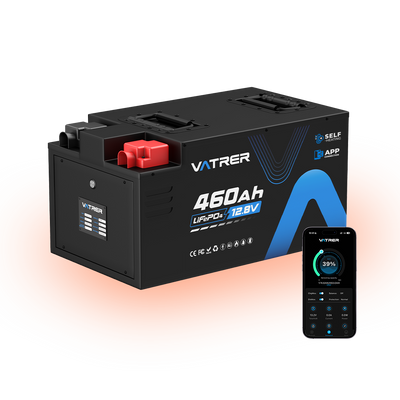
Vatrer LiFePO4 RV batteries combine 4000+ cycles, smart 200A BMS, wide temperature protection (−4°F–140°F), and Bluetooth monitoring, making them an ideal choice for off-grid or full-time RV users.
Best RV Battery Brands and Key Buying Considerations
When evaluating brands, look beyond the label. The best RV battery for you depends on real performance, protection features, and long-term support.
What to Look For
- Cycle Life: Aim for 3,000+ cycles for long-term value.
- BMS Protection: Ensures safe operation and automatic cutoffs during extreme conditions.
- Fast Charging Capability: Shortens downtime between trips.
- Safety Certifications: UL, UN38.3, or IEC62619 compliance.
- Monitoring Features: LCD or Bluetooth apps for status tracking.
- Warranty & Support: A solid 5-10 year warranty indicates brand confidence.
Brands such as Vatrer Battery are known for consistent performance. Vatrer stands out with advanced BMS protection, low-temperature heating capabilities, real-time monitoring, and durable LiFePO4 construction specifically engineered for RV and solar use.
RV Battery Installation and Maintenance Tips
Even the best battery can fail if installed or maintained incorrectly. Follow these practical steps to maximize performance and lifespan.
Installation Tips
- Mount in a dry, ventilated area away from heat sources.
- Use the proper cable gauge to handle current safely.
- Double-check polarity before connecting terminals.
Charging Tips
- Lead-acid batteries require multi-stage charging (bulk, absorption, float).
- Lithium batteries need dedicated LiFePO4 chargers.
- Avoid overcharging or deep discharging, use a BMS-equipped system.
Maintenance Tips
- Clean terminals periodically to prevent corrosion.
- Inspect voltage regularly with a multimeter.
- Store at 40-60% charge if unused for long periods.
- For lithium systems, rely on BMS to manage safety automatically.
Tip: Pairing your lithium RV battery with a solar system helps maintain steady charge levels during long off-grid stays.
Power Your Journey with the Right RV Battery
Your RV battery choice determines how freely and comfortably you travel. By understanding the different battery types, capacities, and performance factors, you can confidently invest in the power setup that fits your lifestyle.
For those seeking durability, safety, and long-term value, LiFePO4 lithium batteries are clearly the best RV battery solution. They offer higher efficiency, lower maintenance, and years of dependable energy, ideal for off-grid, boondocking, and full-time RV living.
If you're ready to upgrade, Vatrer Battery delivers advanced LiFePO4 models with smart BMS protection, fast charging, and Bluetooth monitoring, helping RVers explore farther and live off-grid with peace of mind.
Share