The Complete Guide to Shipping Lithium Batteries
Reading time: 13 minutes

Share
Shipping a lithium-ion battery in the United States requires different preparations depending on its watt-hour rating, physical condition, and transport method. A small battery packed with a device may qualify for simplified rules, while a large LiFePO4 pack for an RV, golf cart, or home energy system usually needs a regulated freight service. This guide explains the classifications, ground and air restrictions, packaging, and paperwork that determine how a shipment can move.
Why Lithium Battery Shipping Is Heavily Regulated
Thermal Runaway Risks
Lithium-ion batteries can enter thermal runaway if a cell is severely damaged, overheated, or subjected to an internal short circuit. Heat and flammable gases may spread between cells, creating a fire hazard inside a cargo compartment or shipping container. Their transport classification reflects these risks even when the batteries are new and working normally.
US Shipping Regulators
In the United States, the Pipeline and Hazardous Materials Safety Administration (PHMSA), part of the Department of Transportation (DOT), administers the Hazardous Materials Regulations in 49 CFR Parts 171–180. The Federal Aviation Administration (FAA) oversees aviation safety, while International Civil Aviation Organization (ICAO) technical instructions and the International Air Transport Association (IATA) Dangerous Goods Regulations (DGR) shape international air-cargo procedures and airline acceptance policies.
US Regulatory Framework for Lithium Battery Transport
| Transport Mode | Regulatory Oversight | Principal Rules or Standards |
|---|---|---|
| US ground | PHMSA (DOT) | 49 CFR Parts 171–180, including § 173.185 |
| Air cargo | PHMSA and FAA | US hazardous materials rules; ICAO Technical Instructions and IATA DGR where applicable |
Lithium Battery UN Numbers and Classification
Identifying the Correct UN Number
The UN number depends on battery chemistry and what is actually inside the package. A loose rechargeable lithium-ion battery is UN3480. If that battery is packed with the device it powers, or installed inside the device, it generally falls under UN3481 instead. A charger, cable, or battery display packed alongside a standalone battery does not by itself turn the shipment into UN3481.
Lithium Battery UN Number Classification
| UN Number | Battery or Vehicle Type | Shipping Configuration |
|---|---|---|
| UN3480 | Lithium-ion battery | Shipped alone, without the equipment it powers |
| UN3481 | Lithium-ion battery | Packed with or contained in the equipment it powers |
| UN3090 | Lithium metal battery | Shipped alone |
| UN3091 | Lithium metal battery | Packed with or contained in equipment |
| UN3171 | Battery-powered vehicle or equipment | Classification used for relevant vehicle shipments under US domestic rules |
Vehicles and Lithium Metal Batteries
Lithium metal batteries are generally non-rechargeable and use UN3090 or UN3091 according to their shipping configuration. Vehicles introduce a separate classification issue: international rules introduced UN3556 for lithium-ion-battery-powered vehicles and UN3557 for lithium-metal-battery-powered vehicles in 2025. US domestic rules have continued to use UN3171 for relevant battery-powered vehicle shipments, although certain movements may use international standards under permitted conditions. Check the rules in force for the transport mode before classifying a complete electric golf cart as a standalone battery.
US Ground Shipping Rules for Lithium Batteries
49 CFR 173.185
Section 173.185 sets the main US requirements for transporting lithium cells and batteries by highway and rail, as well as for shipments moving under US hazardous materials rules by other modes. It covers design testing, short-circuit prevention, packaging, and exceptions. Since May 10, 2024, lithium-ion battery cases must also display their watt-hour rating.
Standalone Battery Packaging and Labels
A fully regulated UN3480 package normally needs its proper shipping name, UN identification number, and Class 9 lithium battery hazard label. The smaller lithium battery mark serves a different purpose and is not a substitute for the Class 9 hazard label. Package markings and labels must match the exact regulatory provision used for the shipment.
Small Battery Exceptions
Under § 173.185(c), lithium-ion cells rated at no more than 20 Wh and batteries rated at no more than 100 Wh can qualify for reduced US shipping requirements when the packaging and quantity conditions are met. Use nominal voltage and rated amp-hour capacity to calculate a battery's energy:
Watt-hours (Wh) = Nominal voltage (V) × Capacity (Ah)
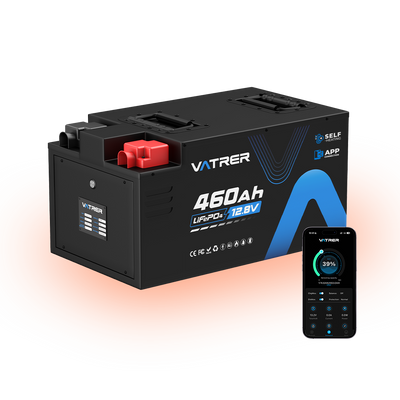
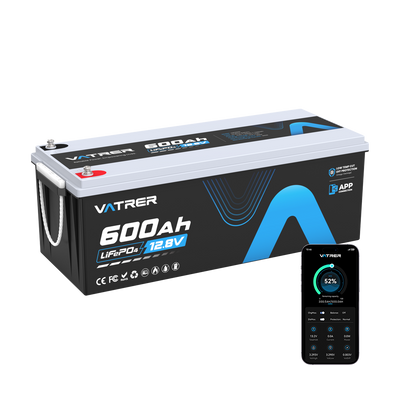
For example, a 12.8 V 100 Ah LiFePO4 battery has a nominal energy rating of 1,280 Wh, well above the standard small-battery threshold.
US Ground Requirements for Standalone Lithium-Ion Batteries
| Requirement | Fully Regulated UN3480 | Qualifying Smaller UN3480 Under § 173.185(c) |
|---|---|---|
| Outer packaging | UN-specification packaging generally required; certain large-battery provisions apply | Strong, rigid outer packaging; UN-specification packaging generally not required |
| Class 9 lithium battery label | Required | Generally not required |
| Lithium battery mark | Not generally the applicable mark for fully regulated shipments | Required unless a specific exception applies |
| Hazmat shipping papers | Required | Generally not required |
| Loose-battery package weight | Subject to applicable packaging and transport limits | Maximum 66 lb (30 kg) gross weight under the exception |
| Formal DOT hazmat training | Required for hazmat employees | The Part 172 training requirement is excepted when all applicable conditions are met |
A separate highway-and-rail-only provision in § 173.185(c)(1)(iv) permits certain lithium-ion cells up to 60 Wh and batteries up to 300 Wh to use specified reduced requirements. Those packages need the prescribed marking prohibiting transport aboard aircraft and vessels; the exception does not extend to ordinary air or vessel shipments.

Training and Damaged Batteries
Employees preparing fully regulated shipments need initial and recurrent DOT hazardous materials training, with recurrent training at least every three years. A battery identified as damaged or defective for safety reasons requires different handling from a routine new-battery shipment. Under § 173.185(f), qualifying damaged, defective, or recalled batteries may travel only by highway, rail, or vessel in prescribed protective packaging, not by air.
Air Shipping Lithium Batteries: IATA Rules and 30% SoC
Passenger Aircraft and SoC Limits
Standalone lithium-ion batteries shipped as UN3480 under Packing Instruction (PI) 965 are generally restricted to cargo aircraft, with a maximum 30% state of charge (SoC) unless the necessary regulatory approvals are granted. Passenger-aircraft carriage is prohibited under normal cargo procedures; exceptional authorizations are tightly controlled.
Under the 2026 IATA DGR, PI 966 Section I batteries packed with equipment must also be offered at no more than 30% SoC. The same limit applies to PI 966 Section II cells and batteries rated above 2.7 Wh. For batteries already contained in equipment under PI 967, 30% SoC—or an indicated battery capacity no higher than 25%—remains a safety recommendation rather than a general mandatory limit.
2026 IATA Air Shipping Rules for Lithium-Ion Batteries
| Packing Instruction | Configuration | Passenger Aircraft | SoC Requirement |
|---|---|---|---|
| PI 965 | Standalone, UN3480 | Prohibited under normal cargo procedures | Maximum 30%, unless specially approved |
| PI 966 | Packed with equipment, UN3481 | Permitted within applicable limits | Maximum 30% in Section I and in Section II above 2.7 Wh |
| PI 967 | Contained in equipment, UN3481 | Permitted within applicable limits | Maximum 30% recommended, or indicated capacity no higher than 25% |

Packing Instructions and Declarations
The packing instruction also determines the regulatory section. PI 965 distinguishes Section IA for larger fully regulated standalone cells and batteries from Section IB for smaller standalone units that still carry dangerous-goods obligations. PI 966 and PI 967 use Sections I and II, with different package limits, labeling, and documentation. A small standalone battery shipped by air is therefore not automatically an excepted shipment.
For example, PI 965 Section IB packages must meet a 3.9 ft (1.2 m) drop capability and a 9.8 ft (3 m) stacking requirement for 24 hours. Airlines may impose acceptance restrictions beyond the baseline regulations, so a compliant package still needs an available dangerous-goods service.
Lithium Battery Packaging and Short-Circuit Protection
Terminal and Inner Packaging
Insulate exposed battery terminals with suitable non-conductive caps or other protection that cannot easily come loose. Where the rules require inner packaging, use non-metallic material that completely encloses the battery and separates it from metal tools, other batteries, and conductive items. Secure the contents against movement; equipment with an installed battery must also be protected against accidental activation.

Outer Packaging for Heavy Batteries
Fully regulated loose lithium-ion batteries usually require UN-specification outer packaging tested to the relevant performance level. A UN packaging code such as 4G identifies an approved fiberboard-box design, but the code alone does not show that a particular box is suitable for the battery's weight or packing arrangement.
Packaging Tests and Large-Battery Provisions
| Shipping Situation | Applicable Packaging Check |
|---|---|
| Fully regulated standalone battery | UN-specification packaging meeting the applicable Packing Group II performance requirements, unless an authorized alternative applies |
| Qualifying smaller battery under US ground exception | Package capable of withstanding a 3.9 ft (1.2 m) drop without battery damage or release of contents |
| PI 965 Section IB air shipment | 3.9 ft (1.2 m) drop capability and 9.8 ft (3 m) stacking capability for 24 hours |
| Battery weighing at least 26.5 lb (12 kg) with a strong, impact-resistant case | Under § 173.185(b)(5), an eligible strong outer package, protective enclosure, or secured pallet may replace standard UN-specification packaging |
For the heavy-battery provision, the battery must be secured so it cannot shift, and its terminals cannot support the weight of other cargo. The alternative packaging provision does not by itself authorize transportation on a cargo aircraft; special approval may be required.
Overpack Markings
An overpack groups one or more prepared packages into a single handling unit, often on a pallet. If required package markings and labels are hidden, reproduce them on the outside and add the OVERPACK marking as prescribed. For air shipments, there are also restrictions on combining certain fully regulated standalone lithium battery packages with incompatible dangerous goods in one overpack.
Lithium Battery Shipping Documents and Certifications
UN38.3 Test Summaries and SDS
Lithium battery designs generally must pass the applicable tests in the UN Manual of Tests and Criteria, subsection 38.3, before being offered for transport. The test program includes altitude simulation, thermal cycling, vibration, shock, external short circuit, impact or crush, overcharge, and forced discharge, as applicable. In the US, the test-summary availability requirement took effect in 2022 for relevant batteries manufactured on or after January 1, 2008, with an exception for button cells installed in equipment. Manufacturers and subsequent distributors must make the applicable summary available; a printed copy is not ordinarily required inside every package.
A UN38.3 test summary identifies the tested battery design and reports the relevant tests and results. It does not automatically expire each year, although a changed design may require new testing. A Safety Data Sheet (SDS) provides different hazard and handling information and may be requested by a carrier; it cannot replace the test summary.
Transport-Specific Shipping Papers
Fully regulated US ground shipments require hazardous materials shipping papers with the UN number, proper shipping name, hazard class, and quantity, plus other information required by 49 CFR Part 172. Class 9 lithium batteries have no assigned packing group. For air freight, the Shipper's Declaration for Dangerous Goods is required for regulated sections such as PI 965 Sections IA and IB and PI 966 Section I; the applicable packing instruction governs the exact entries.
USPS uses Publication 52 and Packaging Instruction 9D for eligible domestic lithium battery mailings. Commercial carriers may impose their own acceptance procedures and account conditions, including restrictions on standalone batteries and returns.
Lithium Battery Transport Documentation
| Item | US Ground Freight | Air Freight | Eligible USPS Mail |
|---|---|---|---|
| UN38.3 test summary | Must be made available as applicable | Must be made available as applicable | Must be made available as applicable |
| SDS | May be requested by the carrier | May be requested by the carrier | Not routinely required by postal rules |
| Hazmat shipping paper | Required for fully regulated shipments | Required dangerous-goods information as applicable | Not required for qualifying mailpieces |
| Shipper's Declaration for Dangerous Goods | Not required | Required for specified fully regulated sections | Not required |
Common Lithium Battery Shipping Mistakes
Common Compliance Failures
A shipping label for ordinary merchandise does not authorize a regulated battery shipment. Common errors include declaring a standalone pack as a battery packed with equipment, using the wrong Class 9 label, and selecting a service that does not accept the battery's configuration. These mistakes can lead to rejected packages or enforcement action.
Another avoidable problem is using a UN38.3 test summary for a different battery design or assuming an old summary automatically needs renewal. A change to the design may trigger retesting, but elapsed time alone does not invalidate a valid test summary. Packaging reused from a previous shipment also needs to remain suitable for the current battery and its condition.
A Class 9 placard is not generally required on a vehicle carrying Class 9 material in domestic US transportation, and that fact alone does not trigger a hazmat endorsement for the driver. The shipment can still be subject to shipping-paper, packaging, marking, and employee-training requirements.
Penalties for Violations
PHMSA can assess civil penalties for violations of the hazardous materials rules, and the statutory maximums are adjusted over time. A violation may be assessed for each day it continues; knowing or willful misconduct can also lead to criminal enforcement. The applicable amount depends on the violation and the penalty limits in force.
FAQs
Can you ship lithium ion batteries through USPS?
Yes, but only eligible batteries under Publication 52 and Packaging Instruction 9D. A lithium-ion cell is generally limited to 20 Wh and a battery to 100 Wh. For packages containing batteries installed in or packed with equipment, the usual limit is eight cells or two batteries per mailpiece; eligible standalone batteries generally must remain in originally sealed packaging and travel by surface transportation. A standalone battery mailpiece must also meet the applicable 5 lb weight limit.
How do you ship a lithium ion battery over 100Wh?
Use a carrier that accepts the battery's regulated UN classification and confirm its packaging and documentation requirements before arranging pickup. The 100 Wh threshold does not prohibit commercial freight movement; some batteries may also qualify for specific highway-and-rail exceptions.
Are LiFePO4 batteries subject to lithium ion shipping regulations?
Yes. Lithium iron phosphate (LiFePO4 or LFP) is a rechargeable lithium-ion chemistry, even though its cathode material differs from other lithium-ion batteries. It follows the relevant UN3480 or UN3481 classification rather than the lithium-metal UN numbers.
Can lithium ion batteries be shipped by air in 2026?
Yes, if their configuration is permitted and the airline accepts the shipment under the applicable packing instruction. Ask the carrier about dangerous-goods booking, required declarations, and any operator-specific restrictions before preparing an air shipment.
Can I ship a damaged or defective lithium battery for return?
A battery that is swollen, leaking, overheated, or defective for safety reasons must not be sent as an ordinary parcel or air shipment. Contact the seller or manufacturer about ground or other permitted transport; the applicable rules call for separate inner packaging and non-combustible, non-conductive, absorbent cushioning. A routine performance fault, such as reduced capacity without a safety defect, does not automatically mean the battery falls under the damaged-battery transport provisions.
Conclusions
Start the shipping process by matching the battery's label and physical condition to the transport service you intend to use, then obtain that service's acceptance instructions before buying a shipping label.
Sources & References
- Federal Aviation Administration (FAA) — Common Cargo Hazards. Lithium battery fire hazards, thermal runaway, and aircraft cargo safety.
- Pipeline and Hazardous Materials Safety Administration (PHMSA) — Transporting Lithium Batteries. Federal oversight, lithium battery transport safety, and applicable hazardous materials regulations.
- 49 CFR § 173.185 — Lithium Cells and Batteries. US lithium battery classification, packaging, marking, testing, exceptions, and damaged-battery transport requirements.
- International Air Transport Association (IATA) — Battery Guidance Document: Transport of Lithium Metal, Lithium Ion and Sodium Ion Batteries, Revised for the 2026 Regulations. Air transport classification, packing instructions, state-of-charge restrictions, testing, marking, and documentation.
- International Air Transport Association (IATA) — Significant Changes and Amendments in the 66th Edition (2025). Introduction of battery-powered vehicle UN classifications and changes to dangerous goods regulations.
- PHMSA — Interpretation Response #25-0096. US domestic classification of lithium-battery-powered vehicles and permitted use of international transport provisions.
- PHMSA — Hazardous Materials Training Requirements. Training responsibilities, employee qualifications, and recurrent training intervals.
- PHMSA — Lithium Battery Test Summaries (TS), Revised July 2024. UN38.3 testing, test-summary content, effective dates, exemptions, and availability requirements.
- PHMSA — Interpretation Response #23-0040. Validity of UN38.3 test summaries and circumstances requiring renewed testing.
- Occupational Safety and Health Administration (OSHA) — Appendix D to § 1910.1200: Safety Data Sheets. SDS content, hazard communication, and handling information.
- 49 CFR § 172.202 — Description of Hazardous Material on Shipping Papers. Required identification and quantity information for regulated hazardous materials shipments.
- United States Postal Service (USPS) — Packaging Instruction 9D: Lithium Metal and Lithium-ion Cells and Batteries — Domestic. Postal battery capacity limits, quantity limits, packaging, and domestic transport eligibility.
- PHMSA — Interpretation Response #22-0086. Domestic Class 9 placarding, commercial driver hazmat endorsements, training, and shipping documentation.
- 49 CFR § 107.329 — Maximum Penalties. Civil penalty provisions for violations of hazardous materials transport requirements.
- 49 U.S. Code § 5124 — Criminal Penalty. Criminal liability relating to federal hazardous materials transportation law.
Share