Group 27 vs Group 31 Batteries: What's the Difference
Reading time: 8 minutes

Share
Choosing between a Group 27 battery and a Group 31 battery can be confusing if you’re upgrading your RV, boat, or off-grid solar system. These battery “group” numbers come from the Battery Council International (BCI) and determine the size, capacity, and fit of a battery.
In practical terms, the right battery group affects how long you can power your fridge, lights, or inverter before needing a recharge and whether the battery even fits in your tray.
In this guide, we'll explain everything you need to know about Group 27 and Group 31 batteries, from size and capacity comparisons to cost, performance, and ideal applications, so you can confidently select the battery that best powers your lifestyle.

What Are BCI Battery Group Sizes
BCI (Battery Council International) group sizes are standardized codes that define a battery’s physical dimensions, terminal placement, and polarity orientation. Think of them as the “shoe size” of batteries, ensuring your new unit fits securely in the same tray, connects to the same cables, and delivers power efficiently.
| Key Factor | What It Means | Why It Matters |
|---|---|---|
| Group Number | Defines the case size (length, width, height) | Ensures compatibility with your battery tray or compartment |
| Terminal Type | SAE post, stud, or threaded terminals | Prevents cable mismatch and connection issues |
| Polarity | Position of positive/negative terminals | Avoids reversed connections or short circuits |
If your system originally used a Group 27 battery, replacing it with another Group 27 or upgrading to Group 31 if space allows, ensures a proper fit without rewiring.
What Is a Group 27 Battery
A Group 27 battery is one of the most popular mid-size battery options, widely used in recreational vehicles (RVs), small to medium boats, and portable solar energy systems. It offers a good balance between compact dimensions and moderate energy storage capacity. Measuring approximately 12.06 × 6.81 × 8.90 inches, it provides 85–105Ah in lead-acid form or 100–120Ah in lithium.
Typically weighing around 50–65 lbs for lead-acid and 25–35 lbs for lithium, Group 27 batteries are suitable for weekend camping trips or marine activities that don’t require long hours of continuous energy supply. The lithium battery offers faster charging, maintenance-free operation, and higher energy utilization, making it a reliable option for users who want stable power in a limited space.
What Is a Group 31 Battery
A Group 31 battery is a larger and higher-capacity option compared to Group 27, often found in large RVs, yachts, and full off-grid solar installations. Its typical dimensions are 13.00 × 6.81 × 9.44 inches, giving it more internal volume to store energy. It delivers 95–125Ah in lead-acid form or 100–140Ah in lithium, providing up to 20–30% more capacity than Group 27.
Weighing about 60-75 lbs for lead-acid and 30-40 lbs for lithium, it's designed for high-demand systems that run multiple appliances such as refrigerators, pumps, or inverters simultaneously. Many users upgrade from Group 27 to Group 31 for extended runtime, better power delivery, and reduced charging frequency.
Group 27 vs Group 31 Battery Size and Weight Comparison Table
| Feature | Group 27 Battery | Group 31 Battery |
|---|---|---|
| Dimensions (L × W × H) | 12.06 × 6.81 × 8.90 in | 13.00 × 6.81 × 9.44 in |
| Lead-acid Capacity (Ah) | 85–105Ah | 95–125Ah |
| Lithium Capacity (Ah) | 100–120Ah | 100–140Ah |
| Lead-acid Weight (lbs) | 50–65 lbs | 60–75 lbs |
| Lithium Weight (lbs) | 25–35 lbs | 30–40 lbs |
| Best Fit For | Medium RVs, fishing boats | Large RVs, yachts, solar cabins |
Tip: Most RV and marine battery trays can fit a Group 31 battery in place of a Group 27 with minimal adjustment, just ensure enough clearance and cable length.
How Group 27 and Group 31 Batteries Power Your System: Capacity and Performance
When comparing Group 27 vs Group 31 batteries, the key differences come down to how much energy each can store and how efficiently they can deliver it. Group 27 batteries typically provide 42-52Ah of usable capacity for lead-acid and 80-100Ah for lithium, while Group 31 batteries deliver roughly 47-62Ah (lead-acid) or 90-120Ah (lithium). This means Group 31 models can keep appliances like RV refrigerators or trolling motors running several hours longer before recharging.
Battery Capacity and Runtime Comparison Table
| Group | Lead-acid (Usable) | Lithium (Usable) | Typical Runtime (12V 60W load) |
|---|---|---|---|
| Group 27 | ~42–52Ah usable | ~80–100Ah usable | 12–14 hours |
| Group 31 | ~47–62Ah usable | ~90–120Ah usable | 16–18 hours |
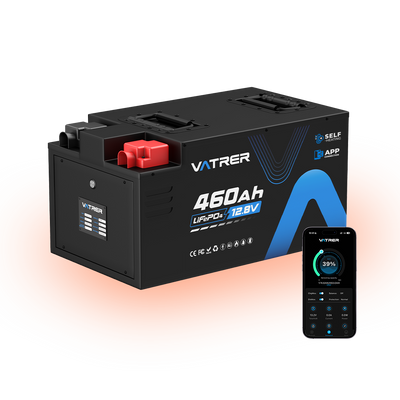
Lithium batteries, such as the Vatrer LiFePO4 battery, maintain a flat discharge curve, providing consistent voltage output throughout the cycle. This ensures your lights or electronics perform at full brightness until the battery is nearly depleted, unlike lead-acid types that gradually lose power. Additionally, Group 31 batteries feature higher reserve capacity (up to 230 minutes at 25A), making them more dependable for long-duration use in RVs or solar systems.
Tip: If your system runs multiple appliances daily, upgrading from Group 27 to Group 31 reduces charging frequency and improves efficiency.
Cost vs Value: Comparing Group 27 and Group 31 Batteries
When choosing between a Group 27 and a Group 31 battery, the upfront cost is often the first thing people notice, but it's not the whole story. True long-term value depends on cycle life, charging efficiency, energy density, and maintenance costs.
Group 27 vs Group 31 Battery Cost and Value Comparison Table
| Group | Lead-Acid Price Range | Lithium Price Range | Cycle Life | Charging Time | Maintenance |
|---|---|---|---|---|---|
| Group 27 | $100–$200 | $250–$500 | 500–1000 (lead) / 3000–5000 (lithium) | 8–15h (lead) / 3–5h (lithium) | Moderate (lead) / None (lithium) |
| Group 31 | $150–$300 | $300–$600 | 500–1000 (lead) / 4000–6000 (lithium) | 8–15h (lead) / 3–5h (lithium) | Moderate (lead) / None (lithium) |
While a Group 31 battery typically costs more upfront, it delivers superior long-term value due to its greater capacity, faster recharging rate, and extended lifespan. The additional investment translates into higher energy availability and better reliability for power-hungry systems like large RVs, yachts, or off-grid solar arrays.
In contrast, Group 27 batteries are an excellent mid-range option for users with moderate power demands. They provide a lower initial cost and compact footprint, but their shorter runtime and lower energy reserve make them less ideal for continuous heavy loads. For occasional or weekend use, however, a Group 27 can meet most basic requirements efficiently.
Tip: For frequent RV, marine, or off-grid users, investing in a lithium Group 31 battery can reduce total cost of ownership by 30-50% over a decade compared to maintaining multiple lead-acid replacements.
Group 27 vs Group 31 Battery: Which Is Better
Choosing the right group depends on your energy consumption, available space, and type of usage. The table below provides selection suggestions to help you make an informed choice based on your needs.
| Application | Recommended Group | Reason and Use Case |
|---|---|---|
| Small RVs or Compact Boats | Group 27 | Compact design fits tight spaces while providing enough power for lights, fans, and a small fridge during short trips. Ideal for weekend campers or fishing boats. |
| Mid-size RVs or Sailboats | Group 27 or Group 31 | Group 27 suits shorter stays, while Group 31 extends runtime up to two days without recharging, ideal for moderate solar or inverter systems. |
| Large RVs, Yachts, or Luxury Campers | Group 31 | Delivers longer runtime, supports higher current draw, and ensures uninterrupted operation of heavy loads like ACs or water pumps. |
| Off-grid Solar Cabins | Group 31 | Provides higher energy reserve for solar storage, allows multiple units in parallel, and supports large inverters for full-time living. |
For users planning frequent travel or extended off-grid operation, Group 31 batteries are the more practical choice. Their higher capacity and deep-cycle performance ensure fewer recharges and better reliability in demanding conditions.
How to Choose Between Group 27 and Group 31 Batteries
Making the right choice requires more than just comparing sizes, consider your energy usage, space, and environment carefully.
- Measure Your Battery Compartment: Use a tape measure to verify the internal length, width, and height of your battery tray, leaving at least 0.5 inches of clearance for airflow and cable movement. This ensures a secure and safe installation without pinching wires or stressing the housing.
- Determine Your Power Needs: Calculate your total daily watt-hour (Wh) consumption. For example, running a 60W refrigerator for 12 hours equals 720Wh, which requires roughly 60Ah of usable capacity. This calculation helps identify whether Group 27 or 31 better meets your energy requirements.
- Select the Right Chemistry Type: Lead-acid batteries are budget-friendly but require maintenance and offer less usable capacity. Lithium batteries, such as Vatrer RV LiFePO4 battery, provide deep discharge capability, faster charging, and a lifespan up to 10 times longer, ideal for frequent travelers.
- Check Compatibility and Wiring: Ensure the terminal type (SAE or stud) and polarity match your existing setup. Misaligned terminals can complicate installation or lead to connection issues.
- Consider Operating Environment: For users in cold climates, opt for lithium models with self-heating systems that allow charging below 32°F. In humid or confined environments, sealed AGM or lithium batteries prevent corrosion and gas buildup.
- Compare Warranty and After-sales Support: Choose reputable manufacturers that offer long-term technical service. Brands like Vatrer provide 5-10-year warranties and responsive global support, ensuring peace of mind throughout the product's life cycle.
Tip: If you anticipate future upgrades, such as adding solar panels or larger inverters, investing in a Group 31 lithium battery now provides scalability and saves replacement costs later.
Conclusion
Ultimately, both Group 27 and Group 31 batteries are reliable choices for powering RVs, boats, and solar systems, but they cater to different levels of energy demand. Group 27 batteries are ideal for users seeking a balance of compactness and moderate power, perfect for smaller vehicles or weekend trips. In contrast, Group 31 batteries offer greater storage capacity, longer runtime, and higher current output, making them the preferred option for full-time RVers, yacht owners, or off-grid enthusiasts.
For those ready to move beyond the limits of lead-acid technology, upgrading to a Vatrer LiFePO4 battery delivers the ultimate combination of lightweight design, deep-cycle performance, and built-in safety features. With up to 4000 cycles, smart BMS protection, and fast charging, it provides dependable energy anywhere your adventure takes you.