What Happens If I Charge An AGM Battery With A Regular Charger?
Reading time: 14 minutes

Share
You can sometimes charge an AGM battery with a regular charger, but compatibility depends on how that charger controls voltage and moves through the charging cycle. A modern automatic charger may work perfectly well with AGM batteries even if it does not have a dedicated AGM mode. An older charger with poorly controlled output is a different story.
The main risks are overcharging, undercharging, excess heat, and gradual capacity loss. Charger type alone does not provide enough information to confirm compatibility. You need to compare its charging profile with the specifications of your AGM battery.
Can I Charge an AGM Battery With a Regular Charger?
Yes, but only if the charger is compatible with AGM battery charging requirements. A regular charger can refer to several very different devices, from an old manual charger that keeps applying current until you disconnect it to a modern smart charger that automatically changes charging stages. A charger that regulates voltage correctly, limits current, and switches into a maintenance stage may be suitable even without a separate AGM setting.
What Regular Charger Means
A traditional charger may simply supply current with limited control over what happens as the battery approaches full charge. Automatic chargers monitor battery voltage and change their output as charging progresses. Smart chargers go further by selecting charging stages, stopping or reducing current when necessary, and sometimes adjusting output for battery type or temperature. Treating all three as the same kind of charger can lead to the wrong conclusion about AGM compatibility.
AGM Compatibility Matters More Than Charger Type
A dedicated AGM battery charger is the easiest choice because its charging profile is already intended for AGM chemistry. A charger without a dedicated AGM mode may also be compatible if its voltage range, charging current, and charging stages meet the requirements specified for the battery. Check the charger manual for AGM, sealed lead-acid, SLA, or absorbed glass mat compatibility, then compare its charging limits with the specifications published for your battery.
When a Regular Charger Should Not Be Used
A charger becomes a poor choice when you cannot confirm how it regulates voltage or what it does near the end of the charging cycle. Old manual chargers, units that continue applying a high charging voltage indefinitely, and chargers with no defined charging profile deserve extra caution. If the output specifications cannot be matched to your AGM battery, do not assume that a shared 12V rating makes the two devices compatible.
What Happens If You Charge an AGM Battery With a Regular Charger?
Using the wrong charger does not always cause immediate failure. Damage often develops through repeated charging at the wrong voltage or through a charging cycle that never brings the battery to the proper state of charge. What happens depends on whether the charger pushes the battery too hard, stops too early, or keeps supplying current after the battery is full.
Overcharging and Excess Heat
An AGM battery holds its electrolyte inside absorbent fiberglass mats and uses a sealed, valve-regulated case. If charging voltage stays too high, the battery can generate excess heat and internal gas pressure. Severe or repeated overcharging may force the pressure-relief valve to open, allowing moisture to escape that cannot simply be replaced by adding water. Capacity and service life can fall as that damage accumulates.
Undercharging and Sulfation
A charger can also be too conservative. If it ends the cycle too early or does not maintain the proper absorption stage, the AGM battery may repeatedly return to service without reaching a full state of charge. Chronic partial charging encourages sulfation on the lead plates, which makes it harder for the battery to accept and deliver energy over time.
Long-Term Capacity Loss
Repeated charging problems usually show up as declining performance rather than a sudden dead battery. You may notice shorter runtime, weaker starting performance, faster voltage drop under load, or a battery that appears to charge quickly but also discharges sooner than it used to. These symptoms can have other causes, so they should be treated as signs to test the battery rather than proof that the charger caused permanent damage.
- Runtime becomes noticeably shorter after a full charge.
- The battery needs charging more often under the same load.
- The case becomes hotter than usual during charging.
- The charger repeatedly ends the cycle unusually early or reports a fault.
One-Time Mischarge vs Repeated Misuse
One session with a mismatched charger does not mean your AGM battery is automatically ruined. The outcome depends on the voltage applied, how long charging continued, battery temperature, and the battery’s condition before charging started. Repeated overcharging or undercharging is much more likely to shorten service life than a brief mistake that caused no unusual heat, swelling, or performance change.
AGM Battery Charging Voltage and Charging Profile
AGM battery charging voltage needs to stay within the range specified by the battery manufacturer, but there is no single universal number that applies to every AGM model. Battery size, internal design, temperature, and intended use can affect the recommended settings. This is why checking the battery data sheet is more reliable than copying a voltage value from a different brand or capacity.
Bulk, Absorption, and Float Stages
A multi-stage AGM charger changes its behavior as the battery fills. During bulk charging, it supplies more current to restore most of the missing capacity. The absorption stage holds the charging voltage under tighter control while current gradually falls. Once the battery is full, the float stage reduces the voltage so the battery can remain charged without being continuously pushed at the higher absorption level.
Charging Voltage by Battery Specification
Use the absorption and float settings listed for your exact battery whenever they are available. Two 12V AGM batteries can share the same nominal voltage while still calling for different charger settings. The same applies to recommended charging current. A charger should be selected around the battery manufacturer’s limits rather than a universal rule based only on battery voltage or amp-hour capacity.
Temperature Compensation
Battery temperature changes how an AGM battery responds to charging voltage. High temperatures increase the risk of charging too aggressively, while cold conditions can change how readily the battery accepts charge. Chargers with temperature compensation can adjust their output as conditions change, which is useful in engine bays, RV battery compartments, boats, garages, and other places where temperatures vary widely.
AGM Charger vs Regular Charger: What's the Difference
The biggest difference between an AGM charger and a basic regular charger is how precisely the charger manages the battery as it approaches full charge. A dedicated AGM mode usually provides a charging profile intended for sealed AGM batteries. A regular smart charger may still perform the same job if AGM compatibility is documented, while a simple manual charger may offer very little control.
AGM Charger vs Regular Charger Comparison
| Comparison Point | AGM Charger / AGM Mode | Traditional Regular Charger |
|---|---|---|
| Charging profile | Uses a profile suitable for AGM charging | May use a profile intended mainly for flooded lead-acid batteries |
| Voltage control | Usually closely regulated | Varies widely by charger design |
| Multi-stage charging | Common | May be absent on older units |
| Automatic float mode | Common | Not always available |
| Temperature compensation | Available on some models | Less common on basic chargers |
| AGM compatibility | Charging settings account for AGM requirements | Requires model-by-model verification |
A charger without a dedicated AGM mode may still be suitable if its voltage control, charging stages, and current limits meet the AGM battery manufacturer’s requirements. Compatibility should be confirmed from the specifications of both devices.
Charging Profile and Voltage Control
An AGM charger controls the transition from bulk charging to absorption and then to maintenance charging without requiring you to manually determine when the battery is full. Older chargers may keep delivering current under conditions where an automatic charger would already have reduced its output. That difference can matter far more than peak charger amperage.
Automatic Charging and Protection
Modern chargers may combine automatic stage switching with reverse-polarity protection, overcharge control, maintenance charging, and fault detection. These functions reduce the chance that the battery will sit at an unsuitable charging condition for hours. They are particularly useful when the battery is charged frequently or left connected for storage.
AGM Mode vs AGM Compatibility
An AGM mode provides a charging profile intended for this battery type, but some chargers support AGM batteries through a shared automatic program. Check the charger specifications and manual to confirm the supported battery types and charging parameters. A charger intended only for flooded batteries should not be used with an AGM battery unless its charging requirements can be verified as compatible.
How to Check Your AGM Battery Charger for Compatibility
Checking compatibility takes less guesswork if you look at the charger and battery specifications side by side. Start with battery type, then compare charging voltage, current recommendations, and the charger’s behavior after the battery reaches full charge. If any of those details are missing, the charger may not be the best device for routine AGM charging.
Charger Label and Manual
The charger documentation should identify the battery types and charging conditions it supports. Detailed compatibility information may appear in the manual or specification sheet rather than in the main controls.
- Battery type: Check for AGM, Absorbed Glass Mat, sealed lead-acid, or compatible SLA specifications.
- Charging stages: Check for automatic bulk, absorption, and float operation.
- Maintenance behavior: Confirm what the charger does after the battery reaches full charge.
- Operating limits: Review charger voltage, current, and temperature requirements.
Output Voltage and Charging Current
Compare the charger’s charging voltage with the limits listed for the battery. Do the same for current. A very small charger may simply take longer, while a charger that exceeds the battery’s recommended charge current can place unnecessary stress on it. Battery capacity alone does not tell you the correct charger size, so use the manufacturer’s recommendations as the deciding reference.
Smart Charging Features
Automatic multi-stage charging is one of the most useful features to prioritize. Temperature compensation, maintenance mode, reverse-polarity protection, automatic shutoff, and clear charging-status indicators can also make regular battery care easier. No single feature replaces battery compatibility, but together they reduce the amount of manual judgment required during charging.
How to Charge an AGM Battery Safely
Safe AGM battery charging starts before the charger is connected. Confirm that the battery is actually AGM, review its condition, select a compatible charger, and follow the connection procedure in the charger manual. Do not continue normal charging if the case is cracked, badly swollen, leaking, or showing other obvious physical damage.
Confirm Battery and Charger Compatibility
Read the battery information and charger specifications first. Make sure the charger supports the battery voltage and AGM chemistry, then check its recommended charging current against the battery specifications. This prevents a common mistake: choosing a charger because both products use a 12V nominal system even though their charging requirements do not match.
Select the Correct Charging Mode
Use AGM mode when the charger provides one and the manual calls for it. Do not substitute repair, recondition, equalization, or desulfation modes unless the battery manufacturer specifically allows that procedure. Some special modes intentionally use charging behavior that may not be appropriate for every sealed AGM battery.
Connect the Charger Safely
Make the connections with the charger turned off or unplugged if the charger instructions call for that sequence. Match positive to positive and negative to the specified negative connection point. Keep the charging area ventilated and keep sparks or open flames away from the battery. Follow the charger manufacturer’s connection and disconnection order rather than improvising.
Monitor Temperature and Charging Status
A battery can warm somewhat during charging, but unusual heat deserves attention. Stop charging if the case becomes very hot, starts to swell, produces an unusual odor, or if the charger repeatedly reports a fault. Those signs can indicate a battery problem, a charger mismatch, or an internal fault that should be investigated before another charging attempt.
Complete the Charging Cycle
Let a compatible automatic charger finish its normal cycle instead of disconnecting it simply because the voltage rises quickly. AGM batteries that are repeatedly returned to service before completing the appropriate absorption stage may spend too much time partially charged. If the charger supports maintenance mode, follow its instructions for long-term storage rather than assuming any charger can remain connected indefinitely.
Already Used a Regular Charger on an AGM Battery?
If you have already charged the battery, focus on its condition instead of assuming permanent damage. Disconnect the charger if the battery is abnormally hot or physically distorted. If everything appears normal, let the battery rest and then check how well it holds charge and performs under its normal load.
Stop Charging if the Battery Overheats
Unusual heat, swelling, case deformation, strong odor, or visible damage are reasons to stop. Reconnecting the same charger for another charging cycle can worsen an existing problem. A physically damaged battery should be evaluated and handled according to the battery manufacturer’s safety guidance.
Let the Battery Rest
Voltage measured immediately after charging can be influenced by surface charge, so it does not always represent the battery’s settled condition. Let the battery rest before checking resting voltage or comparing its performance with previous use. Consistent behavior under the same load tells you more than one reading taken immediately after unplugging the charger.
Check for Capacity Loss
Pay attention to runtime, starting strength, charging behavior, and how quickly the battery loses voltage in service. A battery that now needs charging much more often, becomes unusually warm, or cannot complete a normal charging cycle with a compatible charger may need further testing.
Test or Replace a Damaged Battery
A load test or capacity test can give you a better picture of the battery’s condition when ordinary voltage checks do not explain the performance loss. Physical case damage, repeated overheating, or a major loss of usable capacity can justify replacement rather than further charging attempts. One accidental charging session without symptoms is a very different situation from a battery that repeatedly shows these warning signs.
Choosing the Right AGM Battery Charger
A good AGM battery charger should match the battery first and add convenience second. AGM compatibility, controlled multi-stage charging, suitable output current, and reliable maintenance behavior matter more than a long list of extra modes. Choose the charger according to the specifications of the battery you actually use rather than selecting one based mainly on its maximum amperage.
AGM-Compatible Charging
Start by checking AGM support in the charger documentation. A dedicated AGM setting provides the correct profile directly, while a shared automatic mode can also be suitable if the charger specifications include AGM batteries. If compatibility cannot be confirmed, use a charger with defined AGM charging parameters.
Multi-Stage Charging
Automatic bulk, absorption, and float control reduces the chance of leaving the battery at an unsuitable voltage after it reaches full charge. It also makes routine charging easier because you are not manually watching voltage and deciding when to disconnect the charger.
Correct Charger Amperage
Charging current should stay within the battery manufacturer’s recommended range. More amperage is not automatically better. A smaller charger can extend charging time, while excessive current may push the battery harder than intended. Check both battery capacity and the published charging-current limit before choosing a unit.
Useful Maintenance Features
Temperature compensation is useful where seasonal conditions vary. Automatic maintenance mode helps batteries that spend long periods in storage, and reverse-polarity protection can prevent a simple connection mistake from becoming a larger problem. A clear status display is also useful because it shows whether the charger is still actively charging, maintaining the battery, or reporting a fault.
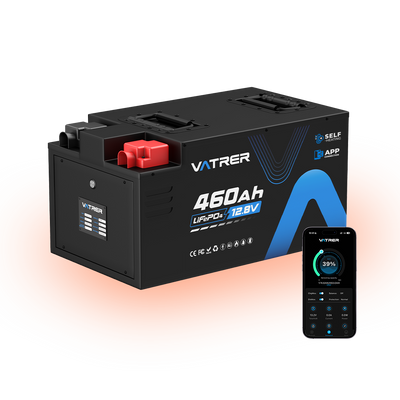
Thinking about moving away from AGM maintenance? If your battery supports an RV, boat, or off-grid setup and replacing chargers is only one part of a longer list of AGM maintenance concerns, consider a Vatrer lithium battery that fits the voltage and load of your application. Our 12V lithium battery includes Bluetooth monitoring and low-temperature and self-heating protection for colder conditions. You will still need a lithium-compatible charging profile, but battery status and cold-weather charging behavior can be easier to monitor directly.

Use an AGM Battery Charger That Matches the Battery
The correct charger is determined by its charging voltage, current range, charging stages, and AGM compatibility. A charger that meets the battery manufacturer’s requirements can charge an AGM battery correctly, while poor voltage regulation or an unsuitable charging profile can shorten battery life even when the charger and battery use the same nominal system voltage.
If charger compatibility, repeated maintenance, and limited battery visibility are pushing you toward a different setup, Vatrer offers LiFePO4 lithium batteries for RV, marine, and off-grid power systems with smart BMS protection, Bluetooth monitoring, and low-temperature features. Choose the battery around your real capacity and load requirements, then pair it with the correct lithium battery charging equipment rather than reusing an AGM charging profile.

Share