Why Is There A Low Temp Cut-Off Protection Function?
Reading time: 7 minutes
Cold weather can change the way a lithium battery performs. As winter arrives across many parts of the United States, RV owners, golf cart users, boaters, solar users, and off-grid homeowners often notice shorter runtime, slower charging, or battery protection alerts. These changes are not unusual. Temperature has a direct effect on the chemical activity inside a battery, especially when the battery is exposed to freezing conditions.
For LiFePO4 batteries, low-temperature cut-off protection is an important safety function built into the battery management system, also known as the BMS. Its purpose is simple: protect the battery from unsafe charging or discharging when temperatures fall below safe operating limits. This helps preserve battery capacity, extend service life, and reduce the risk of permanent cell damage.
How Temperature Affects LiFePO4 Batteries
LiFePO4 batteries are known for strong thermal stability, long cycle life, and safer chemistry compared with many other lithium battery types. However, they still have recommended temperature limits. In practical use, many LiFePO4 batteries are designed to discharge within approximately -4°F to 140°F (-20°C to 60°C), charge within approximately 32°F to 122°F (0°C to 50°C), and be stored within approximately 14°F to 122°F (-10°C to 50°C), depending on the specific model and manufacturer guidance.
The best battery performance is usually achieved at moderate temperatures, around 77°F (25°C). At this temperature, the electrolyte moves efficiently, internal resistance remains lower, and the battery can deliver stable capacity. When temperatures drop, the chemical reactions inside the battery slow down. As a result, the battery may deliver less usable power than it would in warmer conditions.
| Battery Condition | Typical Temperature Range | What It Means |
|---|---|---|
| Charging | 32°F to 122°F (0°C to 50°C) | Charging below freezing should be avoided unless the battery has self-heating or approved cold-charge protection. |
| Discharging | -4°F to 140°F (-20°C to 60°C) | Discharge is possible in colder weather, but available capacity and power output may drop. |
| Storage | 14°F to 122°F (-10°C to 50°C) | Stable indoor or protected storage helps reduce stress on the battery. |
| Best Performance | Around 77°F (25°C) | The battery can usually deliver its most stable capacity and output. |
What Is Low-Temperature Cut-Off Protection?
Low-temperature cut-off protection is a BMS safety feature that stops charging, discharging, or both when the battery temperature falls below a preset threshold. For many LiFePO4 batteries, low-temperature charging protection activates around 32°F (0°C), while low-temperature discharge protection may activate around -4°F (-20°C). Some batteries use a tolerance range, such as 0°C ±4°C for charge protection and -20°C ±4°C for discharge protection.
This function does not mean the battery is defective. It means the battery is protecting itself. Once the internal temperature returns to a safe range, the BMS can allow normal operation again.
Why Charging Below Freezing Is Risky
Charging a lithium battery at freezing temperatures can cause long-term damage. When the battery is too cold, lithium ions cannot move through the cell as efficiently. If charging continues in this condition, lithium can deposit on the surface of the anode instead of entering the cell structure properly. This issue is often called lithium plating.
Lithium plating can reduce battery capacity, increase internal resistance, shorten cycle life, and create safety risks. Damage caused by cold charging may not be obvious immediately, but the battery can lose performance over time. This is why low-temperature charge cut-off is one of the most important protections for LiFePO4 batteries used in cold climates.
Why Low Temperatures Reduce Battery Performance
Cold temperatures affect lithium batteries in several ways. The battery may still work, but it may not deliver the same output or runtime as it does in warmer weather.
- Reduced capacity: Cold weather slows the chemical reactions inside the battery, so the battery may provide less usable energy during discharge.
- Higher internal resistance: As temperature drops, resistance increases. This makes it harder for the battery to deliver current under load.
- Lower voltage under load: A cold battery may show a bigger voltage drop when powering a motor, inverter, or other high-demand device.
- Slower charging response: The battery may charge more slowly or stop charging completely if the BMS detects unsafe temperature conditions.
- Potential permanent damage: Charging below safe limits can harm the cells and reduce battery lifespan.
Why U.S. Users Need This Protection
Low-temperature cut-off protection is especially valuable for U.S. users who operate batteries in seasonal or outdoor applications. Golf carts in northern states, RVs parked through winter, bass boats stored in unheated garages, solar batteries in cabins, and off-grid backup systems can all face freezing temperatures.
Without low-temperature protection, a charger may continue to push current into a battery that is too cold to accept it safely. With BMS protection, the battery can pause charging automatically and help prevent hidden cell damage.
Which Battery Applications Benefit Most?
- RV batteries: RVs are often stored outdoors or in unheated spaces during winter. Low-temp protection helps prevent unsafe charging from solar panels or shore power.
- Golf cart batteries: Carts used in communities, resorts, farms, and hunting properties may sit in cold garages or sheds overnight.
- Marine batteries: Fishing boats and trolling motor batteries are frequently stored in cold conditions during the off-season.
- Solar storage batteries: Cabin and off-grid systems may charge automatically from solar panels, even when the battery is below freezing.
- Backup power batteries: Batteries used for emergency power need protection when installed in cold basements, workshops, or utility areas.
Products with Low-Temperature Cut-Off Protection
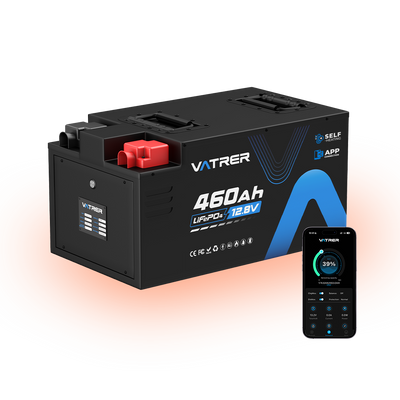
Many modern LiFePO4 batteries are built with low-temperature cut-off protection to improve winter safety and reliability. Examples may include 12V 100Ah LiFePO4 batteries, 12V 200Ah deep cycle batteries, 12V 300Ah solar batteries, 12V 460Ah RV batteries, 48V 100Ah server rack batteries, and 36V or 48V lithium golf cart batteries.
For users who regularly charge batteries in cold conditions, self-heating LiFePO4 batteries can be a better option. A self-heating battery can activate internal heating when the temperature falls below 32°F (0°C). Once the battery warms to around 41°F (5°C), heating can stop and normal charging can resume. This feature is useful for RVs, boats, solar systems, cabins, and other winter applications where moving the battery indoors is not convenient.
Safety is a key priority for Vatrer Power. A quality LiFePO4 battery should combine stable cells, a reliable BMS, low-temperature protection, overcharge protection, over-discharge protection, overcurrent protection, and short-circuit protection to support long service life and dependable power.

Tips for Keeping Lithium Batteries Warm in Winter
- Store batteries indoors when possible: A climate-controlled garage, utility room, or storage area helps protect the battery from extreme cold.
- Use insulation carefully: Battery boxes, foam insulation, or insulated compartments can reduce heat loss, but ventilation and manufacturer instructions should still be followed.
- Choose self-heating batteries for cold charging: If the battery will be charged outdoors in winter, built-in heating can make operation easier and safer.
- Pre-warm the battery before charging: If the battery has been exposed to freezing temperatures, move it to a warmer area before charging.
- Use compatible chargers: A lithium-compatible charger is important, and charging should follow the battery manufacturer’s temperature recommendations.
- Reduce exposure time: When using batteries outdoors, limit unnecessary exposure to extreme cold whenever possible.
- Monitor battery temperature: Bluetooth batteries or smart monitors can help users check battery status before charging.
Winter Storage Tips for LiFePO4 Batteries
Proper storage is one of the easiest ways to extend lithium battery life during the winter. Before storing a battery for several weeks or months, always follow the manufacturer’s manual. In general, the following practices are helpful.
- Store at a partial charge: Many LiFePO4 batteries are best stored around 40% to 60% state of charge rather than fully drained.
- Disconnect the battery: Remove the battery from equipment or turn off all loads to prevent slow parasitic drain.
- Choose a dry location: Avoid damp sheds, wet floors, and areas with high humidity.
- Avoid extreme temperatures: A stable, moderate environment is better than repeated freezing and warming cycles.
- Check voltage periodically: For long storage periods, inspect the battery occasionally and recharge only if needed.
- Keep terminals protected: Clean, dry terminals reduce the risk of corrosion or accidental short circuits.
Conclusion
Low-temperature cut-off protection exists because lithium batteries need extra protection in freezing conditions. Cold weather can reduce capacity, raise internal resistance, limit power output, and make charging unsafe. By stopping charge or discharge below preset temperature limits, the BMS helps protect the battery from damage and supports a longer service life.
For U.S. users with RVs, golf carts, boats, solar systems, cabins, and backup power setups, low-temperature cut-off is not just a convenience. It is an important safety feature that helps keep lithium batteries reliable through winter and ready for long-term use.
Share
1 comment
自己加熱タイプの12.8v 300Aリン酸鉄バッテリー購入したのですが、1〜4℃のバッテリー温度の場合自己加熱もされず充電もされません。
バッテリー温度が上がるのを待つしかないのでしょうか?