Comprehensive Guide to RV Battery Replacement
Reading time: 11 minutes
Introduction
Your RV battery is easy to ignore until the lights dim, the water pump slows down, or the fridge control board shuts off in the middle of a trip. Whether you camp at full-hookup RV parks, boondock on public land, or take weekend trips with the family, a weak battery can turn a relaxing getaway into a troubleshooting project.
This RV battery replacement guide explains when to replace your battery, how to choose the right type, what signs point to a failing battery, and how to avoid killing your new one too soon. If you are upgrading from old lead-acid batteries to lithium, it also covers the extra checks you should make before installing a new system.
A good RV battery setup should match how you actually camp. A weekend camper plugged into shore power has very different needs from someone running an inverter, solar panels, a residential fridge, Starlink, and a CPAP machine off-grid.
What Does an RV Battery Actually Power?
Most RV owners are talking about the “house battery” when they mention RV battery replacement. This is different from the chassis battery that starts a motorhome engine.
Your RV house battery usually powers the 12V side of the RV, including:
- Interior LED lights
- Water pump
- Furnace fan and thermostat
- Vent fans
- Slide-out controls on some RVs
- Awning motor on some RVs
- Propane detector and safety sensors
- Control boards for fridge, water heater, and furnace
- USB outlets and small 12V accessories
If you have an inverter, the battery may also power 120V appliances such as a TV, microwave, laptop charger, coffee maker, or residential fridge. The bigger the inverter loads, the more important battery capacity becomes.
What Kind of Battery Should You Use in an RV?
The best RV battery depends on your budget, camping style, charging system, and how much maintenance you want to deal with. The three most common options are flooded lead-acid, AGM, and lithium.
| Battery Type | Best For | Main Pros | Main Cons |
| Flooded lead-acid | Budget replacements and basic RV use | Lowest upfront cost, widely available | Needs water checks, heavier, shorter usable capacity |
| AGM | Maintenance-free lead-acid upgrade | Sealed, less maintenance, better vibration resistance | Costs more than flooded batteries, still heavy |
| LiFePO4 lithium | Boondocking, solar, inverter use, long-term value | Lightweight, long lifespan, fast charging, deeper usable capacity | Higher upfront cost, charger compatibility must be checked |
Flooded lead-acid batteries are the traditional choice. They are affordable, but they require regular maintenance, including checking electrolyte levels and keeping terminals clean. They also should not be deeply discharged often.
AGM batteries are sealed and easier to live with. They handle vibration better and are a nice middle ground if you want lower maintenance but are not ready to switch to lithium.
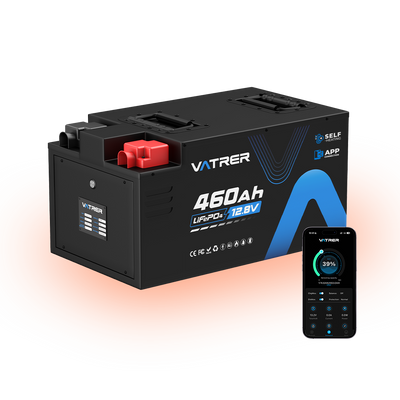
LiFePO4 lithium batteries are the premium choice for many modern RV owners. They weigh less, charge faster, last longer, and allow much deeper usable discharge. For boondocking and solar setups, lithium is often the most practical upgrade.
Video: How to Replace RV House Batteries
If you are replacing RV house batteries for the first time, it helps to see the basic process before you start. Always follow your RV manual and battery manufacturer’s instructions.
How Long Do RV Batteries Usually Last?
RV battery lifespan depends on the battery type, how often you use it, how deeply you discharge it, and how well it is charged and stored.
| Battery Type | Typical Lifespan | What Usually Shortens Life |
| Flooded lead-acid | About 3 to 5 years | Low water, deep discharge, sulfation, poor storage |
| AGM | About 4 to 7 years | Chronic undercharging, heat, deep discharge |
| LiFePO4 lithium | About 8 to 15 years | Wrong charger, extreme temperatures, overloading, poor BMS quality |
These are general expectations, not guarantees. A battery that is drained flat every weekend and stored dead all winter may fail early. A battery that is charged properly, kept clean, and stored correctly can last much longer.
When Should You Replace Your RV Battery?
You do not have to wait until the battery completely dies. In fact, replacing it before it fails is usually better, especially if you rely on the RV for medical devices, cold food storage, water pressure, or furnace heat.
It may be time to replace your RV battery if you notice:
- The battery does not hold a charge as long as it used to.
- Lights dim quickly when you are not plugged in.
- The water pump sounds weak.
- The furnace fan shuts off early or struggles overnight.
- The battery voltage drops fast under load.
- The battery case is swollen, cracked, or leaking.
- Terminals are badly corroded.
- The battery is more than five years old and performance is fading.
- The battery fails a proper load test.
For lead-acid batteries, sulfation is a common reason for poor performance. Sulfation happens when lead sulfate crystals build up on the plates, often from undercharging, deep discharge, or long storage at a low state of charge.
How Do You Know If an RV Battery Is Bad?
There are three simple ways to check battery health: visual inspection, voltage testing, and load testing.
1. Start With a Visual Inspection
Look for swollen battery cases, cracks, leaks, loose cables, melted terminals, corrosion, or a strong rotten-egg smell. If you see serious damage, stop using the battery and replace it safely.
2. Check Battery Voltage
A multimeter can give you a basic idea of battery condition. Let the battery rest after charging, then test voltage at the terminals. A 12V lead-acid battery that rests well below normal full-charge voltage may be weak, discharged, or damaged.
Voltage alone does not tell the whole story. A battery can show decent voltage with no load and still fail when you turn on the furnace fan or inverter.
3. Perform a Load Test
A load test checks whether the battery can deliver power under real demand. If voltage drops sharply under load, the battery may be near the end of its life. Many auto parts stores, RV service shops, and battery dealers can perform this test.
How Much Does RV Battery Replacement Cost?
RV battery replacement cost depends on battery type, capacity, brand, warranty, and whether you need extra components. A simple flooded lead-acid replacement is usually the cheapest. AGM costs more. Lithium costs the most upfront, but it can be the better long-term value because it lasts longer and gives you more usable capacity.
When budgeting, do not only look at the battery price. You may also need:
- New battery cables
- A battery monitor
- A lithium-compatible converter or charger
- A DC-DC charger for alternator charging
- Solar charge controller adjustments
- Battery box or mounting hardware
- Professional installation if wiring changes are needed
If you are simply replacing one old 12V lead-acid battery with another similar battery, the job is usually straightforward. If you are converting to lithium or adding a large inverter, plan the full system instead of only swapping the battery.
Can You Replace Lead-Acid RV Batteries With Lithium?
Yes, many RV owners upgrade from lead-acid to LiFePO4 lithium batteries. The benefits can be huge: less weight, longer lifespan, faster charging, better usable capacity, and more consistent voltage.
But lithium is not always a drop-in swap. Before upgrading, check:
- Whether your RV converter supports lithium charging
- Whether your solar charge controller can be set for LiFePO4
- Whether your alternator needs a DC-DC charger
- Whether the battery has low-temperature charging protection
- Whether the battery compartment is protected from extreme heat and cold
- Whether cable size and fuses match the new current demands
If you are not sure, have an RV technician or qualified installer review the system. Lithium batteries are excellent, but they need the right charging setup to perform well.
Do RV Batteries Drain When Not in Use?
Yes. RV batteries can drain even when the RV is parked. This happens because of parasitic loads and natural self-discharge.
Common parasitic loads include:
- Propane detector
- Carbon monoxide detector
- Clock displays
- Radio memory
- Control boards
- Inverter standby draw
- Tank monitors
- Security systems
If your RV sits for weeks, these small loads can slowly drain the battery. Use a battery disconnect switch, turn off the inverter, or keep the battery on a proper maintenance charger when stored.
Is It Bad to Leave Your RV Plugged In All the Time?
Leaving the RV plugged into shore power is convenient, but it depends on the quality of your converter or charger.
A modern smart charger can maintain the battery properly by adjusting voltage as needed. An older converter may overcharge a lead-acid battery, which can cause water loss, heat, and shorter battery life.
If you leave your RV plugged in often, check the battery type and charging system. Flooded lead-acid batteries still need water checks. Lithium batteries need a compatible charging profile and should not be charged below their allowed temperature range.
Will an RV Run Without a Battery?
Some RV systems may work when connected to shore power, but many RVs still need a battery for proper 12V operation. The battery helps power lights, controls, safety detectors, water pump, furnace fan, and some slide or awning systems.
Even if the converter can supply 12V power, running without a battery is not always recommended. The battery acts as a buffer and helps stabilize the 12V system.
Does an RV Charge the Battery While Plugged In?
Most RVs charge the house battery when connected to shore power or when the generator is running. Motorhomes may also charge from the alternator while driving. Travel trailers may receive some charge from the tow vehicle, but it is often limited unless a proper DC-DC charger is installed.
If your battery is not charging, check the converter, fuses, battery disconnect switch, wiring, shore power, and charger settings. A bad converter can make a good battery seem weak.
What Kills an RV Battery?
Most RV batteries fail early because of repeated abuse, not because they were used normally.
- Deep discharge: Running lead-acid batteries too low damages them over time.
- Undercharging: Batteries that never fully recharge can sulfate.
- Overcharging: Older chargers can cook lead-acid batteries.
- Heat: High temperatures speed up battery aging.
- Freezing: Discharged lead-acid batteries can freeze and crack.
- Parasitic draw: Small loads can drain the battery in storage.
- Loose or dirty terminals: Poor connections cause voltage drop and charging issues.
- Wrong charger: A charger that does not match the battery type can shorten lifespan.
Should You Disconnect the RV Battery When Plugged In?
If your RV has a good smart charger and you are using the RV regularly, you usually do not need to disconnect the battery while plugged in. The charger should maintain it.
If the RV is going into long storage and you are not keeping it on a proper maintainer, disconnecting the battery can help prevent parasitic drain. Just remember that disconnecting the battery may also disable safety detectors and some memory settings.
Should You Remove RV Batteries for Winter?
For many RV owners, removing batteries for winter storage is a smart move, especially in cold climates or if the RV is stored away from power.
Before winter storage:
- Fully charge lead-acid or AGM batteries before storage.
- Store lithium batteries at the manufacturer’s recommended state of charge.
- Clean terminals and cable ends.
- Use a battery disconnect switch or remove the battery.
- Store batteries in a cool, dry location.
- Check charge level periodically.
- Use the correct maintainer for the battery type.
Do not store a battery fully discharged. That is one of the fastest ways to damage it.
Basic RV Battery Replacement Steps
If you are replacing a similar battery with the same type and voltage, the process is usually simple. Still, take your time and work safely.
- Turn off RV loads and unplug shore power.
- Take a photo of the existing battery wiring before removing anything.
- Disconnect the negative cable first.
- Disconnect the positive cable next.
- Remove the old battery carefully.
- Clean the battery tray and cable terminals.
- Install the new battery securely.
- Connect the positive cable first.
- Connect the negative cable last.
- Check charger settings and test RV 12V systems.
If your RV uses multiple 6V or 12V batteries in series or parallel, wiring mistakes can damage equipment. Label every cable before disconnecting the old batteries.
FAQ
How often should RV batteries be replaced?
Flooded lead-acid batteries often last around 3 to 5 years, AGM batteries around 4 to 7 years, and LiFePO4 lithium batteries around 8 to 15 years. Real lifespan depends on use, charging, storage, and maintenance.
Can I replace my RV battery myself?
Yes, if you are replacing the same type of battery and understand the wiring. For lithium upgrades, inverter systems, or multi-battery banks, professional help is often worth it.
What is the best battery for boondocking?
LiFePO4 lithium is often the best choice for boondocking because it offers deeper usable capacity, faster charging, lighter weight, and longer cycle life.
Why does my RV battery keep dying?
Common causes include parasitic loads, an old battery, a bad converter, poor charging, loose connections, or leaving the battery stored at a low charge.
Do I need a special charger for lithium RV batteries?
Usually yes. Lithium batteries need a compatible charging profile. Check your RV converter, solar controller, and alternator charging setup before upgrading.
Conclusion
RV battery replacement is not just about buying the same battery again. The right choice depends on how you camp, what you power, how long you stay off-grid, and whether you want low upfront cost or better long-term performance.
Flooded lead-acid batteries are affordable but need maintenance. AGM batteries are cleaner and easier to manage. LiFePO4 lithium batteries cost more upfront but offer longer life, lighter weight, and better usable power. Before replacing your RV battery, check the age, symptoms, voltage, charger compatibility, and storage habits. A well-matched battery system will make every trip smoother, whether you are plugged in at a campground or camping miles from the nearest outlet.
Share