Does a 7-Pin Trailer Plug Charge a Trailer Battery?
Reading time: 15 minutes

Share
A 7-pin trailer plug can charge or maintain a trailer battery while you drive, but only when the 12V auxiliary power circuit is active and properly connected. In most setups, it gives the battery a slow maintenance charge, not a fast full charge.
That means it can help keep a healthy trailer battery topped up on the road. It is not the best way to recover a dead battery, power a large RV battery bank, or manage a lithium trailer battery as your main charging source.
The real question is not only “does a 7 pin trailer plug charge battery?” It is also whether your truck, trailer wiring, fuse, ground, and battery setup are actually allowing useful current to reach the battery.


How 7-Pin Trailer Battery Charging Works and How to Test It
A 7-pin trailer plug carries several different circuits between your tow vehicle and trailer. Some pins handle lights. Some handle trailer brakes. The battery charging side depends on the 12V auxiliary power circuit. That one circuit is what lets you charge trailer battery from truck while driving.
The 12V Auxiliary Power Pin
The 12V auxiliary power pin is the charging path. When your tow vehicle is running, the alternator supplies power to the vehicle’s electrical system. If the 7-pin charge line is wired and active, some of that power can travel through the trailer plug and reach the trailer battery.
This does not mean every 7-pin plug works the same way. Some vehicles send 12V power to the trailer plug only when the ignition is on. Others may keep that pin powered even when the engine is off. Some factory tow packages include the wiring but need a fuse or relay installed before the charge line works. Aftermarket wiring can vary even more.
Do not rely only on wire color. Trailer wiring colors are not always consistent after years of repairs or modifications. Use the wiring diagram for your vehicle and trailer, then verify the circuit with a multimeter.
What Must Be Connected Correctly
A 7-pin plug can only charge the battery when the whole charging path is complete. One weak point can stop charging or make it so slow that you barely notice it.
- Active 12V power at the tow vehicle socket: The auxiliary pin should show charging voltage when the vehicle is in the right operating state. On many vehicles, this means ignition on or engine running.
- Fuse, relay, or circuit breaker protection: The charge line should be protected against shorts and overloads. Many tow vehicles use a fuse or relay in the charging circuit.
- Correct trailer-side wiring: The trailer’s auxiliary wire must actually connect to the battery charging circuit. If it only enters a junction box and stops there, the battery will not charge.
- Good ground connection: Charging needs a clean return path. A weak ground can let trailer lights work but still reduce battery charging performance.
- Battery disconnect in the correct position: Many campers and travel trailers have a battery disconnect switch. If it is off, the charge line may not reach the battery.
- A battery that can accept charge: A damaged, sulfated, frozen, or deeply discharged battery may not respond well to a small 7-pin charging current.
A Simple Voltage Test
A quick voltage test tells you more than guessing from the dashboard or trailer lights.
Quick 7-Pin Trailer Battery Charging Test
| Test Point | Expected Reading | What It Means |
|---|---|---|
| Tow vehicle 12V auxiliary pin, engine off | 0V or about 12.2–12.8V | Depends on whether the pin is switched or constant power |
| Tow vehicle 12V auxiliary pin, engine running | About 13.5–14.7V | The tow vehicle charge circuit is likely active |
| Trailer battery before connecting | About 12.2–12.8V for many 12V lead-acid batteries | Shows battery resting voltage before charging |
| Trailer battery after connecting and starting vehicle | Usually rises by 0.2V–1.5V | A voltage rise suggests the 7-pin charge line is working |
| Trailer battery stays unchanged | No meaningful increase | Check fuse, relay, ground, wiring, battery disconnect, or battery condition |
The key reading is at the trailer battery. If the battery is at 12.3V before you connect, then rises to 13.2V, 13.6V, or higher after the truck starts, the charge line is probably doing something. If it stays at 12.3V, power is not reaching the battery, the ground is weak, or the battery cannot accept charge.
A small voltage increase does not mean the battery is charging fast. It only shows that charging voltage is present.
Why a 7-Pin Plug Charges a Trailer Battery Slowly
A 7-pin plug is convenient because it is already there. It is not built like a dedicated battery charger.
Most trailer battery charging through a 7-pin plug is slow because the charge wire is limited, the cable run is long, and the trailer may be using power at the same time.
Trickle Charge, Not Bulk Charge
A normal battery charger has charging stages. It can push more current during the bulk stage, then reduce current as the battery fills. A 7-pin charge line is different. It is usually just a 12V feed from the tow vehicle.
That is why it is better to think of it as a maintenance charge.
- Good use: Keeping a mostly charged trailer battery from dropping too far during a drive.
- Weak use: Trying to recharge a deeply discharged battery from 20% to 100% while towing.
- Poor use: Treating the 7-pin plug as the main charger for a large RV battery bank.
In real driving, many 7-pin charge circuits deliver only about 5–15 amps to the trailer battery after voltage drop. Some systems deliver less. A better-wired setup may do more, but the fuse rating, connector, wire gauge, cable length, and battery state of charge all matter.
Wire Gauge and Voltage Drop
Voltage drop is one of the biggest reasons RV battery charging while driving feels disappointing.
The power has to travel from the tow vehicle battery or alternator area, through the vehicle wiring, through the 7-pin socket, across the trailer plug, through the trailer wiring, and finally to the battery. That can easily be 20–40 feet of total circuit length when you count both the power and ground paths.
Thin wire adds resistance. Long wire adds more. Corroded connectors add even more.
Why 7-Pin Charging Often Feels Slow
| Limiting Factor | Common Range or Example | Effect on Charging |
|---|---|---|
| Charge wire size | Often 10–14 AWG depending on setup | Smaller wire limits usable current |
| Total circuit length | Often 20–40 ft round-trip path | Longer distance increases voltage drop |
| Trailer battery voltage needed for charging | Often 13.2V–14.6V depending on battery type | Low voltage at the battery slows charging |
| Typical useful current through 7-pin | Often about 5–15A at the battery | Maintains charge better than it restores charge |
| Large RV battery bank size | 200Ah–600Ah is common in upgraded systems | 7-pin charging may be too small to matter much |
A 7-pin plug may show voltage, but the trailer battery may still receive only a small amount of usable charging current.
A 7-pin charge line is like filling a water tank through a narrow garden hose. It can work if the tank is already nearly full and you only need to replace a little water. It becomes painfully slow when the tank is low.
Trailer Loads Can Reduce Net Charging
Your trailer battery may not gain much charge if appliances are using power while you drive.
Common 12V loads include:
- 12V refrigerator: A compressor fridge may use about 3–8 amps while running. If it cycles often in hot weather, it can consume much of the 7-pin input.
- Vent fan and lights: LED lights are small loads, but fans can draw about 1–5 amps depending on speed and size.
- Water pump and control boards: These do not always run continuously, yet they still add to total demand.
- Propane fridge control circuit: Even when a fridge runs on propane, the control board still needs 12V power.
- Electric jack standby or accessories: Small accessory loads can add up if several are connected.
If the 7-pin line is supplying 8 amps and your trailer is using 6 amps, the battery only sees about 2 amps of net charging. On a 100Ah battery, that is a very slow recovery. On a 300Ah battery, you may barely notice the change over a short drive.
A Dead Battery Usually Needs a Proper Charger
A dead trailer battery is a different problem. The 7-pin plug may put some power into it, but it is not a reliable recovery method.
A deeply discharged 12V lead-acid battery may sit below 12.0V. A deeply discharged lithium battery may have its BMS protection triggered. In either case, a small and voltage-limited charge line may not bring it back in a reasonable amount of time.
Better options include:
- Shore power charger: Good when you are at home or at a campsite with AC power.
- Solar charger: Useful during storage, camping, and off-grid trips when paired with the right charge controller.
- DC-to-DC charger: Better for controlled charging while driving, especially with lithium batteries.
- Dedicated battery charger: Best for recovering a low battery before travel.
The best habit is to charge the trailer battery fully before you leave. Then let the 7-pin plug help maintain it during the drive.
Why Your Trailer Battery Is Not Charging From the 7-Pin Plug
If your trailer battery is not charging from the truck, the problem is usually on one of three sides: the tow vehicle circuit, the trailer wiring, or the battery/load setup.
Tow Vehicle Side Issues
Start at the truck or SUV. The trailer cannot receive charging current if the tow vehicle is not sending it.
- No power at the auxiliary pin: The 12V pin may not be active. Test it with the engine running before checking the trailer side.
- Missing fuse or relay: Some tow packages include the socket but need a fuse or relay installed to activate trailer battery charging.
- Blown fuse or tripped breaker: A shorted wire, old connector, or overloaded circuit can shut down the charge line.
- Aftermarket wiring without charge line: Some installations wire only lights and brakes, leaving the auxiliary charging pin unused.
- Smart alternator behavior: Some newer vehicles reduce alternator output after the starting battery is charged. That can make trailer charging weak or inconsistent.
Trailer Side Issues
If the tow vehicle has power at the 7-pin socket, move to the trailer.
- Corroded connector: Dirt, moisture, and corrosion increase resistance. The plug may look connected but pass very little current.
- Loose ground: A bad ground can cause strange symptoms. Lights may flicker, brakes may act oddly, and charging may be weak.
- Broken auxiliary wire: The charge wire may be damaged near the tongue, junction box, or battery compartment.
- Incorrect junction box wiring: The 12V auxiliary wire may not be tied into the battery circuit.
- Battery disconnect turned off: This is common on RVs and campers. The trailer may be plugged in, but the battery is isolated.
- Inline fuse blown: Many trailers have a fuse or breaker near the battery. Check it before replacing parts.
Battery or Load Issues
Sometimes the wiring is fine, but the result still looks poor.
- Old battery: A weak lead-acid battery may show voltage but have little usable capacity left.
- Battery voltage too low: A very low battery may need a proper charger before the 7-pin line can maintain it.
- Large battery capacity: A 300Ah or 400Ah battery bank will not show a big percentage gain from a small 7-pin input.
- Loads running while driving: A refrigerator, fan, or other 12V equipment may consume most of the incoming power.
- Lithium battery charging mismatch: A lithium trailer battery can accept high current when properly charged, but a 7-pin line does not give it the stable charging profile it works best with.
Will the Trailer Drain the Tow Vehicle Battery Through the 7-Pin Plug?
It can happen in some wiring setups. The risk depends on whether the 12V auxiliary pin shuts off when the engine is off. If it stays powered, the trailer battery and trailer loads may pull power from the tow vehicle battery while parked.
Constant Power vs Ignition-Switched Power
A constant-power 7-pin circuit stays live even when the vehicle is parked. That can be convenient for short stops, but it can also drain the starting battery if the trailer battery is low.
An ignition-switched circuit only sends power when the key is on or the engine is running. This helps protect the tow vehicle battery, though the exact behavior depends on the vehicle and wiring.
7-Pin Power Behavior and Battery Drain Risk
| 7-Pin Power Type | Engine Off Reading | Drain Risk | Best Practice |
|---|---|---|---|
| Ignition-switched | 0V | Low | Still unplug for long parking periods |
| Constant power | About 12.2–12.8V | Medium to high | Use isolator or unplug when parked |
| Relay or solenoid controlled | 0V when off, 13.5–14.7V running | Low | Check operation during routine testing |
| Unknown aftermarket wiring | Varies | Unknown | Test with a multimeter before overnight use |
If you do not know how your vehicle is wired, test it. Turn the engine off, wait a few minutes, then check the 12V auxiliary pin at the 7-pin socket. If it still shows battery voltage, avoid leaving the trailer connected overnight unless you have isolation protection.
How to Prevent Tow Vehicle Battery Drain
You do not need a complicated setup to reduce the risk.
- Unplug during long stops: The fastest fix is to disconnect the 7-pin plug when parked overnight or during long storage.
- Add a battery isolator: An isolator helps stop the trailer from pulling power from the tow vehicle battery.
- Use a relay or solenoid: These devices can disconnect the charge line when the ignition is off.
- Install a DC-to-DC charger: Many DC-to-DC chargers include input control and better charging regulation.
- Do not park with a dead trailer battery connected: A low trailer battery can pull current from the tow vehicle if the circuit allows it.
Better Trailer Battery Charging Options
A 7-pin plug is enough for some trailers. It is not enough for every trailer.
The right setup depends on battery size, battery chemistry, how much power you use while driving, and whether you camp away from hookups.


When the 7-Pin Plug Is Enough
A 7-pin plug may be fine when your power needs are light.
- The battery starts full: If your trailer battery is already near 100% before the trip, the 7-pin line may help keep it from dropping much.
- The battery is small: A single 50Ah–100Ah battery is easier to maintain with a small charge line than a 300Ah–600Ah battery bank.
- Loads are low: LED lights, control boards, and small accessories are easier to support than a fridge, inverter, or high-draw equipment.
- The drive is long enough: A 30-minute drive will not do much. A 4–8 hour drive gives the system more time, but it is still limited by current.
- The wiring is healthy: Clean connectors, solid ground, active fuse protection, and correct trailer wiring make a noticeable difference.
When to Use a DC-to-DC Charger
A DC-to-DC charger is the better choice when you want controlled charging while driving.
It takes power from the tow vehicle, then outputs a more suitable charging voltage and current to the trailer battery. It also helps with voltage drop, smart alternators, and lithium charging needs.
Use one when:
- You have a lithium trailer battery: LiFePO4 batteries work best with a charger that matches their voltage needs. A 7-pin line alone does not provide a proper lithium charging profile.
- Your battery bank is large: A 200Ah–600Ah RV battery bank needs more than a small trickle charge to recover meaningful capacity.
- You camp off-grid: Boondocking with a fridge, fan, lights, water pump, and inverter can use dozens of amp-hours per day.
- Your truck has a smart alternator: A DC-to-DC charger can give the trailer battery steadier charging even when alternator voltage changes.
- You want better protection: A well-installed DC-to-DC charger can limit current and reduce backfeeding concerns.
A common DC-to-DC charger size for trailer use is 20A–40A. Larger systems may use 50A or more, but wire size, fuse rating, alternator capacity, and battery specs must match the charger.
Other Charging Options for Higher Demand
Some trailers need more than the factory 7-pin circuit can provide.
Better Trailer Battery Charging Options
| Charging Option | Typical Output Range | Best Use | Main Limitation |
|---|---|---|---|
| 7-pin trailer plug | Often about 5–15A useful current | Maintenance charging | Slow and voltage-drop sensitive |
| DC-to-DC charger | Commonly 20–50A | RV battery charging while driving | Requires proper installation |
| Heavy-gauge charge line | Depends on wire and fuse rating | Higher current truck-to-trailer charging | Needs careful circuit protection |
| Anderson plug setup | Often used for higher current circuits | Dump trailer, winch, job-site trailer | Requires separate connector and wiring |
| Solar charging | 100W–800W+ on many trailer setups | Camping, storage, boondocking | Weather and roof space matter |
| Shore power charger | Commonly 10–80A | Full recharge at home or campsite | Needs AC power |
The best setup is usually a mix. The 7-pin plug can maintain. Solar can help while parked. Shore power can fully charge before a trip. A DC-to-DC charger can make driving time much more useful.
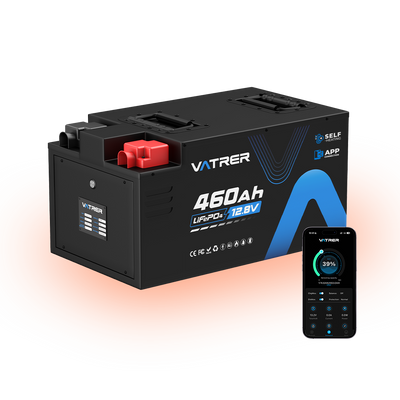
If you are upgrading to LiFePO4 for RV or trailer use, Vatrer batteries are built for deep-cycle use, off-grid setups, solar, inverters, and RV charging systems, with 4,000+ cycles. The Vatrer 12V lithium battery highlights lighter weight, faster charging, and built-in BMS protection for RV, off-grid, and trolling motor applications.
Finally
A 7-pin trailer plug can charge a trailer battery while driving, but only when the 12V auxiliary charge line is active, protected by the right fuse or breaker, grounded properly, and connected to the trailer battery. In most real-world setups, it works as a slow maintenance charge. It is not a fast charger, and it should not be your main plan for restoring a dead battery or filling a large RV battery bank.
If your trailer has a small, healthy battery and light 12V loads, the 7-pin plug may be enough to help maintain charge between stops. If you use a lithium trailer battery, run a fridge while driving, camp off-grid, or often arrive with a low battery, you will get better results from a DC-to-DC charger, solar charging, shore power, or a properly sized charging system built around how much power you actually use.
Share