What is The Holy Grail of Lithium Batteries?
Reading time: 7 minutes

Share
When you rely on batteries every day, you start noticing the limits pretty quickly. Your golf cart slows down halfway through a round. Your RV setup needs longer charging time than expected. In colder weather, performance drops off faster than you’d like. And over time, battery replacement becomes part of the routine.
That’s exactly why the idea of the holy grail of lithium batteries keeps coming up in conversations across the energy industry.
People aren’t just looking for better batteries. They want something that solves everything at once. More power, longer life, faster charging, and no safety concerns.


What Is the Holy Grail of Lithium Batteries?
When engineers talk about the holy grail of lithium batteries, they’re not talking about a single product you can buy today. They’re describing an ideal. A battery that checks every box without compromise.
If you break it down, the best lithium battery technology would need to combine several things at once. Not just one or two improvements, but a full balance across performance, safety, and cost.
Here’s what that looks like in practical terms:
- High Energy Density: You get more runtime without increasing size or weight. That means longer drives, longer trips, and fewer charges.
- Ultra-Long Cycle Life: Instead of 1,000 cycles, you're looking at 3,000 to 10,000 cycles. That translates into 8 to 15 years of use in real conditions.
- Fast Charging Capability: Not hours, but ideally under one hour for a full charge in future systems.
- Stable and Safe Chemistry: No overheating, no thermal runaway risk, even under stress or extreme temperatures.
- Wide Temperature Range: Reliable operation from below 32°F to over 100°F without major performance loss.
- Cost Efficiency at Scale: Not just high performance, but affordable enough for everyday users.
Right now, no battery hits all of these targets at the same time. That’s why the “holy grail” is still something the industry is chasing.
Why Current Lithium Batteries Are Not Yet the Best Lithium Battery Technology
Modern lithium batteries are already a big step up from lead-acid. But they still have trade-offs. And if you’ve used them long enough, you’ve probably noticed a few.
The most common limitations come from how lithium-ion systems are designed today.
- Energy and Safety Trade-Off: Higher energy density often means more reactive chemistry. That requires better thermal management.
- Cold Weather Performance: Below 32°F, charging efficiency drops. Some battery systems with a built-in BMS stop charging completely to protect the cells.
- Cost Barrier: Lithium batteries still cost more upfront than lead-acid, even though they last longer.
- Thermal Management Needs: Heat control systems add complexity, especially in high-performance setups.
According to the U.S. Department of Energy, improving energy density while maintaining safety remains one of the biggest challenges in battery research
These limitations are exactly why researchers are pushing toward next-generation battery technology that can eliminate these compromises.
Tips:
Even the most advanced batteries today are designed for reliability, not perfection. That’s an important distinction when making a buying decision.
Next-Generation Battery Technology: Moving Toward the Holy Grail
The industry isn’t standing still. There’s a lot happening behind the scenes, and some of it is pretty exciting. When people talk about the future of lithium batteries, they’re usually referring to a few key technologies that could change everything.
Solid-State Batteries: A Key Direction in the Future of Lithium Batteries
Solid-state batteries are often considered one of the strongest candidates for the holy grail of lithium batteries. The concept is simple, but the impact is huge.
Instead of using a liquid electrolyte like traditional lithium-ion batteries, they use a solid material. That changes how the battery behaves.
Here’s why that matters:
- Lithium Metal Anode: Replacing graphite with lithium metal allows significantly higher energy storage in the same space.
- Solid Electrolyte: Removes flammable liquid components, reducing fire risk and improving safety.
- Higher Energy Density: Potentially 2 to 3 times higher than current lithium-ion batteries.
- Longer Lifespan Potential: Targeting over 10,000 charge cycles in future designs.
This is a major step forward in next-generation battery technology, but there’s a catch.
Challenges of Solid-State Battery Development
The biggest challenge is something called dendrite formation. It sounds technical, but here’s the simple version.
When lithium metal is used, tiny needle-like structures can grow inside the battery. Over time, they can cause short circuits. That’s a serious safety issue.
On top of that:
- Manufacturing is complex
- Production costs are high
- Scaling for mass markets is still difficult
So while solid-state batteries look promising, they’re not ready for everyday use just yet.
Other Emerging Technologies in Battery Innovation
There are other approaches being explored as well. Not all of them will succeed, but they’re part of the bigger picture.
- Lithium-Sulfur Batteries: Higher energy density, but shorter lifespan due to degradation issues.
- Sodium-Ion Batteries: Lower cost and more abundant materials, but lower energy density.
Each of these technologies moves us closer to better performance, but none of them fully replaces lithium systems today.
Solid-State Battery vs Lithium-Ion: Which Technology Comes Closer
When comparing solid-state batteries and lithium-ion, you’re really comparing future potential with current reliability.
Battery Technology Comparison
| Technology Type | Energy Density (Wh/kg) | Cycle Life | Safety Level | Commercial Availability |
|---|---|---|---|---|
| Lithium-ion | 150–250 | 1000–2000 | Medium | Fully commercial |
| LiFePO4 | 90–160 | 3000–5000+ | High | Widely available |
| Solid-state | 300–500 (target) | 8000–10000 (target) | Very high | Limited / early stage |
Solid-state batteries are ahead in theory. But lithium-ion and LiFePO4 are what you can actually rely on today.
In real-world use, availability and consistency matter more than theoretical performance.
The Best Lithium Battery Technology Available Today: LiFePO4
If you’re looking for something practical right now, LiFePO4 stands out as one of the best lithium battery technology options available today.
It doesn’t try to be perfect. It focuses on being reliable, safe, and long-lasting.
Here’s what you actually get:
- Cycle Life of 3000–5000+: That’s typically 8 to 10 years of use.
- Stable Chemistry: Much lower risk of overheating compared to standard lithium-ion.
- Consistent Voltage Output: Your equipment runs at full power until the battery is nearly empty.
- Low Maintenance: No water refilling, no corrosion cleanup.
- Weight Advantage: Around 50% lighter than lead-acid batteries.
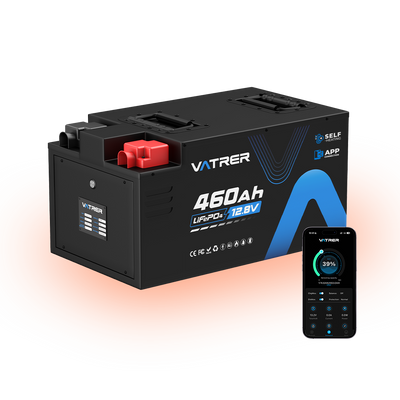
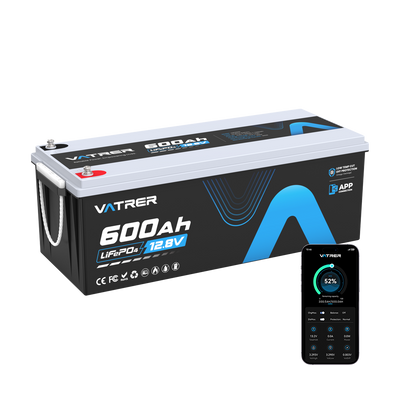
For example, Vatrer LiFePO4 batteries are designed with built-in BMS protection that prevents overcharge, over-discharge, and short circuits. Many models also include low-temperature protection, where charging automatically stops below 32°F and resumes above 41°F. With fast charging from 0% to 100% in about 2–5 hours.
Where Lithium Batteries Deliver Real-World Value Today
You don’t need a lab to see where lithium batteries make a difference. You see it in everyday use.
- Golf Carts: Stable discharge and higher efficiency improve range and performance.
- RV and Off-Grid Systems: Longer runtime and faster recharge with solar integration.
- Marine Applications: Lightweight design reduces load while maintaining power.
- Home Energy Storage: Reliable backup power with minimal maintenance.
Vatrer lithium batteries are widely used in these applications, offering real-time monitoring through Bluetooth apps or LCD displays. This allows you to track voltage, capacity, and performance directly from your phone.
The Holy Grail of Lithium Batteries Is Still Evolving
The holy grail of lithium batteries isn’t a single product sitting on a shelf. It’s a direction the industry is moving toward. Solid-state technology, lithium-metal designs, and other innovations are all part of that journey.
But today, the most practical solution isn’t about chasing perfection. It’s about choosing what works reliably right now.
LiFePO4 batteries offer that balance. Long life, stable performance, and strong safety characteristics.
Choosing a solution like Vatrer batteries means you’re not waiting on future breakthroughs. You’re using technology that already delivers consistent results, whether you're powering a golf cart, an RV, or an off-grid system.
FAQs
What is the most advanced next-generation battery technology?
Solid-state batteries are currently considered the most advanced next-generation battery technology. They offer higher energy density and improved safety, but they are still in early development and not widely available.
Is a solid-state battery better than lithium-ion?
When comparing solid-state batteries vs lithium-ion, solid-state has higher potential performance. However, lithium-ion and LiFePO4 are more practical today due to cost and availability.
What is the best lithium battery technology available today?
LiFePO4 is widely considered the best lithium battery technology for real-world use. It provides a strong balance of safety, lifespan, and reliability.
What does the future of lithium batteries look like?
The future of lithium batteries includes higher energy density, faster charging, and improved safety. Solid-state and lithium-metal technologies are key areas of development.
Is the holy grail of lithium batteries already available?
Not yet. The holy grail of lithium batteries is still a target the industry is working toward. Current technologies like LiFePO4 come close in practical applications, but no single battery meets all ideal criteria yet.
Share