30lb Thrust Trolling Motor Battery Size: How Many Ah Do You Need?
Reading time: 9 minutes

Share
For a 30lb thrust trolling motor, you usually need a 12V deep cycle battery between 50Ah and 100Ah. A 50Ah–60Ah lithium battery is a good fit for kayaks, small fishing boats, and shorter trips. If you want longer trolling motor battery runtime, more room for wind or current, or enough power for most of the day, choose an 80Ah–100Ah lithium battery. If you prefer AGM or lead-acid, look at a 100Ah–110Ah deep cycle marine battery because these batteries are heavier and offer less usable capacity in real use.
A 30lb trolling motor is common on kayaks, jon boats, inflatable boats, and small fishing boats. Most are designed to accommodate 12V batteries, it does not need a huge battery system, but battery size still matters. Go too small, and you may run out of power before you are ready to head back. Go too large, and you may add weight and cost your boat does not need.
Quick Answer: Best Battery Size for a 30lb Trolling Motor
A good 30lb thrust trolling motor battery should match your fishing time, boat size, and how much weight you want to carry. For most users, the best range is 12V 50Ah to 100Ah.
Recommended Battery Size for a 30lb Trolling Motor
| Use Case | Recommended Battery Size | Estimated Use Pattern | Best For |
|---|---|---|---|
| Very light use | 12V 30Ah lithium battery | Short, low-speed trips | Quick pond runs or backup use |
| Kayak or small boat | 12V 50Ah–60Ah lithium battery | About 3–5 hours at low to mid speed | Lighter, space-saving setup |
| Longer fishing trips | 12V 80Ah–100Ah lithium battery | About 5–7+ hours at low to mid speed | More runtime and fewer battery worries |
| AGM or lead-acid setup | 12V 100Ah–110Ah deep cycle marine battery | Heavier, lower usable capacity | Lower upfront cost |
For many small-boat anglers, a 50Ah–60Ah lithium battery gives the best mix of weight, runtime, and cost. If you often fish longer days, run in wind, or carry more gear, a 100Ah lithium battery is the more comfortable choice.
Why a 30lb Thrust Trolling Motor Uses a 12V Battery
A 30lb thrust trolling motor usually runs on 12V, not 24V or 36V. Higher-voltage systems are normally used on larger trolling motors with more thrust.
Voltage is not the same thing as capacity. A 12V motor needs a 12V battery system. A bigger Ah rating can give you more runtime, but a higher voltage can damage the motor if the motor is not designed for it.
Please follow these purchasing steps:
- Check voltage first: Most 30lb trolling motors need one 12V battery.
- Choose capacity next: Ah determines how long the battery can support the motor.
- Match the battery type: Use a deep cycle battery, not a starting battery.
- Confirm the manual: If your motor label or manual says 12V, stay with 12V.
Do not connect a 12V trolling motor to a 24V battery system just because you want more power. That is not how you extend runtime safely.
How Many Ah Do You Need for a 30lb Trolling Motor?
Ah stands for amp-hours. It tells you how much energy the battery can store. A higher Ah rating does not make your 30lb trolling motor stronger. It simply gives the motor more stored energy to draw from.
A 50Ah battery and a 100Ah battery can both run the same 30lb motor. The 100Ah battery should run longer, but it may also cost more and take up more space.
When to Choose 30Ah Battery
A 30Ah lithium battery can work, but only for light use.
- Short trips: It is best for quick fishing sessions, small ponds, or slow movement around a limited area.
- Low speed: It works better if you mostly stay at lower speed settings.
- Lightweight kayak use: It can make sense when saving space and weight matters more than long runtime.
A 30Ah battery is not a good choice for all-day fishing, strong wind, or frequent full-throttle use.
When to Choose 50Ah to 60Ah
A 50Ah–60Ah lithium battery is the practical middle ground for many kayak and small-boat users. It gives you useful runtime without adding too much weight.
- Good size for kayaks: This range is easier to carry, mount, and remove than a large lead-acid battery.
- Useful real-world runtime: At low to mid speed, you may see about 3–5 hours of use, depending on load and conditions.
- Better weight balance: Less battery weight helps small boats sit and handle better.
This size range works well for calm lakes, ponds, sheltered coves, and shorter fishing trips. If you regularly fight wind or current, move up in capacity.
When to Choose 80Ah to 100Ah
Choose 80Ah–100Ah if you want more runtime and less second-guessing on the water.
- Longer trips: At low to mid speed, this range may support about 5–7+ hours of use.
- Heavier loads: Extra tackle, a second person, a cooler, or a wider jon boat all increase demand.
- Wind and current: Tougher water conditions make the motor pull more power.
- Better margin: A 100Ah lithium battery gives you more room when the day runs longer than planned.
For most anglers who want dependable runtime, 100Ah lithium battery is the safer pick. It gives a 30lb trolling motor plenty of breathing room without the heavy feel of a similar-size lead-acid battery.
How Long Will a Battery Run a 30lb Trolling Motor?
You can estimate runtime with this formula:
Runtime = Battery Ah ÷ Motor amp draw
If a 30lb trolling motor draws about 30 amps at full throttle, the full-speed runtime looks like this:
| Battery Capacity | Amp Draw Used for Estimate | Estimated Full-Throttle Runtime |
|---|---|---|
| 30Ah | 30A | About 1 hour |
| 50Ah | 30A | About 1.6 hours |
| 60Ah | 30A | About 2 hours |
| 80Ah | 30A | About 2.7 hours |
| 100Ah | 30A | About 3.3 hours |
These numbers are full-throttle estimates. In real fishing, you probably will not run the motor wide open the whole time. Lower speed settings use less current, so actual runtime can be much longer.
What Affects Real Runtime
- Speed setting: Full throttle drains the battery fastest. Low and mid speed can stretch runtime a lot.
- Boat weight: A loaded jon boat needs more energy than a lightly rigged kayak. Extra lbs matter.
- Wind and current: Holding position in wind or moving against current increases amp draw.
- Battery type: Lithium battery usually gives you more usable capacity than AGM or lead-acid.
- Battery age: Older batteries lose capacity. A worn 100Ah battery may not perform like a new one.
- Usable capacity: Lead-acid and AGM batteries are often treated as roughly 50% usable for better life. Lithium batteries can usually use much more of their rated capacity.
This is why two batteries with the same Ah rating can feel very different on the water. A 100Ah lead-acid battery and a 100Ah LiFePO4 lithium battery are not the same experience.
Lithium vs AGM vs Lead-Acid Trolling Motor Battery
You can use lithium, AGM, or flooded lead-acid with a 30lb trolling motor, as long as the battery matches the motor voltage and is designed for deep-cycle use. The difference is weight, usable capacity, maintenance, and long-term value.
Battery Type Comparison for a 30lb Trolling Motor
| Battery Type | Typical Capacity for This Motor | Weight Profile | Maintenance | Best For |
|---|---|---|---|---|
| LiFePO4 lithium battery | 50Ah–100Ah | Lightest | Very low | Kayaks, small boats, longer runtime |
| AGM battery | 100Ah–110Ah | Heavy | Low | Sealed lead-acid option with lower upfront cost |
| Flooded lead-acid battery | 100Ah–110Ah | Heaviest | Regular maintenance | Lowest upfront cost |
Lithium battery is usually the best fit if you want less weight and more usable capacity. AGM is cleaner than flooded lead-acid, but still heavy. Flooded lead-acid can work, but it is the least convenient choice for portable small-boat use.
LiFePO4 Lithium Battery
A LiFePO4 lithium battery is usually the strongest all-around choice for a 30lb trolling motor.
- Lighter weight: This is a major benefit for kayaks and small boats. Less battery weight makes loading, carrying, and boat balance easier.
- More usable capacity: You can use more of the rated Ah compared with lead-acid batteries.
- Steadier voltage: The motor feels more consistent as the battery discharges.
- Low maintenance: No watering, no acid spills, and less routine cleanup.
- Longer cycle life: A quality LiFePO4 lithium battery can handle far more charge cycles than traditional lead-acid options.
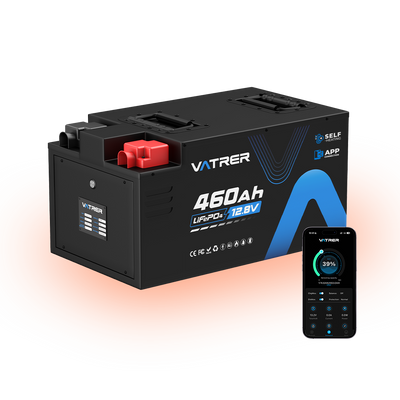
For a clean upgrade from lead-acid, a Vatrer 12V LiFePO4 lithium battery reduces weight while maintaining the original 12V trolling motor configuration.
AGM Battery
AGM is a sealed lead-acid battery. It is easier to maintain than flooded lead-acid, but it is still heavy.
- No watering: You do not need to check electrolyte levels.
- Lower upfront cost than lithium: AGM can be a middle option if lithium battery pricing is outside your budget.
- Heavy for the capacity: A 100Ah AGM battery can be awkward to carry, especially for kayak use.
- Lower usable capacity: Regular deep discharge can shorten service life.
AGM can make sense if you want a sealed battery and are not ready to move to lithium battery yet.
Flooded Lead-Acid Battery
Flooded lead-acid is the traditional low-cost option, but the tradeoffs are easy to feel on a small boat.
- Lower initial price: This is the main reason to choose it.
- High weight: A 100Ah–110Ah flooded lead-acid battery can be difficult to move by yourself.
- Maintenance required: You may need to check water levels and keep terminals clean.
- Less usable capacity: Frequent deep discharge shortens battery life.
- Less friendly for kayaks: Weight, acid, and ventilation make it less convenient.
If you choose lead-acid, choose a true deep cycle marine battery. Do not use a car battery just because it is available.
What to Check Before Buying a Trolling Motor Battery
A battery can have the right Ah rating and still be the wrong choice. Check these points before you buy.


Match the Battery Voltage
Most 30lb trolling motors need one 12V battery.
- Correct match: 12V motor with one 12V battery.
- Wrong match: 12V motor connected to 24V.
- Best habit: Read the motor label before connecting the battery.
Choose a Deep Cycle Battery
A trolling motor draws power steadily over time. That is what deep cycle batteries are built for.
- Use deep cycle: A deep cycle marine battery is designed for repeated discharge and recharge.
- Avoid starting batteries: A car battery or cranking battery is made for short engine-starting bursts.
- Protect battery life: The wrong battery type can wear out quickly under trolling motor use.
Check Weight and Space
This matters a lot on kayaks and compact boats.
- Boat balance: A heavy battery can affect trim and handling.
- Carrying weight: Think about lifting the battery in and out after every trip.
- Mounting space: Measure your battery area and leave room for cables and terminals.
Use the Right Charger and Protection
Charging and circuit protection are easy to overlook, but they help the battery and motor work safely.
- Use the right charger: LiFePO4 lithium battery needs a lithium-compatible charger. AGM and lead-acid batteries also need compatible charging profiles.
- Add circuit protection: Use a properly rated circuit breaker or fuse near the positive battery terminal.
- Keep connections tight: Loose terminals can cause heat, voltage drop, and unreliable power.
You do not need a complicated wiring system for a 30lb trolling motor. You do need the right voltage, the right battery type, and safe connections.
Final Recommendation
The right battery is the one that gives you enough usable energy without making your boat harder to handle. For a 30lb trolling motor, that usually means staying with a 12V deep cycle battery setup and choosing capacity based on how often you run the motor hard, not just how long you plan to be on the water.
Before you buy, check four things: the motor voltage, the battery’s usable capacity, the weight your boat can safely carry, and whether your charger matches the battery type. That quick check will prevent most battery-sizing mistakes.
If you're planning to replace your heavy lead-acid batteries, Vatrer lithium batteries are the most practical upgrade option. They simplify the system, reduce weight, and provide more usable power for each voyage.
Share