Can You Run a Fish Finder and Trolling Motor on One Battery?
Reading time: 16 minutes

Share
You can run a fish finder and a trolling motor on one battery in many small 12V boat setups. But not every setup should use shared battery power.
The trolling motor is the heavy load. A basic fish finder may draw around 0.5–1.5 amps, while a 12V trolling motor can pull 30–55 amps at higher speeds. That difference matters. When both devices share one battery, the motor can create electrical noise, pull voltage down, and drain the battery fast enough that your fish finder may flicker, restart, or shut off before the trip is over.
A shared battery works best on a kayak, small jon boat, or small aluminum boat with a basic 12V trolling motor and a low-power fish finder. It is not suitable when you use advanced sonar, multiple displays, a 24V or 36V trolling motor system without proper 12V power, or long all-day fishing trips where the fish finder needs stable power the entire time.


What Do Need Check Before You Share One Battery?
A one-battery system is not just about connecting both devices to the same battery posts. The battery voltage, usable capacity, fuse protection, and cable routing all affect whether the system works well.
Check the Voltage
Most fish finders are designed around 12V DC power. Many units can tolerate a range such as 10–20V DC, but that does not mean you can connect one directly to a 24V or 36V trolling motor battery bank.
Voltage Compatibility for Shared Battery Setups
| System Type | Fish Finder Power | Trolling Motor Power | Shared Battery Result |
|---|---|---|---|
| Basic 12V system | 12V DC | 12V DC | Workable with correct wiring |
| 24V trolling motor bank | 12V DC | 24V DC | Needs a separate 12V source or converter |
| 36V trolling motor bank | 12V DC | 36V DC | Needs a separate 12V source or converter |
A 12V fish finder belongs on a proper 12V supply. A full 24V or 36V battery bank is not safe power for a 12V fish finder.
Check Battery Capacity
The fish finder is not the device that drains the battery quickly. The trolling motor does that.
A small fish finder may draw less than 1 amp. A 7–9 inch display may draw around 1–3 amps. A forward-facing sonar system with a module and larger display can draw 3–6 amps or more. A 12V trolling motor, by comparison, may pull 30–55 amps at high speed.
That is why a shared battery should be a deep cycle battery, not a small starting battery. A Group 27 lead-acid deep cycle battery is often around 90–105Ah, while a 12V lithium battery used for small boats is commonly 50Ah, 100Ah, or larger.
If the trolling motor already drains the battery too quickly on its own, adding a fish finder will not solve or create the main problem. The battery simply does not have enough usable capacity for how the boat is being used.
Give the Fish Finder Clean Power
Sharing one battery does not mean sharing the same wires.
Your fish finder should not be spliced into the trolling motor power wires. It should have its own positive and negative wires running back to the battery terminals, a bus bar, or a fused distribution block.
Use an inline fuse on the fish finder’s positive wire. Many fish finder circuits use a 3A, 5A, or 7.5A fuse, but you should match the manufacturer’s recommendation. The fuse protects against overcurrent and short-circuit problems. It does not fix sonar interference by itself.
Why Trolling Motors Affect Fish Finders?
A trolling motor is not a quiet electrical load. It pulls high current, changes speed often, and can send noise through wiring if the system is not laid out well.
Electrical Interference
Electrical interference is one of the most common complaints when a fish finder and trolling motor share power. The screen may look normal when the motor is off, then show problems as soon as the motor starts.
Common signs include:
- Horizontal lines: Thin lines move across the display when the trolling motor runs.
- Screen flickering: The display brightness or image jumps when the motor speed changes.
- Random marks: The sonar screen shows clutter that does not match the bottom or fish activity.
- Pixelated sonar view: The image breaks up, especially at higher motor speeds.
- Poor bottom lock: The fish finder may struggle to hold a clean bottom reading.
This does not happen on every boat. It is more likely when the trolling motor wires and fish finder cables run close together, when the trolling motor is running at higher speeds, or when the motor design creates more electrical noise.
Voltage Drop and Resets
Voltage drop is different from interference. It is not just “noise” on the screen. It is a power supply problem.
A trolling motor can pull a large burst of current when it starts, turns hard, or runs at high speed. If the battery is weak, undersized, or connected with poor wiring, voltage can dip below the fish finder’s operating range. The display may flicker, restart, or shut off.
You will usually see this when:
- The motor jumps to a higher speed: Current draw rises quickly, and voltage dips for a moment.
- Battery state of charge is low: A lead-acid battery near 50% charge is more likely to sag under load.
- Wires are too thin or too long: Undersized wiring adds resistance and makes voltage drop worse.
- Terminals are loose or corroded: Bad contact can create intermittent power even with a good battery.
Faster Battery Drain
A fish finder can drain a battery, but it usually does not drain it fast.
The trolling motor is the main load. A motor pulling 40 amps uses the same energy in 15 minutes that a 1 amp fish finder uses in 10 hours. That gap is why many anglers blame the fish finder for dying, when the trolling motor has actually pulled the battery down first.
A shared battery works when you run the trolling motor at low or medium speed for shorter periods. It is not suitable when you hold position in wind, fight current, or run the motor near full power for long stretches.
When Can the Same Battery Be Used?
A single battery can be a good fit when your system is small, your electronics are basic, and your wiring is clean.
Simple 12V Boat Setups
One battery works best on small boats with limited power needs.
Good-fit examples include:
- Kayak fishing: You may not have space for two batteries, and every pound matters.
- Small jon boat: A single 12V deep cycle battery can keep the layout clean.
- Small aluminum boat: Basic wiring and short cable runs make interference easier to control.
- Portable fishing setup: A battery box with fused outputs can keep the system tidy.
The best version of this setup is not a messy pile of ring terminals on the battery posts. It is one deep cycle battery with protected circuits, clean terminals, and separated wiring.
Low-Power Fish Finders
A basic fish finder is easier to share with a trolling motor battery than a full electronics network.
Fish Finder Power Draw and Shared Battery Fit
| Fish Finder Type | Typical Current Draw | Shared Battery Fit |
|---|---|---|
| 4–5 inch basic sonar | 0.5–1.0A | Good fit |
| 7–9 inch fish finder/GPS | 1.0–3.0A | Workable with clean wiring |
| 10–12 inch display | 2.0–4.0A | Needs more battery margin |
| Forward-facing sonar system | 3.0–6.0A+ | Use separate electronics power |
The larger and more advanced your fish finder system gets, the more it needs stable power. A small sonar unit can share a battery more easily than a large display with a live sonar module.
Short Trips and Stable Performance
A one-battery setup is easier to trust when your trips are short and your motor use is moderate.
You are in better shape when:
- Trips are under 4–6 hours: Less total run time gives the battery more margin.
- The motor runs mostly at low or medium speed: Current draw stays far below peak.
- The screen stays clean when the motor runs: No flickering, lines, or random marks.
- The fish finder does not reboot: Stable voltage is a good sign.
- The battery is healthy: A deep cycle battery in good condition handles shared loads better.
If you test the setup on the water and everything stays stable, one battery can work. Recheck performance as the battery ages or when wind and current force higher trolling motor speeds.
When to Use a Separate Fish Finder Battery
A separate fish finder battery is not required for every boat. It is the better choice when the fish finder needs stable power and clean sonar performance.
Sonar Noise or Screen Flickering
When the fish finder screen changes every time the trolling motor runs, separate power is one of the fastest tests.
Try a small 12V battery directly on the fish finder. If the screen clears up, the problem is likely tied to shared power, wiring layout, or trolling motor noise. That test saves time because it separates a sonar problem from a power problem.
A dedicated fish finder battery gives the display cleaner power. It also keeps the fish finder alive if the trolling motor battery is pulled down heavily.
Advanced Sonar or Multiple Displays
Advanced electronics need better voltage stability. They also draw more current.
Separate battery power is the right choice when you run:
- Forward-facing sonar: Live sonar modules can add several amps of load.
- Large displays: A 10–12 inch screen may draw 2–4 amps depending on brightness and features.
- Multiple fish finders: Two displays can double the electronics load.
- Networked electronics: Sonar modules, GPS, and accessories all add demand.
- Long cable runs: More distance means more chance for voltage drop and noise.
A dedicated electronics battery keeps these devices away from the trolling motor’s heavy current spikes. That is often the cleanest way to protect image quality.
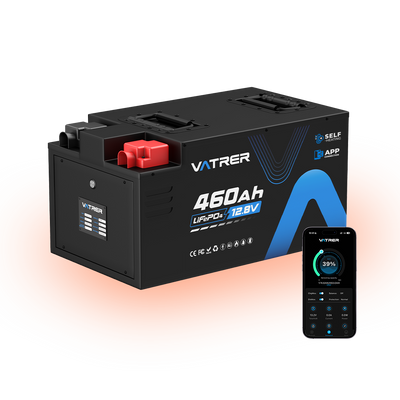
If your goal is to isolate your fish finder from trolling motor noise without the burden of a heavy lead-acid battery, the Vatrer 12V deep-cycle lithium battery offers a lightweight solution that delivers stable 12V power. It ensures consistent operation for your sonar and GPS without adding excessive weight to your kayak or small boat.
All-Day Fishing or GPS Dependence
A shared battery is not the right setup when your fish finder is more than a nice-to-have screen.
If you rely on GPS routes, waypoints, depth, or sonar to stay on fish, the fish finder should not be the first device to lose power when the trolling motor battery gets low. A separate battery gives you a backup layer. The trolling motor can drain down, while your electronics still have their own supply.
That matters on big lakes, tidal water, or any place where navigation and depth information help you get back safely.


How to Setup 24V and 36V Trolling Motor?
Many wiring mistakes happen on 24V and 36V boats. A 24V or 36V trolling motor system is not the same as a 12V battery system, even if it is built from 12V batteries.
Avoid Full-Bank 24V/36V Power
A 12V fish finder should not be connected across a full 24V or 36V trolling motor battery bank.
The voltage is too high. A fish finder designed for 12V power can be damaged if it receives 24V or 36V. Some electronics have voltage protection, but you should not depend on that to save the device. The correct move is to power the fish finder from a proper 12V source.
Avoid Tapping One Series Battery
It may look tempting to connect the fish finder to just one 12V battery inside a 24V or 36V series bank. That creates a new problem.
When one battery powers extra electronics and the others do not, the bank becomes unbalanced. One battery discharges more than the rest. Over time, that uneven draw can affect charging balance, shorten battery life, and make the trolling motor system less consistent.
This applies to lead-acid and lithium battery banks. Balanced batteries age better and charge more evenly.
Use a Proper 12V Source
Use one of these instead:
Proper 12V Power Options for 24V/36V Boats
| Power Option | Best Use | Notes |
|---|---|---|
| Dedicated 12V starting battery | Boats with outboards | Common source for basic electronics |
| Dedicated house/electronics battery | Multiple displays or sonar modules | Best for clean power and runtime |
| Marine-rated DC-to-DC converter | Space-limited systems | Must match the fish finder’s amp draw |
| Small 12V lithium battery | Kayak or portable electronics | Light, clean, and easy to isolate |
A DC-to-DC converter should be rated for marine use and sized above the fish finder’s load. If the electronics draw 4 amps, a converter rated around 8–10 amps gives useful margin.
How to Wire One Battery Safely For Fish Finder and Trolling Motor
Good wiring cannot make a weak battery strong, but it can prevent many shared-battery problems.
Run Direct Fish Finder Wiring
Run the fish finder’s positive and negative wires directly to the battery, bus bar, or fused distribution block. Do not splice into the trolling motor wires.
That separation helps reduce noise coupling and voltage drop. It also makes troubleshooting easier because each device has its own circuit.
Use Fuses or Circuit Breakers
Both devices need protection on the positive side.
Fuse and Breaker Reference for Shared Battery Wiring
| Circuit Type | Protection Range | Purpose |
|---|---|---|
| Fish finder circuit | 3–7.5A inline fuse | Protects the fish finder wiring |
| Basic electronics circuit | 5–15A fuse block | Protects accessory wiring |
| 12V trolling motor circuit | 50–60A breaker | Protects high-current motor wiring |
Always follow the device manual when it gives a specific fuse or breaker rating. A fuse that is too large may not protect the wiring. A fuse that is too small may blow during normal use.
Separate Power and Transducer Cables
Cable routing has a real effect on sonar quality.
Keep fish finder power cables and transducer cables away from trolling motor power wires. A separation of 6–12 inches is a good target when space allows. Do not run them side by side in the same wire loom for several feet.
If the cables must cross, cross them at a 90-degree angle. Avoid coiling extra transducer cable into a tight loop near trolling motor wiring. A loose figure-eight coil is usually better than a tight circular coil.
Use Clean Connections and Proper Wire Gauge
Poor connections can make a good battery act like a bad one.
Use marine-grade terminals, tighten all battery connections, and keep corrosion away from ring terminals and fuse holders. For fish finder power leads, 16–18 AWG is common for short runs, but longer runs may need thicker wire. For trolling motor wiring, 6–8 AWG is common on many 12V systems, depending on current and cable length.
Do not guess on long runs. Voltage drop gets worse as wire length increases.
Add Filters After Basic Checks
Filters can help, but they should not be your first fix.
Check wiring, fuses, grounds, terminals, cable separation, and battery condition before adding parts. If the fish finder still shows noise, try these options:
- Ferrite beads: Clip them onto the fish finder power cable or transducer cable to reduce high-frequency noise.
- Chokes: Use them when interference follows the cable path.
- 12V DC EMI filter: Install it between the battery and fish finder power lead.
- Trolling motor wire pairing: Keep the positive and negative trolling motor cables close together where practical. Twisting them together may reduce the electromagnetic field around the wires.
These methods can reduce interference. They cannot fix low voltage, weak battery capacity, or poor cable routing.
One Battery vs Separate Batteries: Which is the Best?
There is no single setup that fits every boat. The better choice depends on whether you want the lightest setup or the most stable electronics power.
Use One Battery for Simple Setups
One battery can be the right call when the system is small and predictable.
One-Battery Setup Fit
| Setup Factor | Good Fit | Poor Fit |
|---|---|---|
| Boat size | Kayak, small jon boat, small aluminum boat | Larger boat with many electronics |
| Trolling motor | 12V motor | 24V or 36V system |
| Fish finder | Basic 4–7 inch unit | Live sonar or multiple screens |
| Trip length | 2–6 hours | All-day fishing |
| Wiring | Direct fused fish finder circuit | Spliced into motor wires |
A shared battery is most practical when the fish finder is a light load and the trolling motor does not run near full power all day.
Use Separate Batteries for Reliability
Separate batteries are better when clean power matters more than saving space.
You get three direct benefits:
- Cleaner sonar image: The fish finder is isolated from trolling motor current spikes.
- More dependable electronics: GPS and sonar stay powered even when the trolling motor battery drops.
- Easier troubleshooting: You can quickly tell whether a problem is from the motor circuit or the electronics circuit.
This is why many anglers move to a dedicated electronics battery after adding a larger display or forward-facing sonar.
Quick Setup Recommendations
Recommended Battery Setup by Boat and Electronics Load
| Setup | Recommended Battery Choice |
|---|---|
| 12V kayak, basic fish finder, short trips | One battery can work |
| 12V jon boat, 7 inch fish finder, moderate motor use | One battery can work with clean wiring |
| Screen flickers when motor runs | Test a separate fish finder battery |
| 24V/36V trolling motor system | Use a proper 12V source or DC-to-DC converter |
| Live sonar, multiple displays, all-day fishing | Use a dedicated electronics battery |
One battery is about simplicity. Separate batteries are about cleaner power, better fault isolation, and fewer shutdowns on the water.
Common Mistakes to Avoid When Using One Batteries
Most shared-battery problems come from a few repeat mistakes. They are easy to avoid once you know what to look for.
Connecting 12V Fish Finder to 24V/36V
Do not connect a 12V fish finder to a full 24V or 36V trolling motor bank. That is the fastest way to damage the fish finder.
Use a true 12V source, a dedicated electronics battery, or a marine-rated DC-to-DC converter.
Splicing into Trolling Motor Wires
Do not power the fish finder from the trolling motor wires.
The trolling motor circuit is a high-current path. Your fish finder needs its own clean, fused circuit. Same battery, separate wiring.
Skipping Fuses or Circuit Breakers
A fish finder should have an inline fuse. A trolling motor should have a suitable breaker or fuse.
That protection is not optional. It protects wiring from short circuits and overcurrent problems. It also makes the system safer to service.
Running All Cables Together
Do not bundle the fish finder power cable, transducer cable, and trolling motor power cable together for long runs.
That layout invites noise. Keep them separated where possible, and cross at 90 degrees when they need to meet.
Using an Undersized Battery
A weak battery makes every other problem worse.
Small capacity increases battery drain. Poor voltage stability increases fish finder resets. Old lead-acid batteries are especially likely to sag under trolling motor load.
If you want a one-battery system, give the system enough battery to work with. A Vatrer lithium trolling motor battery can help when you want more usable capacity, steadier voltage, and less weight than a comparable lead-acid battery, but it still needs to match your trolling motor use.
Conclusion
You can run a fish finder and trolling motor on one battery when the system is simple, 12V, and wired correctly. It works best with a basic fish finder, a healthy deep cycle battery, short-to-medium trips, and a separate fused power run for the electronics.
A separate fish finder battery is the better choice when you see screen flickering, sonar noise, voltage-related resets, or when you use advanced sonar and multiple displays. It also makes sense on all-day trips where GPS and sonar need to stay on even if the trolling motor battery gets low.
One battery works when simplicity matters and the system stays stable. Separate batteries work better when clean power and reliable electronics matter more.
Share