Upgrading Your EZGO Golf Cart to Lithium Batteries: Expert Recommendations and Insights
Reading time: 7 minutes
Upgrading an EZGO golf cart from lead-acid batteries to lithium is one of the most effective ways to improve driving range, acceleration, charging speed, and day-to-day reliability. For many U.S. golf cart owners, this upgrade makes sense whether the cart is used on the course, around a gated community, at a lake house, on a campground, or for light utility work around a property.
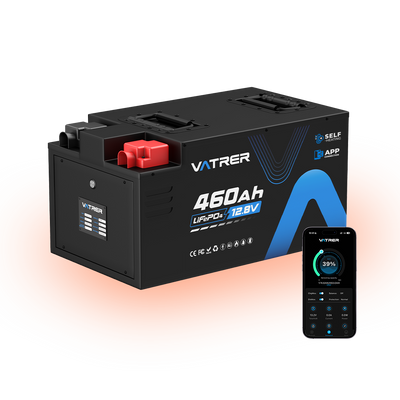
Traditional lead-acid batteries are heavy, require regular maintenance, and gradually lose power as they discharge. A quality 48V lithium battery gives your EZGO cart a more consistent power curve, quicker charging, and a cleaner battery bay. If your cart is already running a 48V system, the Vatrer 48V lithium battery is a strong upgrade option designed to simplify the conversion while improving overall performance.
Why Upgrade an EZGO Golf Cart to Lithium Batteries?
Lead-acid battery packs have powered golf carts for decades, but they come with several drawbacks. A full lead-acid pack can add significant weight to the cart, and that extra weight affects acceleration, hill climbing, braking, tire wear, and range. Lead-acid batteries also need watering, terminal cleaning, equalization in some cases, and careful charging habits.
Lithium batteries reduce many of those concerns. They are lighter, more energy efficient, and able to deliver steadier voltage throughout the discharge cycle. This means your EZGO cart can feel more responsive, especially when carrying passengers, climbing grades, or driving across larger properties.
Recommended 48V Lithium Battery for EZGO Golf Carts
The Vatrer 48V lithium golf cart battery is built for carts that need strong current output, long cycle life, and simple monitoring. For EZGO owners replacing a 48V lead-acid pack, it offers a clean single-pack solution instead of managing multiple heavy batteries.
This type of upgrade is especially valuable for carts used frequently in golf communities, resorts, vacation rentals, private farms, neighborhoods, and recreational properties where downtime and maintenance can become frustrating.
High-Output Performance for Daily Driving
The Vatrer 48V lithium battery uses EVE Grade A cells and a built-in 200A BMS. It supports 200A continuous discharge, with peak output up to 400A for 35 seconds and 600A for 3 seconds. This helps the cart handle stronger acceleration, short power surges, and hill starts more confidently than many aging lead-acid packs.
For EZGO carts used on rolling terrain or loaded with passengers, current output matters. A battery that cannot supply enough current may cause sluggish starts, reduced speed under load, or controller protection issues. A properly matched lithium pack helps the cart maintain stronger, more predictable performance.
Built-In Safety Protection
A lithium conversion should never be judged by capacity alone. Safety protection is just as important. The built-in BMS helps protect the battery against overcharging, over-discharging, overcurrent, short circuits, and temperature-related issues. This is especially useful for golf carts that are driven by multiple users, such as rental guests, family members, staff, or community residents.
Compared with a traditional lead-acid pack, a lithium battery with integrated protection reduces the risk of damage caused by poor charging habits or excessive discharge. It also helps preserve battery life over repeated use.
App-Based Battery Monitoring
Real-time monitoring is one of the most useful advantages of a modern lithium golf cart battery. With app connectivity, you can check battery voltage, current, temperature, state of charge, and overall status. This makes it easier to understand how your cart is performing and when it needs to be recharged.
For property owners or fleet users, battery monitoring can also reduce guesswork. Instead of relying only on a basic dash meter, you can review important battery data directly and identify potential issues before they affect the cart’s operation.
Longer Range and Faster Charging
A properly installed Vatrer 48V lithium battery can support up to about 50 miles of range on a single charge, depending on cart model, load, tire size, speed, terrain, driving habits, and accessory use. That range is a major improvement for many EZGO owners who are tired of watching lead-acid performance decline halfway through the day.
The included 58.4V 22A charger can recharge the battery from 0% to 100% in about 5 hours. For golf courses, Airbnb properties, resorts, and neighborhood carts, faster charging means the cart can return to service sooner and spend less time parked near an outlet.
Cold Weather Protection
Many parts of the United States experience cold mornings, especially in mountain regions, northern states, and winter golf destinations. Low-temperature protection helps prevent battery damage when conditions are outside the safe charging or discharging range. This is an important feature for anyone storing or using a golf cart in a garage, barn, shed, or unheated cart storage area.

Before You Convert Your EZGO Cart to Lithium
Before removing the old batteries, confirm that your EZGO cart is compatible with a 48V lithium conversion. Check the cart model, year, controller rating, motor condition, battery tray space, cable layout, charger compatibility, and accessory wiring. EZGO TXT and RXV models may have different configurations, so always compare the battery specifications with your cart’s requirements.
| Item to Check | Why It Matters |
| System voltage | The battery must match the cart’s 48V electrical system. |
| Battery tray dimensions | The lithium pack must fit securely in the available space. |
| Controller current demand | The BMS must support the current required by the cart. |
| Charger type | Lead-acid chargers are not always suitable for lithium batteries. |
| Accessory wiring | Lights, stereos, USB ports, and voltage reducers should be checked. |
Installation Tips for EZGO Golf Carts
1. Prepare the Cart Safely
Park the cart on a flat surface, turn the key off, set the run/tow switch to the correct service position if your model has one, and disconnect the charger. Wear gloves and eye protection before working around batteries. Remove jewelry and keep metal tools away from exposed terminals.
2. Remove the Old Lead-Acid Batteries
Take photos of the existing wiring before disconnecting anything. Label cables if needed. Remove the negative cable first, then continue removing the series cables and hold-down hardware. Lead-acid batteries are heavy, so lift carefully or use proper equipment. Recycle the old batteries through an approved battery recycling location.
3. Clean and Inspect the Battery Bay
Once the lead-acid batteries are removed, clean the tray and inspect for corrosion, loose hardware, cracked cables, or damaged insulation. This is the best time to replace worn cables, clean grounds, and make sure the tray is ready for the new lithium pack.
4. Position and Secure the Lithium Battery
Place the Vatrer 48V lithium battery in the tray according to the installation orientation recommended by the manufacturer. Secure it with the supplied bracket, screws, or approved hold-down hardware. The battery should not slide, bounce, or shift during driving.
5. Connect the Main Power Cables
Connect the cart’s main positive and negative cables to the correct battery terminals. Make sure every connection is tight, clean, and properly insulated. Incorrect polarity can damage the controller, charger, or battery, so verify connections before powering the cart.
6. Install the Charger and Monitoring Components
Use the lithium charger supplied with the battery or a charger approved for the battery’s voltage and chemistry. If the battery includes a display, app connection, or state-of-charge meter, install and configure it before regular driving.
7. Test the Cart in a Controlled Area
After installation, power the cart on and test it slowly in a safe open area. Check forward and reverse operation, braking, acceleration, charger function, and app data. Monitor the battery status during the first few rides to confirm normal performance.
8. Continue Basic Maintenance
Lithium batteries do not need watering, but the system still deserves regular checks. Inspect cable tightness, keep terminals clean, review app data, and make sure the charger and battery remain dry and properly ventilated.

Common Benefits After the Upgrade
Less weight: Reducing battery weight can improve handling, acceleration, and efficiency.
More consistent power: Lithium voltage stays steadier than lead-acid voltage during discharge.
Lower maintenance: No watering, no acid spills, and less terminal corrosion.
Faster recharge time: A compatible lithium charger helps reduce downtime.
Cleaner battery compartment: A single lithium pack can simplify the cart’s electrical layout.
Conclusion
Upgrading an EZGO golf cart to a 48V lithium battery is a practical way to improve range, power delivery, charging speed, and reliability. The Vatrer 48V lithium battery is a strong fit for many EZGO 48V carts because it combines high current output, BMS safety protection, app monitoring, rapid charging, and cold-weather safeguards. With careful compatibility checks and proper installation, this conversion can make your EZGO cart easier to maintain and more enjoyable to drive across golf courses, neighborhoods, resorts, and private properties.
Share