Everything You Wanted to Know About Heated Lithium Battery
Reading time: 7 minutes
Introduction
If you use lithium batteries in cold weather, you have probably heard one warning more than once: do not charge a standard lithium battery below freezing unless it is designed for it. That becomes a real concern for RV owners, boaters, off-grid homeowners, overlanders, and anyone storing power equipment in an unheated garage, shed, trailer, or cabin.
A heated lithium battery helps solve that problem by using built-in heating elements to bring the battery to a safer operating temperature before charging. Instead of letting freezing temperatures limit performance or risk damage, a self-heating lithium battery manages its internal temperature so it can work more reliably in cold environments.
This guide explains what a heated lithium battery is, how it works, when you may need one, what temperature limits matter, and what benefits and trade-offs to consider before buying.
What Is a Heated Lithium Battery?
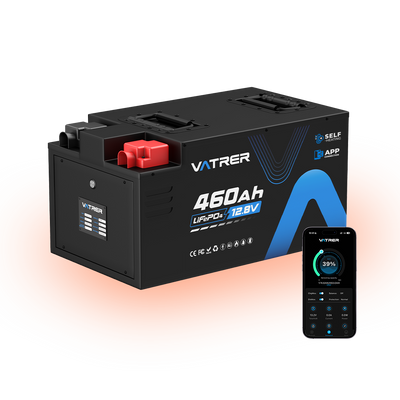
A heated lithium battery is a lithium battery with an internal heating system built into the battery case. In most modern deep-cycle applications, this usually means a LiFePO4 heated lithium battery with heating pads, temperature sensors, and a battery management system, often called a BMS.
The main purpose of the heating system is to protect the battery in cold conditions. Standard lithium batteries can discharge in cold weather within their rated range, but charging below the recommended temperature can damage the cells. A heated model is designed to warm itself before or during charging, depending on the battery design.
This makes heated lithium batteries especially useful for RVs, marine systems, solar storage, hunting cabins, backup power, and other setups that may face freezing temperatures.
How Does a Heated Lithium Battery Work?
A heated lithium battery works by using a built-in heating element that activates when the battery temperature drops below a preset threshold. The heating system draws power from a charger, the battery itself, or an external source depending on the design.
Temperature sensors monitor the battery cells. When the battery is too cold for safe charging, the BMS can direct power to the heating pads first. Once the internal temperature reaches a safe range, the battery can begin accepting charge normally.
The process is automatic in many self-heating batteries. You do not usually need to manually switch the heater on. The battery decides when heating is needed based on its internal temperature.

One thing to remember is that heating uses energy. If the battery must warm itself in very cold weather, some power will be used for heat instead of directly charging the cells or running loads. That small energy cost is usually worth it when the alternative is poor charging performance or possible cold-temperature damage.
Do You Need a Heated Lithium Battery?
You may not need a heated lithium battery if your battery is always installed indoors, kept above freezing, or used only in warm weather. But if your battery regularly sees cold temperatures, a heated model can be a smart upgrade.
In the U.S., heated lithium batteries are especially useful for RVers in northern states, mountain campers, ice fishing setups, winter solar systems, boats stored in cold climates, and off-grid cabins where temperatures can fall below freezing overnight.
1. RVs, Overlanding, and Outdoor Power Systems
Cold-weather camping puts extra stress on batteries. If your RV battery bank is mounted in an exterior compartment, under the trailer, or in an unheated storage bay, low temperatures can limit charging. A heated LiFePO4 battery helps protect the battery during cold morning solar charging, generator charging, or shore power charging.
It can also help outdoor electronics, remote cameras, GPS devices, monitoring systems, and security equipment stay more reliable in harsh weather.

2. Medical and Emergency Equipment
Some mobile medical equipment and emergency support systems need dependable battery power even when temperatures are low. While not every medical device uses a heated lithium battery, the concept is important: temperature control can help maintain stable performance in applications where power failure is not acceptable.

3. Aerospace, Industrial, and Remote Systems
Heated lithium battery technology is also useful in demanding environments where equipment must work through extreme temperature swings. Aerospace, remote monitoring, telecom, and industrial systems may use battery heating to keep power systems within a safe operating range.

What Temperature Is Too Low for a Heated LiFePO4 Battery?
Many LiFePO4 batteries can discharge in cold conditions, often down to around -20°C (-4°F), depending on the model. Charging is the more sensitive issue. For many LiFePO4 batteries, charging should begin only at or above 0°C (32°F) unless the battery has low-temperature charging protection or self-heating capability.
A common operating range for LiFePO4 batteries is around -20°C to 60°C (-4°F to 140°F) for discharge, while the best performance and longest life usually come from keeping the battery in a more moderate range such as 0°C to 45°C (32°F to 113°F).
Heated batteries help by warming the cells before charging. This does not mean every heated battery can be used the same way in every cold environment. The exact temperature limits depend on the battery design, heating power, BMS settings, charger compatibility, and manufacturer specifications.

For example, the Vatrer 12V 100Ah LiFePO4 Heated Lithium Battery is designed with defined temperature ranges, including a charge temperature range of 0°C to 50°C (32°F to 122°F), a discharge temperature range of -20°C to 60°C (-4°F to 140°F), and a storage temperature range of -10°C to 50°C (14°F to 122°F). These ranges help guide safe use, charging, and storage.
With self-heating technology and temperature monitoring, a heated LiFePO4 battery can be a practical solution for users who need reliable power in cold climates.

Benefits of Heated Lithium Batteries
1. Better Cold-Weather Charging
The biggest advantage is safer and more reliable charging in cold weather. The heating system helps bring the battery cells into a suitable temperature range before accepting charge, which is especially useful for solar charging on freezing mornings.
2. More Reliable Power in Harsh Conditions
A heated lithium battery can help maintain more consistent output in cold environments. That matters for RV furnaces, lights, pumps, inverters, fish finders, communication gear, and backup systems.
3. Longer Battery Life When Used Correctly
Cold charging can damage lithium cells if the battery lacks protection. A heated battery helps reduce that risk by preventing charging when the cells are too cold or by warming them first.
4. Lower Maintenance Than Lead-Acid
Compared with flooded lead-acid batteries, heated LiFePO4 batteries do not need watering, acid checks, or the same level of terminal maintenance. They are also lighter and typically provide more usable capacity.
5. More Flexible Installation Options
A heated battery may give you more flexibility if the battery compartment is not fully climate-controlled. This is useful in RVs, vans, trailers, boats, and cabins where indoor installation may not be practical.
Challenges and Considerations
1. Heating Uses Energy
The built-in heater consumes power. In freezing weather, some incoming charge energy may be used to warm the battery before the cells begin charging. This can make charging take longer.
2. Higher Upfront Cost
Heated lithium batteries usually cost more than non-heated models because they include heating pads, sensors, and control logic. The extra cost may be worth it if you often use batteries in cold weather.
3. Charger Compatibility Still Matters
A heated battery still needs the right charger. Use a charger or charge controller with a lithium-compatible profile and follow the battery manufacturer’s voltage and current limits.
4. Not a Substitute for Proper Storage
Self-heating helps during cold charging, but it does not mean the battery should be neglected. Store the battery at the recommended state of charge, avoid unnecessary exposure to extreme temperatures, and disconnect parasitic loads during long storage.
Heated vs Non-Heated Lithium Battery
| Feature | Heated Lithium Battery | Standard Lithium Battery |
|---|---|---|
| Cold Charging | Can warm itself before charging, depending on design | Should not be charged below freezing unless protected |
| Best Use | Cold-weather RVs, boats, solar systems, cabins, outdoor equipment | Warm climates or indoor installations |
| Cost | Higher upfront cost | Lower upfront cost |
| Energy Use | Uses some energy for heating | No heater energy draw |
| Cold-Weather Convenience | Better for freezing conditions | Requires more careful temperature management |
Final Thoughts
A heated lithium battery is designed for users who need dependable lithium power in cold conditions. It uses built-in heating elements, temperature sensors, and BMS protection to help keep the battery within a safer charging range.
For RVs, off-grid cabins, marine systems, outdoor electronics, solar power, and winter backup setups, a heated LiFePO4 battery can be a smart investment. The key is to choose the right capacity, confirm the temperature ratings, use a compatible charger, and follow the manufacturer’s storage and charging instructions.
Share