How to Charge Two 12V Lithium Batteries in Series and Parallel?
Reading time: 8 minutes

Share
When building or maintaining a power system for an RV, boat, solar setup, or golf cart, understanding how to connect and charge two 12V batteries is essential. The way you wire and charge your batteries, either in series or parallel, determines your system's total voltage, capacity, and performance. Incorrect charging can shorten battery life or even cause safety issues.
This guide walks through everything you need to know about charging two 12V lithium batteries in series and parallel, including how each setup works, proper charging methods, safety practices, and the best tools to use for safe and efficient charging.
Key Takeaways
- Series connection doubles the voltage (12V + 12V = 24V) but keeps the same capacity (Ah).
- Parallel connection keeps the voltage at 12V but doubles the capacity for longer runtime.
- Use a 24V charger for series connections and a 12V charger for parallel ones.
- Always match battery type, age, and charge level before connecting.
- Smart chargers and BMS-equipped lithium batteries help ensure safe, balanced charging.
- Regular monitoring prevents overcharging, voltage imbalance, and safety risks.


Understanding 12V Battery Series and Parallel Connections
To understand how to charge two 12V batteries properly, it's important to first grasp how series and parallel wiring work. Both methods combine batteries, but they serve different purposes and require different charging setups.
- In a series connection, you connect the positive terminal of one battery to the negative terminal of the other. This adds the voltages together. For example, two 12V 100Ah batteries in series create a 24V 100Ah system, perfect for powering high-voltage systems like solar inverters. However, the capacity (Ah) stays the same, so the runtime doesn't increase.
- In a parallel connection, you connect the positive terminals together and the negative terminals together. This keeps the system voltage at 12V, but the capacity doubles, two 12V 100Ah batteries become a 12V 200Ah system. This configuration is ideal for RVs or boats that need longer running time at 12V.
The main difference lies in the voltage and capacity output. Series setups are about higher voltage, while parallel setups are about longer endurance. Each requires a unique charging strategy to keep the batteries balanced and safe.
How to Charge Two 12V Batteries in Series
Charging two 12V batteries in series means you're working with a 24V system, not 12V. Therefore, you must use a 24V charger or solar charge controller designed for 24V systems. Using a single 12V charger on a series pair won't provide enough voltage and can damage the batteries or charger.
Step-by-Step Guide
- Check Compatibility: Ensure both batteries are of the same type, capacity, and charge level. Mixing brands or battery conditions can cause uneven charging.
- Connect in Series: Link the positive terminal of Battery A to the negative terminal of Battery B. The remaining two terminals (the free positive and free negative) are your system output points.
- Connect the Charger: Attach the charger's positive lead to the open positive terminal and the negative lead to the open negative terminal.
- Start Charging: Use a 24V charger that automatically stops when full. Smart chargers help balance both batteries evenly.
- Monitor Voltage: Check the combined system voltage periodically to ensure both batteries charge uniformly.
Important Notes
- Never use a 12V charger on two batteries connected in series, it won't charge properly and could overheat.
- Always disconnect the batteries before charging them individually.
- Lithium batteries like LiFePO4 often include a built-in Battery Management System (BMS) that automatically protects from overcharging or imbalance.
Tips: For long-term setups like solar systems or electric carts, use a charger with temperature compensation and overvoltage protection to maximize battery lifespan.
How to Charge Two 12V Batteries in Parallel
When charging two 12V batteries in parallel, the goal is to keep both at the same voltage level. Since the voltage remains 12V, a standard 12V charger can be used. However, the current distribution between the batteries must be balanced for safety and efficiency.
Step-by-Step Guide
- Voltage Check: Before connecting, verify both batteries have nearly identical voltages, ideally within 0.1V of each other.
- Parallel Connection: Connect the positive terminals together and the negative terminals together. Use cables of equal length and gauge to keep resistance balanced.
- Attach the Charger: Connect the charger's positive and negative leads to one of the batteries (they will charge together).
- Start Charging: Power on the charger and allow it to run until both batteries reach full charge. Smart chargers automatically taper current when nearing 100%.
Safety Precautions
- Avoid connecting batteries with significantly different charge levels, as it can cause cross-current, where one battery rapidly charges the other.
- Use a fused link or circuit breaker between batteries to protect against short circuits.
- Periodically disconnect and charge each battery individually to keep them equalized.
Tips: Smart 12V chargers with automatic equalization help manage voltage differences and maintain consistent charge between both batteries.
12V Batteries Series vs Parallel Charging: Key Differences
Understanding how series and parallel charging differ helps you choose the right setup for performance, safety, and battery longevity. While both methods combine two 12V batteries, the way energy flows and how you must charge them is very different.
Electrical Behavior and Charging Impact
- Series Charging: Voltage increases (12V + 12V = 24V), while capacity (Ah) stays the same. The charger must deliver double the voltage-hence, a 24V charger is required. Both batteries charge at the same current, so any imbalance in internal resistance can cause one battery to overcharge faster than the other.
- Parallel Charging: Voltage remains 12V, but capacity doubles. A 12V charger can be used, and the current is split between the two batteries. This allows for longer runtime but requires both batteries to start at nearly equal voltage to prevent backflow current between them.
Efficiency, Balance, and Maintenance
- Series systems are more efficient for high-power applications (solar inverters, golf carts, large trolling motors) but require precise voltage balancing to avoid stressing one battery more than the other.
- Parallel systems are more forgiving in load distribution but prone to current imbalance if the cables are of unequal length or gauge. Periodic individual charging or the use of a smart balancer is recommended to maintain equality.
Safety and Application Suitability
- Series Connection: Better suited for 24V or higher-voltage systems, but the increased voltage also means greater electrical risk, use insulated connectors and overvoltage protection.
- Parallel Connection: Safer for smaller 12V systems, such as RVs or marine batteries, where longevity and capacity are prioritized over voltage. However, mismatched batteries can still overheat if one carries more load.
Core Differences Between Series and Parallel Charging Table
| Aspect | Series Connection | Parallel Connection | What It Means for Charging |
|---|---|---|---|
| Total System Voltage | Adds up (12V + 12V = 24V) | Stays at 12V | Determines charger voltage requirement |
| Total Capacity (Ah) | Same as one battery | Doubled | Affects total runtime and charge duration |
| Charging Current Flow | Equal through both batteries | Split between both batteries | Imbalance in one can stress the other |
| Charger Type Required | 24V charger | 12V charger | Must match system voltage exactly |
| Balancing Need | Higher (voltage drift risk) | Moderate (current drift risk) | Smart BMS or equalization charger recommended |
| Typical Use Cases | Solar systems, golf carts, off-grid setups | RVs, boats, backup power | Depends on power vs runtime priority |
| Primary Risk | Uneven charge/discharge between cells | Cross-current or backfeeding between batteries | Use fuses, identical batteries, and monitoring tools |
Regardless of the setup, both methods require batteries of the same brand, type, and charge state to maintain performance and safety.
Safety Tips for Series and Parallel Charging Two 12V Batteries
Safety should always come first when working with battery systems. Even small mistakes like reversed polarity can cause significant damage. Follow these essential precautions:
- Match Batteries: Only connect batteries with the same chemistry, brand, capacity, and age.
- Check Polarity Twice: Reverse polarity can permanently damage chargers or batteries.
- Use Protective Components: Install fuses, insulated terminals, and heavy-duty cables.
- Avoid Extreme Temperatures: Don’t charge below 32°F (0°C) or above 113°F (45°C).
- Monitor Frequently: Use a voltmeter or smart monitor to watch for imbalance.
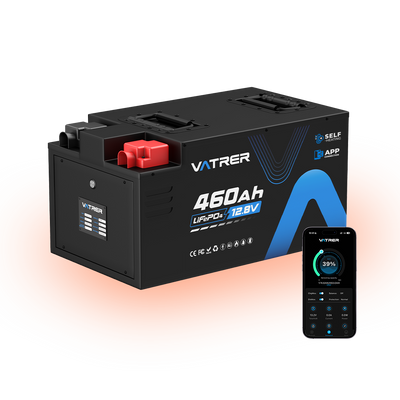
- Use BMS for Lithium Batteries: Systems like the Vatrer lithium battery BMS automatically handle overcharge, over-discharge, and temperature protection.
Tips: For long-term reliability, test each battery every few months for internal resistance and voltage drift.
Recommended Chargers and Battery Monitoring Options
Choosing the right charger is as important as connecting batteries correctly. The wrong charger can undercharge, overcharge, or shorten your battery life.
Charger Options
- 12V Smart Chargers: Ideal for parallel setups, automatically stop charging when full.
- 24V Smart Chargers: Necessary for series connections, provide voltage-specific charging curves.
- MPPT Solar Charge Controllers: For solar systems, match the controller's voltage rating with the system (12V or 24V).
Monitoring Tools
- Modern battery systems benefit from real-time monitoring.
- LCD or Bluetooth Displays: Show live voltage, amperage, and state of charge (SOC).
- Mobile Apps: Many lithium batteries, including Vatrer Battery models, allow users to monitor battery status through Bluetooth.
Tips: Look for chargers with overvoltage protection, temperature compensation, and balancing functions to keep batteries healthy for years.
Smart and Efficient Charging Tips for Series and Parallel Batteries
To ensure long battery life and consistent performance, follow these best practices:
- Always check voltage levels before connecting.
- Use equal-length cables to ensure even current flow.
- Match your charger voltage with the connection type (12V for parallel, 24V for series).
- Avoid over-discharging batteries below 20% SOC.
- Periodically perform individual battery maintenance charging to rebalance cells.
- Keep terminals clean and tight to reduce resistance and heat buildup.
Tips: Using a smart lithium charger with built-in diagnostics can automatically adjust charging rates and detect irregularities early.
Conclusion
Whether charging in series for higher voltage or parallel for longer runtime, understanding your setup is essential to safe, efficient energy use. Use the right charger: 24V for series, 12V for parallel, maintain equal battery health, and always follow safe connection practices.
If you plan to upgrade to lithium battery technology, Vatrer LiFePO4 battery solutions offer advanced safety and convenience. Each 12V lithium battery features a built-in 100A-300A Smart BMS, low-temperature protection, fast charging, and real-time monitoring via LCD and mobile app. With Vatrer, charging two 12V batteries becomes safer, smarter, and more efficient.
1 comment
並列でつないだ場合、アプリの充電容量の%は正しく表示されますか?